History & Presence in Santiago
In Santiago, Mandarin Oriental belongs less to a European-style heritage narrative than to the contemporary history of the international grand hotel. Its identity lies in the meeting point between an Andean capital shaped by business, culture and gastronomy, and a hotel house known for a particular understanding of service: precise, discreet and attentive to the rhythm of each stay. Here, heritage is not expressed through period salons or aristocratic storytelling, but through the continuity of a hospitality savoir-faire centred on ease, serenity and understated elegance.
Within Santiago, the address occupies a distinctive position. The city, once seen primarily as a gateway to vineyards, the Andes or the Pacific coast, has over recent decades asserted a more layered identity: business capital, evolving culinary scene, cultural centre and base for travellers who no longer settle for a simple stopover. A hotel of this calibre therefore fulfils a specific role. It must answer the expectations of an international clientele accustomed to high standards, while offering a clear route into the local character: the dry valley light, the outline of the mountains, the contrast between residential districts, commercial avenues and cultural institutions.
The Mandarin Oriental spirit brings an immediate coherence to this setting. A stay is shaped around a form of hospitality that values efficiency as much as emotional comfort: a smooth arrival, spaces designed for gathering or retreat, and attention to practical detail rather than display. This way of inhabiting luxury, more than any dramatic historical narrative, forms the property’s true signature. Guests come as much for the quality of the welcome as for the sense of balance the hotel offers within an active city.
This international presence does not erase the Chilean context; it frames it. From the hotel, Santiago appears as a capital of relief and contrasts, where days may alternate between business appointments, urban walks, gastronomic discoveries and escapes to vineyards or the foothills of the Andes. The property supports this variety of uses with notable ease. It suits the business traveller who requires reliable reference points just as well as the leisure guest seeking an elegant, well-located base.
In that sense, the hotel’s story is also part of a broader transformation in high-end travel across South America. The grand hotel is no longer merely a place to sleep between engagements; it becomes a vantage point over the city, a transitional space between urban intensity and retreat, between schedule and chosen time. Mandarin Oriental, Santiago fully belongs to that evolution. Its heritage is that of a brand that has made service a discipline and calm a form of sophistication. In a city as lively as Santiago, that promise takes on particular resonance.
The Hotel
The first impression of Mandarin Oriental, Santiago is that of a hotel designed to bring ease to the city. In a dense, active and at times contrasting capital, the property offers a calmer reading of the urban stay. Its setting in a lively district allows straightforward access to key points of interest while preserving the necessary distance that turns the hotel into a genuine place of return. This matters: some addresses serve only as logistical bases; here, one also finds a setting in which to slow down, settle and regain the thread of the day.
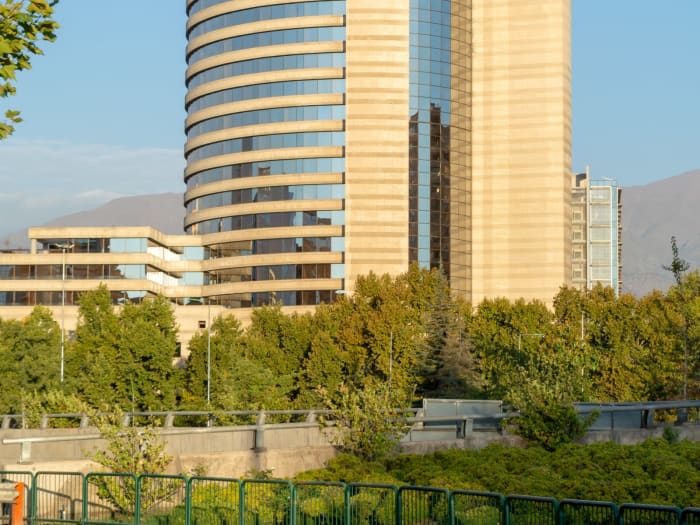
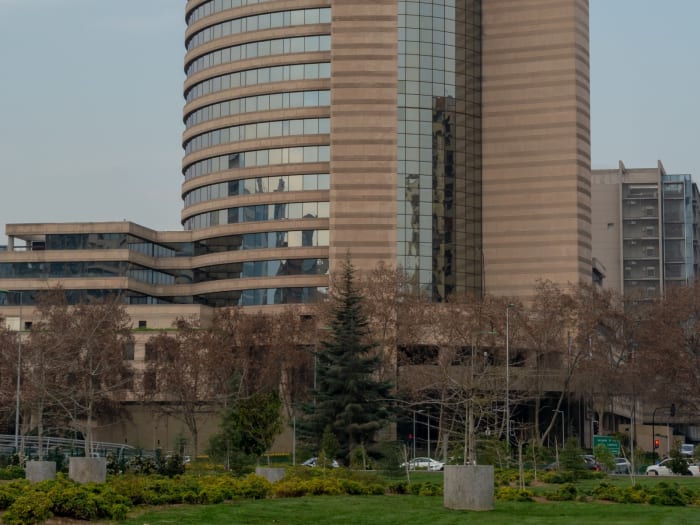
The architecture and public spaces extend that impression. The vocabulary is contemporary, with a search for balance between clean lines, readable volumes and an elegant atmosphere. Nothing feels demonstrative. Luxury is expressed less through decorative excess than through perceived quality, fluid circulation, light, the discipline of materials and overall coherence. That restraint suits Santiago particularly well, a city of discreet modernity where places able to combine international efficiency with a sense of context are often the most convincing.
The hotel naturally addresses several kinds of traveller. Business stays find immediate reference points: round-the-clock reception, 24-hour concierge and an overall organisation shaped by punctuality and simplicity. Leisure guests, meanwhile, benefit from an address that makes the capital easy to explore without imposing a pace. One can imagine a day beginning early with appointments, continuing with a neighbourhood visit and ending in the hotel’s calm; or, conversely, a more contemplative stay in which the property becomes a refuge between outings.
What distinguishes the place is precisely this ability to accommodate different temporalities. In the morning, the hotel supports the day’s momentum. In mid-afternoon, it offers a pause. By evening, it adopts a more hushed tone suited to rest, conversation or an unhurried close to the day. This modulation is essential in a successful urban hotel: it allows each guest to inhabit the property according to personal needs, without ever feeling trapped in a fixed stage set.
Mandarin Oriental, Santiago also reads as a gateway to the contemporary city. From this base, one reaches a capital where shopping districts, residential neighbourhoods, notable tables, cultural institutions and mountain perspectives form a very particular landscape. The hotel does not claim to summarise Santiago; it offers a clear, comfortable and well-composed version of it. That is a subtle but decisive difference. A successful grand hotel does not lock guests inside its bubble: it encourages them to go out, then rewards them for returning.
For that reason, the property particularly suits travellers seeking a luxury of continuity. Continuity of service first, thanks to a team available at all hours. Continuity of experience next, because the spaces, design and facilities form a coherent whole. Continuity of stay finally, since the hotel supports both a short stop and a broader programme in the Chilean capital. That sense of steadiness, within a city in motion, is among its most persuasive strengths.
Rooms & Suites
In a major urban address, the room is never merely a place to sleep. It must function as a refuge, an occasional workspace, a transitional zone between the interior and the city, and at times even the main setting of the stay when travelling for business. At Mandarin Oriental, Santiago, that versatility appears central to the experience. In keeping with the rest of the property, the overall atmosphere favours contemporary elegance and a sense of order. The emphasis is less on decorative effect than on quality of use: simple circulation, legible comfort and an ambience suited equally to relaxation and concentration.
This approach is particularly apt in Santiago. The city often imposes contrasting days, divided between appointments, movement, cultural discoveries and rarer pauses than one might expect. Returning to a well-conceived room then changes the nature of the stay. Comfort depends not only on bedding or bathroom standards, though these remain essential in a five-star hotel; it also depends on the way the space absorbs urban fatigue. A successful room soothes without dulling, protects without entirely isolating, and allows one to regain footing before heading out again.
The suites extend this logic with greater amplitude. They suit guests who wish to distinguish more clearly between moments of the stay: receiving briefly, working in a separate area, adopting a more residential rhythm, or simply enjoying more generous proportions. In a capital such as Santiago, where professional obligations and personal time may easily overlap within the same day, that flexibility makes particular sense. It allows guests not to submit to the programme, but to shape it to their advantage.
The hotel’s style, modern and measured, encourages a calm reading of rooms and suites. The spaces do not need to overstate themselves in order to convince. What matters here is the coherence between design, functionality and the promise of tranquillity. One expects such a property to orchestrate the details that make a stay more fluid: turndown service, daily housekeeping, continuous staff availability and discreet attention to the preparation of night and the restart of morning. These gestures, often invisible when well executed, nonetheless contribute directly to the sense of quality.
For international travellers, the rooms also provide an anchor. They offer reliable reference points in a city sometimes being discovered for the first time. For those already familiar with Santiago, they create a form of suspension: the possibility of experiencing the capital differently, from an address that filters out everyday noise and restores continuity to the schedule. In both cases, the room becomes more than accommodation; it becomes an instrument of the stay.
This is perhaps where the principal value of Mandarin Oriental, Santiago’s accommodation lies. It does not seek to impress through spectacle, but to establish a lasting sense of controlled comfort. For a long weekend as much as for a business trip, that underlying quality makes the difference. It allows guests to move through the city with greater lightness, knowing that on return a calm, ordered and attentive space awaits.
Dining
In a capital such as Santiago, dining in a five-star hotel can no longer be reduced to a supporting role. It fully shapes the experience of the place, its daily rhythm and the way it enters into dialogue with the city. At Mandarin Oriental, Santiago, the culinary offering first belongs to a logic of continuity: providing residents with a reliable, polished and pleasant option at different moments of the day, whether for breakfast before a meeting, a discreet lunch, an early evening drink or a more settled dinner. In a property suited to both business and leisure stays, that flexibility is essential.
The hotel’s broader setting, modern and elegant, suggests dining in the same spirit: contemporary in expression, attentive to execution and free from unnecessary effect. The value of such a proposition often lies in its balance. International travellers find recognisable standards; guests curious about Santiago may look for a first approach to local taste, seasonality or certain dining habits specific to the city. A successful grand hotel does not replace the surrounding culinary scene, but it can offer a comfortable and coherent introduction to it.
Breakfast in particular plays a structuring role. In a city where days often begin early, it sets the tone of the stay. One expects a property of this category to combine efficiency with pleasure: attentive service, a fluid pace and the possibility either to linger or to leave quickly. For business travellers, it is often a strategic moment. For leisure guests, it may be the only truly still point of the morning. In both cases, the quality of this first encounter with the day matters more than is often acknowledged.
At lunch or dinner, the hotel table may fulfil several functions. It can be a practical refuge when one does not wish to go out again. It can also become a meeting place, formal enough for a professional exchange yet relaxed enough to extend a conversation. In a lively district of Santiago, that versatility makes sense. The hotel benefits from the city’s proximity while offering a more controlled setting, where one regains the comfort of service and a certain continuity of tone.
It is also worth recalling that in Santiago, gastronomy belongs to a wider landscape: Chilean wines, Pacific produce, regional influences and an urban dining scene that has grown considerably in confidence. Even without detailing a specific menu, one may say that an address such as Mandarin Oriental is meant to support that curiosity, either by encouraging exploration of the city’s tables or by offering on site an accessible and refined interpretation of hospitality.
For the traveller, this is a genuine comfort. Dining is not an add-on; it forms part of the architecture of the stay. It allows the day to be organised with greater flexibility, creates transitions and turns a simple meal into a breathing space. In an urban hotel of this level, a significant part of overall satisfaction is often decided here: in the ability not only to feed well, but to accompany time well.
Spa & Wellness
In a metropolis such as Santiago, wellness is not merely an optional dimension of luxury hospitality; it becomes a condition of balance. The city’s relative altitude, its clear light and the shifts between meetings, movement and outings all make recovery time central to the stay. At Mandarin Oriental, Santiago, this dimension naturally belongs to the property’s overall promise: to offer a setting in which one can be fully in the city while stepping away from it at chosen moments. The spa and wellness areas therefore take on particular value, not as a simple amenity but as a counterpoint to urban intensity.
The Mandarin Oriental spirit has long been associated with a certain culture of care, founded on precision, discretion and attention to sensory experience. Without relying on display, this type of approach generally privileges the quality of touch, the coherence of the journey and the feeling of being looked after with accuracy. In Santiago, that answers a very practical need. After a long-haul flight, a day of meetings or sustained exploration of the city, the body asks less for a demonstration of luxury than for an environment capable of restoring rhythm.
Wellness in a major urban hotel often depends on simple things when they are well conceived: a space in which to slow down, treatments adapted to the time available, an atmosphere that helps one disengage quickly, and the possibility of reintroducing continuity between physical fatigue and mental rest. The business traveller sees in it a way to recover without disrupting the schedule. The leisure guest finds a personal interval that prevents the stay from becoming a mere accumulation of visits. In both cases, the spa acts as a regulator.
One should also consider the climatic and geographical dimension. Santiago lives under the constant presence of the Andes, with a very physical relationship to landscape, dry air, light and seasons. A wellness programme therefore takes on a particular tone: it is not only about relaxing, but about attuning oneself to a new environment. Treatments, rest periods, attention to sleep or muscular recovery may become valuable tools for inhabiting the city more fully and enjoying the stay with greater openness.
For many travellers, true luxury lies precisely in this ability to create breathing space. A massage at the end of the day, a quiet pause between engagements, a moment of recentering before dinner or an early departure: these discreet sequences often transform the experience more deeply than any spectacular programme. They restore quality of presence, sharpen one’s perception of the city and make travel feel less abrasive.
At Mandarin Oriental, Santiago, wellness therefore forms part of a broader vision of hospitality. It is not a matter of adding a spa to a list of facilities, but of integrating care into the narrative of the stay. In an address designed for demanding travellers, that coherence matters. It reminds us that a great hotel is judged not only by what it shows, but by the way it helps you feel better, more available and more grounded—even in the heart of a capital in motion.
Concierge & Services
In high-end hospitality, services matter not merely because they appear on a facilities list; they matter because of the way they genuinely lighten the stay. At Mandarin Oriental, Santiago, this aspect appears central. The 24-hour concierge and round-the-clock front desk immediately define an address designed for international travellers, late arrivals, early departures and programmes that change at short notice. In Santiago, where stays often combine professional obligations, urban exploration and the logistics of wider travel in Chile, this constant availability is not an abstract luxury: it is a form of practical reassurance.
The role of the concierge is especially important here. In a city sometimes being discovered for the first time, it turns scattered information into a readable itinerary. Advising on a route, arranging transport, directing guests towards a district, helping structure a day or responding to a last-minute request: these gestures save valuable time and reduce the fatigue of constant decision-making. For the seasoned traveller, it is a comfort. For someone less familiar with Santiago, it is often the condition for a smoother and richer experience.
Daily services belong to the same logic. Housekeeping, turndown service, luggage storage, laundry and wake-up calls are not merely standard features; they form the invisible infrastructure of a successful stay. They allow the hotel to adapt to very different rhythms. A business trip requires punctuality, impeccable clothing and controlled schedules. A leisure stay calls for greater flexibility, the possibility of leaving early, returning late, storing luggage before a flight or finding the room prepared after a long day. In both cases, well-delivered service has the particular quality of becoming almost invisible while materially improving the experience.
The presence of multilingual staff, mentioned among the known facilities, adds an essential dimension. In an international address, the quality of exchange matters as much as speed of execution. To be understood immediately, to formulate a precise request and to receive a clear answer: these elements reduce the friction of travel and reinforce the sense of being accompanied rather than merely served. It is often one of the most reliable markers of a truly accomplished hotel.
It is also worth noting that a property such as this serves as a base for very different kinds of stay. Some guests will make only a short stop before continuing to other regions of Chile. Others will remain in Santiago for several days. Some will need meticulous organisation; others will seek mainly relevant recommendations and broad flexibility. The quality of service is therefore measured by its capacity to adapt. A good hotel does not treat every stay in the same way; it recognises different uses and responds to them with accuracy.
At Mandarin Oriental, Santiago, this promise of service appears to be one of the foundations of the experience. It gives luxury a practical translation: fewer complications, more useful time and a sense of continuity from the first moment to the last. For the demanding traveller, that is often what remains. Not an accumulation of spectacular attentions, but the feeling that at every stage, someone has thought about making the stay simpler, more flexible and more pleasant.
Santiago, an Andean Way of Life
Staying at Mandarin Oriental, Santiago also means discovering a city whose way of life does not always reveal itself immediately. Santiago has neither the seaside obviousness of certain Latin American capitals nor the theatrical heritage of other great cities on the continent. Its charm sometimes requires attention: it appears in the light on the Andes, in the structure of its neighbourhoods, in the coexistence of business life with an increasingly confident dining culture, and in the ease with which the urban fabric converses with nearby nature. This is precisely why a well-located address matters: it allows one to enter the city without being overwhelmed by it.
From the hotel, Santiago can be understood as a capital of controlled contrasts. Lively districts offer shops, restaurants, galleries, contemporary buildings and a sustained everyday rhythm. On another scale, the mountains remain constantly present, as both physical and mental horizon. Few cities maintain such a direct relationship with their landscape. This proximity influences the way life is lived: one works in the city, yet the idea of an escape to the Andes, the vineyards or the coast is never far away. The stay thus acquires a particular depth, poised between urban energy and the pull of the outdoors.
Santiago’s way of life also reveals itself in tempo. The city may seem highly active, almost rigorous at certain times of day, then become more supple around meals, meetings and walks. Attentive travellers discover a measured sociability, a taste for well-kept places and a growing curiosity for gastronomy, wine, design and contemporary cultural expression. It is not a city that tries too hard to seduce; it convinces instead through coherence and the quality of its habits.
For the visitor, this subtlety is valuable. It allows a stay to be composed on several levels. One may devote a morning to exploring a district, an afternoon to a cultural institution or a notable table, then return to the hotel for a calmer setting. One may also treat Santiago as a base for other Chilean landscapes while still fully enjoying what the capital offers in its own right. In that perspective, Mandarin Oriental acts as an interface: sufficiently anchored in the city to make it accessible, sufficiently protected to provide breathing space.
It is also worth remembering that Santiago is a seasonal capital. Light, temperatures, visibility of the mountains and the desire for terraces or, conversely, for interior retreat all significantly alter the experience. A successful stay often consists in allowing oneself to be guided by that variation, accepting that the city does not reveal itself in the same way at every moment. The hotel, through its steadiness, makes it possible to accompany these changes without losing one’s bearings.
Choosing this address therefore means choosing a certain way of living Santiago: not in the haste of a checklist, but in a more balanced relationship between discovery, comfort and availability. For couples, business travellers or visitors who simply wish to understand the city from a reliable setting, it is a particularly relevant option. It opens onto a contemporary Santiago—elegant without affectation, urban without harshness, Andean without folklore.
Book with MyConciergeHotel
Booking Mandarin Oriental, Santiago through MyConciergeHotel means approaching the property in the right way: with a stay prepared thoughtfully, taking into account both the rhythm of the city and the practical expectations attached to a five-star hotel. Santiago experiences periods of heightened activity, whether linked to the business calendar, local events or the tourist season. In that context, booking ahead is not merely a prudent reflex; it is often the best way to secure the desired room category, build a coherent programme and avoid last-minute compromises.
The value of editorial and concierge guidance lies precisely in that perspective. No two stays in Santiago are quite alike. Some travellers seek an efficient base for a few well-defined appointments. Others want time to explore the city, its neighbourhoods, tables and surroundings. Others still combine business and leisure, with needs that shift from one day to the next. A well-considered booking therefore does not simply mean reserving a room; it means choosing the right tempo, the right duration and sometimes even the right period.
MyConciergeHotel makes it possible to approach the address in that spirit. The aim is not to overload the stay, but to calibrate it. Should one favour an early arrival or a later check-in? Build in margin before an international departure? Organise breathing spaces between meetings? Make use of laundry, luggage storage or the 24-hour concierge to keep everything fluid? These details, often underestimated, are what transform a correct stay into one that feels genuinely mastered.
For a couple, booking ahead helps place the trip within a broader project: an urban escape, an elegant stop before other Chilean regions, or a few days in a capital too often crossed without being properly seen. For a business traveller, the stakes differ but are no less important: securing a reliable, well-located address capable of absorbing the unexpected while maintaining a constant level of comfort despite a dense schedule. In both cases, the value of the booking lies in the clarity it provides.
It is also wise to check local events when planning a stay. Santiago moves to the rhythm of business, cultural and seasonal appointments that may influence demand, the atmosphere of certain districts or hotel availability. Good preparation can then turn a potential constraint into an advantage: choosing dates best suited to one’s plans, or conversely embracing a livelier period in order to feel the city at full intensity.
Ultimately, booking through MyConciergeHotel means considering Mandarin Oriental, Santiago not as a simple room in a large city, but as an address to be integrated intelligently into the journey. That is the difference between staying somewhere and truly inhabiting one’s stay. In a capital as nuanced as Santiago, that attention to preparation often makes all the difference.