History & heritage
The Waldorf Astoria New York belongs to that very small group of hotels whose name extends far beyond the simple function of accommodation. In New York, it suggests a particular idea of grand urban hospitality: codified service, an address embedded in the collective imagination, and a lasting presence in the story of Manhattan. Its identity has been shaped over time around a rare duality: the monumentality of a historic grand hotel and the fluidity of a house designed for the fast pace of a global capital.
Within the New York landscape, the Waldorf Astoria holds a singular place. It is not merely central; it forms part of the city’s memory. Its name recalls an era when great hotels were also social stages, places of rendezvous, display, informal diplomacy and metropolitan life. That dimension remains essential to understanding the property today. Even when one stays here for thoroughly contemporary reasons — a business trip, a cultural weekend, a few days of shopping or a first discovery of Midtown — one enters a setting that still bears the imprint of that tradition.
The appeal of the Waldorf Astoria New York lies precisely in this continuity. The past is not treated as a decorative argument, but as a structure for the experience. The architecture, the scale of the interiors, the staging of the public spaces and the approach to service all recall a classical vision of luxury hospitality: one that values composure, clarity, discretion and permanence. Unlike some addresses that seek to impress through effect, the Waldorf Astoria follows a logic of immediate recognition. Guests also come here to reconnect with a certain idea of New York — more ceremonial, more institutional, almost cinematic.
This historical depth explains the attachment the hotel inspires among an international clientele. For some travellers, it is a familiar landmark in a city of constant movement; for others, it is a destination in itself, chosen for the strength of its name and the symbolic density it carries. A stay therefore takes on a particular tone: it is not simply a matter of occupying a well-located room, but of inhabiting, for a few nights, an address that has crossed the decades without losing its evocative power.
What remains striking, finally, is the way the hotel balances heritage with relevance. The historic setting does not freeze the experience; it gives it depth. In a city where everything seems to reinvent itself continually, the Waldorf Astoria New York reminds guests that a great hotel can also offer a form of cultural stability. It places travel within a longer timeframe, where comfort, elegance and a sense of protocol are not nostalgic gestures, but a lasting way of welcoming the world.
The property
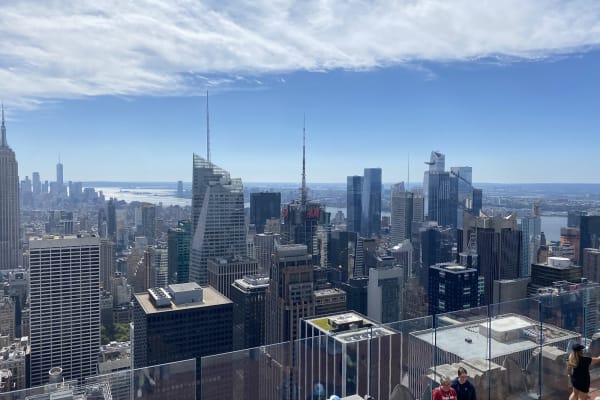
To stay at the Waldorf Astoria New York is to choose an address that naturally converses with Midtown Manhattan. The district concentrates much of New York’s energy: corporate headquarters, cultural institutions, major avenues, a constant flow of taxis and pedestrians, Art Deco façades, international flagships and instantly recognisable landmarks. Within this dense setting, the hotel acts as an anchor point. It allows guests to experience the city at close range while recovering, once through the doors, a more ordered, quieter, almost ceremonial atmosphere.
One of its clearest strengths lies in this accessibility. For a business traveller, the location simplifies meetings and movements across town. For a leisure stay, it makes exploration on foot or by car particularly straightforward, whether towards the major sights of Manhattan or the city’s better-known shopping and cultural districts. The address therefore suits those who wish to make the most of a full programme without sacrificing the quality of the stay itself. One can easily imagine a day shaped by meetings, a museum visit, time on Fifth Avenue, and then a return to the hotel in a more composed environment designed to slow the pace.
Yet the Waldorf Astoria is not defined solely by its setting. The property also stands out for the way it occupies space. In a city where hospitality can sometimes favour efficiency over breathing room, this address retains the spirit of grand proportions and legible circulation. The public spaces, through their composition and restraint, contribute to that sense of controlled grandeur. The décor combines classical references with more contemporary touches without seeking rupture. The result is a feeling of balance: neither museum nor concept hotel, but a house of tradition that accepts modernity when it serves comfort and clarity.
This reading of the place directly shapes the guest experience. A stay here takes on a more structured tone, almost more urban in the noblest sense of the word. One feels the city without being absorbed by its permanent agitation. That is one of the privileges of well-located grand historic hotels: to offer a filtered relationship with the metropolis, where the intensity outside remains present but does not overrun the interior. The Waldorf Astoria New York answers that expectation particularly well.
The address therefore speaks to several profiles without losing coherence. Couples find an elegant setting for a New York escape; business travellers appreciate the clarity of service and the central location; families can organise an urban stay in an environment known for attentive hospitality. This versatility does not come from a generic positioning, but from a rarer quality: the ability to combine prestige, practicality and familiarity. In New York, where the hotel landscape is vast and highly segmented, that combination remains a meaningful distinction.
Rooms and suites
In a hotel of this standing, the room is not merely a stopping point between appointments; it is the true counterpoint to the city. At the Waldorf Astoria New York, that idea is especially meaningful. After the intensity of Midtown, rooms and suites are conceived as spaces of retreat, where one finds a more intimate scale, legible comfort and an atmosphere that extends the hotel’s overall elegance. The decorative language suggested by the property — a dialogue between tradition and modernity — is particularly effective here, because it avoids two common pitfalls: historical pastiche on one side, international neutrality on the other.
Guests expect interiors capable of carrying the symbolic weight of the Waldorf Astoria name while meeting contemporary needs. That implies well-organised proportions, high-quality bedding, bathrooms designed for genuine recovery, and attention to service details that tangibly shape the rhythm of a stay. Turndown, daily housekeeping, and the responsiveness of the front desk and concierge all contribute to that sense of continuity. In a grand hotel, comfort is never limited to furniture; it depends on the way everything works without visible friction.
For business travellers, the room must also become an efficient transition space between different parts of the day. One prepares a file there, takes a call, regains a measure of calm after the movement outside. For leisure guests, it serves more as a refuge: a place to set down purchases, catch one’s breath, watch the light over Manhattan shift through the hours, and then head out again for dinner or a performance. Suites generally answer a different logic altogether: that of a more expansive stay, a private reception, or a greater need for space and separation between functions.
What distinguishes rooms in a well-kept historic address is often their ability to create an impression of permanence. Guests do not simply want to sleep well; they want to inhabit a setting coherent with the story of the place. At the Waldorf Astoria New York, that coherence matters greatly. It allows the stay to retain a sensory unity between the public spaces, the hotel’s place within the city, and the moment of returning to one’s room.
For a couple, a room or suite in this context takes on an almost narrative dimension: it becomes the setting for the New York stay one imagines before departure, somewhere between urban refinement and recovered intimacy. For a family, the value lies more in the quality of organisation and in the hotel’s ability to maintain a high level of service without excessive rigidity. In every case, the essential point remains the same: to offer a space where sophistication remains liveable, and where luxury is measured first by the rightness of the experience.
Dining
In a grand New York hotel, dining never serves a purely practical purpose. It shapes the way the address belongs to the city, welcomes its residents and, at times, draws an outside clientele as much for the atmosphere as for the plate itself. At the Waldorf Astoria New York, this dimension is especially significant, because the history of Manhattan’s great hotels is closely tied to that of their salons, bars, business breakfasts, end-of-day meetings and more formal meals. Even without detailing a specific offer here, it is clear that dining forms an integral part of the property’s identity.
The first expected register is breakfast, a decisive moment in a city that imposes its pace very quickly. In an address of this category, the point is not only to provide efficient service, but to create a setting that starts the day with the right tone. The business traveller looks for punctuality, clarity and an environment suited to a first exchange. The leisure guest expects more of a breathing space before heading out to explore Manhattan. In both cases, the quality of the experience depends on the balance between well-managed service and a sense of ease.
Then comes the question of meals taken on site throughout the day. In a historic hotel, dining spaces often have a broader social function than simple consumption. One meets there, observes there, extends a conversation there, arranges a discreet appointment there. The décor, the acoustics and the way the staff conduct service matter almost as much as the menu itself. This is where the Waldorf Astoria New York typically asserts its character: in its ability to provide a setting that is neither anonymous nor theatrical, but immediately credible for a business lunch, afternoon tea, an evening drink or dinner for two.
For guests, the presence of dining within the hotel itself offers a practical advantage. It removes the need constantly to choose between the abundance outside in New York and the occasional desire to remain in a calmer environment. After a full day, many appreciate being able to continue the evening without leaving the address, in a setting coherent with the rest of the stay. This is particularly true for short visits, when every hour matters, but also for international travellers seeking a degree of stability in a very intense city.
Dining, in this context, should be understood in the broadest sense: as a staging of time, service and hospitality. More than a spectacular promise, it represents continuity. The Waldorf Astoria New York embodies that tradition of hotels where one dines partly to belong, for the length of a meal, to a certain idea of New York life: elegant, active, cosmopolitan and fully aware of its own codes.
Concierge & services
In a city such as New York, the quality of a hotel is often measured by its ability to simplify the intensity of a stay. The Waldorf Astoria New York answers that requirement through a service foundation aligned with the expectations of an international clientele accustomed to grand addresses: a 24-hour front desk, round-the-clock concierge, daily housekeeping, turndown service, luggage storage, laundry, wake-up service and multilingual staff. Considered separately, these elements may seem standard in five-star hospitality; taken together, however, they form a genuine promise of fluidity.
The concierge occupies a central place here. In a property of this nature, the role goes beyond fulfilling requests; it structures the stay, helps prioritise needs, saves time and makes the city more legible. Arranging a car, guiding guests towards a neighbourhood, suggesting a sensible pace for visits, easing an early arrival or a late departure under the best possible conditions: these discreet interventions are often what turn a good stay into one that feels truly mastered. In New York, where the offer is abundant and distances can be deceptive, that mediation has particular value.
The permanent front desk plays an equally important complementary role. In a metropolis that never stops, late arrivals, programme changes and last-minute requests are part of daily life. Knowing that the hotel remains fully operational at any hour is a tangible comfort, especially for long-haul travellers, professionals with shifting schedules or families whose organisation requires greater flexibility. Service must not only be available; it must remain steady, courteous and precise whatever the hour.
Daily housekeeping and turndown contribute to another dimension of luxury: invisible continuity. A room perfectly reset, returning in the evening to a space prepared for the night, efficient handling of laundry or luggage — all create a sense of obviousness that matters greatly in the overall perception of the hotel. These are old gestures of service, but they remain entirely relevant when carried out consistently and without emphasis.
For international travellers, multilingual staff add a decisive layer of comfort. They reduce friction, facilitate specific requests and establish a calmer relationship with the property from the outset. Laundry and wake-up service, meanwhile, answer highly practical needs, particularly appreciated during business stays, longer itineraries or tightly planned visits.
Ultimately, the strength of the Waldorf Astoria New York’s services lies in their coherence with the address itself. Nothing feels incidental. Each element contributes to making the hotel not simply a place to sleep, but an elegant infrastructure in the service of travel. In a city as demanding as New York, that discreet reliability is often worth as much as the décor itself.
The New York art of living
Choosing the Waldorf Astoria New York also means choosing a particular way of inhabiting the city. New York never reveals itself all at once; it is discovered in layers, through neighbourhoods, rhythms and habits one adopts almost in spite of oneself. From a central address such as this, the experience takes on a particularly legible form. Days can be organised methodically, balancing highlights with pauses, moving from one register to another — business, culture, walking, shopping, dinner — without the sense of crossing several different cities. That is one of Midtown’s privileges when experienced from a grand hotel: the ability to compose a stay that is dense yet coherent.
In the morning, New York often belongs to those who start early. A walk along avenues still relatively ordered, a coffee before the crowds, a first look at façades and the light sliding between the buildings are enough to remind one that Manhattan is also a city of details, not only of verticality. From the hotel, it becomes easy to structure the day around a few major themes: cultural institutions, department stores, architecture, business appointments, or simply the pleasure of watching the city function.
By afternoon, the value of a well-placed address becomes even clearer. One can return to rest, leave shopping behind, change before dinner or a performance, then head out again without losing time. This flexibility profoundly changes the quality of an urban stay. It prevents the cumulative fatigue often produced by overly linear programmes. The Waldorf Astoria New York fits precisely into that logic: enabling genuine immersion in the city without demanding constant exertion. New York is better enjoyed when one has a credible, elegant and central point of retreat.
In the evening, the city shifts register. Lights, movement, appointments, bars, restaurants and cultural venues redraw Manhattan. For visitors, this is often the moment when New York becomes fully imaginary, almost faithful to its own mythology. Returning afterwards to a historic hotel extends that impression rather than interrupting it. The stay thus retains aesthetic and emotional continuity. One does not move abruptly from a spectacular city to interchangeable accommodation; one remains within the same urban narrative.
This New York art of living ultimately requires a certain discipline of attention. The aim is not to see everything, but to choose well. A grand hotel such as the Waldorf Astoria encourages that approach because it offers a stable framework from which to think one’s stay. One may come here for a first discovery of New York or for a more informed return. In both cases, the address helps shape an experience that is neither rushed nor superficial. It suggests that in New York, true luxury may lie less in accumulation than in orchestration: of places, time, distances and moments of retreat.
Book with MyConciergeHotel
Booking the Waldorf Astoria New York through MyConciergeHotel means approaching the address in the right way: as a stay considered in advance and adjusted to your pace and priorities, rather than as a standard reservation. A hotel of this stature calls for more thoughtful preparation than may first appear. Depending on the nature of the trip — business, cultural, as a couple, with family, for a first discovery of Manhattan or for a more targeted return — expectations will differ. The value of editorial and concierge guidance lies precisely in turning that variety of needs into a coherent stay.
The first added value is interpretation of the address itself. Not every five-star hotel in New York answers the same imagination or the same practical use. The Waldorf Astoria New York speaks to those seeking an iconic address, a historic setting, a central location and structured service. Booking through MyConciergeHotel helps place those elements within a concrete travel logic: ideal length of stay, balance between appointments and free time, the usefulness of returning to the hotel during the day, and the relevance of a room or suite category according to your programme.
This approach is particularly useful in a city where the abundance of choice can blur decisions. New York easily creates the impression that being well located is enough to ensure a successful stay. In reality, the quality of the experience also depends on the relationship between the hotel, the neighbourhood, the rhythms of the day and the expected level of service. A historic address such as the Waldorf Astoria does not mean the same thing for a short business trip as it does for a weekend for two or for several days devoted to the arts, institutions and major urban walks. MyConciergeHotel’s role is to clarify that fit.
Booking with guidance also means anticipating the details that matter: arrival times, luggage handling, schedule constraints, stay preferences, concierge needs and the organisation of a tailored programme in the city. In luxury hospitality, these are often the parameters that determine the perceived quality of the journey. A well-prepared reservation does not merely change the logistics; it changes the way one enters the experience.
Finally, choosing MyConciergeHotel for an address such as the Waldorf Astoria New York means favouring a vision of luxury based on accuracy. The point is not to overstate, but to book at the right moment, in the right configuration and with the right expectations. For a hotel so charged with history and so central to the New York imagination, that precision matters. It allows guests to experience the address for what it truly is: not simply a famous name, but a great urban hotel whose value is fully revealed when the stay is planned with discernment.