History & Presence in Jeddah
In Jeddah, The Ritz-Carlton Jeddah belongs less to the tradition of a historic grand hotel than to that of a contemporary prestige address on the shores of the Red Sea. Its identity is rooted in a modern reading of international luxury, interpreted through the codes of Saudi hospitality: a strong sense of welcome, generous proportions, attention to ritual, and interiors designed to feel both composed and expansive. In a city that has long served as a gateway to the western part of the Kingdom, the hotel naturally appeals to a wide-ranging clientele, from business travellers and official delegations to families and couples seeking a refined retreat.
Jeddah itself occupies a distinctive place in Saudi Arabia. A port city shaped by Red Sea trade and exchange, it developed as a commercial and cultural crossroads, with a more maritime and cosmopolitan character than many other urban centres in the country. This context matters when reading the hotel. One does not stay here simply for a polished room, but to anchor oneself in a metropolis of movement, meetings and transition, where contemporary economic energy coexists with an older relationship to seafaring routes. The property reflects this through an atmosphere of continual reception, almost diplomatic in tone, where arrivals and departures unfold with ease.
The Ritz-Carlton imprint brings a recognisable vocabulary: structured service, elevated standards, discreet staging of comfort and a search for a seamless guest experience. Here, that signature is not merely decorative. It can be felt in the way public spaces are designed to host, wait, converse, negotiate or simply pause. Luxury is not expressed in a loud or theatrical manner; it appears instead through scale, poise, perceived quality and consistency of service.
For European travellers, the appeal also lies in the hotel’s ability to provide a clear and reassuring setting within a fast-changing urban environment. A stay takes on a particular tone: one is in Jeddah, close to a lively city, yet within a hotel that values order, calm and efficiency. This balance explains why it suits both short business trips and more leisurely stays. Couples find a setting conducive to privacy, while business guests appreciate an organisation designed for demanding schedules.
Rather than claiming a dramatic historic narrative, The Ritz-Carlton Jeddah embodies another kind of heritage: that of the grand hotel as a place of representation, hospitality and continuity. In a destination where travel habits are evolving quickly, such steadiness has real value. It allows guests to settle into an immediately legible environment, where the familiar references of exacting international hospitality are enriched by a local culture of welcome defined by attentiveness, availability and care.
The Establishment and Its Connection to the Red Sea
One of the attractions of The Ritz-Carlton Jeddah lies in its relationship with the Red Sea. While not a beach retreat, the hotel benefits from a valuable proximity to the coastline. The light, the openness of the landscape, and the sense of space provided by the shore alter the perception of the stay. In Jeddah, the sea also evokes the city’s maritime history and its role in regional and international trade.
The hotel is situated in a lively district, offering a dual advantage. It remains connected to the city’s life, its movements, and its contemporary energy. Once inside, it provides a welcome respite. This transition from the bustling exterior to the tranquil interior contributes to the comfort of a grand hotel. It allows guests to shift from a packed agenda to a calmer environment without isolating them from the rhythm of Jeddah.
Architecturally, the establishment adheres to the codes of a luxury address. Spacious volumes, clearly defined communal areas, and smooth circulation between different aspects of the stay are key features. The lobby and lounges are designed for experience, not just transit. Guests can receive visitors, wait, work informally, or observe the discreet pace of a well-managed international hotel. This quality of use is significant in a city where hotels often become a daily anchor.
Refinement here is expressed through an elegance of composition rather than ostentatious decor. The materials, lighting, and spatial distribution prioritise coherence. For the traveller, this creates a comprehensible experience without visual overload. Luxury is then measured by the tranquillity it affords. Clear markers, a stable atmosphere, and the sense that each space serves its purpose accurately are paramount.
This location is naturally suited for business stays. Being in a vibrant area of Jeddah while remaining close to the waterfront allows for a blend of efficiency and relaxation. Between meetings, it is pleasant to return to an environment where the city seems to slow down slightly. Couples also find a setting that is not removed from the world but sufficiently serene to create a pause. The hotel is not an enclave cut off from the destination but an orderly way to inhabit it.
Finally, the address can serve as a base to discover the spirit of Jeddah. The city is not defined solely by its economic activity or its coastline. It is understood through the combination of both. Staying here allows one to grasp this balance: a dynamic Saudi metropolis open to the sea, marked by a certain cosmopolitanism, where comfort, representation, and hospitality remain essential. The Ritz-Carlton Jeddah condenses this understanding within a coherent, practical, and contemporary framework.
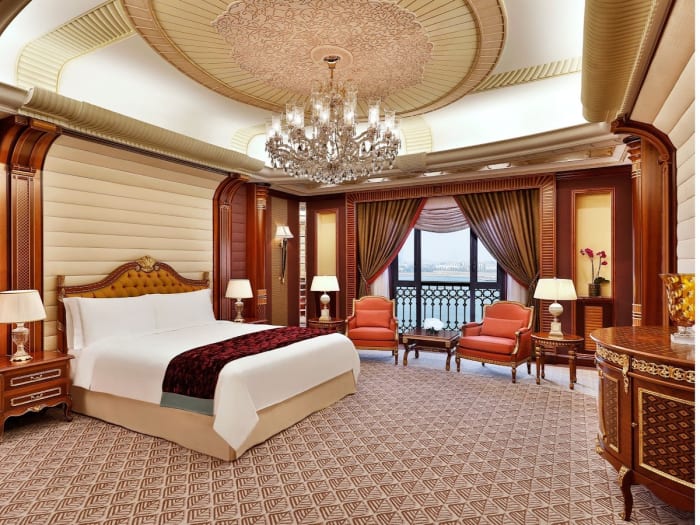
Rooms and Suites
In a hotel of this calibre, the room serves not only as a place to rest but also as an extension of the overall experience.
At The Ritz-Carlton Jeddah, we expect spaces designed for the actual duration of the stay. Whether it’s a night between meetings, a weekend for two, or a longer journey.
Elegance here takes the form of structured comfort. Balanced volumes, thoughtfully chosen furnishings, and a calming atmosphere following the urban intensity.
The rooms and common areas form a coherent ensemble. The quality of a room is measured by the sense of ease it provides.
Lighting, circulation, surfaces for placing items, bedding, and storage must all find their rightful place. This clarity is important for an international clientele.
In Jeddah, the room willingly becomes a refuge. It offers a relative silence, a controlled temperature, and attentive service.
The turndown service contributes to this culture of discreet care. It accompanies the various moments of the stay, from early departures to evening returns.
The suites cater to multiple uses. Some are suitable for protocol or professional stays, while others provide more space for couples or families.
The hotel is expected to deliver on this gradation, from the well-executed comfort of the room to the additional ease of a suite.
The in-room experience also depends on daily service. Housekeeping, luggage handling, responsiveness of the reception and concierge, and flexibility with timings.
In a business stay, this reliability is essential. In a leisure stay, it supports a genuine sense of relaxation.
The rooms and suites at The Ritz-Carlton Jeddah are thus envisioned as spaces of mastery and comfort. One can work, take a call, prepare without haste, and then return in the evening to an orderly and restful atmosphere.
Dining and the Moments of Your Stay
In Jeddah, an active and cosmopolitan city, the hotel often plays a filtering role. Guests seek venues where they can host without complication. It is also possible to organise professional exchanges in a calm setting.
The dining experience naturally extends the hospitality offered. It must provide clarity, flexibility, and reliable execution. This is important for both business clientele and couples.
In an establishment inspired by Saudi hospitality, the attention given to welcome, service, and the pace of meals is paramount. Refinement is often reflected in the manner in which the team supports guests.
A grand hotel knows how to adapt its dining options to various needs. Quick yet polished meals, ceremonial moments, late-night snacks, or more elaborate dinners. This versatility is one of the hallmarks of a well-conceived establishment.
Room service is an integral part of the experience. For many international travellers, it allows for dining or enjoying breakfast in the tranquillity of their room, without sacrificing quality or precision in execution.
In a hotel suited for both business stays and romantic getaways, this option is particularly valuable. It allows guests to tailor their stay according to their energy levels, schedules, or desire for privacy.
Dining also contributes to the memory of a place. One remembers the light, attentive service, a well-appointed dining room, or a leisurely breakfast taken before venturing into the city.
For The Ritz-Carlton Jeddah, dining is understood as an art of orchestrating moments. The traveller will seek an elegant setting, consistent hospitality, and serious execution.
Concierge & Services
What distinguishes a grand hotel over time is not only the beauty of its spaces but also the way it supports the stay in its most concrete details. In this regard, The Ritz-Carlton Jeddah brings together essential services: 24-hour concierge, 24-hour reception, daily room service, turndown service, luggage storage, laundry, wake-up calls, and multilingual staff. Together, they create a precise promise: that of a seamless, adaptable stay, consistently attended to.
The concierge available at all hours plays a central role. In a city like Jeddah, where travel rhythms and appointment times vary greatly, this continuous availability is reassuring. It allows for the management of simple requests as well as last-minute adjustments, with a level of presence that makes a difference. For the business traveller, it saves time and provides peace of mind. For leisure travellers, it offers greater flexibility.
The 24-hour reception extends this logic of continuity. Late arrivals, early departures, changes in plans, and unforeseen needs are part of the reality of contemporary travel. A grand hotel is recognised by its ability to absorb these variations without creating friction. The quality of welcome is also measured by the precision of procedures, the speed of processing, and the feeling of being anticipated.
Daily room service and turndown service fall into a more intimate category. They shape the perception of comfort over time. A well-maintained room, tidied regularly, and then prepared for the night with discretion, directly contributes to the quality of rest. These silent gestures give texture to the stay. In a hotel that welcomes both professionals and couples, this attention to each individual's personal rhythm is significant.
Laundry and luggage storage address very practical needs. These services often enable light travel, facilitate multiple stages, maintain a polished appearance for important meetings, or allow guests to enjoy their final hours in the city without logistical constraints. The wake-up call service also serves as a reminder that luxury lies in securing key moments in an agenda.
Finally, the presence of multilingual staff is particularly relevant in an international setting. It facilitates communication, enhances understanding, reduces misunderstandings, and builds trust. In a destination where regional travellers intersect with guests from further afield, this skill contributes significantly to comfort.
The services at The Ritz-Carlton Jeddah thus compose a serious hospitality approach, designed to support varied stays without losing elegance. It is this reliability, more than any spectacular effect, that gives the address its daily value.
The Art of Living in Jeddah
Staying at The Ritz-Carlton Jeddah also means entering into a certain idea of Jeddah. A city turned towards the sea, active, mobile, and marked by both ancient and contemporary cosmopolitanism.
For the traveller, the interest lies not only in having a comfortable hotel. It is also about reading the city from a point of balance. Close to the Red Sea and situated in a lively neighbourhood, the address allows for this perspective.
Jeddah is often discovered through successive atmospheres. There is the light by the seaside, the promenades open to the horizon, the bustling districts, and a strong culture of hospitality.
In this context, a grand hotel plays an interpretative role. It helps guests enter the rhythm of the destination without being overwhelmed by its intensity. One can organise their days, take breaks, receive visitors, go out, and return.
Saudi hospitality reflects a culture of attention, consideration, and generosity. In high-end hospitality, this translates into a quality of presence. A well-received traveller feels that things are anticipated and that their rhythm is respected.
In Jeddah, this dimension takes on particular significance. The city combines modern energy with social codes where hospitality remains central.
For couples, the stay can be punctuated by simple yet well-chosen moments. An unhurried early departure, a day of meetings or discoveries, followed by a return to a setting conducive to dinner and retreat.
For business travellers, the challenge is different. It is about finding a base that allows for the juggling of obligations while maintaining a certain quality of life. In both cases, the hotel serves as a mediator between the density of the city and the need for control.
The most pleasant season is between November and April, when the climate is milder. During the cooler months, the proximity to the Red Sea and outdoor activities lend a more open tone to the stay.
One can then better perceive what makes Jeddah unique. A city of maritime facades, movement, and encounters.
The art of living in Jeddah does not rely on a fixed image. It is based on a way of composing with multiple registers. City and sea, business and relaxation, protocol and intimacy, movement and pause. The Ritz-Carlton Jeddah is well-suited to this experience through its sense of balance.
Book via MyConciergeHotel
Booking The Ritz-Carlton Jeddah through MyConciergeHotel means approaching this establishment with a mindset of selection and support, rather than merely a transactional process.
A hotel of this calibre caters to a variety of needs. Whether for a business trip, a romantic getaway, solo travel, or a family break, a well-prepared reservation ensures the right pace of stay aligns with the appropriate type of experience.
In Jeddah, the context of travel can vary significantly from one visitor to another. Thus, this preparation makes a tangible difference.
The first challenge is to correctly position one's stay within the calendar. The high season runs from November to April, when the climate is more temperate. This period is the most sought after for enjoying the city and the proximity to the Red Sea.
Booking in advance allows for greater choice. This pertains to room categories, the rhythm of travel, and certain organisational preferences. For business trips, this foresight facilitates smoother logistics. For a couple's retreat, it allows for more time to unwind.
The second challenge concerns positioning. The Ritz-Carlton Jeddah is ideal for travellers seeking a refined setting, structured hospitality, and a good fit for business stays, without sacrificing a more personal or romantic dimension.
This versatility deserves clarification at the time of booking. Depending on whether one prioritises efficiency, intimacy, the length of stay, or service flexibility, expectations will differ. Editorial and concierge support helps articulate these priorities.
Booking through MyConciergeHotel also provides a more qualitative understanding of the establishment. Rather than merely stacking features, it is about comprehending what the hotel genuinely offers. Proximity to the Red Sea, location in a vibrant neighbourhood, an atmosphere inspired by Saudi hospitality, continuous services, and a setting suitable for various types of travellers.
This manner of presenting the hotel allows for more discerning decision-making. It is beneficial for clients already familiar with international luxury standards. They seek less a general promise and more a concrete alignment with their stay.
Opting for off-peak hours to fully enjoy the facilities and avoid crowds aligns with this same logic. A successful experience also depends on the timing of one's presence in the venue. Adjusting schedules, allowing for quieter periods, and organising appointments in advance contribute to a smoother stay.
In summary, booking The Ritz-Carlton Jeddah via MyConciergeHotel equates to choosing a more precise and attentive approach to travel style. In Jeddah, this quality of preparation allows one to make the most of a seaside address.