History & heritage
Staying at Palacio do Governador means choosing an address that naturally converses with Lisbon’s history rather than a simple place to sleep. The hotel is set in Belém, a district whose very name evokes Portugal’s Age of Discovery, departures across the Atlantic and the city’s enduring relationship with the Tagus. In this western part of the capital, monuments, gardens and river views create a setting in which the past is never static: it accompanies daily life, walks and the changing light. Palacio do Governador belongs to that continuity, with an identity shaped by the meeting of architectural memory and contemporary hospitality.
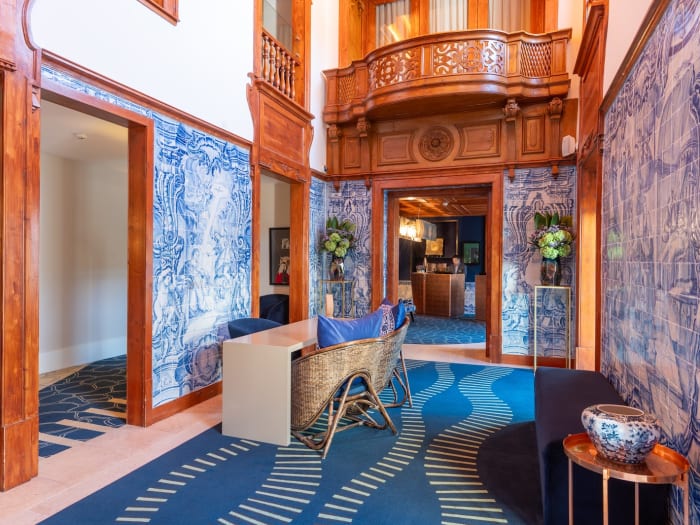
The hotel’s name itself suggests a link to a former residence of authority or representation, setting the tone from the outset. The appeal here does not lie in theatrical reconstruction, but in a more nuanced way of inhabiting an old place. The volumes, materials and certain heritage details remind guests that before becoming a hotel, the building formed part of a broader story tied to a strategic and symbolic quarter of Lisbon. That depth can be felt in the overall atmosphere: this is not a standardised setting, but a place with density, quiet gravitas and the calm that often belongs to buildings that have endured through time.
Belém provides a particularly legible context for that heritage. It is one of the areas of Lisbon where the city’s outward-looking history is most clearly understood. Between cultural institutions, landmark monuments and riverside promenades, the district gathers an unusual concentration of historical reference points. Within this landscape, Palacio do Governador occupies an interesting position: rooted enough in its surroundings to reflect their spirit, yet sufficiently set back to preserve a sense of intimacy. That balance between openness to the city and sheltered calm is central to its character.
Its membership of Small Luxury Hotels of the World also helps define the nature of the address. Such affiliation generally points to smaller-scale hotels where individuality matters more than uniformity. In the case of Palacio do Governador, this feels consistent with a property that relies on the personality of its setting, on a discreet form of luxury and on a more sensitive relationship with heritage. Refinement is not presented as display; it is expressed in the way the soul of a site is preserved while being adapted to present-day expectations.
For travellers, this historical dimension changes the stay in practical ways. Returning in the evening to a building that still carries traces of another era does not feel the same as coming back to a purely functional hotel. Time seems slightly slower, the city becomes easier to read, and the experience of Lisbon gains depth. Palacio do Governador therefore offers more than an elegant base: it proposes a way of connecting with Belém and, more broadly, with Lisbon’s history in a setting defined by continuity, restraint and a strong sense of place.
The Establishment
The Palacio do Governador embodies a refined sense of luxury. From the moment you enter the communal spaces, the hotel asserts a meticulous aesthetic. Elegance is rooted in proportions, textures, and light. The flow of corridors, lounges, and transitional areas sets the rhythm of your stay, inviting you to linger between outings or to extend your return at the end of the day.
The historical architecture, paired with modern comforts, forms the essence of the project. The Palacio do Governador seeks balance, preserving the presence of the past while offering the fluidity of a contemporary five-star hotel. This is reflected in the clear layout of the spaces, intuitive circulation, and furnishings that engage in dialogue with the structure. The atmosphere remains sufficiently tranquil, creating a subtle retreat from the bustling city.
This sense of calm is among the most appealing features of the establishment. After several hours spent exploring the hills, museums, or waterfronts of Lisbon, returning to a peaceful environment becomes a luxury. The Palacio do Governador provides this respite. It is not about isolation, but rather a welcome distance. The setting absorbs the noise from outside, allowing guests to return to a slower pace.
The relationship with the neighbourhood also contributes to this quality. Belém offers more air, perspectives, and breathing space than some central areas. This geography is felt within the hotel, which benefits from this openness. You are in Lisbon, but in a broader, more horizontal, and often brighter version of the city. Your stay allows for a blend of cultural visits, strolls along the Tagus River, and returns to a place that does not overwhelm the senses.
Belonging to Small Luxury Hotels of the World reinforces the notion of a property that is both intimate and thoughtfully curated. The Palacio do Governador is not designed as an anonymous hotel machine. It prioritises a more embodied experience, with a distinctive decorative approach, a unique identity, and a particular way of hosting. This coherence matters. It shapes the stay into a harmonious ensemble: a building, a neighbourhood, an atmosphere, and the feeling of having chosen a place that resonates with the city.
Rooms and Suites
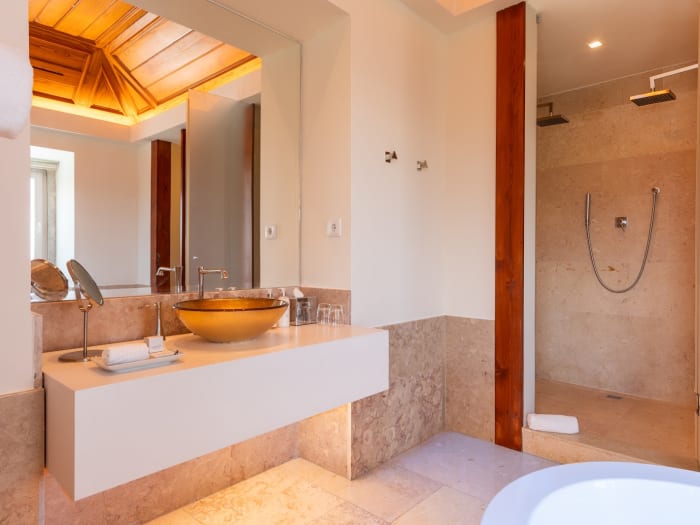
At the Palacio do Governador, the room continues the narrative of the place. It reflects, on a more intimate scale, the balance between architectural heritage, modern comfort, and elegant simplicity.
The rooms and suites prioritise a sense of enclosure, silence, and continuity. After the bustle of the city, they provide a genuine decompression, thanks to a soothing palette, pleasant materials, and a clear layout.
In a historic building, the uniqueness of the volumes often makes a difference. The rooms may feature proportions, heights, or details that give them their own distinct personality.
Modern comfort finds its place discreetly here. The traveller thus enjoys a non-standardised environment and the fluidity of a contemporary stay.
Comfort also relates to acoustics, bedding, lighting, and the ease with which one can make the room their own. The turn-down service contributes to this evening calm.
Daily maintenance reinforces the impression of a space that is always refreshed, without ever appearing impersonal.
The suites appeal to those seeking more than just a beautiful room. They allow for reading, working, or entertaining in a separate setting.
In Belém, where one easily alternates between cultural visits and moments of pause, this generosity of space makes perfect sense. The room then becomes a refuge, rather than just a place to rest.
At the Palacio do Governador, the essence lies in the coherence between the spirit of the place and the private experience. A successful room allows the architecture to breathe and prioritises genuine comfort over ostentation.
This address is suitable for couples, travellers in search of tranquility, and those who wish to discover Lisbon without sacrificing a refined environment. Here, the room becomes the equilibrium point of the journey.
Dining
At the Palacio do Governador, the dining experience is seamlessly integrated into the essence of the place. It offers refined hospitality, free from rigidity, attentive to the rhythm of the stay.
In an establishment of this calibre, the dining experience does not need to be spectacular to be memorable. It can play a more subtle role, serving as a daily anchor, a well-thought-out comfort, and a moment of transition between the city and the hotel.
Breakfast, light lunch, an afternoon drink, or a more leisurely dinner: each sequence matters, provided it is served in a setting that aligns with the spirit of the house.
In Lisbon, and even more so in Belém, dining is never a secondary activity. The relationship with time, light, and the river naturally influences daily habits.
One sets out early to visit a monument. One lingers in a museum. One returns after a stroll along the waterfront. In this context, the ideal hotel accompanies these movements without imposing.
An elegant dining room, attentive yet unobtrusive service, and a clear menu: these are often the ingredients for a successful hotel dining experience.
Breakfast deserves special mention. It sets the tone for the day. In a venue with a historic setting, this first moment can be one of the most enjoyable of the stay.
The morning light, the calm before the visits, the sensation of starting the day in a characterful place contribute to a discreet luxury. Here, one expects quality, freshness, seamless service, and an atmosphere suited to every pace.
In the evening, dining takes on another function. After the visual intensity of Lisbon, dining at the hotel can extend the peaceful interlude that the address suggests.
Some travellers may wish to explore Lisbon's culinary scene. Others will appreciate not having to venture out after a busy day. In both cases, the internal dining options gain value when they provide a credible, comfortable, and elegant alternative.
Luxury often lies in this freedom. The ability to choose between the city and retreat, between exploration and continuity.
One also expects a five-star hotel to pay particular attention to transitional moments. A leisurely coffee, a drink in a lounge, a light snack upon returning from an excursion.
These moments often build the memory of a stay. They allow one to truly inhabit the hotel, to experience it beyond mere accommodation.
At the Palacio do Governador, dining fits into this overarching logic. Not a standalone gastronomic theatre, but an essential component of the art of hospitality. A successful hotel kitchen supports the journey, respects the place, engages with the neighbourhood, and offers, at every hour, a form of just comfort.
Spa and wellbeing
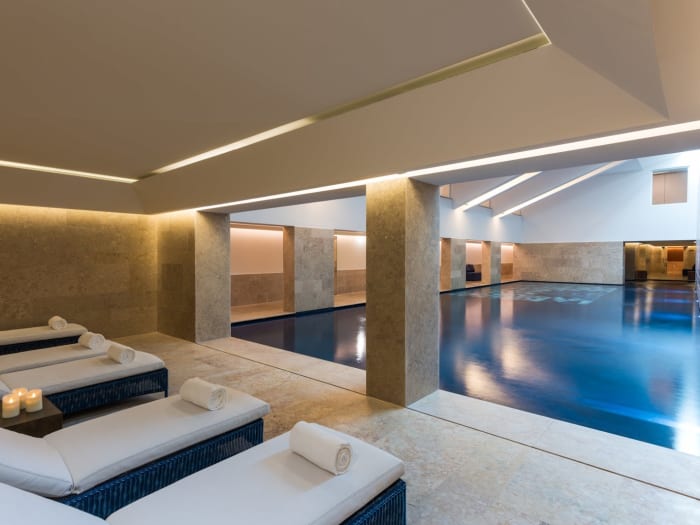
In a city such as Lisbon, wellbeing at the hotel is not merely an added pleasure; it answers a genuine need for recovery. Days there are often long, shaped by walking, gradients, cultural visits and repeated exposure to light, river winds or seasonal heat. In that context, a space dedicated to rest acquires particular value. Even when every spa detail is not explicitly given, one understands that at Palacio do Governador the essential promise lies in the possibility of slowing down after the city, recovering a form of inner quiet and balancing the stay between discovery and retreat.
The hotel’s setting naturally lends itself to this dimension. Historic architecture, when well restored, often creates a protective sense of thickness: walls, volumes and materials help separate guests from the rhythm outside. Wellbeing sometimes begins there, before any specific treatment or ritual. It arises from the quality of the atmosphere, the temperature of the spaces, softer light and the gradual transition from urban activity to a slower temporality. In a characterful address, that continuity is essential: the spa should not feel like an artificial addition, but like the logical extension of the overall experience.
For travellers, uses are varied. Some will seek a massage or body treatment after a day spent walking through historic districts; others will simply value a moment of calm, a few lengths, a silent pause or time to recover before dinner. Couples often appreciate these sequences as shared interludes, while business travellers find in them an effective way to shift pace between professional obligations and personal time. The luxury of wellbeing then lies less in visible sophistication than in the ability to answer precisely what the body needs at a given moment.
Belém, with its more open relationship to the river and to space, further reinforces that search for calm. This is not the city’s densest core, but a district that allows more breathing room. That quality naturally carries over into the experience of rest. After a walk along the Tagus or a visit to the area’s major cultural institutions, returning to the hotel for a period of wellbeing feels almost self-evident. The stay gains balance: the city nourishes the mind, the hotel restores the body.
In a five-star property, wellbeing also includes everything that contributes to a sense of discreet care: immaculate linen, attentive service, evening room preparation and a concierge able to adjust the next day’s plans. The spa is therefore only one part of a broader whole, that of a hotel which understands that rest is not an optional extra but a constituent element of travel. At Palacio do Governador, this dimension appears especially coherent with the property’s overall atmosphere. One comes for Lisbon, certainly, but gladly stays for this rarer quality: the possibility of experiencing the city intensely without ever feeling overwhelmed by it.
Concierge & Services
True hotel luxury is often measured by what operates seamlessly and effortlessly. At the Palacio do Governador, the services create a fluid, discreet, and well-supported stay.
24-hour reception, 24-hour concierge, daily housekeeping, turn-down service, luggage storage, laundry, wake-up service, multilingual staff. Together, they form the backbone of a well-managed experience.
The concierge occupies a central role here. In Lisbon, it serves not only to book a transfer or a table but also to help organise the city with precision.
From Belém, this can take the form of a day spent between monuments, museums, a stroll along the Tagus, and returning to the hotel at the right moment. For a first-time visitor, this mediation is invaluable. For a regular guest, it helps avoid overly obvious routes.
The continuously open reception provides appreciated comfort. Arriving late, departing early, requesting assistance at an unusual hour, or retrieving luggage becomes simpler.
Room and housekeeping services represent a quieter form of luxury. Daily cleaning restores order to the room after each outing. The turn-down service accompanies the transition from day to night.
Laundry and luggage storage become essential during itinerant stays, business trips, or late departures. They significantly lighten the organisation of travel.
Multilingual staff also matters. Being able to articulate a specific, nuanced, or urgent request makes communication simpler and more direct.
The services at the Palacio do Governador thus respond to a sober vision of hospitality. Being present without being intrusive, anticipating without overwhelming, making the stay lighter. In a venue with a strong architectural personality, this quality of service gives the place its hotel depth.
The Lisbon way of life
Choosing Palacio do Governador also means choosing a particular way of experiencing Lisbon. The address is not in the city’s densest centre, but in Belém, a district that offers a broader, more historical and more spacious reading of the capital. For many travellers, that location changes the stay profoundly. Lisbon is discovered not only through steep streets and its busiest quarters, but through its relationship with the river, with monumentality, with gardens and with a form of calm grandeur. Belém allows visitors to understand the city through its maritime openness, its former imperial imagination and its present ability to combine heritage, culture and promenade.
The rhythm of the district encourages a more nuanced experience. One can set out early to enjoy softer light on façades and quays, visit a monument before the crowds, linger in a cultural institution, then return to the hotel for a pause before heading to other parts of the city. This alternation between intensity and retreat suits the spirit of Palacio do Governador particularly well. The hotel does not try to compete with Lisbon; it helps guests experience it with greater measure. That is an important distinction. Some addresses encourage over-scheduling; others, more rarely, make it possible to shape a stay that is more intelligent and more breathable.
Belém also has the precious quality of offering horizons. The Tagus is more present there, perspectives are wider and walks feel more natural. For the visitor, this means the city is not reduced to a succession of sights, but becomes a place to inhabit. Walking by the water, observing changes in the light, pausing in a garden or extending a visit with an unplanned detour: this availability to time forms an integral part of the Lisbon way of life. Palacio do Governador, through its peaceful atmosphere, seems particularly well suited to that kind of experience.
The proximity to public transport mentioned in the existing description adds an essential practical dimension. It makes it easier to reach other neighbourhoods, vary the mood of the day and then return to Belém without difficulty. In this way, one can combine the energy of more central areas with the comfort of coming back to a calmer environment. For a stay of several days, that balance is often ideal: close enough to explore, removed enough to rest properly.
Spring and autumn, noted as especially pleasant seasons, suit this way of discovering the city well. The light is often splendid, temperatures milder and walks longer. Yet beyond the season, what matters most is the travel posture itself. Palacio do Governador speaks to those who want to see Lisbon without consuming it too quickly, to those who appreciate hotels that extend the character of a district rather than erase it. Here, the art of living lies in the alliance of culture, chosen slowness, discreet comfort and awareness of place. It is a less demonstrative way of travelling, but often one that lasts longer in the memory.
Book with MyConciergeHotel
Booking Palacio do Governador through MyConciergeHotel makes sense for travellers who believe that a characterful hotel should be chosen with as much care as the destination itself. An address such as this cannot be reduced to a five-star category or a list of amenities. Its interest lies in subtler balances: a location in Belém rather than in the city’s densest core, membership of Small Luxury Hotels of the World, the dialogue between historic architecture and contemporary comfort, and the peaceful atmosphere that defines the evening return. Booking well therefore means ensuring that the stay genuinely matches one’s expectations in terms of rhythm, mood and use of the city.
MyConciergeHotel’s guidance helps refine that choice. Depending on the traveller’s profile, priorities will differ. A couple may favour calm, the character of the place and the possibility of experiencing Lisbon in a more hushed way. A business traveller may focus more on service fluidity, the 24-hour front desk, round-the-clock concierge and ease of movement. A culture-minded guest, meanwhile, will be sensitive to the value of staying in a historically charged district well suited to visits and walks along the Tagus. The role of advice is to turn those preferences into a relevant booking rather than allowing the decision to be made solely on generic criteria.
Booking ahead is particularly wise for this type of property. Hotels with a strong identity, especially those belonging to collections recognised for their individuality, attract travellers who are specifically looking for that combination of personality and comfort. Planning in advance not only secures the stay, but also helps prepare the overall experience: arrival times, transfer arrangements, special requests, sightseeing rhythm and possible touches for a special occasion. The earlier the stay is thought through, the smoother it can be once on site.
MyConciergeHotel also adds value in the reading of the destination. Palacio do Governador is not merely a beautiful address in Lisbon; it is a specific way into the city, through Belém, through the river, through history. That nuance matters. It makes it possible to recommend the hotel to travellers for whom this geography and atmosphere will be a genuine asset, and to explain clearly what they will find there: more breathing space, discreet elegance, a heritage setting and a calmer relationship with the capital.
Finally, booking through MyConciergeHotel means favouring a stay logic rather than a simple transaction. In luxury hospitality, the quality of an experience often begins well before arrival. It starts with accurate information, with the ability to ask the right questions and with attention to the details that will make a difference once on site. For Palacio do Governador, this approach is especially relevant. The hotel appeals to travellers who appreciate places with soul, but who also expect flawless execution. MyConciergeHotel’s role is to link those two expectations: the emotion of the place and the clarity of organisation.