History & heritage
In Tangalle, on Sri Lanka’s southern coast, Anantara Peace Haven Tangalle Resort is defined less by the history of a landmark building than by a careful reading of its setting. Its sense of heritage lies in the landscape itself: the light of the Indian Ocean, the coconut palms, the gentle contours of the coast, and the vernacular principles of Sri Lankan architecture, where indoors and outdoors are designed to remain in constant conversation. The resort draws directly from that continuity, seeking to extend the spirit of the shoreline rather than dominate it.
Tangalle has long been regarded as a quieter stop along the island’s south coast, with a slower rhythm, broad beaches and a more immediate relationship with nature. Establishing a luxury resort here therefore makes particular sense. It answers a contemporary desire to stay somewhere refined without losing touch with the character of the place. Anantara Peace Haven Tangalle Resort embraces the idea of a coastal retreat in the fullest sense: a place to step back from noise, recover time and restore simplicity.
The heritage it reflects is also that of Asian hospitality, where attentiveness is expressed through ease rather than display. Good service here is not theatrical; it is seamless. In a resort of this calibre, that means smooth arrivals, legible public spaces, gentle transitions throughout the day and the ability to accommodate different styles of stay—romantic, restorative, family-oriented or culturally curious—without disturbing the overall sense of calm.
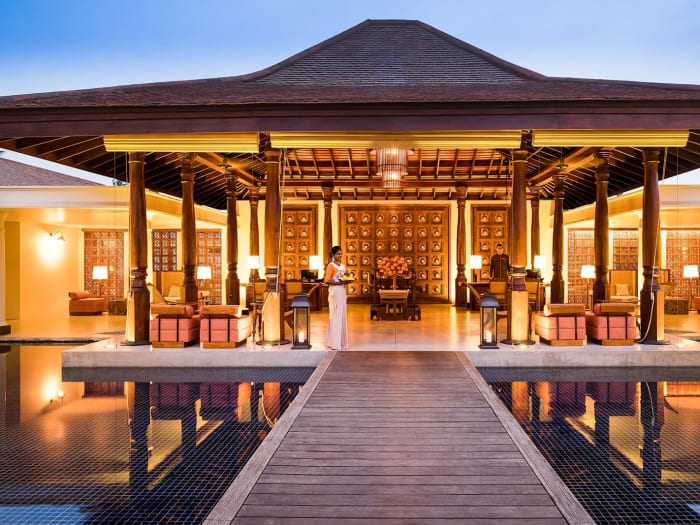
Its architecture, inspired by local design, reinforces this cultural continuity. Rooflines, materials, open volumes, airflow and the relationship to gardens all suggest that in tropical climates, true luxury is not about shutting the world out but about shaping a graceful coexistence with it. More broadly, a stay here offers an insight into the contemporary identity of Sri Lanka’s southern coast: natural beauty, cultural depth and high-end hospitality, all tempered by a notable sense of restraint.
The resort
Anantara Peace Haven Tangalle Resort unfolds in a setting that captures a certain idea of tropical coastal travel: golden beaches on one side, lush greenery on the other. This position between sea and vegetation is not merely scenic; it shapes the entire stay. Guests experience both openness, through the presence of the shoreline, and shelter, through gardens and planting that soften the resort’s scale.
Architecture inspired by local design is central to that balance. Without resorting to pastiche, it draws on forms suited to climate and landscape: open lines, airy volumes, fluid circulation and materials that sit naturally within the environment. The result is warm rather than showy. Public spaces are designed to welcome light, catch the breeze and frame views of gardens or ocean. In this kind of property, success often lies in allowing modern comfort to recede behind a sense of ease.
The resort particularly suits travellers seeking calm. Couples, honeymooners, guests in search of a restorative pause and families wanting a serene, well-ordered setting can all find common ground here. Days may be carefully planned or left deliberately unstructured: breakfast in the morning light, time by the pool, a walk to the beach, a spa treatment, then dinner in a quieter evening atmosphere.
The pool, outdoor areas and relaxation spaces reinforce the sense of retreat. Yet the resort is not limited to idleness alone. Cultural outings are also part of the appeal, making Tangalle a useful base for exploring the southern part of Sri Lanka before returning to the calm of the property. What ultimately distinguishes the resort is its ability to combine completeness with restraint. The setting is not a backdrop; it is the substance of the stay.
Rooms and Suites
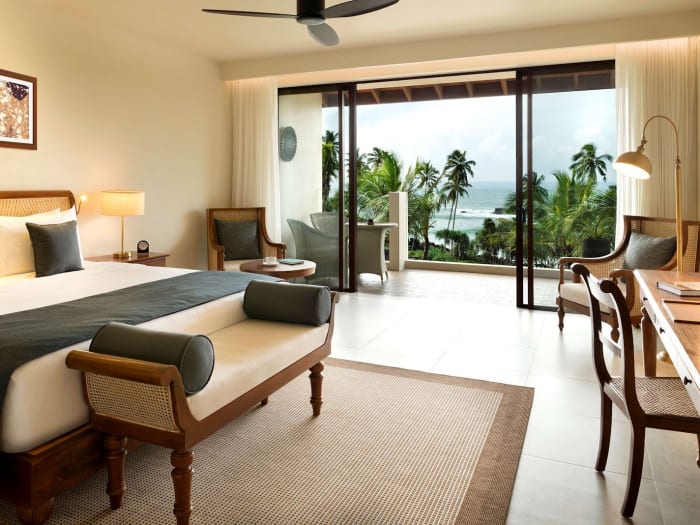
At the Anantara Peace Haven Tangalle Resort, a room transcends being merely a return point between activities. It extends the landscape and rhythm of your stay. In a tropical environment, the quality of accommodation is measured by its comfort and its harmonious relationship with the outdoors. The offerings reflect this ethos. The accommodations prioritise light, perceived space, intimacy, and relaxation, all within an aesthetic inspired by local architecture and the natural setting of Tangalle.
The first hallmark of a successful room in these latitudes is the sensation of breathability. Well-proportioned volumes, generous openings, and seamless transitions between the resting area, bathroom, and outdoor spaces contribute to this. Luxury here lies in the quality of materials, the comfort of the bed, the acoustics, the softness of the evening lighting, and the presence of views. In Tangalle, this sense of grounding is significant. The room allows the presence of the sea, gardens, or vegetation to filter in, even when one chooses to retreat for several hours.
Local inspiration suggests a decorative style based on natural materials, understated tones, and tactile warmth. In a resort of this calibre, this translates into matte-finished woods, light textiles, artisanal elements, and subtle references to Sri Lankan vernacular. The overall effect remains uncluttered. The aim is to create a sense of coherence, avoiding the impression of a generic luxury room.
The suites cater to a different expectation. They allow for inhabiting the space rather than merely sleeping in it. A clearer separation is sought between rest periods and living moments. They also offer greater intimacy for couples or a more flexible arrangement for families. In a wellness-focused resort, this notion of personal space takes on particular importance, allowing for a balance between social moments and genuine retreats.
The bathrooms also contribute to the experience. They are designed as transitional spaces, almost for decompression, where the sensation of a spa is extended to a private scale. After a cultural excursion, a swim, or several hours in the sun, returning to a well-tempered room, enjoying a generous shower, or soaking in a calm atmosphere is essential comfort.
Ultimately, the value of the accommodation lies in its ability to cater to different types of travellers. Couples seek an elegant retreat, families find a comfortable and clear base, and those in search of rest discover a silent cocoon in which to unwind. In all cases, the ideal room at the Anantara Peace Haven Tangalle Resort extends the qualities of the location: light, tranquillity, lush vegetation, a temperate climate, and a distance from the hustle and bustle.
Dining
The Anantara Peace Haven Tangalle Resort places significant emphasis on gastronomy. In a beach resort, dining punctuates the day and contributes to the identity of the stay.
Facing the ocean, under a warm climate, the culinary offerings must combine freshness, precision, variety, and flexibility. They should also evoke the locale without confining the traveller.
In the morning, breakfast takes on a special significance. The light is gentle, the air still temperate, and the awakening unfolds at a more leisurely pace.
Fruits, savoury preparations, international options, hot beverages, and fresh juices compose this initial moment. The essence remains the freedom of rhythm, between a peaceful morning and a more active departure.
The rest of the day calls for a cuisine that is clear and suited to the climate. Lunches often favour lightness, with clean textures and plates easy to share.
The Sri Lankan context invites spices, seafood, and certain regional inspirations. The overall balance is struck between international cuisine and local references.
Dinner belongs to another realm. The heat subsides, the spaces darken, and conversations linger.
The dining experience then becomes an evening element. One expects attentive service, the right atmosphere, and a menu suited for both intimate meals and family dinners.
The diversity of dining contexts also matters. A lunch by the pool, a snack after an excursion, or a drink at sunset serve different purposes.
The resort must orchestrate these sequences with flexibility. This is where the coherence of a culinary offering designed for the actual usage of the stay is measured.
Here, gastronomy participates in a broader idea of care. It accompanies the climate, the body, and the mood, with a focus on freshness and the pleasure of shared dining.
In Tangalle, the flavours also offer a sensitive reading of Sri Lanka. The success lies in meals that are just right, desired, and naturally integrated into the stay.
Spa & Wellness
If there is a common thread in the promise of the Anantara Peace Haven Tangalle Resort, it is that of rejuvenation. The spa is not merely a facility; it embodies the spirit of the place. It offers a more concentrated form of slowing down, releasing tension, and regaining focus.
In a seaside destination, wellness often begins even before entering the spa. It arises from the climate, the light, and the soothing sound of water. It also relates to the possibility of walking barefoot. The role of a well-designed spa is to extend this natural disposition. Here, one expects calm spaces, intimate treatment rooms, and attentive service. The rituals should cater to various needs: recovery after travel, muscle relaxation, a couple's retreat, or facial treatments.
After a day of exploration, the spa naturally finds its place. Tangalle and its surroundings invite a blend of beach time, cultural excursions, and relaxation. In this context, the spa becomes a point of equilibrium, helping to centre the body within the experience. It alleviates the fatigue of travel and restores a sense of slowness after a busier day.
Wellness is not limited to treatments; it is also reflected in the overall facilities. A pool for swimming or lounging, outdoor spaces conducive to reading, dining attuned to the rhythm of the climate, and a room designed as a temperate refuge. Service flows smoothly, without unnecessary friction. Here, wellness is the result of a coherent collection of details.
For couples, the spa often represents a signature moment. For solo travellers, it can become a space for re-centering. For families, it offers adults a welcome pause. This flexibility of use is significant, demonstrating that a good spa accommodates various ways of experiencing the resort.
In a place like the Anantara Peace Haven Tangalle Resort, the most compelling wellness does not need to be overstated. It is recognised at the end of the day: calmer breathing, lighter fatigue, and a less scattered mind. The spa contributes directly to this, but it is also part of a broader experience. The landscape, architecture, silence, and attentive service work together. The desired outcome is not performance; it is the feeling of having truly disconnected.
Concierge & Services
In high-end hospitality, services gain value when they simplify the stay without adding burden. This is particularly true at the Anantara Peace Haven Tangalle Resort, where everything revolves around tranquillity.
Here, the quality of service is measured by its appropriateness. Anticipating without overwhelming, guiding without rigidity, supporting without constraining. When this balance is achieved, everything seems to fall into place.
The concierge plays a key role. In Tangalle, it helps organise days according to very different desires. Some guests remain at the resort, enjoying the beach, pool, spa treatments, and meals. Others punctuate their stay with cultural excursions or regional discoveries.
Between these two approaches, needs vary. Advice on pacing, activity bookings, transfers, suggestions tailored to the weather or the traveller's profile. A good concierge does not merely respond; it helps compose a coherent stay.
In a seaside setting, the most appreciated services are often the simplest. A smooth arrival, discreet handling of luggage, and genuine availability on a daily basis. This is complemented by flexible dining options, the organisation of relaxation times, and calm management of unforeseen events.
For families, this involves attention to children's rhythms and the logistics of the day. For couples, it means arranging a more intimate dinner, a couple's treatment, or an activity outside the resort. For all, the essential remains the right level of support.
Attentive service is an important indicator here. In the best establishments, this attentiveness does not translate into constant presence. It relies on a fine reading of expectations.
This expertise is recognised in details. A timely and relevant recommendation. A swift solution to a practical request. The ability to maintain calm, even with varied traveller profiles.
Modern facilities complement this human dimension. They suggest the contemporary comfort expected in a five-star establishment. Well-maintained leisure spaces, clear relaxation zones, and equipment designed for a seamless stay.
What matters is not an exhaustive list. It is the overall coherence. A large resort functions well when its services seem integrated into a unified hospitality logic.
The Anantara Peace Haven Tangalle Resort is a seaside address that reveals its full potential when the services play their true role: that of facilitators of serenity.
The Art of Living in Tangalle
Staying at the Anantara Peace Haven Tangalle Resort also means entering into a unique relationship with time, closely linked to Tangalle itself. The town and its coast do not belong to the imagination of bustling beach resorts. They evoke rather a form of luminous retreat, where the sea, warmth, vegetation, and more open distances invite one to slow down. This art of living is not merely about idleness. It hinges on a subtle balance between contemplation, gentle movement, and curiosity for the cultural environment of southern Sri Lanka.
The first gesture here often involves accepting the rhythm of the coastline. Rising early to enjoy a softer light. Walking when the temperature is still mild. Then settling in the shade. Allowing the afternoon to unfold more slowly. Finally, returning outdoors as the sun begins to set. This simple chronology profoundly transforms the quality of a stay. Tangalle lends itself well to this way of inhabiting the day. The resort, with its location between golden beaches and lush vegetation, offers a particularly comfortable interpretation of this.
However, the local art of living does not stop at the landscape. It also involves attention to sensory details: the sound of palm fronds, the density of the air after a rain shower, the spicy aromas at the table, the sensation of still-warm sand at the end of the day. In the most successful tropical destinations, luxury does not erase these elements. It makes them more accessible, clearer, and more enjoyable to experience. This is what one expects from an address like this: to allow one to savour Tangalle without harshness, in a soothing yet not disconnected version of reality.
The southern coast of Sri Lanka is not limited to its beaches. For travellers wishing to enrich their stay, Tangalle can become a starting point for broader discoveries. Landscapes, local traditions, and fragments of daily life then compose the backdrop of the journey. The appeal of this type of resort is to provide a stable and comfortable base. One can thus open up to the territory without renouncing rest. One departs for a few hours, then returns to an ordered, calm, familiar environment. This alternation is often the best way to approach a destination: neither forced immersion nor complete isolation.
For couples, Tangalle offers a naturally conducive setting for two. The coastline, the evening light, the sense of space, and the relative tranquillity of the place create a backdrop favourable to celebratory trips or more intimate pauses. For families, the local art of living can take another form. That of a stay where everyone finds their rhythm, between shared times and moments of rest, without excessive pressure from a schedule. In both cases, the true privilege is the same: the ability to slow down without becoming bored.
Ultimately, the art of living in Tangalle rests on a simple yet rare idea: that of a luxury compatible with gentleness. No frenzy. No compulsion to see everything. No constant display. Just a place on the southern coast where one learns to look better, to breathe better, and to revalue unfilled hours. The Anantara Peace Haven Tangalle Resort finds its balance here. It does not impose a style of stay. It offers the ideal conditions to adopt, for a few days, this discreet elegance of the Sri Lankan shoreline.
Booking via MyConciergeHotel
Choosing the Anantara Peace Haven Tangalle Resort essentially comes down to asking whether its style aligns with how one wishes to travel in Sri Lanka.
The address offers a stay marked by calm, nature, wellness, and a certain tropical elegance. Cultural outings can be added without disrupting the overall balance.
For couples, the reservation should be considered around the atmosphere. This address suits those seeking a more tranquil coastline, a setting conducive to intimacy, and deliberately unhurried days.
It is better to prioritise time on-site rather than an overly ambitious itinerary. Incorporating a moment at the spa, planning a few memorable meals, and allowing the landscape the space it deserves.
For families, the reading is slightly different. The resort represents a solid option for balancing comfort, safety, varied activities, and moments of recovery.
Booking with a clear vision of priorities helps construct a more harmonious stay. Rest, swimming, logistical simplicity, or excursions set the right pace for the journey.
The period from December to March, generally drier, is often favourable for enjoying the southern coast. It lends itself well to outdoor spaces, the beach, the pool, and discovery activities.
The Anantara Peace Haven Tangalle Resort is not a transit hotel. It is a destination in itself, designed for travellers who value calm, the coherence of the setting, and rejuvenation.
Booking this address makes sense if one seeks a refined anchor point on the southern coast of Sri Lanka. Wellness, gastronomy, and quality of experience hold a central place here.