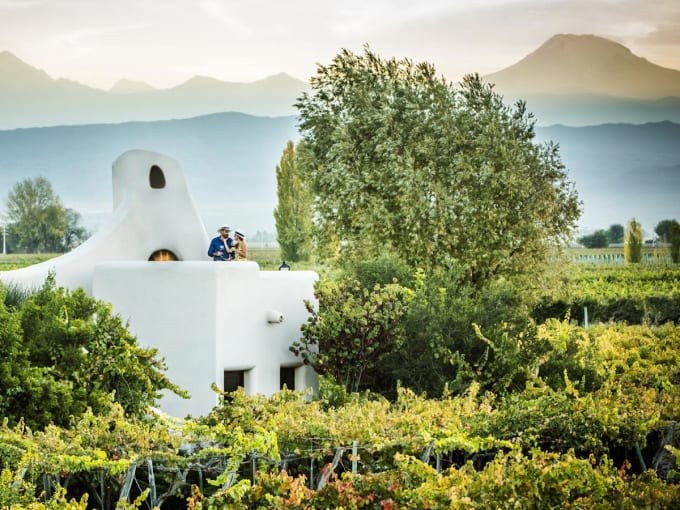
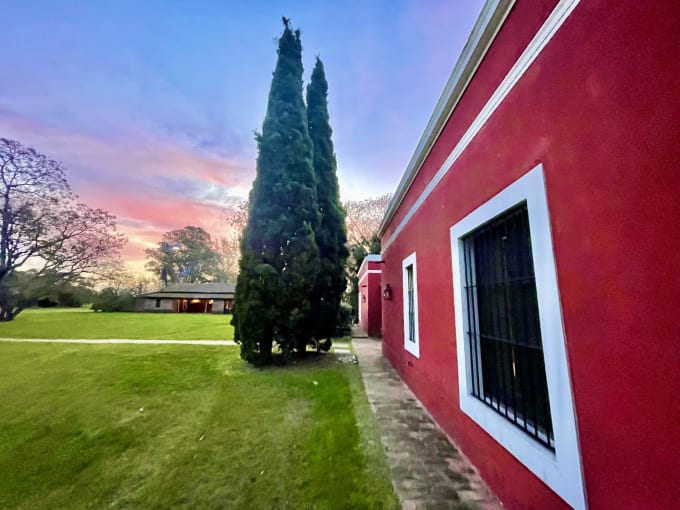
In Argentina, the Relais & Châteaux label resonates profoundly. The country combines vast landscapes, a direct culture of hospitality, and a culinary tradition deeply rooted in the territory. Here, the experience extends beyond a beautiful room. It unfolds in the rhythm of an estancia, in a dinner crafted around Andean produce, in a lodge overlooking the vineyards, or in a house facing the Patagonian lakes. It is precisely this intersection of personalised hospitality, living heritage, and gastronomy that makes this selection so relevant. Awasi Mendoza, Hotel Awasi Iguazu, Hotel El Colibri, Hotel EOLO - Patagonia's Spirit, Hotel House of Jasmines, Hotel La Bamba de Areco, Hotel Las Balsas, and Hotel Susana Balbo Winemaker's House & Spa Suites each embody a different interpretation of Argentina. Together, they sketch a country of unique homes, rather than mere hotels.
To establish this ranking, MyConciergeHotel does not simply align well-known signatures. We first observe the coherence between the Relais & Châteaux label and the promise genuinely fulfilled on-site. This includes the character of the house, the quality of the welcome, the strength of the setting, and the emphasis placed on gastronomy. We also consider a hotel's ability to express its immediate environment. A vineyard is not assessed in the same way as a historic estancia or a Patagonian address. What our advisors retain is the harmony between the place, the table, and the stay. Service is important, but it must remain embodied. In this category, the spirit of the house often weighs more than a demonstration of luxury. The ranking therefore values complete, coherent, and sustainable experiences.
The Argentine panorama is particularly rich, as each region imposes its own language. In Luján de Cuyo and Chacras de Coria, wine structures the experience, with stays where the cellar, the cuisine, and the landscape engage in a natural dialogue. In Puerto Iguazú, the subtropical forest alters the scale of the journey. The hotel becomes a vantage point, almost a refuge, where one seeks silence as much as comfort. In El Calafate and Villa La Angostura, Patagonia offers two distinct visions. One gazes upon the vast open spaces, while the other favours lakeside intimacy. Salta and Santa Catalina remind us of the importance of rural heritage in the North. Finally, San Antonio de Areco embeds hospitality within the history of estancias and gaucho culture. Notably, this selection never pits nature against refinement; rather, it showcases their complementarity.
For 2025 and 2026, several trends are solidifying in Argentine boutique hospitality. The first concerns the pursuit of more private experiences, with fewer rooms, more space, and more precise service. Travellers are seeking less animation and more meaning. The second trend relates to gastronomy. The most compelling tables return to better-identified local products, short supply chains, and a more nuanced understanding of terroirs. Wine remains central, especially in Mendoza, but it no longer overshadows other regional expressions. A third trend is emerging, that of slow-paced stays. Reservations are made less to tick off destinations and more to inhabit a place. In this context, houses like Awasi Mendoza, Hotel House of Jasmines, or Hotel Las Balsas meet current expectations very well. They offer immersion rather than mere accommodation.
This selection also speaks to a certain idea of luxury, close to French sensibility but interpreted in Argentina. Here, luxury does not solely rest on material rarity. It lies in the precision of detail, the continuity of service, the quality of the table, and the relationship between the house and its territory. Relais & Châteaux has long championed this vision. In Argentina, it finds a natural terrain. A country house like Hotel La Bamba de Areco does not speak the same language as a contemporary refuge like Hotel Awasi Iguazu. Yet both share the same level of expectation. Hospitality must be personal, the cuisine must tell a story of place, and the architecture must preserve a memory. My advice for reading this category well is to observe the overall coherence. It is often this that distinguishes a great house from a simply pleasant address.
It is also important to remember that an editorial ranking is not a universal verdict. Each hotel in this selection has its audience, its ideal season, and its rhythm. Some will be better suited for a romantic trip centred on food and wine. Others cater to travellers who prioritise landscapes, isolation, or rural heritage. We are therefore not seeking to designate a perfect house in absolute terms. We aim to rank experiences according to the strength of their overall proposition. What our advisors often observe is that a successful stay depends less on abstract prestige than on a good fit between the place and the desire of the moment. A charming weekend near Buenos Aires does not meet the same expectations as a retreat in Patagonia or a wine itinerary in Mendoza. This ranking should be read as a demanding orientation guide.
You will find in this Top 8 of Argentine Relais & Châteaux very different houses, yet united by a shared discipline of hospitality. Some shine through their gastronomic roots, others through their landscape power, and still others through their spirit of a private residence. It is this diversity, rather than uniformity, that adds value to the selection. Let us now move on to the ranking.