History & sense of place
House of Jasmines belongs to a style of travel more often associated with refined country houses than with conventional luxury hotels: a place that does not rely on display, but instead establishes a slower, more attentive rhythm from the moment of arrival. In Salta, in north-western Argentina, this Relais & Châteaux address embodies that rare form of hospitality in which elegance lies less in spectacle than in the coherence of the setting, its relationship with the landscape, and the quality of care offered by those who run it. Even the name suggests a world of gardens, fragrance and dry light, in keeping with the atmosphere of the region.
In this part of Argentina, the history of estancias, rural houses and large agricultural estates has long shaped both architecture and the art of receiving guests. Without turning that heritage into folklore, House of Jasmines draws on some of its essential codes: calm proportions, a direct relationship with the outdoors, the importance of patios, terraces and open views, and a décor inspired by local character without becoming theatrical. The result is neither museum nor reconstruction. It is a house designed to be lived in, filled with light, and rooted in its natural and cultural surroundings.
Its membership of Relais & Châteaux also helps define the spirit of the property. Within this collection, the idea of a house matters as much as that of a hotel. One expects individuality, attention to detail, and a focus on the overall experience rather than on a catalogue of effects. House of Jasmines answers that promise through an intimate atmosphere, a human scale, and personalised service that values appropriateness over performance. It is a place for travellers who want to feel a destination before they consume it: to notice the colours of the landscape, to understand the rhythm of Salta, and to return from an excursion to the calm of a protected retreat.
What stays with guests is the way the property bridges several travel imaginaries at once. There is the Argentina of vast spaces, relief and roads leading towards the Andean valleys. There is also a quieter tradition of hospitality, more inward and more composed, in which comfort is measured by the serenity a place provides. House of Jasmines stands at that intersection. One comes for nature, for the light of northern Argentina, for the proximity to Salta and its surroundings, but one also remains for that sense of an inhabited retreat, where every detail suggests that a successful stay is not only about itinerary, but about tone.
The property within its landscape
One of the defining qualities of House of Jasmines lies in its setting: a natural environment near Salta, sufficiently preserved to create a genuine sense of retreat, yet still connected to the city and to what it represents for travel in north-western Argentina. This in-between position is especially valuable. It allows guests to experience nature and quiet without giving up the cultural interest of Salta, often used as a gateway to the valleys, high plateaus and dramatic roads of the region.
From the moment of arrival, the landscape asserts itself. The views over the surroundings are not merely a visual asset; they shape the entire stay. Here, the relationship with the outdoors is never secondary. Light, relief, vegetation and the changing sky throughout the day create a living backdrop that shifts with the hour and the season. Mornings may feel clear, almost crystalline; by late afternoon, warmer tones soften the scene. This quality of light, so distinctive in northern Argentina, contributes greatly to the feeling of disconnection.
The architecture and layout seem intended to accompany this dialogue with the landscape rather than dominate it. One imagines open spaces, fluid circulation, areas of repose oriented towards the outdoors, terraces or lounges where guests settle as much to read as simply to look. In a property of this kind, luxury often lies in the possibility of doing nothing more than inhabiting the moment: taking coffee facing the hills, listening to the quiet, noticing the air change after a day out. House of Jasmines appears designed precisely for that.
This location within a natural environment also reinforces the intimate character of the hotel. Unlike large urban properties where energy comes from constant movement, the experience here is based on a sense of breathing space. The surroundings are meant to calm. The landscape acts almost like a service in itself, so strongly does it influence the rhythm of the stay. For travellers moving through several Argentine destinations, this pause can be essential: it offers time to reset, to slow down, and to recover a quality of attention often lost in over-packed itineraries.
Staying here also reveals something about Salta through its more sensitive outskirts. The city is known for its colonial architecture, its historical role in the north-west of the country, and its proximity to territories of remarkable geographical variety. House of Jasmines makes it possible to approach the destination from a more contemplative perspective. One discovers not only a city, but a broader territory made of relief, light and horizon. That is what gives the property its rightness: it does not merely accommodate a stay in Salta, it offers a wider, calmer reading of the region, deeply connected to the landscape.
Rooms and Suites
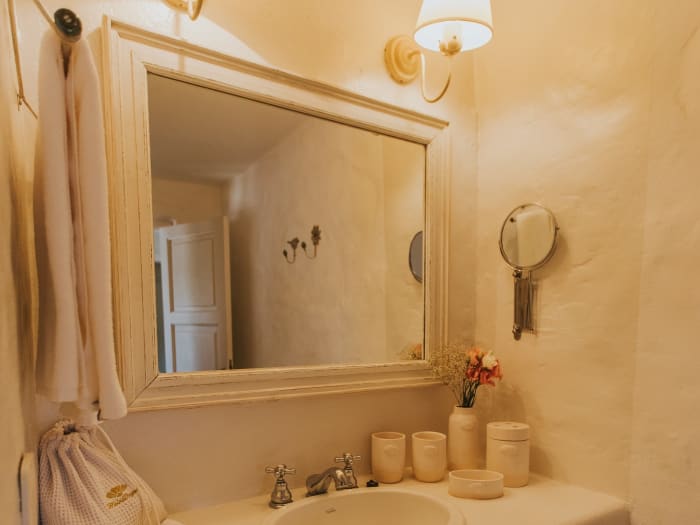
At House of Jasmines, the rooms are designed as natural extensions of the home. In this intimate setting, comfort takes on a subtle form. Balanced proportions, pleasant materials, genuine silence, carefully curated light, and simple circulation create a space dedicated to relaxation. The room is not merely a place to rest; it is a sanctuary one wishes to return to early, linger in, open a book, or watch the landscape change.
The decor, inspired by local charm, plays a central role here. It does not accumulate regional signs but instead establishes a tone. Earthy colours, natural textiles, understated furniture, and artisanal details create a coherent and warm atmosphere. Discreet references to northwestern Argentina enhance the identity of the place. Elegance arises from restraint; nothing feels forced, and everything seems in its rightful place.
The connection to the outdoors is significant in the experience of the rooms. In a hotel surrounded by nature and open to the landscapes of Salta, the view becomes an integral part of the stay. The garden, terrace, rolling hills, and beautiful light contribute to a sense of tranquillity. The room transforms into a refuge, never severing ties with the landscape.
Service further enhances this quality of experience. Daily housekeeping, turn-down service, and reception and concierge available at all hours create a seamless and reassuring stay. True luxury often lies in never having to ask twice. Returning to the room after dinner or an excursion feels anticipated with discretion. There is nothing spectacular about it, but rather a series of precise gestures that simplify the stay.
For the discerning traveller, the success of a room is also measured by its ability to accommodate various uses. One can recuperate after a long journey, prepare for a day of exploration, extend a quiet morning, or isolate oneself for a few hours. House of Jasmines meets this expectation with a residential approach to comfort. Here, the focus is less on immediate impact and more on the lasting sensation of well-being. It is often this quality that distinguishes a beautiful hotel from a place to which one feels a lasting attachment.
The Table and the Taste of the Region
In a Relais & Châteaux property, dining rarely takes a back seat. At House of Jasmines, it is deeply intertwined with the spirit of the place. Authentic hospitality, a natural setting, and an intimate atmosphere define the experience. The cuisine is straightforward yet rooted, extending the landscape onto the plate.
In Salta and the north-west of Argentina, the relationship with food is closely linked to geography. Culinary traditions blend Andean heritage, local produce, rural influences, and a culture of sharing. A stay here invites guests to explore the region through local ingredients, preparations inspired by Argentine customs, and a masterful simplicity.
Breakfast holds a special significance here. It harmonises with the landscape and the morning light. Starting the day facing the mountains, in a stillness that remains untouched, transforms the perception of the meal. For travellers setting out to explore Salta or its surroundings, this moment sets the tone.
Dinner becomes a time for return. After the roads, excursions, and altitude contrasts, finding a table in a softly lit atmosphere is soothing. In a house of this size, one appreciates a service that adapts to the rhythm of its guests.
Beyond the plate, gastronomy contributes to the art of hospitality. It connects the intimate and the local, the comfort of home and the identity of the region. House of Jasmines is one of those places where the cuisine remains discreet, precise, and attuned to both the landscape and the spirit of Salta.
Concierge & Services
At House of Jasmines, the service embodies a philosophy of presence rather than demonstration. In the most thoughtful homes, excellence renders the stay fluid, comprehensible, and personal.
One does not simply feel taken care of; there is a sense of being understood in one’s rhythm, expectations, and way of travelling.
The 24-hour concierge and reception provide a solid foundation of tangible comfort. In Salta, this constant availability holds real value.
Late arrivals, early departures, excursion organisation, transfers, or luggage handling require a consistent and flexible team. The luggage storage, wake-up service, laundry, and daily maintenance all contribute to this.
Practical aspects are thus managed without friction. Time and attention remain available for what truly matters.
The turn-down service also contributes to this feeling of a well-kept home. It marks the transition from a day of exploration to the intimacy of the room.
In a nature-focused hotel, returning in the evening to a space thoughtfully prepared is soothing. It is these discreet gestures that build the memory of a stay.
The value of personalised service also lies in its ability to guide the journey without weighing it down. A good concierge helps prioritise, choose, and adjust an itinerary.
In Salta, this can make all the difference. Between urban exploration, escapades into the surrounding landscapes, and restful moments at the hotel, the balance of the stay often hinges on precise advice.
In an intimate setting like House of Jasmines, one expects this quality of measured recommendation. It avoids overly packed itineraries and favours coherence.
The presence of multilingual staff adds an essential dimension to the international welcome. It facilitates communication, reduces misunderstandings, and allows for more nuanced requests.
For guests seeking the comfort of a grand hotel combined with the uniqueness of a characterful home, this relational fluidity is highly valued. It nurtures a sense of calm trust.
At House of Jasmines, services appear less as a list of advantages and more as an invisible infrastructure of well-being. The traveller feels free, supported, and open to their surroundings.
The Art of Living in Salta
Staying at House of Jasmines offers a different perspective on Salta. The address invites a more sensitive rhythm, attuned to the light, the terrain, and the culture of north-west Argentina.
Salta has a strong identity. A historic city, admired for its colonial architecture and measured atmosphere, it opens up to spectacular territories. It also warrants a closer look for its squares, churches, façades, and the dialogue between Hispanic heritage, Andean traditions, and local culture.
From a hotel set in a natural environment, the experience of Salta deepens. One moves between varying intensities. The city offers its cultural and heritage landmarks. The hotel allows for a more open and tranquil horizon.
This alternation gives each moment its rightful value. Discovery during the day. Retreat in the evening. Contemplation in the morning. Excursions as a broader breath.
Between April and October, the mild climate enhances the art of living on-site. It becomes easier to enjoy outdoor spaces, early departures, and returns at the end of the day. At House of Jasmines, this seasonality shapes the way one inhabits the place, takes meals, and organises daily activities.
For couples, the destination naturally lends itself to a shared experience, characterised by calm and rekindled time together. Solo travellers also find a structuring pause between two denser stages.
The art of living in Salta, as felt from House of Jasmines, rests on a rare balance. It combines culture and nature, movement and rest, curiosity and retreat. One returns with memories of light, silence, landscapes, and meals enjoyed without haste.
Booking via MyConciergeHotel
Booking House of Jasmines through MyConciergeHotel makes sense for a stay that relies as much on atmosphere as on logistics. An address like this cannot be reduced to a room category or a price. Its value depends on the chosen period, the pace of travel, excursions around Salta, and the balance between discovery and relaxation.
In the case of Salta, this preparation is particularly significant. The destination can fit into a broader itinerary across Argentina or serve as a standalone retreat for a few days. Depending on the circumstances, one would not choose the same length of stay or the same priorities. Some travellers will favour contemplation and relaxation in the hotel’s natural setting, while others will organise multiple outings to explore the surrounding landscapes. Still others will seek a balance between local immersion, time together, and discreet comfort.
MyConciergeHotel can also help highlight what makes this address unique: its intimate ambiance, its affiliation with Relais & Châteaux, its personalised service, and its relationship with the landscape. This precise understanding allows for discerning who the hotel will truly suit. House of Jasmines appeals to travellers sensitive to characterful homes, natural environments, calm refinement, and the idea of a stay where one takes their time. It is less a stopover destination than a place to inhabit for a few days.
Booking excursions in advance is wise, especially during the most pleasant season. Pre-arranging experiences ensures the desired activities are secured, helps construct a realistic programme, and preserves free time, which is essential for fully enjoying the hotel. In a region as visually rich as Salta, a common mistake is to try to see too much too quickly. House of Jasmines truly comes into its own when given space in the itinerary.
Finally, booking via MyConciergeHotel means choosing a more qualitative approach to travel. It is about finding the right combination of place, season, pace, and personal expectations. For a house like House of Jasmines, this method is particularly relevant. It transforms a simple reservation into a thoughtfully planned stay, with attention to detail that makes a difference once on-site.