History & spirit of the place
Awasi Mendoza is shaped by a way of travelling that values rarity, measured pace and an intimate connection with place. The appeal here lies not in grand historical spectacle or urban hotel theatre, but in a contemporary way of inhabiting one of Argentina’s most celebrated wine landscapes. In Luján de Cuyo, the property unfolds within an environment where viticulture has long defined the economy, local customs and even the quality of the light. A stay is therefore best understood as an encounter with Mendoza itself, rather than a self-contained hotel interlude.
Its position as a member of Relais & Châteaux helps clarify that philosophy. The emphasis is on local character, cuisine, hospitality and a destination-led sense of luxury. Awasi Mendoza does not seek to reproduce an interchangeable international standard; instead, it works through rootedness. The natural setting, the vineyards, the proximity of the Andes and the relationship to the land give the property its coherence. This sense of place is not decorative: it shapes the arrival, the rhythm of the stay, the way wine is approached, the reading of distances and even the perception of time, marked here by the vine-growing seasons and especially by the harvest period from March to April.
Another defining feature is the hotel’s tailor-made approach. This promise of personalisation is not merely rhetorical; it responds to the nature of the destination itself. Mendoza is difficult to experience in a standardised way, as much depends on the estates visited, the roads taken, individual interests and the traveller’s appetite for wine, gastronomy or Andean scenery. The hotel therefore distinguishes itself through a form of hospitality conceived as accompaniment, with each stay shaped around personal preferences. For some, that means devoting several days to vineyards; for others, balancing tastings, rest and excursions into the surrounding landscape.
This outlook also aligns with a contemporary sensitivity to sustainability, one of the property’s stated commitments. In a region where water, agriculture and ecological balance are tangible concerns, that commitment carries particular meaning. Without turning it into a manifesto, the hotel belongs to a more attentive way of travelling: observing the territory, understanding its resources, valuing local know-how and favouring depth of experience over accumulation.
Awasi Mendoza therefore appeals to travellers seeking less a social scene than a precise relationship with place. Couples in search of quiet, wine enthusiasts and aesthetes drawn to open landscapes and the dry light of western Argentina will find a coherent setting here. The spirit of the house rests on this alliance of intimacy, local culture and attentive service. That is what gives it distinction: not an ancient historical narrative in the heritage sense, but a clear identity shaped by Mendoza itself.
The establishment, between vineyards and mountains
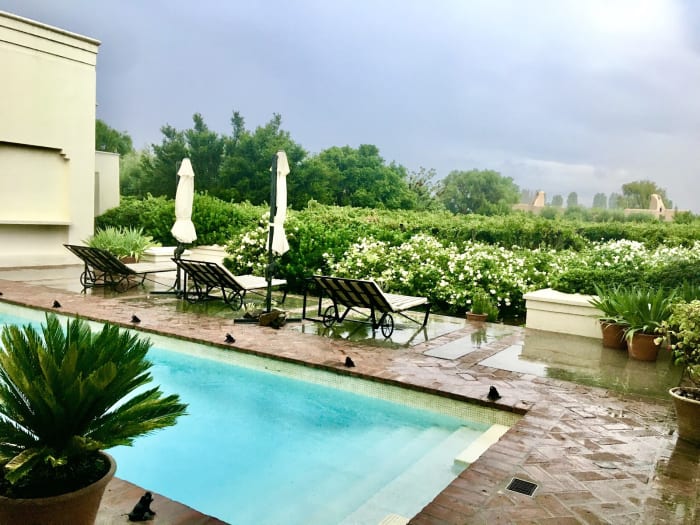
Staying at Awasi Mendoza means choosing a location that is primarily defined by its geography. Luján de Cuyo is one of the key names in Argentine wine. The hotel fully embraces its surroundings, nestled between vineyards and the Andes. This interpretation of the landscape imparts a sense of calm to the place. Guests do not come here to be in the heart of a city, but to inhabit an open territory.
The character of the establishment is rooted in this feeling of intimacy within a grand setting. The experience leans more towards a discreet retreat than a resort. The surrounding landscapes shape the day from the moment one awakens. The gaze rests upon the rows of vines, the mineral hues of the soil, and the dry, clear air. Depending on the season, the region changes its expression. The southern summer intensifies the light. The autumn harvest brings a particular density to the vineyards. Quieter periods suit those seeking more silence.
The appeal of this location also lies in the ease with which it allows guests to engage with the local culture. Mendoza is not just about tasting wine. It is a world of agricultural know-how, regional hospitality, local cuisine, and a tangible relationship with the environment. From the hotel, excursions naturally take the form of days spent in vineyards, walks in the surroundings, or more contemplative moments. The landscape is not merely a backdrop; it is the very subject of the stay.
The establishment is ideal for travellers who appreciate places where space is a luxury in itself. Here, the feeling of breathing freely is as important as material comfort. The silence, the distance between points of interest, the quality of the sky, and the presence of the mountains create a soothing experience. Couples find a conducive setting for disconnection. The address will also resonate with those who wish to understand Mendoza precisely, connecting the wines to their geographical origins.
In this context, Awasi Mendoza functions more as a base than a closed destination. Guests return here after their visits, rest, and organise the next leg of their journey. This fluid relationship between the hotel and its environment is essential. It explains the allure of the place for nature lovers as well as wine enthusiasts. Between vineyards and mountains, the establishment finds its balance in discreet luxury.
Suites, intimacy, and personal rhythm
At Awasi Mendoza, the accommodation extends a bespoke stay. The spirit of the place is clear. It prioritises an intimate, refined experience that is oriented towards the landscape.
In Mendoza, one explores the vineyards, enjoys lunch at a winery, and then ventures into the surrounding hills. The room serves not just for sleeping; it becomes a space for returning to tranquillity.
Here, luxury lies in the sensation of retreat. After the roads of Mendoza, the bright light, and the tastings, finding a private space takes on a special significance. Guests expect a calming atmosphere, thoughtfully designed volumes for rest, and a seamless flow between indoor and outdoor spaces.
The landscape remains one of the key protagonists of the stay. The accommodation complements it aptly, favouring clarity, comfort, and sophisticated simplicity.
This intimacy is particularly suited to couples. Mendoza naturally lends itself to romantic getaways. In this setting, the suite or room acts as a refuge.
The personalisation of the stay takes on tangible forms here. Flexible timings, easy returns after excursions, attention to individual preferences, and discreet yet present service.
Daily service, turn-down service, and thoughtful hospitality contribute to this quality of experience. They remind guests that a successful stay also relies on the continuity of comfort. Returning to a tidied space and counting on a team available at all hours are significant.
Thus, one chooses Awasi Mendoza if seeking more than just a simple base in the wine region. The accommodation is an integral part of the journey. It allows guests to experience Mendoza without saturation, providing essential moments of pause.
For wine enthusiasts, it offers the right distance after the intensity of tastings. For nature-sensitive travellers, it extends the presence of the landscape within a protected setting. In Luján de Cuyo, it offers a fitting way to inhabit the place, with discretion, comfort, and regained time.
Dining, between Mendoza terroir and wine culture
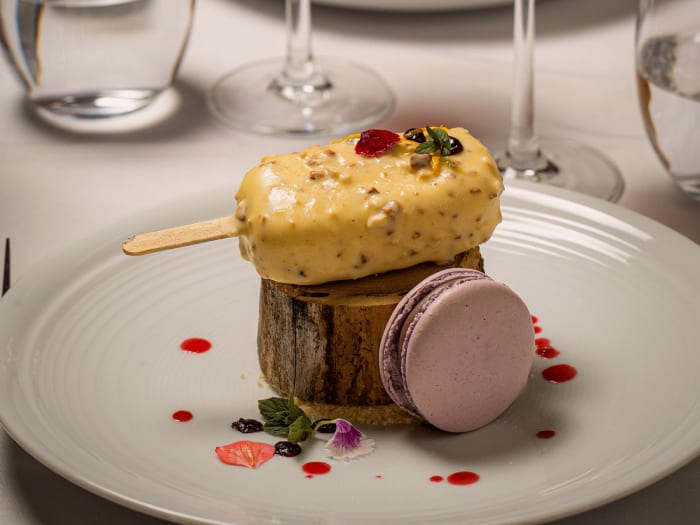
In Mendoza, gastronomy cannot be separated from wine, yet reducing it to a mere accompaniment would be misleading. In this region, the table tells as much of the territory as the bottles do: agricultural produce, seasonality, local influences, the conviviality of long meals and the direct relationship between cuisine and landscape. Awasi Mendoza belongs naturally to this world, with an approach one would expect from a property of its calibre: a culinary experience in dialogue with its surroundings, attentive to the rhythm of the stay and to the identity of the destination.
Travellers come here intending to discover estates, understand styles of winemaking, explore the region’s emblematic grape varieties and place terroirs in context. In that setting, the hotel table plays a balancing role. It may be the setting for a more composed dinner after a day of tastings, a lunch that leaves room before an excursion, or a moment of gastronomic reading of the territory without needing to get back on the road. What matters is coherence: a cuisine that does not try to outshine Mendoza, but to translate it with precision.
The immersion in local culture, listed among the property’s known highlights, finds one of its clearest expressions here. Gastronomy is often one of the most immediate ways of understanding a wine region. Textures, cooking methods, seasonal produce, wine pairings and the tempo of service all form part of the same experience. One can readily imagine an approach in which local ingredients and inspirations matter more than effect. In a destination defined by open landscapes and clear materiality, a successful table is one that remains legible: clean flavours, attention to produce and an intelligent relationship with wine.
For travellers focused on wine, one of the advantages of a hotel such as Awasi Mendoza lies in the ability to shape meals around visits. A lighter lunch before a deep tasting, a more enveloping dinner on return, a more informal moment depending on arrival time: this flexibility is part of the comfort. The hotel’s tailor-made philosophy finds an obvious application here. Not every traveller relates to wine in the same way, nor does everyone have the same stamina for moving from cellar to cellar. A good hotel table accommodates these differences without rigidity.
Ultimately, dining at Awasi Mendoza should be understood as a chapter of the journey, not a separate stage set. It extends the landscapes, illuminates local culture and gives sensory grounding to days spent among the vineyards. In a region where people speak constantly of soils, altitude, climate and ripeness, cuisine is a reminder that territory is also tasted in other ways. It is this articulation between hospitality, terroir and wine that gives the table its relevance. Luxury here lies not in accumulation, but in rightness: a meal arriving at the right moment, in the right setting, with the right degree of attention.
Concierge & Services: The Art of Tailored Stays
Awasi Mendoza stands out for its personalised approach to hospitality. In Mendoza, the experience hinges on the itineraries, the estates visited, and the pace chosen. Here, the concierge becomes the heart of the journey. The establishment assists in crafting a coherent, seamless stay tailored to each traveller.
With 24-hour concierge and reception services, there is a constant presence to cater to guests' needs. Additional offerings include daily housekeeping, turn-down service, luggage storage, laundry, wake-up calls, and a multilingual staff. Together, these services create a fluid experience. In a destination defined by movement and tastings, this simplicity is essential.
Their true value lies in their ability to support a highly personalised stay. A couple visiting for the grape harvest has different expectations compared to a connoisseur of fine wines. The concierge helps prioritise activities, avoid overly ambitious schedules, and secure vineyard visits during peak season. It also adjusts the pace according to the energy of the moment.
In Mendoza, the quality of a stay often depends on logistical details. Distances, travel times, the availability of estates, and the sequence of tastings can quickly weigh down the days. A good concierge service mitigates this pitfall. It constructs balanced days and allows for breaks. A lunch at an estate does not hold the same significance as a hike or an afternoon of rest.
Awasi Mendoza caters to travellers who appreciate attentive service without intrusion. The team knows how to be present without overwhelming the experience. The stay feels natural, yet is underpinned by precise organisation. Guests gain time for the scenery, the wines, conversation, and relaxation. In Luján de Cuyo, this intelligence in service is as important as the location.
The art of living in Luján de Cuyo
Luján de Cuyo is not just a name familiar to wine lovers. It is a territory that embodies a certain way of living Mendoza. The rhythm here is dictated by the vine, the seasons, the light, and a tangible relationship with the land. Staying at Awasi Mendoza allows one to enter into this art of living without reducing it to a series of tastings. Wine is one of the guiding threads. It is part of a broader tapestry made up of landscapes, meals, backroads, conversations, and moments of contemplation.
The experience often begins with a form of slowing down. Here, the quality of a day is not measured by the number of places checked off. It lies in the accuracy of the sequence. A winery in the morning, a leisurely lunch, a pause at the hotel, a walk or an excursion, followed by a quiet dinner. This rhythm suits the region particularly well. It allows one to sense the nuances of the place and observe the changes in light over the vineyards. Mendoza is discovered as much in the interstices as in the scheduled appointments.
The harvest season, from March to April, naturally attracts many visitors. It gives the region a particular intensity, with increased activity in the vineyards. However, Luján de Cuyo is not solely defined by this peak moment. Outside of this period, the territory reveals another quality. More space, a quieter relationship with the landscapes, and sometimes a greater availability for visits. Each season thus offers a different interpretation of the destination. Travellers sensitive to tranquillity may prefer the less busy periods. Wine enthusiasts will appreciate the specific energy of the harvest.
The local art of living also hinges on the balance between culture and nature. Vineyard visits and hikes in the surroundings encapsulate this duality well. Mendoza is a land of production, but also a territory of reliefs, vast skies, and breathing space. Alternating between the two dimensions enriches the stay. After several tastings, a walk in nature re-establishes the body and gaze in their rightful place. After a more active excursion, returning to the culture of wine connects the landscape to what it produces.
Awasi Mendoza provides a setting suited to this way of inhabiting the region. Its intimate atmosphere, local grounding, and tailored approach allow one to experience Luján de Cuyo with finesse. Guests do not come merely to discover a renowned destination. They come to understand its customs, tempo, and essence. The luxury of Mendoza lies in this ability to combine pleasure, knowledge, and calm. A successful day is not spectacular. It consists of a well-chosen glass, a vine-lined road, the silhouette of the mountains in the late afternoon, and the feeling of having truly experienced the place without haste.
Book Awasi Mendoza through MyConciergeHotel
Booking Awasi Mendoza through MyConciergeHotel makes perfect sense, as it is not just a standard stay. In Luján de Cuyo, the success of your journey relies equally on the hotel and how you structure your days. With vineyard visits, travel times, a desire for nature, the harvest season, and the quest for tranquility, every detail matters. A well-supported reservation helps set the right tone from the outset.
The value of editorial and concierge support lies primarily in understanding the traveler's profile. Awasi Mendoza does not cater to everyone in the same way. Some guests come primarily for the wine and wish to organise focused days around specific estates. Others seek a retreat for two, preferring more relaxation, scenic views, and flexibility. Still, others want to balance local culture, gastronomy, and nature. Booking under optimal conditions means clarifying priorities: length of stay, suitable timing, intensity of visits, and the importance given to downtime. This nuanced understanding is essential in a region where it is easy to over-schedule.
MyConciergeHotel also allows for a more relaxed approach to timing. Vineyard visits must be booked in advance, especially during the high season and the harvest from March to April. This foresight preserves the quality of the experience, preventing impromptu days, poorly ordered journeys, and disappointments due to limited availability. In a hotel founded on bespoke experiences, it is logical that the preparation of the stay should be equally tailored.
Booking through MyConciergeHotel ultimately seeks a coherent overall experience. The goal is not merely to secure a room, but to align the venue with a particular way of travelling. Awasi Mendoza is particularly suited to couples, wine enthusiasts, and travellers in search of peace. However, it is essential to translate these expectations into a tangible experience. Should one favour the intensity of the harvest season, or a quieter time to enjoy the landscapes with greater serenity? Is a packed itinerary of estates preferred, or a few selected visits allowing for rest? Should the focus be on local culture or the surrounding nature?
It is during this discernment phase that the support becomes invaluable. A successful stay in Mendoza is not necessarily one that crams in numerous stops, but rather one that strikes the right balance between discovery and relaxation. Awasi Mendoza provides an ideal setting for this equilibrium, thanks to its intimate atmosphere, attentive service, and personalised philosophy. Booking with MyConciergeHotel means approaching this promise with method and attention to detail.