MC
Editorial ranking

The best hotels in Tokyo in 2026

Editorial selection of 10 exceptional hotels in Tokyo, 2026: skyline views, acclaimed dining, full-service spas in the city.

Ranking reviewed on 22 June 2026.

The top of the ranking in pictures

The verdict at a glance

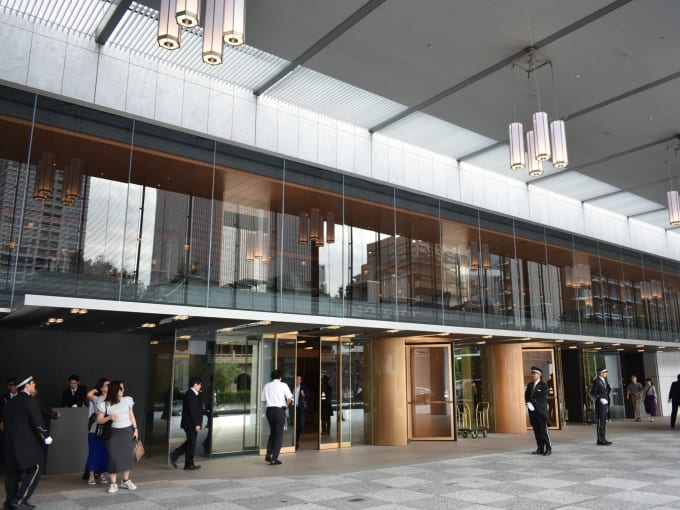
  1. Palace Hotel TokyoIf Palace Hotel Tokyo ranks first, it is above all for its rare relationship with the city.
  2. The Peninsula TokyoRanked #2 in Tokyo, The Peninsula Tokyo earns its place through a rare advantage: Hibiya, Ginza and the Imperial Palace gardens within the same orbit.
  3. The Ritz-Carlton TokyoThe Ritz-Carlton Tokyo earns its 3rd place for the way it reads contemporary Tokyo with precision.

Our methodology

Tokyo offers a multitude of interpretations of the contemporary grand hotel. The city juxtaposes century-old institutions, meticulously designed business towers, and urban retreats with an almost monastic aesthetic. For the discerning traveller, this density complicates the choice. One does not book Aman Tokyo in the same way as Imperial Hotel Tokyo. The experience at Four Seasons Marunouchi is not akin to that of Palace Hotel Tokyo. This is precisely the purpose of this ranking. It does not seek an absolute winner. Instead, it aids in identifying the right address based on the rhythm of the stay, the neighbourhood, the relationship to the view, and the desire for Japanese tradition or international codes. In Tokyo, luxury hospitality never presents itself in the same manner. It is reflected in the precision of service, the fluidity of movement, and a hotel's ability to make one forget the scale of the city.

At MyConciergeHotel, we rank Tokyo with a deliberately transparent method. We first cross-reference stable facts: category, brand reputation, connection to the city, consistency of experience, and relevance for an international clientele. We then observe practical criteria: quality of views, accessibility, actual quietness of rooms, appeal of common areas, and coherence between promise and execution. We also take into account the personality of the address. A historic palace is not evaluated in the same way as a recent design hotel. A major business hub is not judged like a discreet retreat. It is important to note that this ranking does not reward media noise. It favours hotels that endure over time and those that our advisors confidently recommend based on specific needs.

The Tokyo landscape is more varied than one might imagine from Europe. Imperial Hotel Tokyo embodies a certain idea of a grand institutional house. Palace Hotel Tokyo plays the card of easily recognisable luxury, backed by a sought-after central location. Aman Tokyo offers a high-level experience characterised by silence and controlled simplicity. Grand Hyatt Tokyo remains a reliable choice for Roppongi and active stays. Hotel Okura Tokyo carries a significant legacy within the Japanese hotel landscape. Four Seasons Hotel Tokyo at Otemachi and Four Seasons Marunouchi cater to two distinct uses of the city. Conrad Tokyo and ANA InterContinental Tokyo appeal to an international clientele accustomed to major brands. Finally, Bulgari Tokyo exemplifies the arrival of a more pronounced luxury in its aesthetic language. This diversity makes Tokyo an exciting city to rank.

For 2025 and 2026, several trends are solidifying in the Japanese capital. The first concerns perceived space. Travellers are seeking less ostentation and more breathing room: large windows, unobstructed views, generous baths, and rooms designed as sanctuaries. The second relates to service. Discretion is becoming as important a criterion as personalisation. The best hotels in Tokyo know how to anticipate without overdoing it. The third trend is the return of addresses with a strong local identity. Guests want to understand where they are sleeping, not just recognise a brand. This favours hotels that can express a relationship with the neighbourhood, history, or Japanese aesthetics. Lastly, the demand for both business and leisure continues to intertwine. A good Tokyo hotel must accommodate a morning meeting and then transition seamlessly into a leisurely weekend.

Our perspective remains true to a French idea of luxury hospitality. It prioritises balance, elegance, and the quality of useful detail. A grand hotel is not merely a well-located address. It is a place that enhances the stay without monopolising it. In Tokyo, this philosophy finds a natural home. The best service is often the one that goes almost unnoticed: a smooth arrival, a concierge who understands the rhythm of the journey, a room that frames the city rather than succumbing to it. What our advisors often observe is the difference between displayed prestige and actual comfort. The most compelling Tokyo establishments know how to combine the two. They offer a setting, but also a method. They simplify the city, which may be the most precious form of luxury here.

Thus, this ranking should be read as an editorial hierarchy, not as a universal verdict. The number one will not be the best for everyone. Some travellers will seek the solemnity of an institution, while others may prefer a contemporary tower or a more intimate address near business stations. A three-night stay before Kyoto does not call for the same hotel as a week of meetings in Marunouchi. My advice is simple: consider both the proposed lifestyle and the displayed category. In Tokyo, the gap between a good address and the right address for you can be considerable. This is why we justify each position with concrete elements. Location, identity, use, and consistency of experience always take precedence over mere announcements.

Here is our selection of the best hotels in Tokyo. Eight addresses stand out, each for specific reasons. It is up to you to identify the one that aligns with your way of experiencing the city.

Our selection criteria in Tokyo

Our selection in Tokyo balances location, service consistency, room quality, dining, reputation, and fit for different stays.

Questions about this section

Should I prioritise a hotel for the view, location, or room size in Tokyo?

Choose based on your stay's purpose. For first-time visits, location and connectivity are often priorities. For contemplative stays, a good view can enhance the experience.

Tokyo, between hotel heritage and modernity

Tokyo’s luxury hotel scene blends Japanese service culture, vertical urban design, and international standards with unusual precision.

Tokyo hotels where dining truly matters

In Tokyo, the best hotels turn dining into a real part of the stay.

Questions about this section

Is Tokyo a good destination for a gastronomic stay at a hotel?

Yes, Tokyo offers hotels with significant gastronomic roles, providing excellent breakfasts and signature restaurants, while also allowing exploration of the local dining scene.

Wellness, spa, and calm in a dense city

In Tokyo, the best wellness hotels are those that create real recovery after intense urban days.

Which addresses suit a stay for two

For couples in Tokyo, the best hotels balance privacy, views, discreet service, and an effortless daily rhythm.

How to read value in Tokyo

Tokyo hotel value is best read through location, room size, brand positioning, and included services.

Our final reading of Tokyo’s hotel market

Tokyo rewards precise hotel choices more than generic prestige.

Comparison tables

Comparison of the best hotels in Tokyo
HotelAtmosphereHighlightsBadgeIndicative budget
Aman TokyoContemporary minimalism, very quiet, height and urban views.Recognised international brand address. High position in the city. Very refined take on luxury hospitality.5★from €1,800/night
Palace Hotel TokyoContemporary grand hotel, muted tone, central location.Iconic name in the city. Address associated with the Marunouchi district. Palace positioning in the provided selection.5★ Palacefrom €1,200/night
Imperial Hotel TokyoClassic institution, mastered protocol, historical spirit.Major Tokyo signature. Lasting reputation. Palace positioning in the provided selection.5★ Palacefrom €900/night
Hotel Okura TokyoJapanese lines, understated elegance, attention to detail.Major name in Japanese hospitality. Refined take on local luxury. Highly sought-after address for business clientele.5★from €900/night
Four Seasons Hotel Tokyo at OtemachiContemporary, bright, urban, international service.Globally recognised brand. Business and leisure address. High position in Tokyo's premium market.5★from €1,100/night
Bulgari TokyoItalian design, jewellery codes, very pronounced luxury.Rare brand in Tokyo. Fashion and lifestyle positioning. Strong desirability in the ultra-luxury segment.5★from €2,000/night
Grand Hyatt TokyoLarge international format, urban energy, versatile address.Strong global brand. Good reference for mixed stays. Palace positioning in the provided selection.5★ Palacefrom €700/night
Conrad TokyoBusiness chic, elevated views, contemporary aesthetic.Established international signature. Effective reading of urban luxury. Often chosen for short stays.5★from €800/night

Editorial selection built only from the eligible hotels provided. Budgets are indicative and vary by season, category and view.

Budget guide for Tokyo
LevelHotel profileIndicative range
Entry-level luxuryWell-located major international addresses.€700-1,000/night
Established luxury5★ hotels with strong identity and comprehensive service.€1,000-1,500/night
Urban ultra-luxurySignature addresses, views, suites, and high desirability.€1,500-2,500+/night

Indicative ranges observed across Tokyo’s luxury segment. They are reference points, not fare guarantees.

The ranking

  1. Palace Hotel Tokyo, Tokyo

    #1Palace Hotel Tokyo

    Tokyo · Top pick

    If Palace Hotel Tokyo ranks first, it is above all for its rare relationship with the city. Facing the Kōkyo gardens, it brings an uncommon sense of space to Marunouchi. Mitsubishi Jisho Sekkei and Mitsubishi Jisho Design conceived a crisp whole, read as a grand Japanese urban house. Its 284 keys, including 18 suites, frame Tokyo without overwhelming it. Breakfast overlooking the Imperial Palace captures that balance perfectly. On the dining front, the hotel holds two Michelin-starred addresses. Sushi Kanesaka, by chef Shinji Kanesaka, has 1 star. Amber Palace, associated with chef Eiji Okamura, also has 1 star. evian SPA TOKYO adds 5 private treatment rooms, 1 spa suite, heated baths, a cold plunge and a marble sauna. Forbes Travel Guide Five-Star and the MICHELIN Guide Three Keys 2025 confirm that level of delivery.

  2. The Peninsula Tokyo, Tokyo

    #2The Peninsula Tokyo

    Tokyo · Global classic

    Ranked #2 in Tokyo, The Peninsula Tokyo earns its place through a rare advantage: Hibiya, Ginza and the Imperial Palace gardens within the same orbit. Opened in 2007, this 314-key hotel, with 47 suites, keeps a readable scale for such a dense capital. Rooms start at 53.88 sq m, which matters in Tokyo. Views over Hibiya Park and breakfast facing the Imperial gardens shift the whole stay. At the top end, the Peninsula Suite and Hibiya Suite define the hotel’s signature experience. The Michelin Guide recommends afternoon tea at The Lobby and also cites Hei Fung Terrace. The spa spans 1,579 sq m, with an indoor pool, sauna and 9 private treatment rooms, in partnership with Margy’s Monte Carlo. Forbes Travel Guide Five-Star underlines that consistency of service.

  3. The Ritz-Carlton Tokyo, Tokyo

    #3The Ritz-Carlton Tokyo

    Tokyo · Modern Tokyo

    The Ritz-Carlton Tokyo earns its 3rd place for the way it reads contemporary Tokyo with precision. In Roppongi, it favours height, art and the city’s urban flow. Handel Architects conceived the building around orientation. The 75 Deluxe Rooms, each 52 sq m, frame Tokyo in every direction. The 4 Executive Hotel Suites sit on the north and south corners. The 2 Luxury Tokyo Suites look towards Tokyo Bay. The largest accommodation reaches 306.58 sq m. For dining, Héritage by Kei Kobayashi brings a clear French point of view. Azure45, led by Shintaro Miyazaki, holds 1 Michelin star. The spa combines ESPA and Shiseido Synactif treatments, with an indoor pool and fitness area. Forbes Travel Guide Five-Star confirms the level of execution. The Club Lounge on the 53rd floor and breakfast against the skyline capture the spirit here. The National Art Center, Tokyo, Azabudai Hills and teamLab Borderless extend that cultural Tokyo.

  4. Aman Tokyo, Tokyo

    #4Aman Tokyo

    Tokyo · Serene city stay

    Aman Tokyo earns its 4th place for a vertical reading of the capital that never loses the city centre. Opened in 2014 within Otemachi Tower, it sits in Chiyoda, with Kōkyo, Koami Shrine and Ginza Itoya close at hand. Its 84 keys, split between 68 rooms and 16 suites, span the 35th to 38th floors, with 71 to 157 sq m of space. That elevation shapes the stay: an arrival ritual with a view, then Tokyo held at a measured distance without losing business pace. The Aman Spa, spread across nearly 2,500 sq m on floors 33 and 34, carries real weight here. It brings together 8 treatment rooms, an indoor pool, a steam room, plus the Grounding Rituals and Core & More treatments. For dining, The Lounge by Aman and Arva, led by Masakazu Hiraki, extend the same urban pause. Its place in The World's 50 Best Hotels 2025 confirms the ranking.

  5. Imperial Hotel Tokyo, Tokyo

    #5Imperial Hotel Tokyo

    Tokyo · Tokyo institution

    Ranking the Imperial Hotel Tokyo at No. 5 means recognising an institution that still keeps pace with Tokyo without complicating the stay. Opened in 1890 under the impetus of Eiichi Shibusawa, it was Japan’s first Western-style state guest house. That historical weight matters here, as does its Palace distinction from Atout France. In the heart of the capital, it spreads across 909 keys in the Main Building and Tower Building, with 24-hour room service and a confirmed concierge. That kind of operational precision is rare, and it suits travellers who want Tokyo to run smoothly. For dining, The Imperial Lounge Aqua claims Japan’s first Viking buffet. PARKSIDE DINER serves three house staples: the Imperial Pancake, American Clubhouse Sandwich and Vegetable Curry. SAN APPLAUSE is operated by Nadaman. The Kōkyo, Ginza Itoya and Tokyo Tower are all within easy reach. In Tokyo, few hotels combine protocol, continuity and such an immediate grasp of the city.

  6. Grand Hyatt Tokyo, Tokyo

    #6Grand Hyatt Tokyo

    Tokyo · Contemporary Palace pick

    Ranked sixth in our edit of Tokyo’s best hotels, Grand Hyatt Tokyo follows a clear brief: a large-scale urban hotel without needless formality. Opened in 2003 in the heart of Roppongi Hills, it was designed by Mori Building Company with Kohn Pedersen Fox. That pairing explains the instant legibility: smooth circulation, a metropolitan pulse, and direct access to a district where art, business and late nights overlap. The National Art Center, Tokyo, Azabudai Hills and teamLab Borderless all sit within its immediate orbit. On the dining front, Keyakizaka holds 1 MICHELIN star and delivers the hotel’s sharpest culinary argument. With 497 rooms, the property absorbs Tokyo’s pace without losing clarity. That is exactly why it sits here: a dependable, contemporary Roppongi base, built for combining culture, meetings and seamless returns after dark.

  7. Hotel Okura Tokyo, Tokyo

    #7Hotel Okura Tokyo

    Tokyo · Historic Tokyo name

    Hotel Okura Tokyo earns its place here for a clear reason: it brings together Tokyo heritage, serious scale and quietly precise service. Opened in 1962, recognised as a Palace by Atout France, a member of The Leading Hotels of the World and Forbes Travel Guide Five-Star, it stands on facts. The hotel has 508 keys overall, including 368 rooms in The Okura Prestige Tower, with accommodation ranging from 30 sq m to 730 sq m. Dining has real range: a Japanese morning at Yamazato, top-floor teppanyaki at Sazanka, and a French counterpoint at Nouvelle Epoque. In the evening, Orchid Bar keeps a rare, verifiable detail: the house has served Dom Pérignon by the glass there since 1985. The Okura Spa adds a heated indoor pool, hammam, saunas and private treatment rooms. In Tokyo, few hotels of this scale feel this composed.

  8. Mandarin Oriental Tokyo, Tokyo

    #8Mandarin Oriental Tokyo

    Tokyo · Global luxury signature

    In 8th place, Mandarin Oriental Tokyo earns its position on clear facts. Opened in 2005 within Nihonbashi Mitsui Tower, it bears César Pelli’s signature. The elevated check-in in Nihonbashi sets the tone on arrival. The hotel has 179 keys, including 157 rooms and 22 suites, arranged across 7 floors. That tighter format changes the feel in Tokyo. The Spa adds a Vitality pool, sauna and fitness area, all with panoramic skyline views. At the table, Signature French Fine Dining holds 1 MICHELIN Star. The Forbes Travel Guide Five-Star label signals consistent service, from the Mandarin turndown ritual to the 24-hour urban concierge. Just as important, its Tokyo footing is exact: Koami Shrine, Kanda-myōjin, the Kōkyo and Ginza Itoya are all within quick reach from Nihonbashi.

Glossary

Five-star hotel
Top hotel category, associated with a high level of service, facilities and comfort.
Indicative budget
A price range used as an editorial guide. It varies by season, occupancy, room type and booking conditions.
Palace
In this selection, the term refers to the badge shown in the provided list. It indicates a very high-end positioning.
Signature address
A hotel whose brand, architecture or positioning creates an immediately recognizable identity.
Skyline view
A commanding view over towers, urban axes or the city’s relief. It is a strong criterion in Tokyo.
Urban luxury
A high-end city hotel segment, often chosen for location, views and service efficiency.

Going further

The best Tokyo hotel is the one that fits your pace, your district, and the way you want to experience the city.

Frequently asked questions

What criteria is used to rank the best hotels in Tokyo?

This ranking is based on multiple criteria, including location, international reputation, service consistency, room quality, dining, and spa facilities. It is not merely a price or star rating comparison.

What distinguishes the hotels selected in this ranking in Tokyo?

Selected hotels are distinguished by verifiable elements beneficial to travellers, such as a clear identity, stable service levels, and effective management of the city's pace.

What is the difference between a Palace and a 5-star hotel in Tokyo?

In France, Palace is an official distinction beyond 5 stars. In Tokyo, this category doesn't exist, and hotels are classified as luxury, editorial palaces, or high-end boutiques.

What is the best time to book a luxury hotel in Tokyo?

The best time depends on your dates. For peak seasons like cherry blossom and autumn, book several months in advance. Availability may increase in summer despite heat.

What price range should I expect for a luxury hotel in Tokyo?

Expect a wide range. Entry-level rooms at major hotels often start at several hundred euros per night, with higher rates for suites and sought-after views during peak seasons.

Are there loyalty programmes or benefits for booking directly?

Yes, major international brands in Tokyo typically have loyalty programmes. Direct bookings may include benefits like credits or breakfast, depending on the hotel and dates.

Does concierge service really make a difference in a Tokyo hotel?

Yes, a good concierge can enhance your stay by assisting with restaurants, transfers, and special requests. Personalisation often begins before arrival and continues throughout your stay.

Are these hotels in Tokyo suitable for families and travellers with reduced mobility?

Yes, but check each hotel individually. Major hotels usually offer connecting rooms and family services, while accessibility standards vary based on the building's age and configuration.

How to book these hotels in Tokyo via MyConciergeHotel.com, and what is the advantage over an OTA?

Booking through MyConciergeHotel.com includes personalised assistance. You provide your dates and budget, and we guide you to the most suitable option, offering expert filtering.

What is Tokyo's most luxurious hotel?

Tokyo's most luxurious hotel is the Palace Hotel Tokyo. Other notable options include The Peninsula Tokyo and The Ritz-Carlton Tokyo.

Which area is best to stay in Tokyo?

The best area to stay in Tokyo depends on your preferences. Shinjuku and Ginza are popular for their accessibility and attractions.

Sources & references

This editorial article is based on the following authoritative sources, listed here for transparency and reader verification.