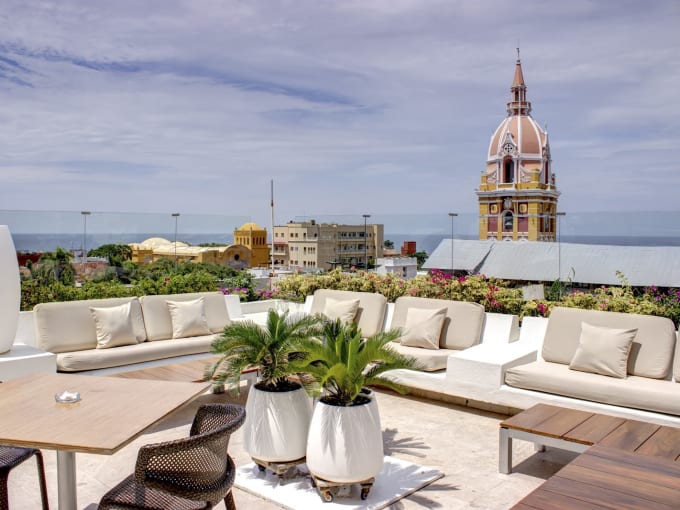
Colombia has emerged as one of the most intriguing hotel scenes in Latin America. The country combines colonial heritage, business capitals, Caribbean coastline, and new international expectations. For a discerning traveller, this diversity is transformative. Here, one does not choose a hotel solely for its prestige; rather, the choice is influenced by its relationship to the city, the climate, and the pace of the stay. Between Bogotá and Cartagena, the customs vary significantly. A single trip may call for a very structured urban address, followed by a more intimate historic residence. This is precisely what makes a Colombian ranking useful. It is not merely about listing prestigious establishments; it is about identifying those that best fulfil their promise, according to their context, identity, and the actual quality of the experience offered.
At MyConciergeHotel, our assessment is never based solely on appearance. We first observe verifiable elements. The displayed category, brand reputation, geographical anchoring, and coherence of positioning are all crucial. We also consider a hotel’s ability to embody its destination. A major international name is not judged in the same way as an independent heritage house. The expectations are different. In this Colombian ranking, we have therefore prioritised editorial clarity. We compare hotels that appeal to different types of travellers but share a high level of expectation. What our advisors primarily observe is consistency. A well-ranked address should be comprehensible at first glance. It must also remain relevant at the time of booking, depending on the purpose of the trip.
The Colombian panorama presented here highlights two major poles. On one side, Cartagena concentrates a significant portion of the country’s most sought-after signatures. The city brings together charming hotels, historic residences, international brands, and seaside addresses. Amarla Boutique Hotel, Casa del Coliseo, Casa San Agustin, Hotel Casa La Merced by Mustique, Hôtel Casa Pestagua, Relais & Châteaux Hôtel Casa Pestagua, Movich Hotel Cartagena, Hyatt Regency Cartagena, and Sofitel Legend Santa Clara exemplify this rare density. On the other side, Bogotá asserts a more urban interpretation of luxury. Four Seasons Hotel Bogota fits into this logic, catering to a clientele of business travellers, short stays, or structured city breaks. It is important to note that Colombia does not offer a uniform luxury; rather, it presents very distinct, often complementary styles of hospitality.
For 2025 and 2026, several trends are clearly emerging. The first concerns the resurgence of smaller hotels, particularly in historic centres. Travellers are seeking more character, less standardisation, and a more direct relationship with the place. The second trend relates to combined stays. Bogotá and Cartagena are increasingly functioning well as a duo. One offers efficiency, urban culture, and international logistics, while the other provides heritage, Caribbean light, and a more contemplative pace. We are also observing a heightened expectation for outdoor spaces, pools, terraces, and views. In a warm climate, these elements become essential. Finally, major international brands remain highly sought after, reassuring guests with their standards. However, they must now engage with a demand that is more sensitive to local architecture, human scale, and the uniqueness of addresses.
This evolution aligns with a certain idea of French luxury, as we advocate at Le Concierge. Luxury is not an accumulation of signs; it is about precision. A smooth arrival, a well-thought-out room, and a service that understands the rhythm of the stay. In Colombia, this precision takes different forms. In an old residence in Cartagena, it may manifest through the silence of a patio and the sensation of being in the city without being overwhelmed by it. In a large contemporary address, it may hinge on the view, the flow of spaces, and the consistency of service. My advice is simple: each hotel should be read for what it truly offers. A historic house is not meant to mimic a tower facing the sea, just as an international brand should not attempt to replicate the intimacy of a boutique hotel.
This is also why we reject hollow superlatives. A useful ranking should assist in making choices, not in standardising experiences. The number one hotel is not automatically the best for everyone. Some travellers seek a heritage immersion within the city walls, while others prefer a more contemporary address with generous spaces and simpler logistics. Still others look for a recognised signature for their first exploration of the country. Our role is to methodically prioritise without caricature. We highlight hotels that excel in their category, never downgrading an address simply because it caters to a different type of stay. What our advisors remember is the suitability. An excellent hotel is primarily one that has been well chosen. Colombia, more than anywhere else, rewards this precision.
The following top list reads like a map of informed preferences. You will find characterful houses, recognised institutions, and more contemporary options. Each deserves its place for concrete reasons. Now, let us present our selection of the best hotels in Colombia.