The South-West holds a unique position in French hospitality. This region combines classified vineyards, historic towns, Atlantic façades, and characterful residences. For a traveller attuned to heritage, this territory offers a rich interpretation of luxury accommodation. Here, charm does not rely on ostentation. It emerges from a fitting location, a building that tells its era, and a local anchorage that is evident upon arrival. Between Martillac, Saint-Émilion, Cognac, and Biarritz, the styles vary significantly. Yet, a common thread remains. The charming hotels of the South-West adeptly weave together the memory of places, contemporary hospitality, and regional rhythm. It is precisely this coherence that we aimed to highlight in this ranking. Not merely a collection of well-known addresses, but a selection that illuminates a way of experiencing heritage.
Our methodology is based on consistent editorial criteria. We first observe the strength of the location. Does the building possess a clear, identifiable identity, documented by its architecture, setting, or local history? We then assess the quality of the overall experience. This includes the hotel standard, the upkeep of spaces, and the coherence between rooms, dining, wellness, and service. At MyConciergeHotel, charm is never reduced to mere décor. It implies a credible relationship between the site and its use. We also take into account the relative rarity of the address within its environment. A palace like Les Sources de Caudalie in Martillac, a grand hotel in Biarritz such as the Hôtel du Palais, or a more intimate address in Saint-Émilion do not play the same tune. Our ranking thus seeks accuracy, not uniformity.
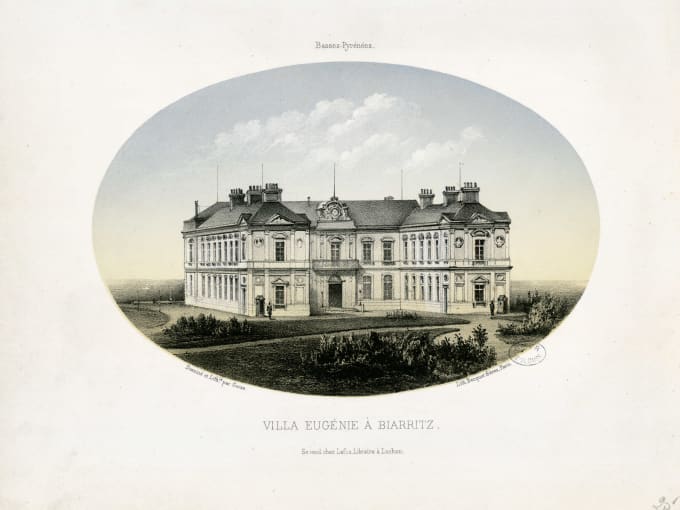
The panorama of the South-West reveals remarkable diversity. In Martillac, Les Sources de Caudalie connects the Bordeaux wine universe with high-level hospitality, in an immediately identifiable setting. In Saint-Émilion, Badon Boutique Hotel and Hôtel de Pavie illustrate two distinct approaches to the same heritage imagery. One favours the intimate scale of a village address. The other is rooted in the renown of a world-famous wine town. In Cognac, Hôtel Chais Monnet reminds us how industrial and spiritual heritage can become hotel material, without losing its clarity. In Biarritz, Hôtel du Palais, also referred to as Hôtel du Palais Biarritz, carries a more monumental seaside and historical dimension. This contrast is significant. In the South-West, charm can arise from a discreet house as well as from an institution facing the ocean.
For 2025 and 2026, our advisors are observing several underlying trends. The first concerns a return to more grounded stays. Travellers are seeking less the accumulation of activities, and more a coherent territory to explore from a strong address. The second trend pertains to reinterpreted heritage. The hotels that are most convincing are those that restore without freezing. They preserve architectural memory while offering contemporary uses, particularly in wellness, suites, and communal spaces. The third evolution is the rise of intergenerational stays. The South-West lends itself well to this, as it combines culture, gastronomy, vineyards, and coastline. Finally, the notion of discreet luxury is gaining traction. It favours establishments where there is a sense of continuity between the landscape, materials, dining, and service. This is a natural terrain for heritage charm hotels.
This ranking also speaks to something about French luxury when it expresses itself outside the capitals. In the South-West, refinement is often reflected in moderation. A fine address does not need to overplay its status if its location speaks for itself. A view of the vineyards, a façade that fits its era, an old structure intelligently rehabilitated, or a historical presence in Biarritz can sometimes suffice to set a tone. It is important to note that heritage is not merely a superficial argument here. It acts as a framework. It influences circulation, light, the relationship to gardens, cellars, cities, or the ocean. This is what distinguishes a simply elegant hotel from a sustainable charming hotel. The latter leaves a deeper impression because it genuinely belongs to its place.
It is also essential to clarify how to read this ranking. A classification only makes sense if it aids in choosing according to one’s own journey. It does not claim to establish an abstract truth. Some travellers will prefer the intimacy of a small establishment. Others will seek the density of services of a grand five-star hotel, or the symbolic strength of a historic address. We have therefore ranked hotels that each excel in an identifiable register. Heritage can be viticultural, urban, seaside, or reinvented industrial. Charm can stem from a human scale, a location in an ancient city, or an institution with a strong past. My advice is simple. Read this top list as a map of sensibilities. You will quickly see which address corresponds to your tempo, your horizon, and your way of experiencing the South-West.
Now, let us present our selection of the best charming hotels in the South-West. Six addresses, six interpretations of heritage, and as many ways to stay with authenticity.