History & heritage
In Saint-Émilion, hospitality is inseparable from a sense of time. The village, shaped by slopes, pale stone and carefully ordered vines, immediately imposes a different rhythm. Hôtel de Pavie belongs to that continuity. More than a base in Bordeaux wine country, it stands within an environment where architecture, wine culture and local memory form a richly layered setting, visible in every façade, every steep lane and every opening onto the vineyards. In that context, the hotel’s historic character is not merely decorative; it genuinely informs the stay.
The name Pavie itself is deeply tied to Saint-Émilion. It evokes one of the village’s renowned hillsides and reflects how closely the hotel and the wine landscape are connected. Staying here means inhabiting, however briefly, a fragment of this emblematic topography, where stone and vine seem to have been in dialogue for centuries. That proximity to the place’s identity gives the property a particular tone: guests do not simply come for a five-star hotel, but to experience Saint-Émilion from within, in direct contact with a tangible heritage.
Its membership of Relais & Châteaux adds another layer of meaning. It suggests a certain idea of French hospitality: characterful houses, a strong local anchoring, and a balance between refinement, modern comfort and fidelity to the spirit of the place. At Hôtel de Pavie, that affiliation feels especially apt in a village where a distinguished address is expected not only to serve a destination, but to interpret it. Luxury here is not based on display. It is found instead in the quality of the setting, the coherence of the restoration and the ability to preserve atmosphere without turning it into a pastiche.
What is striking in Saint-Émilion is the historical density of the everyday scenery. Visitors come for the wines, naturally, but they also discover a town of almost theatrical character, made up of narrow passages, mineral squares and sudden panoramas. Hôtel de Pavie benefits from that cultural depth. Its refined setting sits naturally within a village where elegance never feels imposed, because it arises first from material, light and silence. One understands why the hotel appeals as much to travellers drawn to heritage as to lovers of great vineyards.
Heritage, in a house such as this, cannot be reduced to age alone. It is also measured by a hotel’s ability to extend the spirit of a place without caricaturing it. At Hôtel de Pavie, that impression comes from a whole: a location in the heart of the village, a peaceful atmosphere, a direct relationship with the surrounding vineyards, and a discreet quality that suits Saint-Émilion particularly well. The stay then takes on an almost residential dimension. One does not feel removed from the town, but rather part of its rhythm, perspectives and memory. It is this continuity between the village’s history and the hotel experience that gives the address its true singularity.
The property
One of Hôtel de Pavie’s most obvious privileges lies in its setting: being in the heart of Saint-Émilion rather than in a peripheral property merely inspired by the village. The distinction matters. Here, the stay begins as soon as one enters the town’s sloping streets, with their stone walls, rooftop views and openings onto the vineyards. The hotel is woven into this historic fabric with a natural ease that changes one’s perception of the destination. Saint-Émilion is not observed from outside; it is inhabited. For travellers attentive to atmosphere, that difference is decisive.
The refined historic setting for which the property is known becomes immediately clear on arrival. In Saint-Émilion, architecture is never abstract: it is tactile, mineral, almost luminous. Façades, stairways, terraces and the lines of the hillside create a built landscape in which every detail seems shaped by use as much as by time. Hôtel de Pavie benefits from that local materiality and human scale. Even while offering the level of comfort expected from a five-star hotel, it maintains a close relationship with the village, its volumes and its texture. The result is a rare sense of intimate heritage.
The address is particularly well suited to couples, not because it relies on predictable romantic gestures, but because its surroundings naturally encourage slowness, conversation and contemplation. A walk of only a few minutes can alter the mood of an afternoon: down a lane, pausing at a viewpoint, crossing a square, then moving towards the vines. Returning to the hotel extends that impression of calm. The peace that defines the house comes as much from its location as from the service itself. In a destination that attracts many visitors, that ability to preserve serenity is especially valuable.
Its relationship with the vineyards is equally central. Hôtel de Pavie is an excellent starting point for exploring the surrounding estates. Without lengthy transfers, guests can access one of France’s most storied wine landscapes, moving in a short span from a medieval village centre to roads lined with walls, parcels of vines and winery buildings. That continuity between hotel and vineyard structures the stay. It allows visits, tastings, moments of rest and spontaneous returns to the village to alternate naturally, without ever breaking the thread of the experience.
The property also appeals through its ability to combine tradition and modernity. In the best hotels of this kind, contemporary comfort does not erase the soul of the place; it makes it easier to appreciate. One expects a five-star hotel to provide smooth service, well-kept spaces, a staffed reception and discreet logistics. Yet the essential point lies elsewhere: in the way all of this is integrated into a house with character. At Hôtel de Pavie, that coherence creates a sense of inevitability. Luxury does not feel added on, but rather like a careful way of inhabiting an already exceptional site.
For first-time visitors to Saint-Émilion, the hotel offers immediate access to the spirit of the place. For returning guests, it allows a deeper reading of the destination, especially in quieter moments, early in the morning or at the end of the day, when the stone softens in tone and the village regains some of its breath. In both cases, the property acts as an anchor. It gives the stay its proper measure: central enough to experience everything on foot, peaceful enough to preserve a genuine sense of retreat.
Rooms and Suites
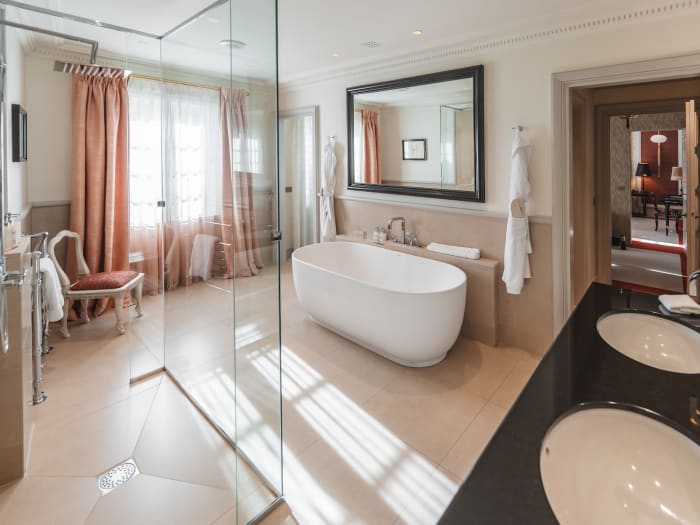
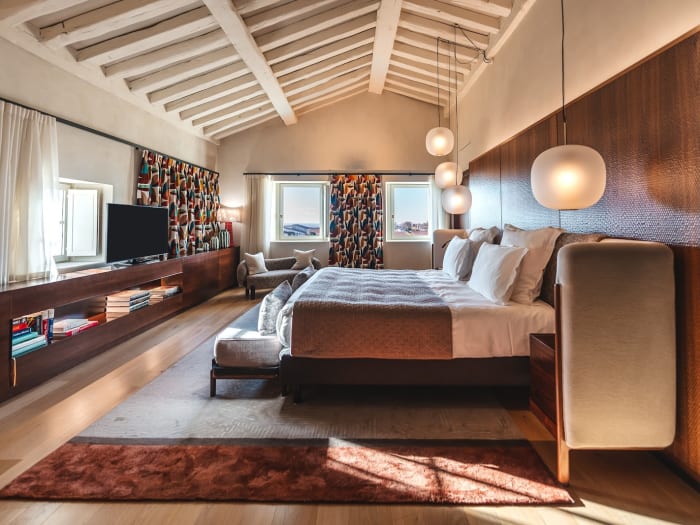
In a destination as steeped in heritage as Saint-Émilion, the success of the rooms lies in a delicate balance. Preserving the character of the place without sacrificing comfort. Offering intimacy without breaking away from the village's identity. Providing refinement without ostentation. At Hôtel de Pavie, the rooms and suites extend the calm of the exterior.
Here, the first luxury often lies in moderation. In a village of stone, relief, and shifting light, one appreciates interiors that allow the architecture to breathe. The materials, volumes, openness to the immediate environment, and the quality of silence are as important as the amenities. The room accompanies the stay in Saint-Émilion, from waking up to returning from tastings.
In a Relais & Châteaux property, comfort is not limited to bedding or aesthetics. It also encompasses the fluidity of service. Daily housekeeping, turn-down service, and attention to the guests' rhythms contribute to the experience. At Hôtel de Pavie, this service dimension makes the rooms true sanctuaries.
For couples, the address holds an obvious appeal. It is a place sought for its elegant retreat, ideal for romantic getaways, discreet anniversaries, or a few days of disconnection. The charm lies in a cohesive whole. The relationship with the stone, the quality of light, and the feeling of being sheltered from the hustle and bustle while remaining in the heart of the village.
The suites cater to different needs. Longer stays, the need for extra space, a desire for a more residential setting. In Saint-Émilion, having a more generous volume, a sitting area, or a broader perspective changes the way one experiences the stay. It becomes more than just a stopover. It feels like home.
Finally, the rooms and suites play a significant role in the temporal aspect of the journey. Saint-Émilion reveals itself differently depending on the time of day. Returning to a room designed as an extension of this atmosphere adds depth to the stay. It is often in this precision that a great address is recognised.
Dining
In Saint-Émilion, gastronomy can never be considered separately from wine. The village and its surroundings have shaped an imagination in which the table belongs naturally to the vineyard landscape, not as a mere complement but as one of its essential languages. In a property such as Hôtel de Pavie, one therefore expects far more than a hotel restaurant: a culinary reading of the territory, attentive to seasons, produce and the particular rhythm of a destination where people come as much to taste as to stay. Even without detailing a menu or naming a chef, the spirit of the table can be understood through this close relationship between place, cuisine and vineyard.
The first pleasure often lies in the setting itself. To dine in Saint-Émilion is to be surrounded by a heritage that immediately gives depth to the meal. Pale stone, views across the village, proximity to the slopes and the constant awareness of the vines all alter the way one sits down to eat. In a refined historic setting, a meal takes on a broader dimension: it becomes a way of reading the territory. At Hôtel de Pavie, that coherence is essential. The table is not meant to detach itself from its surroundings, but to extend them with accuracy.
For wine lovers, the address has an obvious advantage: it stands in the very heart of one of France’s most celebrated wine landscapes. That location naturally encourages thoughtful food-and-wine pairings, discoveries of local labels and a more nuanced approach to flavour. After a day spent visiting estates and tasting, returning to the hotel table allows the experience to continue without interruption. Dinner then becomes a kind of sensory synthesis, in which impressions gathered in cellars and vineyards find an echo on the plate and in the glass.
The quality of a great hotel table is also measured by its ability to adapt to the different moments of a stay. Breakfast, for instance, does not serve the same purpose as a celebratory dinner or a lunch taken between appointments in the vineyards. In a peaceful house, particularly appreciated by couples, these sequences matter greatly. A quiet morning before exploring the region, a light lunch after walking through the village, a more composed dinner to mark the evening: each of these moments contributes to the hotel’s identity. Gastronomy is not merely a highlight; it structures the day.
One may also expect from a Relais & Châteaux property a certain coherence of standards. This means attention to produce, precision in service, the pacing of the meal and the intelligence of recommendations. In a place like Saint-Émilion, that expectation takes on a particular colour, because visitors often arrive with high hopes. They know the village’s reputation, they want to understand its way of life, and they hope to find at table something other than an isolated performance. What they seek, ultimately, is an experience with roots. Hôtel de Pavie answers that expectation through its location, its atmosphere and its ability to place dining within a broader experience of the destination.
Finally, gastronomy in this context also belongs to the realm of discreet emotion. A dinner for two after nightfall, a glass shared on returning from a cellar visit, a breakfast taken before the village fully stirs: these are often the moments that remain. In a destination as codified as Saint-Émilion, true elegance may lie in allowing the table to connect all dimensions of the stay — heritage, wine, landscape and rest — without ever overplaying its hand. It is that restraint, more than effect, that gives a lasting address its value.
Concierge & services
In a destination such as Saint-Émilion, the quality of services is measured not only by their availability, but by their relevance. A distinguished village hotel does not face the same demands as an isolated resort or an urban address. Here, service must above all facilitate access to a dense, highly sought-after territory that can be difficult to navigate for newcomers. At Hôtel de Pavie, that role is especially important: the property stands in the heart of the town and serves as a natural starting point for discovering the surrounding vineyards. The concierge is therefore not merely a support desk; it becomes a genuine link between hotel, village and wine landscape.
The presence of a 24-hour concierge and a front desk open around the clock first answers a need for fluidity. Arrivals may be late, departures early, visit plans may change with the weather, estate availability or guests’ personal rhythm. In that context, continuous service brings real comfort. It allows a stay to be adjusted without fuss, whether by requesting a recommendation, arranging a local transfer, confirming a reservation or handling an unforeseen issue discreetly. More than a sign of status, this continuity of presence is a condition of peace of mind.
Daily housekeeping, turndown service, luggage storage, laundry and wake-up service belong to that silent infrastructure that distinguishes well-run houses. These are sometimes taken for granted in luxury hospitality, yet their true value appears in the way they support the stay without intruding upon it. After a day among the vines, a room carefully reset, luggage efficiently handled or clothing prepared for dinner makes a tangible difference. Luxury here lies in the removal of friction.
Multilingual staff also play an essential role in a village with strong international renown. Saint-Émilion attracts French, European and long-haul travellers, many arriving with precise expectations regarding wine, heritage and gastronomy. Being able to communicate clearly, understand local customs and receive reliable guidance on visits or reservations forms part of the welcome itself. In a house of this category, linguistic competence is not incidental; it contributes to the quality of the destination’s interpretation.
One also expects a good concierge team to personalise without overplaying. In Saint-Émilion, that may mean suggesting a quieter hour to discover the village, pointing guests towards a walk nearby, helping to organise a day of tastings in the vineyards, recommending a realistic pace of visits or simply advising how best to enjoy the calmest hours. This intelligence of the stay is particularly valuable for couples, who often seek not an accumulation of activities but a harmonious, well-paced experience without unnecessary dead time.
Finally, the services of a hotel such as Hôtel de Pavie fulfil a subtler function: they allow travellers to feel immediately at ease in a destination with strong codes. The world of wine can be intimidating, as can Saint-Émilion’s reputation. An attentive, available and measured team helps bridge that distance. It makes the territory more accessible without oversimplifying it. This is one of the surest signs of a great house: making everything appear natural, even though many details have been anticipated. Whether for a short stay or a longer escape, that quality of guidance profoundly shapes the experience.
The Saint-Émilion art of living
Saint-Émilion has the rare quality of destinations that can be read on several levels. One may come for the prestige of its wines, for the beauty of the village, for its proximity to Bordeaux, or simply for a few quiet days in a setting steeped in history. Yet what truly remains, beyond the initial reasons for travelling, is a certain way of living time there. Hôtel de Pavie allows guests to enter into that local art of living precisely because it stands in the heart of the town and maintains a direct relationship with the surrounding vineyard landscape.
The first gesture is often to slow down. Saint-Émilion is poorly suited to haste. Its sloping streets, narrow passages, changing light and sudden views over the vines require available attention. From the hotel, that experience becomes almost instinctive. One steps out for a short walk and is already immersed in the substance of the village: stone warmed by the sun, the shade of a wall, the relative silence of a lane, then an opening towards the hillsides. This immediate proximity to the everyday scenery transforms the stay. One does not consume a site; one gradually adopts its rhythm.
The local art of living also lies in the constant relationship between culture and nature. In Saint-Émilion, the vines are never far away, yet they do not present themselves as a simple postcard landscape. They structure conversations, schedules, visits, meals and even the light of the day. Staying at Hôtel de Pavie means being able to move effortlessly from a dense historic centre to country roads lined with parcels of vines, then return to the village for dinner or simply an evening stroll. This fluid movement between built heritage and wine territory is one of the place’s great privileges.
For couples, the destination offers a particularly apt setting. The romance of Saint-Émilion certainly exists, but it does not need to be underlined. It resides in details: a glass shared after a visit, a walk when the village begins to empty, a quiet morning before the arrival of day visitors, a terrace or viewpoint from which to observe the lines of the vineyards. Hôtel de Pavie, through its peaceful atmosphere, naturally supports that tone. It provides an elegant base from which to experience the destination without agitation, with that sense of retreat that gives stays for two greater depth.
The most favourable period, from May to October, corresponds to a time when the region is especially suited to walks and excursions through the vineyards. The milder climate allows guests to make the most of outdoor spaces, country roads, pauses at estates and evenings that stretch longer. Yet the essence lies not only in the weather. It lies in the way Saint-Émilion yields itself: in successive touches, between heritage, tasting, landscape and rest. A well-located hotel then becomes a tool for reading the territory.
Ultimately, the Saint-Émilion art of living is neither spectacular nor complicated. It rests on pleasures arranged with intelligence: walking well, looking well, eating well, tasting well and resting well. In a house such as Hôtel de Pavie, these dimensions cease to be separate. The stay gains coherence because everything seems connected: the room to the village, the village to the vines, the vines to the table, the table to the calm of evening. It is that continuity, more than any display of prestige, that gives both the destination and the address their lasting strength.
Book with MyConciergeHotel
Booking Hôtel de Pavie through MyConciergeHotel means approaching Saint-Émilion with the logic of a stay rather than a simple room reservation. In such a sought-after destination, where location, the rhythm of visits and access to wine experiences matter as much as the hotel itself, thoughtful preparation makes a real difference. The value of editorial and concierge support lies precisely there: helping guests choose the right time, the right length of stay and the right way to experience the village and its vineyards, without reducing the trip to a sequence of standardised steps.
Hôtel de Pavie is particularly suited to travellers seeking tranquillity, couples and wine lovers wishing to stay in the heart of Saint-Émilion. This fit between traveller profile and the identity of the house deserves consideration before booking. A short two-night stay will not have the same tone as a longer interlude devoted to the surrounding estates, lunches in the village and walks through the hillsides. Booking with discernment therefore also means calibrating one’s programme: leaving room for the unexpected, avoiding overloaded days and preserving time to return to the hotel, which forms an integral part of the pleasure.
The recommended period, from May to October, corresponds to months that are especially pleasant for discovering the region. It is also a time when demand can be strong. Anticipating one’s reservation therefore makes perfect sense, particularly if one also wishes to organise vineyard visits, tastings or meals at specific times. MyConciergeHotel can help shape that whole in a coherent way: not by multiplying activities, but by building a fluid stay suited to the pace of Saint-Émilion. In a destination of this kind, the elegance of travel often lies in the quality of the sequencing.
Booking through a specialised platform also helps clarify what one is truly seeking in an address such as this. Hôtel de Pavie is not an anonymous stopover hotel. It is a house of character in the heart of a village known worldwide for its heritage and vineyards. Choosing this address therefore implies a certain desire: for a refined historic setting, a peaceful atmosphere, direct access to the vines and service capable of supporting a stay that is both simple and exacting. The role of MyConciergeHotel is to make that promise legible and help align it with your actual expectations.
For international travellers as well as French guests, this mediation is valuable. Saint-Émilion may feel familiar because of its reputation, yet the on-site experience benefits from careful preparation. Which hours are best for enjoying the village more quietly? Should tastings be concentrated into one day or spread out? How should rest, meals and visits be balanced? These are practical questions that genuinely affect the quality of a stay. A well-considered booking does not merely secure a room; it improves the entire experience.
Choosing MyConciergeHotel to book Hôtel de Pavie ultimately means favouring a qualitative approach to travel. The aim is not simply to obtain availability, but to give meaning to the stay. In a place as singular as Saint-Émilion, that difference is immediately felt. It allows guests to arrive with a clear framework, well-judged expectations and the freedom to enjoy fully what the village offers at its best: heritage, vineyards, gentle living and that rare impression of effortless elegance.