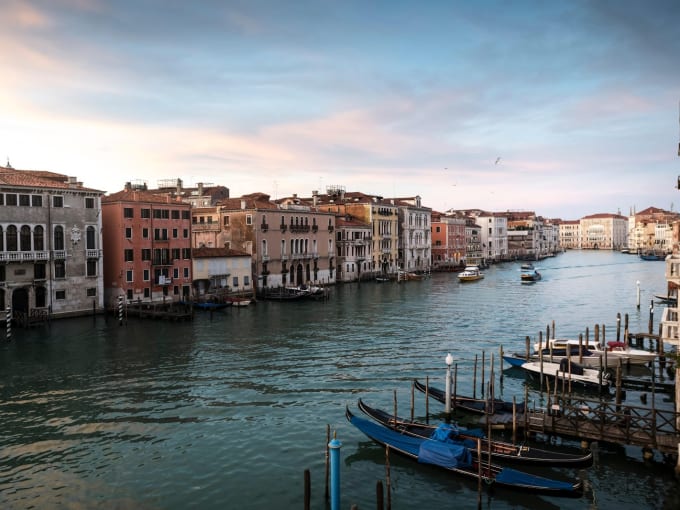
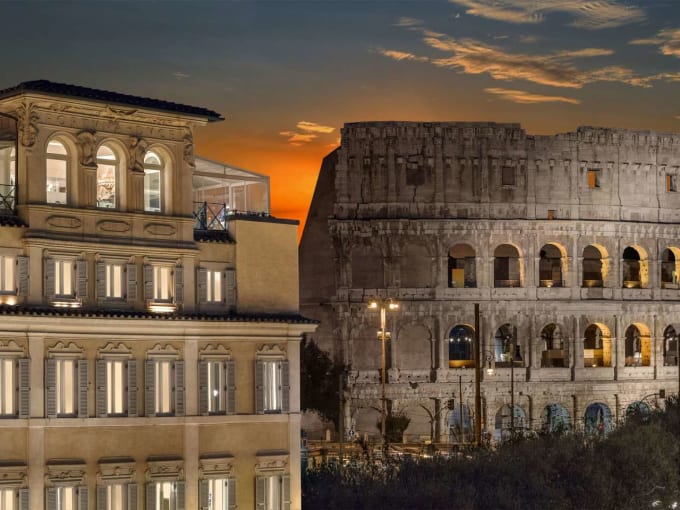
Italy remains an obvious choice when seeking a charming hotel steeped in heritage. Few countries offer such a density of residences inhabited by history. Venice lines up its palaces along the water. Rome layers centuries with rare ease. Tuscany transforms farms, villages, and castles into characterful retreats. Further south, the Amalfi Coast and Puglia provide another interpretation of heritage. Here, the setting is never enough. What truly matters is how a place interacts with its territory. This is precisely what our advisors seek. An Italian charming hotel convinces when architecture, location, and the rhythm of the stay form a coherent whole.
In establishing this ranking, we do not seek mere publicity. We prioritise clear and verifiable criteria. First, the strength of the location. A Venetian palace like Aman Venice or Ca' Sagredo Hotel does not express heritage in the same way as a Tuscan estate such as Castello di Casole. Next, the quality of the setting. In Rome, Babuino 181, Bulgari Hotel Rome, Bulgari Roma, and Casa Monti do not narrate the city in the same manner. We also observe the uniqueness of the hotel experience. A charming hotel must have a distinct identity. Finally, we consider a property’s ability to offer a sustainably desirable experience. Charm does not tolerate uniformity. It demands integrity, context, and a true signature.
The Italian panorama presented in this ranking is intentionally broad. Florence opens the game with 25hours Piazza San Paolino, a city centre address with a distinct positioning. Venice reminds us how theatrical heritage can be without losing intimacy, with Aman Venice and Ca' Sagredo Hotel. Rome presents several interpretations of charm. One is more residential, with Babuino 181 or Casa Monti. The other relies on a more institutional grammar, as seen with Bulgari Hotel Rome and Bulgari Roma. In Tuscany, Borgo Pignano Volterra - Tuscany and Castello di Casole shift the gaze towards the historic countryside. Modena adds a domestic dimension with Casa Maria Luigia. Finally, Belmond Caruso, Borgo Santandrea, and Borgo Egnazia demonstrate that Italian heritage is not limited to ancient centres.
The trends for 2025-2026 confirm a fundamental evolution. The high-end traveller no longer seeks just a beautiful address. They want to understand where they are sleeping. This expectation favours hotels capable of explaining their building, landscape, and local culture. The great Italian houses respond with more contextualised hospitality. Urban palaces highlight their architectural origins. Rural estates place greater value on materials, craftsmanship, and agricultural rhythms. We also observe a growing demand for smaller, more intimate stays. Charm flourishes when the experience feels inhabited rather than scripted. In this regard, places like Borgo Pignano Volterra - Tuscany, Casa Maria Luigia, or Babuino 181 meet a very current expectation. Heritage is no longer just a backdrop. It becomes a way of staying.
At MyConciergeHotel, we advocate for a discerning interpretation of luxury. It owes much to a French sensibility, but it applies here to Italy. Luxury is not only measured by category or brand reputation. It is reflected in the quality of the welcome, the proportion of spaces, and the relationship between the place and the city. A successful charming hotel does not need to overdo it. It must know how to create a sense of obviousness. It is also worth noting that heritage does not exclude contemporary comfort or decorative creativity. 25hours Piazza San Paolino approaches this through narrative design. Aman Venice treats it with palatial restraint. Borgo Egnazia reinterprets it on a village scale. My advice is simple. Always look for coherence before displayed prestige.
This ranking should therefore be read as a curated selection, not as a universal verdict. Each hotel has its audience, its tempo, and its promise. Some travellers will desire the monumentality of a palace on the Grand Canal. Others will prefer the intimacy of a well-located Roman address. Still others will choose Tuscany for the depth of its landscape, or Ravello for its balcony effect over the sea. What our advisors often observe is that charm depends on the right accord between travel and place. A dense cultural stay does not call for the same codes as a contemplative interlude. This is why we value distinct personalities here. Italian heritage is multifaceted. Our role is to clarify its most compelling expressions without erasing their differences.
Now, let’s turn to the Top 10. You will find palaces, townhouses, historic estates, and coastal retreats. All share one essential quality. They inspire a desire to stay in Italy through the place itself.