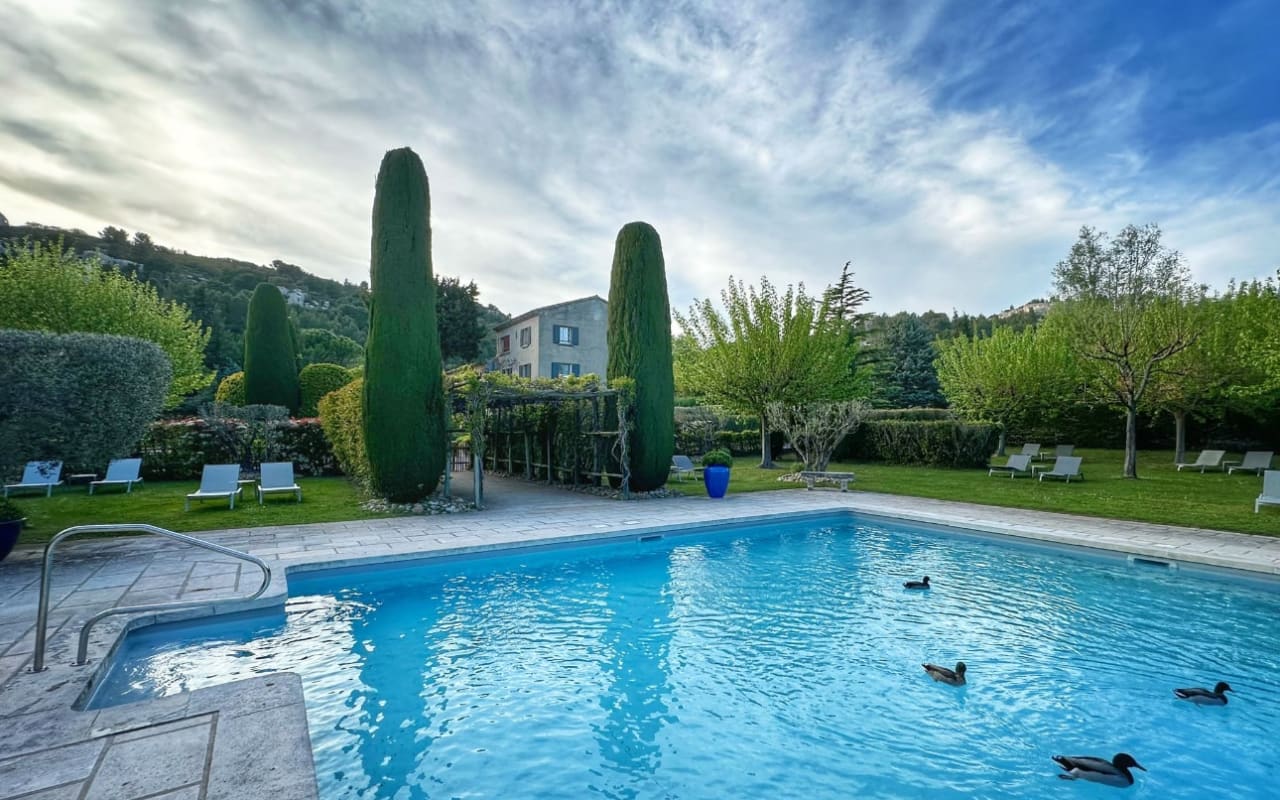
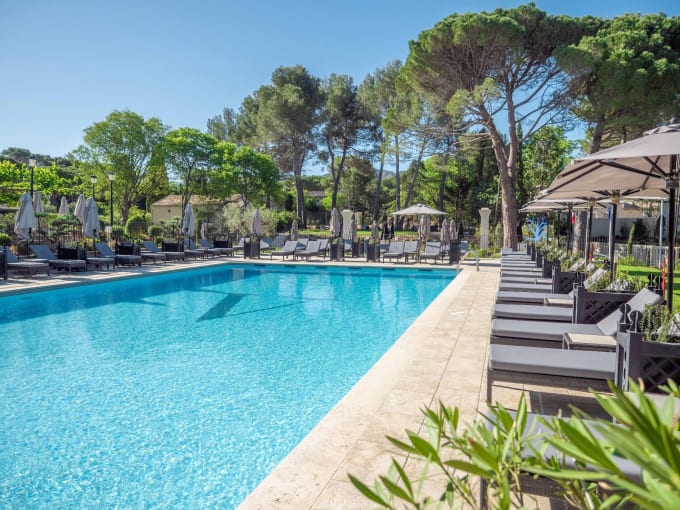
In the Alpilles, a countryside hotel is not merely a green address. It engages in a precise relationship with the landscape, rhythm, and light. Here, the limestone, olive trees, cypress, and narrow roads create a familiar backdrop. Yet, each village imparts a different tone. Les Baux-de-Provence imposes a mineral and spectacular presence. Saint-Rémy-de-Provence offers a more lived-in softness, blending culture, markets, and strolls. Maussane-les-Alpilles presents a more understated idea of a Provençal stay. This is why this segment deserves a dedicated ranking. The traveller seeks not just a beautiful room but a genuine way to inhabit the countryside, without sacrificing service, comfort, and local identity. In this selection, Baumanière Les Baux-de-Provence, Domaine de Manville, and Hôtel Château des Alpilles showcase very different interpretations of the same territory.
At MyConciergeHotel, we do not rank countryside hotels solely on their photogenic qualities. We first consider their real anchorage in the Alpilles. The address must engage in dialogue with its environment, rather than simply using it as a backdrop. We then assess the coherence between the location, architecture, and the experience offered. A bastide, a domain, an old priory, or a village house entail different expectations. The level of service matters, of course, but always in relation to the setting. We also observe the quality of sleep, views, outdoor spaces, and ease of access to trails and villages. A spa can be a factor, though not decisive. Dining also plays a role, without dominating the judgement. It is important to note that our assessment prioritises overall accuracy. It distinguishes hotels that inspire a desire to stay, and then to return in another season.
The panorama of selected hotels reveals a rare diversity within such a compact territory. In Les Baux-de-Provence, Baumanière Les Baux-de-Provence champions a historical and landscape-driven vision of the grand Provençal hotel. Domaine de Manville offers a more contemporary interpretation of rural living, with expansive spaces and a sense of openness. In Saint-Rémy-de-Provence, Hôtel Château des Alpilles situates the stay within a park and a more classical timeframe. Hôtel de Tourrel, on the other hand, brings the countryside closer to the village, with a more urban address that is highly relevant for radiating outwards. Le Saint Rémy & Spa and Le Vallon de Valrugues & Spa cater to two distinct uses of the same area. One favours central elegance, while the other embraces a breath of nature's edge. Finally, Le Prieuré de Maussane reminds us that a countryside address can also charm through its scale, restraint, and direct connection to the village.
For 2025 and 2026, we observe several clear trends in the Alpilles. The first concerns the length of stay. Travellers are less inclined to book a simple two-night break. They are increasingly seeking a base of four to six nights, alternating between relaxation and exploration. The second trend relates to the use of outdoor spaces. Private terraces, gardens, well-integrated pools, and unobstructed views weigh more heavily in decision-making. The third trend indicates that the countryside is no longer conceived as opposing comfort. It must offer seamless service, well-organised transfers, and a concierge capable of crafting tailored days. Our advisors also note a growing interest in stays outside the peak season. April, May, September, and October allow for a more nuanced experience of the Alpilles. The light remains beautiful, the villages breathe better, and the hotel experience often gains in serenity.
French luxury in the Alpilles does not manifest through accumulation. It expresses itself through mastery of proportions, quality of materials, and respect for the place. A beautiful countryside address knows how to create shade, freshness, and silence. It understands that comfort comes as much from the thickness of walls as from the precision of service. In this region, refinement also hinges on the relationship between indoors and outdoors. Lunch is taken under the trees. Reading occurs on a terrace. Returning from a walk, one feels that the hotel extends the landscape. This connection links, despite their differences, establishments like Hôtel Château des Alpilles, Le Prieuré de Maussane, or Le Vallon de Valrugues & Spa. My advice in the Alpilles is simple. Choose less a decor than a rhythm. Some addresses invite isolation. Others allow for living the village on foot. Still others perfectly balance both.
This ranking should thus be read as a guide, not as a universal verdict. The best countryside hotel varies depending on whether you are travelling as a couple, with family, or for a long weekend of disconnection. A historic house may evoke more emotion than a more contemporary domain. Conversely, some travellers will favour more modern volumes, a more developed spa, or simpler logistics. We embrace this plurality. It enriches the Alpilles. This is also why we avoid easy superlatives. They say little about the real experience. We prefer to rank according to coherence, location, and quality of use. Baumanière Les Baux-de-Provence does not offer the same promise as Hôtel de Tourrel. Domaine de Manville does not meet the same desire as Le Saint Rémy & Spa. Each has its audience, its tempo, and its ideal season.
In the following top list, we have selected seven hotels capable of embodying the countryside of the Alpilles in complementary forms. Some excel through their landscape anchorage. Others through their balance between village and nature. All provide a credible and desirable interpretation of the territory. Here are our seven addresses to consider as a priority.