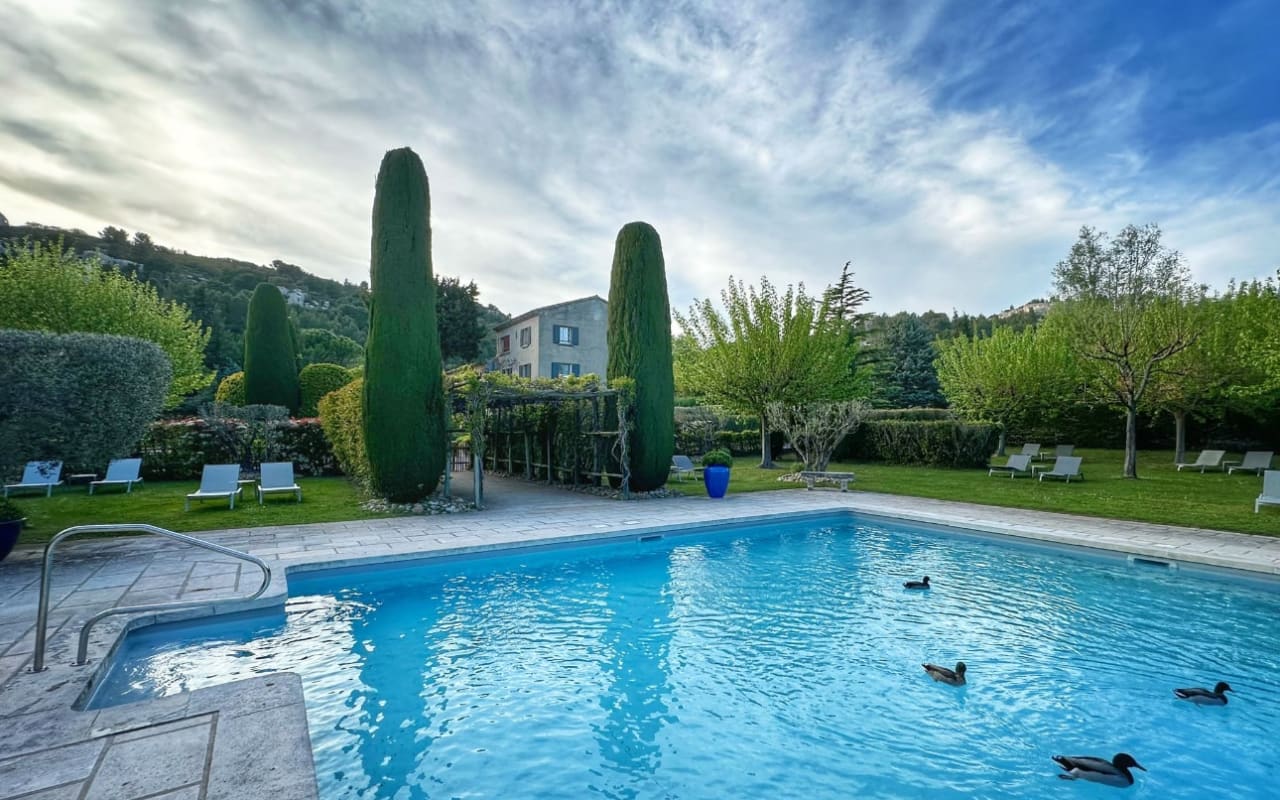
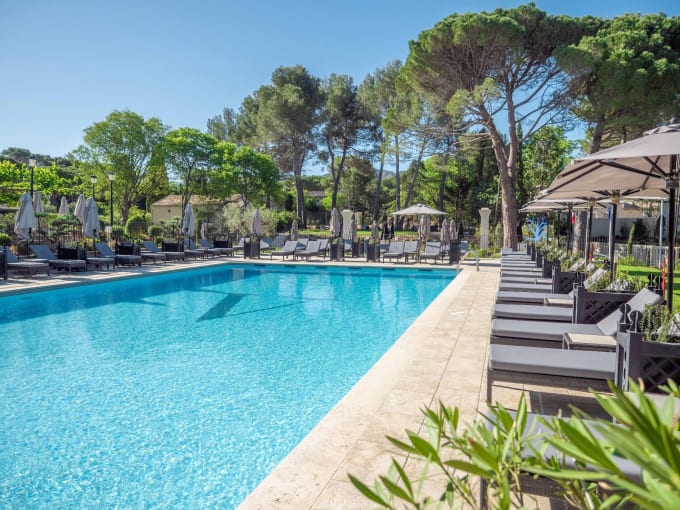
In the Alpilles, characterful hotels unfold like a landscape. They alternate between light rock, cypress trees, olive groves, bastides, and tightly-knit villages surrounding their squares. This territory may not be vast, yet it is home to several major signatures of Provençal hospitality. Les Baux-de-Provence, Saint-Rémy-de-Provence, and Maussane-les-Alpilles form a highly sought-after triangle. Visitors come for the light, but also for a particular idea of the stay. This concept prioritises space, the right rhythm, and a connection to the place. Baumanière Les Baux-de-Provence, Domaine de Manville, Hôtel Château des Alpilles, Hôtel de Tourrel, Le Prieuré de Maussane, Le Saint Rémy & Spa, and Le Vallon de Valrugues & Spa each embody a different interpretation of this promise. This is precisely what makes the ranking useful. In the Alpilles, the best hotel is never just the most famous; it is often the one that best aligns with your way of experiencing Provence.
To establish this ranking, we adhere to simple yet demanding criteria. Firstly, a genuine geographical anchoring within the Alpilles cluster. Secondly, the consistency of hotel quality, exclusively rated at 5 stars here. We also consider the strength of the location, which may stem from a historic address, a landscaped estate, a position in the heart of the village, or an ability to offer tranquillity. Service is important, of course, but without hollow formulas. We assess the clarity of the experience. Is it immediately apparent for whom the hotel has been designed? We also incorporate the amenities that structure a stay. Spas, pools, gardens, golf courses, dining options, family suites, or pedestrian access to the centre can significantly enhance the journey. Finally, we compare the overall coherence. A grand hotel is not merely an accumulation of assets; it is a clear project, maintained from the first glance to departure.
The panorama of selected hotels reveals a rare diversity within such a confined area. Baumanière Les Baux-de-Provence appeals to travellers who cherish the great Provençal houses and reference addresses. Domaine de Manville offers a more contemporary interpretation of rural estates, with the distinctive feature of a golf course. In Saint-Rémy-de-Provence, Hôtel Château des Alpilles champions the concept of a country residence, away from noise, while Hôtel de Tourrel favours the density of a historic centre hotel. Le Saint Rémy & Spa embraces the essence of a vibrant 5-star establishment, immediately connected to the town centre. Le Vallon de Valrugues & Spa caters to wellness stays and getaways with comprehensive services. Lastly, Le Prieuré de Maussane asserts a more intimate scale. It is important to note that this selection does not portray a uniform Provence; rather, it showcases various ways to stay with precision.
For 2025 and 2026, our advisors observe clearer expectations in the Alpilles. The first concerns readable space. Travellers want to know whether they are booking a village hotel, an estate open to nature, or a more secluded house. The second relates to wellness. The spa remains important, but it is no longer sufficient on its own. What matters more is the overall balance between calm, light, fluid circulation, and access to local experiences. The third trend is a slight increase in the duration of stays outside the peak season. The Alpilles are becoming more of a base than just a stopover. Finally, international clientele continues to seek identifiable French addresses, without forced folklore. In this context, the most compelling hotels are those that clearly embrace their positioning. My advice here is to first choose a rhythm for your stay. The right hotel often stems from this initial choice.
French luxury in the Alpilles does not rest on ostentation. It is expressed through the quality of the setting, the upkeep of a house, and a serene relationship with time. An avenue of plane trees, a stone façade, a well-designed garden, or a shaded terrace can be as significant as a grand facility. This region also reminds us that a luxury hotel does not need to be monumental to be just. It must primarily create a continuity between the outside and the inside. This is where the best addresses stand out. They do not impose a narrative on Provence; they work with its materials, volumes, and seasonality. What our advisors often observe is this expectation of controlled authenticity. Travellers desire elevated comfort, but also a place that could not exist elsewhere. In the Alpilles, this demand finds particularly convincing ground.
Thus, this ranking should be read methodically. A number one does not negate the relevance of number seven. Each hotel meets a different expectation, sometimes very specific. Some travellers want to be able to do everything on foot from Saint-Rémy-de-Provence. Others prefer a more secluded address, with gardens, breathing space, and a sense of openness. Some stays focus on dining, others on the spa, and still others on discovering the territory. We do not seek to designate a single truth. We aim to rank experiences according to their coherence, scope, and ability to represent the Alpilles today. This nuance is essential. It avoids lazy comparisons between hotels that do not share the same purpose. Our ranking distinguishes strong houses. It does not impose a single model of good Provençal taste. It helps to choose with greater precision.
You will find below a Top 7 designed as a decision-making tool. The top positions reward a more comprehensive or emblematic vision. However, the subsequent ones may better suit your journey. Consider the location, the scale of the place, and the type of stay desired. In the Alpilles, this is often where everything is decided.