

Nos critères de sélection
Pour établir ce classement, nous partons d’une définition précise de l’esprit villa. Une villa n’est pas seulement une grande chambre. Ce n’est pas non plus un simple hébergement premium. Nous retenons d’abord une promesse d’autonomie, d’intimité et de respiration. L’adresse doit offrir une sensation nette de lieu à soi. Cette impression peut venir d’un bâtiment indépendant, d’un pavillon séparé, ou d’un ensemble très privatisé. À l’inverse, une suite très vaste, même remarquable, ne relève pas automatiquement de la villa. Nous distinguons donc trois cas. La villa indépendante dispose d’un accès, d’un volume et d’une vie propres. La suite villa reprend certains codes résidentiels, sans autonomie complète. L’hôtel de style villa, enfin, adopte une échelle domestique et un rapport paysager fort, sans proposer forcément des unités privatives. Ce cadrage compte. Il permet de comparer des expériences proches, sans mélanger des formats qui ne répondent pas aux mêmes attentes.
Pourquoi la France excelle dans l’esprit villa
La France excelle dans l’esprit villa pour une raison simple. Le pays a fait de la villégiature un langage architectural complet. Il ne s’agit pas seulement d’une grande maison avec piscine. La villa française naît d’un dialogue entre climat, paysage et usages sociaux. Elle répond à une manière d’habiter le temps libre. Elle cherche la lumière, l’ombre, la vue et la circulation de l’air. Elle organise aussi une distance juste avec le voisinage. Cet équilibre entre ouverture et retrait reste central aujourd’hui. C’est lui qui distingue une villa pensée pour le séjour d’une simple résidence de prestige.
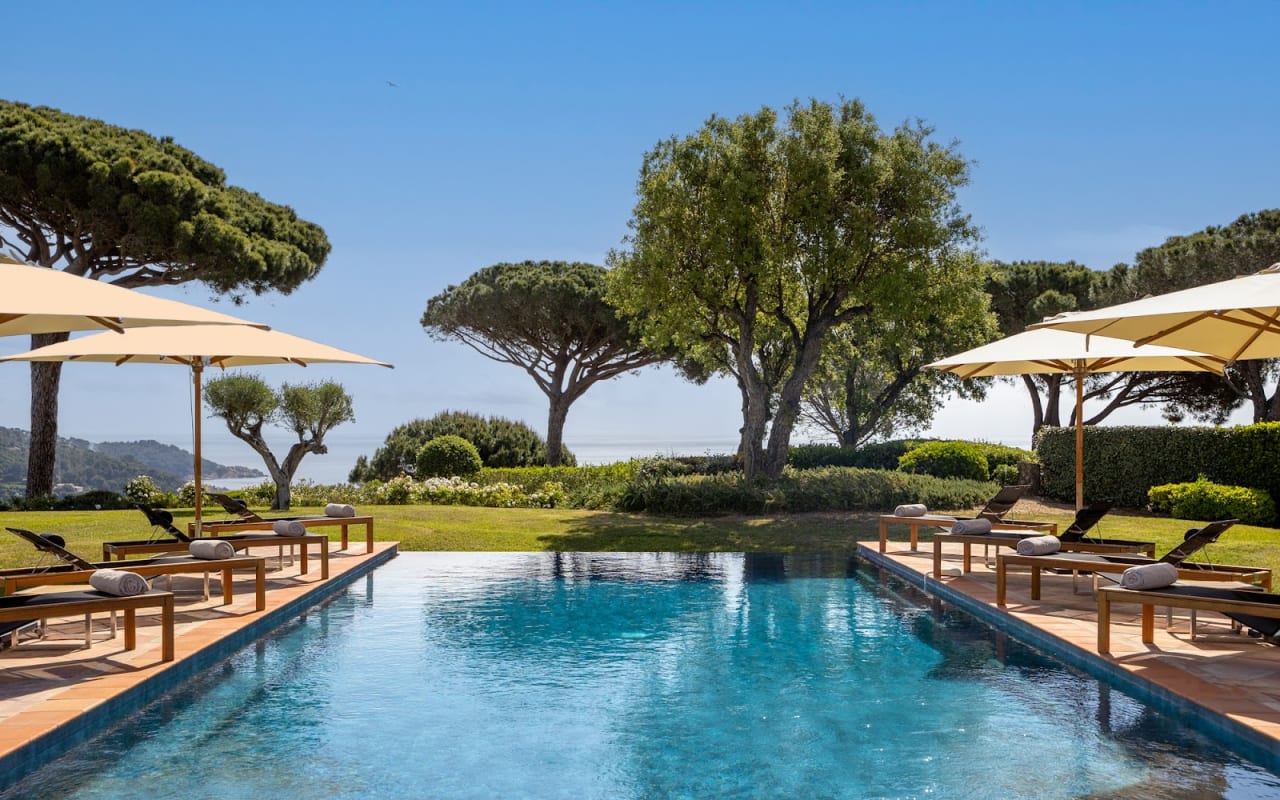
La Côte d’Azur a fixé une grande partie de cet imaginaire. Dès le XIXe siècle, le littoral méditerranéen attire hivernants, artistes et familles fortunées. La villa y devient un poste d’observation sur la mer. Elle s’implante sur les hauteurs, épouse les courbes du terrain et multiplie terrasses, loggias et jardins en restanques. L’architecture y mélange influences italiennes, modernité balnéaire et traditions locales. Les façades claires, les volets, les pergolas et les pins parasols composent un vocabulaire durable. À retenir, la villa azuréenne n’est pas seulement décorative. Elle est conçue pour cadrer un horizon. Elle met la vie extérieure au centre. Ce principe reste l’un des plus recherchés par nos voyageurs.
La Provence a développé un autre registre. Ici, l’esprit villa se rapproche souvent du mas, de la bastide ou d’une maison de campagne structurée autour de la fraîcheur. Les murs épais, les sols minéraux et les alignements d’arbres répondent à la chaleur estivale. Le rapport au paysage y est moins frontal que sur la Riviera. Il est plus diffus, plus agricole, souvent plus olfactif aussi. On y cherche les cyprès, les oliviers, la garrigue et les vues longues sur les reliefs. Ce que nos conseillers observent souvent, c’est l’importance des transitions. Une belle villa provençale réussit ses seuils. Elle relie cuisine, terrasse, bassin et jardin sans rupture. Elle permet de vivre dehors longtemps, sans mise en scène excessive.
La Corse apporte une lecture plus minérale et plus secrète. Le relief, le maquis et la fragmentation du littoral imposent une autre grammaire. Les plus belles villas corses travaillent l’ancrage. Elles utilisent la pierre, les teintes sourdes et des volumes bas, pour ne pas lutter contre le site. L’intimité y compte autant que la vue. On y vient pour entendre le vent, sentir les immortelles et voir la mer sans surexposition. Cette retenue fait beaucoup pour leur force. Mon conseil, en Corse, est de regarder la manière dont la maison s’efface. Une villa marquante n’écrase jamais son environnement. Elle s’y inscrit avec précision.
Le littoral atlantique complète ce tableau français. De la côte basque aux rivages vendéens, puis jusqu’aux stations élégantes de l’Ouest, la villa dialogue avec un climat plus mobile. Ici, il faut composer avec l’océan, le vent et une lumière changeante. Les architectures y valorisent les abris, les porches, les jardins protégés et les pièces traversantes. L’esprit villa y prend parfois des accents régionalistes. Il peut aussi devenir très contemporain. Dans les deux cas, la réussite tient à la relation au dehors. Une grande terrasse ne suffit pas. Il faut une orientation juste, une protection intelligente et une vraie sensation d’espace. C’est pourquoi certaines adresses marquent davantage. Elles ne se contentent pas d’offrir des mètres carrés. Elles traduisent une culture française du séjour. Cette culture associe patrimoine, paysage et usage. C’est elle qui donne à la villa en France sa profondeur particulière.
Questions sur cette section
Qu'est-ce qui fait vraiment la valeur d'une villa patrimoniale ou de caractère en France ?
La valeur d'une villa patrimoniale tient à l'équilibre entre caractère et usage contemporain. Une façade remarquable ne suffit pas. Il faut aussi des circulations fluides, un confort thermique correct, des salles de bains bien pensées et des extérieurs exploitables. En France, beaucoup de voyageurs recherchent cette combinaison. Ils veulent une maison avec mémoire, sans sacrifier la facilité du séjour. À retenir : une villa de caractère réussie raconte un lieu, mais elle doit rester simple à vivre au quotidien.
Les villas les plus adaptées aux familles
Pour un séjour familial, la beauté d’une villa ne suffit pas. Ce qui compte, c’est la manière dont l’espace accompagne les journées réelles. Avec des enfants, on regarde d’abord les volumes, puis la circulation. On vérifie ensuite la séparation possible entre les temps calmes et les temps actifs. Une grande terrasse peut être splendide, mais moins utile qu’un jardin clos. Une piscine impressionne en photo, mais son usage dépend de la sécurité, de la proximité des chambres et du rythme du service. À retenir : une villa adaptée aux familles doit simplifier la logistique. Elle doit aussi préserver l’impression de vacances, sans transformer chaque repas en organisation.
Nos conseillers observent un premier critère très concret. Il s’agit de la composition des chambres. Les familles demandent souvent des chambres communicantes, ou au moins des chambres proches, sur un même niveau. C’est particulièrement important avec de jeunes enfants. À l’inverse, une villa très étendue, répartie sur plusieurs pavillons, convient mieux à des adolescents ou à des familles multigénérationnelles. L’espace devient alors un avantage, car chacun garde son rythme. Il faut aussi regarder la taille réelle des pièces de vie. Un salon généreux, une table intérieure pour plusieurs convives, et une cuisine ou arrière-cuisine bien pensée changent le séjour. Ce sont des détails discrets, mais décisifs. Ils permettent de déjeuner tôt, de gérer un goûter, ou de maintenir une soirée paisible pendant qu’un enfant dort.
Le deuxième filtre concerne l’extérieur. Pour une famille, un beau jardin n’est pas seulement un décor. C’est une extension du séjour. Il permet de jouer, de lire, de déjeuner dehors, et d’occuper les temps intermédiaires. La piscine doit être évaluée avec la même rigueur. Son style importe moins que son accessibilité et sa surveillance naturelle depuis les espaces de vie. Quand la villa offre un accès plage direct, ou très simple, l’expérience change nettement. On évite la voiture, les sacs répétés, et les retours complexes en milieu de journée. Mon conseil : distinguer la carte postale de l’usage réel. Une vue spectaculaire ne compense pas toujours un terrain escarpé, beaucoup de marches, ou une plage difficile d’accès avec de jeunes enfants.
Le troisième critère est le service, souvent sous-estimé. Une villa familiale réussie doit accepter des horaires souples. Les repas doivent pouvoir s’adapter à un dîner précoce, à une collation imprévue, ou à des préférences simples. Cette flexibilité vaut parfois plus qu’un dispositif très formel. Les familles regardent aussi la possibilité d’organiser un séjour en plusieurs tempos. Certains veulent des journées longues, entre piscine et plage. D’autres alternent excursions, siestes, et dîners sur place. Une villa pertinente accompagne ces variations sans rigidité. C’est là que l’on distingue l’esthétique pure de l’usage réel. Une très belle adresse peut rester peu pratique pour une famille. Inversement, une villa moins démonstrative peut offrir une expérience plus juste, plus fluide, et finalement plus reposante.
Enfin, il faut penser à la durée du séjour. Une villa qui fonctionne deux nuits ne fonctionne pas toujours une semaine. Avec le temps, les besoins changent. On apprécie davantage le rangement, la facilité des circulations, l’ombre aux bonnes heures, et la possibilité de vivre dehors sans contrainte. Les familles cherchent rarement une mise en scène permanente. Elles veulent un lieu qui tienne le rythme, du petit déjeuner au retour de plage. C’est pourquoi cette section ne classe pas seulement des silhouettes élégantes. Elle privilégie les villas capables d’absorber la vie réelle. Pour nous, une villa familiale réussie est celle qui laisse de la place à chacun. Elle protège l’intimité des parents. Elle donne de l’autonomie aux enfants. Et elle garde, malgré tout, cette sensation rare de vacances bien composées.
Nos repères pour un séjour en couple
À deux, une villa ne se juge pas seulement à sa surface. Elle se lit dans la qualité du silence, l’orientation de la terrasse et la manière d’habiter le paysage. Pour un séjour en couple, nous regardons d’abord l’intimité réelle. Il faut pouvoir déjeuner dehors sans vis-à-vis, prolonger une soirée sans circulation proche et profiter d’une piscine qui ne semble pas exposée. La vue compte aussi, mais pas comme un décor abstrait. Une mer frontale, un maquis corse, une pinède méditerranéenne ou un jardin très structuré changent la cadence du séjour. Ce que nos conseillers observent souvent, c’est la différence entre une belle villa et une villa juste pour deux. La première impressionne. La seconde apaise, simplifie et donne envie de rester sur place une journée entière. C’est souvent là que commence le vrai luxe romantique.
Questions sur cette section
Une villa est-elle le meilleur choix pour un séjour romantique en France ?
Oui, si vous cherchez avant tout intimité, rythme libre et cadre privé. Une villa convient très bien aux couples qui veulent vivre dehors, dîner sans contrainte horaire et éviter les espaces communs. En revanche, un hôtel peut mieux convenir si vous privilégiez spa, restauration sur place et services immédiats. Le bon choix dépend donc du séjour souhaité. Pour un anniversaire, une lune de miel discrète ou quelques jours au calme, la villa a souvent un vrai avantage.
Quand l’esprit villa rencontre le bien-être
Dans les plus belles villas de France, le bien-être ne prend pas toujours la forme d’un grand spa signature. C’est même souvent l’inverse. L’esprit villa privilégie d’abord l’espace privé, le silence, la lumière et le rythme choisi. Cette nuance compte au moment de réserver. Une villa peut offrir une expérience de repos très aboutie, sans aligner les codes d’un resort thermal. À retenir : il faut distinguer les adresses qui structurent le bien-être autour d’un spa complet, et celles qui l’intègrent dans l’architecture du séjour. Piscine à l’abri des regards, hammam discret, terrasse pour un soin en chambre, jardin méditerranéen ou accès direct à la mer. Ce sont souvent ces détails qui font la différence sur place. Ce que nos conseillers observent, c’est une attente plus précise qu’avant. Les voyageurs ne demandent plus seulement une belle villa. Ils veulent savoir comment ils vont vraiment récupérer, dormir, nager, ralentir et se couper du rythme habituel.
Dans une lecture éditoriale, plusieurs modèles coexistent en France. Le premier est celui de la villa adossée à un hôtel de grand niveau. Ici, le bien-être bénéficie d’infrastructures complètes. Spa, cabines de soins, piscine intérieure ou extérieure, fitness, parfois programmes plus encadrés. L’avantage est clair. On retrouve l’intimité d’un hébergement indépendant, avec la profondeur de service d’une grande maison. C’est souvent le bon choix pour ceux qui veulent alterner vie privée et rituels plus structurés. Le second modèle est plus résidentiel. La villa mise alors sur quelques éléments très bien pensés. Une longue piscine, un hammam, une salle de massage, une grande salle de bain ouverte sur la nature. L’expérience y est moins démonstrative, mais souvent plus cohérente. Mon conseil : si le spa est central dans votre séjour, vérifiez s’il est intégré à la villa, ou accessible dans l’hôtel principal. Cette différence change le quotidien, surtout sur un court séjour.
La France se distingue aussi par la diversité de ses paysages de repos. Sur la Côte d’Azur, le bien-être passe souvent par la relation entre dedans et dehors. Une terrasse ombragée, une piscine avec vue dégagée, un jardin sec bien dessiné, une circulation fluide entre chambre et extérieur. En Corse, l’isolement, le maquis et la proximité de l’eau créent un autre type de détente. Plus sensoriel, souvent plus silencieux. Dans l’arrière-pays, certaines villas jouent davantage la récupération lente. On y cherche la fraîcheur, les murs épais, le calme et des espaces de soins plus confidentiels. Cette géographie compte autant que les équipements. Un hammam n’a pas la même fonction selon la saison, l’exposition ou la destination. Une piscine privée peut suffire à orienter tout le séjour vers le repos, si l’environnement suit. À l’inverse, un spa très complet perd de son intérêt si la villa manque d’intimité ou de respiration.
Il faut aussi regarder la manière dont le service accompagne ce bien-être. Dans une villa, la qualité de l’expérience repose souvent sur l’exécution. Soins en chambre organisés sans friction, petit-déjeuner servi à l’heure juste, coach ou praticien disponible, conciergerie réactive, discrétion du personnel. Ces éléments pèsent autant que la liste des installations. Une belle salle de soins ne remplace pas une logistique fluide. Pour un séjour à deux, nous regardons beaucoup la possibilité de privatiser le temps. Horaires souples, bassin réservé, dîner léger sur terrasse, bain préparé avant le retour. Pour un séjour familial, la question change. Il faut que les adultes puissent accéder au calme sans compliquer l’organisation du groupe. Certaines villas y parviennent grâce à une bonne séparation des espaces, ou à un accès simple aux services de l’hôtel.
Au fond, le bien-être dans une villa française réussie tient à un équilibre. Trop d’équipements peuvent faire basculer l’adresse vers un resort classique. Trop peu, et la promesse de récupération reste théorique. Les plus belles propositions trouvent une ligne juste. Elles offrent assez pour ralentir vraiment, sans perdre l’intimité résidentielle qui fait tout l’intérêt du format villa. C’est cette lecture que nous retiendrons dans notre sélection. Non pas seulement la présence d’un spa, mais la capacité d’une villa à installer un séjour plus calme, plus souple et mieux rythmé. Si vous hésitez entre deux adresses, posez-vous une question simple. Voulez-vous un programme bien-être, ou un cadre qui vous permet naturellement de vous sentir mieux. La meilleure villa n’est pas toujours celle qui en montre le plus. C’est souvent celle qui rend le repos évident.
Questions sur cette section
Une villa avec espace bien-être remplace-t-elle vraiment un hôtel spa ?
Pas toujours, mais cela peut suffire selon vos attentes. Une villa avec piscine, hammam, salle de massage ou espace fitness offre un confort appréciable et plus d'intimité. En revanche, elle ne remplace pas forcément un hôtel spa avec équipe dédiée, carte de soins étendue et installations complètes. Tout dépend de votre usage. Si vous voulez quelques soins privés et du calme, la villa fonctionne très bien. Si vous cherchez une vraie destination bien-être, l'hôtel garde souvent l'avantage.
Tendances 2025-2026 des villas en France
En 2025 et 2026, le segment des villas en France évolue vers une définition plus résidentielle du luxe. Le point de départ reste simple. Les voyageurs veulent plus d’espace utile, pas seulement plus de mètres carrés. Ils recherchent des plans fluides, plusieurs salons, de vraies cuisines, des terrasses praticables et des extérieurs pensés pour vivre dehors longtemps. Cette attente concerne autant les séjours d’été que les échappées de printemps et d’automne. Ce que nos conseillers observent est net. La villa n’est plus seulement une alternative à la suite. Elle devient le format préféré pour habiter une destination avec davantage d’autonomie, tout en gardant un niveau de service élevé.
La confidentialité progresse aussi comme critère central. Elle ne relève pas d’un effet de mode. Elle répond à des usages concrets. Arrivées discrètes, rythmes de journée libres, repas pris à l’heure choisie, espaces séparés pour travailler ou se reposer, et possibilité de recevoir quelques proches sans contrainte. Cette demande s’exprime particulièrement sur les littoraux, en Provence, sur la Côte d’Azur, en Corse et dans certaines campagnes très recherchées. Le voyageur attend une intimité réelle, mais pas l’isolement. Il veut une maison protégée, bien située, avec accès simple aux plages, aux villages, aux domaines viticoles ou aux tables reconnues. À retenir. La bonne villa de demain conjugue retrait, logistique fluide et service discret.
Autre évolution forte, le design durable quitte le registre du discours pour entrer dans les arbitrages de réservation. Les clients regardent davantage les matériaux, l’ombre naturelle, la ventilation, la gestion de l’eau, les essences locales et la manière dont la maison s’inscrit dans son paysage. Le sujet n’est pas décoratif. Il touche au confort quotidien. Une villa bien orientée, bien isolée et pensée pour le climat local se vit mieux en plein été. Elle consomme aussi moins. Dans le même mouvement, l’esthétique devient plus sobre. Les intérieurs très démonstratifs cèdent du terrain à des lignes plus calmes, à des palettes minérales et à des pièces qui vieillissent bien. Mon conseil. Lire la durabilité à travers l’usage réel est souvent plus pertinent qu’à travers les seuls éléments de communication.
Les séjours multigénérationnels pèsent davantage dans la demande. C’est l’une des transformations les plus structurantes du marché. Les familles élargies veulent partager du temps, sans renoncer à leur confort individuel. Cela favorise les villas avec plusieurs suites bien séparées, des chambres adaptées aux enfants, des dépendances, des salles d’eau nombreuses et des espaces communs capables d’absorber des rythmes différents. Les grands-parents cherchent le calme. Les parents veulent une logistique simple. Les adolescents ont besoin d’autonomie. Les plus jeunes réclament des extérieurs sûrs. Cette complexité pousse les voyageurs vers des maisons très servicées. Chef à domicile, courses avant l’arrivée, gouvernante, babysitting, transferts, coach sportif ou soins en villa. Le luxe se mesure ici à la fluidité de l’organisation.
Enfin, le retour des longues pauses hors saison mérite d’être souligné. Il redessine le calendrier des plus belles villas françaises. Les séjours de trois à sept nuits restent importants, mais ils cohabitent avec des parenthèses plus longues, parfois de deux semaines ou davantage. Cette tendance s’appuie sur le travail hybride, sur une envie de ralentir et sur une lecture plus fine des saisons. Septembre, octobre, avril et mai gagnent du terrain. La lumière y est souvent plus douce. Les routes sont plus simples. Les villages respirent mieux. Et la villa révèle alors sa qualité essentielle. Elle permet de vivre comme un résident, sans renoncer aux standards d’un grand hôtel. C’est sans doute la bascule la plus intéressante du moment. La villa n’est plus seulement un lieu de vacances. Elle devient une manière plus souple, plus intime et plus durable de séjourner en France.
Questions sur cette section
Quelles tendances voyez-vous pour les villas de luxe en France en 2025 et 2026 ?
Nous voyons plusieurs tendances nettes. D'abord, une demande plus forte pour les séjours multi-générationnels, avec chambres bien séparées et espaces communs généreux. Ensuite, l'intérêt progresse pour les villas bien gérées, avec services discrets mais fiables. Les voyageurs regardent aussi davantage la saison intermédiaire, pour éviter les pics de fréquentation. Enfin, la valeur perçue se joue de plus en plus sur l'usage réel. Une villa simple à vivre convainc souvent davantage qu'une maison spectaculaire mais peu pratique.
Rapport expérience, espace et service
Parler de valeur, sur le segment des villas françaises, demande un peu de méthode. Le sujet ne se résume jamais au tarif affiché. Une villa peut sembler élevée sur le papier, puis devenir très cohérente à l’usage. Tout dépend de ce qu’elle inclut réellement. Nous regardons donc l’équation complète. Surface privative, nombre de chambres, qualité des extérieurs, degré d’isolement, accès à la mer ou au village, présence d’une piscine, et surtout niveau de service hôtelier. C’est souvent là que la lecture change. Une villa très vaste, mais peu accompagnée, ne produit pas la même sensation qu’une adresse plus compacte, servie avec précision. À retenir, la bonne valeur n’est pas l’option la moins chère. C’est celle où l’expérience livrée correspond clairement à l’investissement demandé.
En France, cette cohérence varie beaucoup selon la destination. Sur la Côte d’Azur, la localisation pèse fortement dans l’équation. Une villa avec vue mer, accès rapide aux plages, et rattachement à un palace ou à une grande maison reconnue, se paiera logiquement plus cher. Ce supplément peut rester pertinent si le service suit. Conciergerie réactive, housekeeping discret, restauration bien pensée, transferts, sécurité, et capacité à organiser un séjour sans friction. En Corse, la notion de valeur se lit souvent autrement. L’espace, l’intimité et le rapport au paysage deviennent centraux. Une villa plus éloignée des flux, mais ouverte sur un grand terrain, peut offrir une sensation de privilège très nette. En Provence, la lecture change encore. La proximité d’un village, la facilité d’accès, l’ombre, le jardin, et la possibilité de vivre dehors comptent presque autant que la signature hôtelière.
Ce que nos conseillers observent, c’est que les villas les plus spectaculaires ne sont pas toujours les plus convaincantes dans cette section. Une architecture remarquable ou une adresse iconique créent un désir immédiat. Mais la valeur se juge dans la durée du séjour. Une famille de six personnes n’évalue pas la même chose qu’un couple. Pour les premiers, plusieurs chambres bien distribuées, une cuisine fonctionnelle, des extérieurs sûrs, et un service souple ont un poids décisif. Pour les seconds, l’intimité, la terrasse, la vue et la qualité du rythme quotidien peuvent suffire. Mon conseil, regarder le coût par usage réel. Une grande villa n’a de sens que si ses volumes sont exploités. À l’inverse, une villa plus mesurée, mais parfaitement située et très bien servie, peut offrir une expérience plus juste.
Le niveau de service reste le meilleur révélateur de valeur. Dans l’hôtellerie de luxe, la villa n’est pas seulement un hébergement agrandi. Elle doit préserver l’autonomie, sans perdre les avantages d’une grande maison. C’est là que certaines adresses se distinguent. Check-in fluide, gouvernante attentive, petit-déjeuner fiable, chef sur demande, buggy ou voiturette, accès aux installations du resort, spa, plage privée, club enfants, ou restaurant signature. Chacun de ces éléments modifie la perception du tarif. Ils évitent surtout l’effet de maison isolée, jolie en photo, mais lourde à vivre au quotidien. Nous valorisons donc les villas capables de tenir une promesse simple. Offrir de l’espace, oui, mais avec un vrai cadre de service.
Au fond, cette section sert à repérer les expériences les plus cohérentes. Certaines villas impressionnent d’abord par leur taille. D’autres convainquent par leur intelligence d’usage. Les meilleures, dans cette lecture, combinent les deux sans déséquilibre. Elles donnent de l’intimité, une localisation claire, et un service qui ne surjoue jamais. C’est souvent ce mélange qui justifie le prix. Pas l’effet vitrine. Si vous hésitez entre plusieurs profils, posez-vous trois questions. Combien d’espace utiliserez-vous vraiment. Quel niveau d’assistance attendez-vous chaque jour. Et la destination impose-t-elle une logistique complexe. Les réponses permettent presque toujours de distinguer la villa spectaculaire de la villa bien choisie.
Comment choisir la bonne villa en France
Choisir la bonne villa en France commence par une question simple. Que voulez-vous ressentir sur place, dès le premier matin. Certaines adresses privilégient l’horizon, la lumière et le rythme du littoral. D’autres misent sur le silence, la végétation et une relation plus directe au paysage. Entre mer et campagne, l’arbitrage n’est donc pas seulement géographique. Il touche à la façon d’habiter le séjour. Pour un voyage centré sur la baignade, les déjeuners dehors et les retours de plage sans logistique lourde, la mer garde un avantage évident. Pour un séjour plus lent, avec repas longs, lecture, marche et intimité réelle, la campagne reste souvent plus cohérente. Ce que nos conseillers observent est constant. Les voyageurs qui hésitent trop entre les deux finissent souvent par sous-utiliser leur villa. Mieux vaut choisir un décor qui impose naturellement son tempo.
Le deuxième critère est esthétique, mais aussi pratique. Préférez-vous une villa de lignes nettes, pensée pour l’ouverture, ou une adresse ancrée dans le patrimoine. Le design convient bien aux séjours où l’on vit beaucoup dedans et dehors. Les circulations sont souvent plus fluides. Les terrasses, les baies et les espaces de réception y jouent un rôle central. Le patrimoine, lui, parle autrement. Il apporte une épaisseur, une mémoire architecturale et parfois un rapport plus nuancé au jardin. À retenir. Le choix ne se résume pas à ancien contre contemporain. Il faut regarder comment l’architecture soutient votre usage réel. Un couple en court séjour cherchera souvent une villa immédiatement lisible. Une famille sur une semaine ou plus acceptera volontiers une maison plus singulière, si l’espace est bien distribué. Mon conseil est simple. Regardez toujours la qualité des extérieurs avant le style de décoration. En France, la réussite d’une villa se joue souvent là.
Vient ensuite la question du format de voyage. À deux, on cherche moins de mètres carrés qu’une sensation de retrait. Une belle vue, une terrasse protégée, une piscine discrète ou un jardin bien dessiné changent davantage l’expérience qu’une grande capacité. En famille, la logique s’inverse partiellement. Il faut de la circulation, des chambres bien séparées, des espaces où chacun peut s’isoler, puis se retrouver. La cuisine, les repas, les horaires décalés et les besoins de repos comptent plus qu’on ne l’imagine au moment de réserver. C’est pourquoi une villa très séduisante en images n’est pas toujours la plus juste sur une semaine complète. Nous recommandons de lire chaque adresse comme une mécanique de séjour. Où prend-on le petit déjeuner. Où se met-on à l’ombre. Où les enfants jouent-ils sans gêner les autres. Où s’installe-t-on le soir quand le vent tourne. Ces détails décident souvent du succès du voyage.
Enfin, il faut arbitrer entre autonomie et service. L’esprit villa attire pour sa liberté. Pourtant, tous les voyageurs n’attendent pas le même degré d’assistance. Certains veulent une base élégante, avec peu d’interventions. D’autres souhaitent retrouver les réflexes d’un grand hôtel, avec conciergerie, restauration, bien-être ou organisation sur mesure. La bonne décision consiste à aligner le niveau de service avec votre énergie disponible. Si vous voulez tout orchestrer vous-même, choisissez une villa simple à vivre. Si vous arrivez pour décrocher immédiatement, privilégiez une adresse capable d’absorber la logistique. C’est la grille de lecture la plus utile pour conclure ce classement. Mer ou campagne. Design ou patrimoine. Couple ou tribu. Liberté totale ou service intégré. Une villa réussie n’est pas celle qui coche tous les critères. C’est celle qui répond clairement aux vôtres, sans friction, dès les premières heures.