Histoire & héritage
À Hoi An, l’idée d’héritage ne se limite jamais à un bâtiment ou à une date. Elle tient à une manière d’habiter le paysage, de vivre au rythme de l’eau, de laisser entrer les influences sans perdre une identité propre. L’Anantara Hoi An Resort s’inscrit dans cette lecture sensible de la ville. Plus qu’un simple point de séjour, il dialogue avec un environnement dont la mémoire est ancienne : celle d’un port marchand d’Asie du Sud-Est où se sont longtemps croisés commerçants vietnamiens, chinois, japonais et européens. Cette histoire cosmopolite, encore perceptible dans les façades ocres, les maisons-tubes, les assemblages de bois sombre et les cours intérieures, donne à Hoi An une densité culturelle rare dans la région.
Le resort reprend cette grammaire locale avec mesure. Son architecture évoque les lignes traditionnelles de la région, avec des volumes bas, des toitures inspirées du bâti vernaculaire et une relation constante entre intérieur et extérieur. Rien ici ne cherche l’effet spectaculaire. L’intérêt réside plutôt dans une continuité : celle d’un lieu qui préfère l’échelle humaine, les circulations ouvertes, les jardins comme respiration, et la rivière Thu Bon comme horizon quotidien. Cette manière d’occuper le site rappelle combien Hoi An a toujours été une ville de seuils, entre terre et eau, entre commerce et contemplation, entre vie locale et regard voyageur.
L’appartenance à la marque Anantara apporte une autre couche de lecture. Dans l’univers de l’hôtellerie haut de gamme, la signature du groupe s’exprime souvent par une attention particulière au bien-être, à l’ancrage culturel et à une forme d’hospitalité qui privilégie l’expérience du lieu plutôt qu’un luxe démonstratif. À Hoi An, cette philosophie trouve un terrain naturel. Le resort ne cherche pas à se substituer à la destination ; il en devient un prolongement apaisé. On y retrouve ce mélange de confort contemporain et de références locales qui permet de séjourner avec aisance tout en gardant le sentiment d’être réellement à Hoi An, et non dans un complexe interchangeable.
Ce qui fait l’intérêt patrimonial de l’adresse tient donc moins à une chronologie précise qu’à sa capacité à traduire l’esprit de la ville. Le rapport à la rivière, la présence des jardins tropicaux, l’usage de matériaux et de formes évoquant l’architecture traditionnelle, tout concourt à installer un sentiment de continuité avec le tissu historique voisin. Pour le voyageur, cela change profondément la perception du séjour. On ne se contente pas de visiter la vieille ville classée par l’UNESCO ; on revient chaque soir dans un lieu qui en partage, à sa manière, le calme, la texture et la mémoire.
Dans une destination aussi photographiée que Hoi An, l’Anantara Hoi An Resort a l’intelligence de ne pas réduire la culture locale à un décor. Son héritage est d’abord atmosphérique. Il se lit dans la douceur des circulations, dans la place accordée au végétal, dans l’importance des terrasses et des espaces ouverts, dans cette sensation de retrait sans isolement. C’est une adresse qui parle moins fort que la ville ancienne, mais qui en prolonge la conversation avec justesse.
L'établissement
L’un des privilèges les plus évidents de l’Anantara Hoi An Resort tient à sa situation : au bord de la rivière Thu Bon, à courte distance de la vieille ville. Cette double appartenance, entre proximité urbaine et retrait végétal, structure toute l’expérience. D’un côté, Hoi An se rejoint facilement, avec ses ruelles animées, ses maisons historiques, ses lanternes, ses marchés et ses cafés. De l’autre, le resort offre une respiration immédiate, comme si la ville se tenait à portée de promenade sans jamais envahir le séjour. Pour beaucoup de voyageurs, c’est précisément cette mesure qui fait la différence : pouvoir explorer intensément puis revenir à un cadre calme, ombragé, presque insulaire dans son ressenti.
Le site est pensé comme un jardin habité. Les bâtiments s’insèrent dans une trame tropicale généreuse, où la végétation joue un rôle autant esthétique que climatique. Les palmiers, les massifs feuillus, les pelouses et les allées plantées filtrent la lumière, créent des zones d’ombre et installent une sensation de fraîcheur. Le regard circule naturellement entre les façades, les terrasses et les perspectives vers l’eau. Cette composition paysagère contribue à l’identité du resort : on n’y ressent pas la monumentalité parfois associée aux grands complexes balnéaires, mais une forme de douceur résidentielle, presque domestique dans son échelle, qui convient particulièrement bien à Hoi An.
L’architecture participe de cette impression. Inspirée des références locales, elle privilégie les lignes sobres, les matériaux visuels chaleureux et les espaces ouverts. Les toitures, les galeries, les vérandas et les transitions entre intérieur et extérieur rappellent que le climat et le mode de vie vietnamien invitent à habiter les seuils. À l’Anantara Hoi An Resort, ces zones intermédiaires comptent autant que les pièces elles-mêmes. On s’y attarde pour lire, prendre un thé, observer le passage sur la rivière ou simplement laisser la journée ralentir. Le luxe, ici, n’est pas affaire d’ostentation ; il réside dans la qualité du temps et dans la facilité avec laquelle le lieu permet de l’éprouver.
La relation à la rivière Thu Bon est centrale. Elle apporte une présence visuelle constante, mais aussi un rythme. Selon l’heure, la lumière change, les reflets se déplacent, l’air se fait plus doux. Le front d’eau donne au resort une profondeur particulière : il ouvre le paysage, invite à la contemplation et rappelle l’histoire fluviale et marchande de Hoi An. Même lorsque l’on ne quitte pas l’hôtel, on garde ainsi un lien direct avec l’âme de la destination. Peu d’adresses offrent ce sentiment d’être à la fois dans la ville et légèrement à côté, suffisamment proche pour en saisir l’énergie, suffisamment en retrait pour en savourer le silence.
Ce cadre convient à des profils de voyageurs variés. Les couples y trouvent une atmosphère naturellement propice à la lenteur et à l’intimité. Les familles apprécient la lisibilité des espaces, la facilité des déplacements et la possibilité d’alterner visites culturelles et moments de repos. Les voyageurs en quête de bien-être, enfin, y reconnaissent une adresse où le paysage n’est pas un simple décor, mais un élément actif du séjour. L’Anantara Hoi An Resort réussit ainsi quelque chose d’assez rare : offrir un ancrage très clair dans la destination tout en préservant une sensation durable de refuge.
Chambres et suites
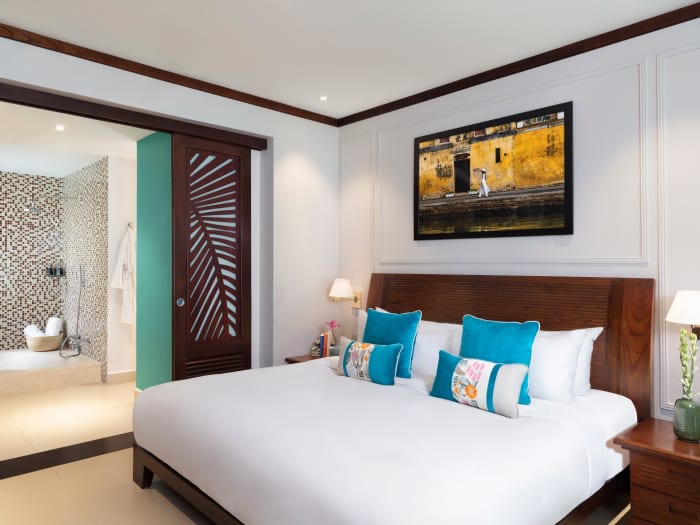
Dans un resort comme l’Anantara Hoi An, la chambre n’est pas pensée comme un simple point de chute entre deux excursions. Elle prolonge le rapport apaisé au paysage et à la ville, avec une écriture intérieure qui privilégie la lumière, l’espace vécu et le confort discret. Le vocabulaire décoratif mêle références locales et éléments contemporains, dans un registre qui reste sobre. On y retrouve l’idée, chère aux belles adresses de villégiature, qu’un intérieur réussi ne cherche pas à impressionner à tout prix : il doit d’abord permettre de se poser, de récupérer de la chaleur extérieure, de lire, de dormir profondément, de vivre quelques heures sans programme.
L’un des traits les plus appréciables réside dans la présence d’espaces extérieurs ou semi-extérieurs, qu’il s’agisse de terrasses, de balcons ou de vérandas selon les catégories. À Hoi An, où la lumière et l’air font partie intégrante de l’expérience, cette ouverture change tout. Elle permet de commencer la journée au calme, d’observer les jardins ou la rivière, et de conserver un lien direct avec l’environnement sans quitter son intimité. Cette relation au dehors inscrit les hébergements dans une logique de villégiature tropicale très cohérente avec le lieu.
Le confort, lui, relève d’une approche mesurée. Les chambres et suites sont conçues pour répondre aux attentes d’un séjour 5 étoiles, mais sans surcharge. Les volumes cherchent l’aisance plus que l’effet, les assises invitent au repos, et l’ensemble vise une fluidité d’usage. Pour les couples, cela crée une atmosphère propice aux séjours lents, aux retours de promenade en fin d’après-midi, aux matinées sans hâte. Pour les familles, certaines configurations permettent de bénéficier d’un cadre lisible et serein, où chacun trouve sa place sans que l’espace perde en élégance.
La palette visuelle s’accorde généralement avec l’esprit du resort : tonalités naturelles, bois, textiles légers, détails inspirés du contexte vietnamien. Cette retenue est importante. Dans une destination aussi riche visuellement que Hoi An, il serait facile de céder au folklore décoratif. L’Anantara Hoi An Resort préfère une interprétation plus mature, où les clins d’œil culturels restent présents sans devenir envahissants. Le résultat est intemporel : un intérieur qui ne fatigue pas le regard et qui laisse la priorité à la sensation de calme.
Les salles de bains participent à cette impression de confort bien pensé, en offrant un espace de transition entre la journée d’exploration et le temps du repos. Après les ruelles animées de la vieille ville, la chaleur humide ou une excursion dans les environs, retrouver une chambre fraîche, bien ordonnée et ouverte sur le vert devient un luxe très concret. C’est souvent là que l’on mesure la qualité réelle d’une adresse : dans la manière dont elle accompagne les rythmes du voyage, sans les contraindre.
À l’Anantara Hoi An Resort, les chambres et suites jouent précisément ce rôle. Elles ne cherchent pas à rivaliser avec la destination, mais à lui offrir un contrepoint. À l’extérieur, Hoi An déploie ses couleurs, ses marchés, ses lanternes et ses flux. À l’intérieur, tout invite à ralentir. Cette complémentarité est essentielle. Elle fait de l’hébergement non pas un décor secondaire, mais une composante active du séjour, capable de transformer une simple visite en expérience réellement habitée.
La table
À Hoi An, la table ne peut jamais être dissociée du territoire. La ville est l’une des grandes étapes culinaires du centre du Vietnam, avec une identité gastronomique marquée, nourrie par l’histoire marchande, les influences régionales et un art quotidien du marché. Séjourner à l’Anantara Hoi An Resort, c’est donc aussi entrer dans une destination où manger fait partie de la découverte culturelle au même titre que la visite des maisons anciennes ou des quais. Dans ce contexte, l’intérêt d’une offre de restauration au sein du resort n’est pas de rivaliser avec toute la ville, mais de proposer un cadre cohérent, confortable et inspiré, capable d’accompagner les différents moments du séjour.
Le premier plaisir est souvent celui du rythme. Un petit-déjeuner pris dans un environnement tropical, avec la lumière du matin sur les jardins ou la rivière, n’a pas la même fonction qu’un repas urbain pris sur le vif. Il installe la journée. On y apprécie la possibilité d’alterner habitudes internationales et saveurs locales, de prendre son temps avant une promenade dans la vieille ville, ou de prolonger un réveil lent dans une atmosphère paisible. Dans une adresse comme celle-ci, le service du matin compte beaucoup : il donne le ton, entre énergie douce et sentiment de vacances pleinement assumé.
Au fil de la journée, la restauration prend une autre dimension. Après les visites, les marchés, la chaleur et l’intensité visuelle de Hoi An, revenir déjeuner ou dîner dans un cadre plus calme devient une forme de luxe. La présence de jardins, de terrasses et de vues ouvertes contribue à cette sensation de détente. La cuisine, lorsqu’elle s’inspire du Vietnam et de la région, trouve ici un contexte particulièrement juste : fraîcheur des herbes, équilibre des textures, importance des bouillons, des grillades, des assaisonnements précis. Même sans détailler une carte particulière, on comprend que l’expérience culinaire prend tout son sens lorsqu’elle reste connectée au lieu et à la saison.
Pour les voyageurs curieux, Hoi An est aussi une ville qui invite à apprendre. Les marchés, les recettes emblématiques du centre du pays, les gestes de préparation, la place des produits frais dans la cuisine quotidienne : tout cela nourrit un imaginaire culinaire très fort. Dans un resort ancré dans la culture locale, des expériences autour de la cuisine ou de la découverte des saveurs trouvent naturellement leur place, qu’il s’agisse d’une initiation, d’un moment de dégustation ou d’un repas pensé comme une lecture du territoire. Ce type d’approche convient particulièrement aux séjours de plusieurs nuits, lorsque l’on souhaite aller au-delà de la simple consommation pour entrer dans une compréhension plus sensible de la destination.
Le soir, la proximité de la rivière apporte une tonalité particulière. La lumière baisse, l’air devient plus doux, et le dîner peut prendre un caractère presque cérémoniel sans jamais perdre sa simplicité. C’est là que l’on mesure la qualité d’une adresse de villégiature : dans sa capacité à créer des moments justes, ni trop formels ni trop anodins. L’Anantara Hoi An Resort semble répondre à cette attente par son cadre, son ancrage local et cette manière de laisser la destination inspirer l’expérience plutôt que de la surjouer.
Pour le voyageur exigeant, la table ici s’envisage donc comme un complément essentiel au séjour. Elle offre le confort de l’hôtel, la tranquillité du site et un accès naturel aux saveurs vietnamiennes, tout en laissant la liberté d’explorer la scène culinaire de Hoi An. Cette souplesse est précieuse : elle permet de vivre la destination selon son propre tempo, entre découvertes extérieures et parenthèses gourmandes au resort.
Spa & bien-être
Le bien-être à Hoi An ne relève pas seulement du soin au sens strict. Il naît aussi d’un climat, d’un rapport à l’eau, d’une lumière, d’une manière de ralentir après l’intensité des visites. À l’Anantara Hoi An Resort, cette dimension semble naturellement inscrite dans le séjour. Le simple fait d’être installé dans des jardins tropicaux, au bord de la Thu Bon, à quelques pas seulement de la vieille ville mais à distance de son agitation, crée déjà les conditions d’un apaisement réel. Le spa et les pratiques de bien-être trouvent ainsi un terrain favorable : ils ne viennent pas corriger un environnement stressant, mais prolonger une qualité de calme déjà présente dans le lieu.
Dans l’hôtellerie haut de gamme contemporaine, le spa n’est plus seulement un espace de soins ; il constitue souvent une manière d’entrer plus profondément dans le rythme d’une destination. Ici, on imagine volontiers des rituels inspirés des traditions asiatiques du toucher, de l’attention portée au corps fatigué par le voyage, et d’une approche holistique où la détente passe autant par l’atmosphère que par la technique. Après une journée à marcher dans Hoi An, à parcourir les ruelles historiques, à visiter des ateliers ou à s’exposer à la chaleur humide, un soin bien conduit prend une valeur particulière. Il ne s’agit pas seulement de se faire plaisir, mais de retrouver une qualité de présence à soi qui transforme la suite du séjour.
Le cadre joue un rôle essentiel. Dans un resort où la végétation est omniprésente, où les circulations sont ouvertes et où la rivière rappelle constamment un mouvement lent, la détente n’est jamais confinée à une seule pièce. Elle commence souvent avant même d’entrer dans l’espace de soin : dans le trajet à travers les jardins, dans le silence relatif du site, dans la sensation de quitter progressivement le rythme extérieur. Cette continuité est précieuse, car elle évite l’effet de rupture artificielle que l’on rencontre parfois dans certains spas très sophistiqués mais déconnectés de leur environnement.
Pour les voyageurs qui envisagent leur séjour sous l’angle de la récupération, l’adresse se prête bien à une routine simple et efficace : alternance de promenades culturelles, temps de repos en chambre ou en terrasse, moments au bord de l’eau, et parenthèses de soin ciblées. Les couples y trouvent un registre naturellement romantique, sans mise en scène excessive. Les voyageurs solos, eux, peuvent apprécier cette possibilité de recentrage, particulièrement bienvenue dans une destination où l’abondance visuelle et sensorielle peut être aussi stimulante qu’épuisante.
Le bien-être passe également par l’attention portée au quotidien : qualité du sommeil, douceur des espaces, possibilité de manger à son rythme, présence du végétal, sentiment de sécurité et de continuité dans le service. Sur ce point, l’Anantara Hoi An Resort dispose d’atouts évidents. Son atmosphère paisible inspirée de la culture locale, son implantation au bord de la rivière et son architecture ouverte créent un contexte favorable à une détente durable, plus profonde qu’un simple moment de spa réservé à la hâte.
En définitive, le bien-être ici se comprend comme une expérience globale. Il ne se limite pas à une carte de soins, aussi agréable soit-elle, mais s’étend à la manière dont le resort accompagne le voyageur tout au long de la journée. À Hoi An, où l’on vient autant pour la beauté du patrimoine que pour une certaine douceur de vivre, cette cohérence fait toute la différence.
Conciergerie & services
Dans une destination comme Hoi An, la qualité des services ne se mesure pas uniquement à l’efficacité opérationnelle. Elle se juge aussi à la capacité d’un hôtel à rendre la découverte plus fluide, plus intelligente, plus personnelle. L’Anantara Hoi An Resort bénéficie ici d’un avantage structurel : sa proximité avec la vieille ville permet d’organiser le séjour avec souplesse, sans dépendre d’une logistique lourde. On peut partir tôt pour profiter d’une lumière plus douce sur les rues historiques, revenir se reposer au cœur de la journée, puis ressortir en fin d’après-midi lorsque la ville change d’atmosphère. Cette liberté de mouvement est déjà, en soi, un service précieux.
La conciergerie prend alors tout son sens. Dans un lieu aussi riche que Hoi An, les attentes varient fortement selon les voyageurs. Certains souhaitent privilégier le patrimoine et comprendre l’histoire de l’ancien port. D’autres cherchent des expériences plus sensorielles : marchés, artisanat, cuisine locale, promenades au bord de l’eau, découverte des environs. D’autres encore veulent surtout préserver un rythme lent, avec quelques sorties bien choisies et beaucoup de temps au resort. Un bon service de conciergerie consiste précisément à lire ces intentions et à proposer un séjour ajusté, ni trop chargé ni trop vague. Dans le meilleur des cas, il aide à éviter les parcours convenus et à faire émerger une relation plus juste avec la destination.
Pour les familles, cette médiation est particulièrement utile. Hoi An peut se vivre de multiples façons, mais toutes ne conviennent pas au même âge ni au même tempo. Pouvoir organiser des journées équilibrées, alterner culture et détente, prévoir des déplacements simples et des pauses adaptées, change considérablement l’expérience. Les couples, eux, apprécient souvent la possibilité de réserver des moments plus intimes : dîner dans un cadre agréable, soin bien-être, excursion ciblée, ou simple recommandation d’horaire pour profiter de la ville dans de meilleures conditions. Quant aux voyageurs expérimentés, ils reconnaissent vite la différence entre un service standardisé et une équipe réellement capable d’affiner un séjour.
Au-delà de la conciergerie, les services d’un resort 5 étoiles comme celui-ci doivent surtout soutenir une sensation de facilité. Accueil attentif, circulation lisible, assistance discrète, entretien rigoureux des espaces, disponibilité pour répondre aux demandes du quotidien : tout cela participe d’un luxe silencieux, souvent plus mémorable que les signes extérieurs de prestige. Dans un cadre tropical, cette exigence est encore plus importante, car le confort dépend aussi de détails pratiques très concrets : fraîcheur des lieux, gestion du rythme, simplicité des transitions entre temps de visite et temps de repos.
L’Anantara Hoi An Resort semble particulièrement bien placé pour offrir ce type d’accompagnement. Son identité paisible, son ancrage local et sa situation stratégique en font une base idéale pour un séjour sur mesure. On y imagine volontiers une équipe capable d’orienter vers les meilleures heures de visite, d’aider à organiser des découvertes culturelles ou gastronomiques, et de préserver en permanence cette sensation de fluidité qui distingue les belles maisons.
En définitive, le service ici ne devrait pas être perçu comme une couche supplémentaire, mais comme une structure invisible qui rend le voyage plus harmonieux. C’est souvent cela, le vrai luxe contemporain : non pas multiplier les effets, mais retirer les frictions. À Hoi An, où l’on vient chercher à la fois beauté, culture et douceur, cette qualité d’accompagnement prend une valeur particulière.
L'art de vivre à Hoi An
Séjourner à l’Anantara Hoi An Resort, c’est aussi approcher une certaine idée de Hoi An : une ville où l’art de vivre se lit dans les détails, dans les heures choisies, dans la manière de circuler à pied, de s’arrêter pour un café, d’observer une façade ancienne ou un reflet de lanterne sur l’eau. Contrairement à d’autres destinations plus démonstratives, Hoi An se découvre souvent par capillarité. On y vient pour son patrimoine, bien sûr, mais ce que l’on retient durablement tient souvent à une ambiance : une lumière de fin d’après-midi, un marché encore en activité, une cour silencieuse derrière une rue passante, une table simple mais juste. Le resort, par sa proximité avec la vieille ville et son atmosphère paisible, permet précisément d’entrer dans cette temporalité nuancée.
La ville ancienne, classée au patrimoine mondial de l’UNESCO, constitue le cœur de cette expérience. Ses maisons de marchands, ses temples, ses assemblages d’influences vietnamiennes, chinoises, japonaises et européennes racontent une histoire d’échanges qui dépasse largement le pittoresque. Mais Hoi An ne se résume pas à un décor patrimonial. Elle reste une ville vécue, avec ses artisans, ses rythmes quotidiens, ses habitudes culinaires, ses flux de visiteurs et ses moments de retrait. Pour bien la comprendre, il faut accepter de varier les heures et les points de vue : la parcourir tôt, y revenir au crépuscule, s’en éloigner un peu, puis la retrouver.
C’est là que l’implantation de l’Anantara Hoi An Resort devient particulièrement pertinente. En séjournant à quelques pas du centre historique sans être au cœur de son animation permanente, on peut vivre Hoi An avec davantage de souplesse. On choisit ses moments. On profite de la ville lorsqu’elle est la plus belle ou la plus agréable, puis on retrouve la tranquillité des jardins et de la rivière. Cette alternance crée un rapport plus durable à la destination. Elle évite la saturation et permet de goûter ce qui fait le charme réel de Hoi An : une douceur, une échelle humaine, un dialogue constant entre culture et quotidien.
L’art de vivre local passe aussi par la table, les marchés, les ateliers, les tissus, les lanternes, les gestes artisanaux et cette attention aux matières qui caractérise tant la ville. Même une promenade sans objectif précis peut devenir ici une expérience riche, tant l’œil est sollicité par les détails. Pour autant, il est utile de ménager des temps de pause. Hoi An se savoure mieux lorsqu’on ne cherche pas à tout voir. Le resort offre alors un contrepoint essentiel : un lieu où l’on peut laisser retomber les impressions, relire la journée, préparer la suivante ou simplement ne rien faire.
Pour les voyageurs sensibles à la culture, cette adresse constitue une base particulièrement cohérente. Elle permet une immersion douce plutôt qu’un face-à-face permanent avec la ville. Pour les couples, elle favorise un séjour romantique sans cliché, fondé sur la promenade, la lumière et le temps partagé. Pour les familles, elle rend possible une découverte progressive, plus confortable et moins fatigante. Dans tous les cas, elle accompagne une certaine idée du voyage : attentive, lente, ouverte à la nuance.
Hoi An est l’une de ces villes qui laissent une empreinte moins par l’accumulation des sites que par une qualité d’atmosphère. L’Anantara Hoi An Resort capte précisément cette dimension. Il ne se contente pas d’être proche de la destination ; il en épouse le rythme. Et c’est sans doute là sa plus grande réussite.
Réserver via MyConciergeHotel
Choisir l’Anantara Hoi An Resort via MyConciergeHotel, c’est aborder Hoi An avec une logique de séjour pensée dans son ensemble, et non comme une simple addition de nuits d’hôtel. Dans une destination où l’équilibre entre découverte culturelle, confort climatique et rythme personnel est essentiel, la qualité de la préparation compte presque autant que l’adresse elle-même. L’intérêt d’un accompagnement éditorial et concierge est précisément là : aider à déterminer si ce resort correspond à votre manière de voyager, puis organiser les bonnes séquences pour que l’expérience soit fluide dès l’arrivée.
L’Anantara Hoi An Resort s’adresse à des profils variés, mais il ne répond pas aux mêmes attentes de la même façon. Pour un couple, il constitue une base particulièrement séduisante grâce à son atmosphère paisible, sa relation à la rivière et sa proximité avec la vieille ville. Pour une famille, l’intérêt réside dans la possibilité d’alterner facilement visites et temps de repos, sans trajets complexes ni fatigue excessive. Pour un voyageur solo ou un séjour centré sur le bien-être, le resort offre un environnement lisible, végétal et apaisant, propice à une découverte plus lente de Hoi An. Réserver avec discernement, c’est donc d’abord clarifier le projet de voyage : immersion patrimoniale, parenthèse romantique, vacances intergénérationnelles ou retraite douce au Vietnam central.
MyConciergeHotel peut ensuite intervenir sur les détails qui changent réellement le séjour. La saison, par exemple, influence fortement l’expérience de Hoi An. La période sèche, généralement plus agréable pour les promenades, les activités extérieures et l’accès aux plages de la région, ne se vit pas de la même manière qu’une saison plus humide. Le choix de la durée est tout aussi important : une ou deux nuits permettent de découvrir l’essentiel, mais un séjour plus long révèle davantage la douceur du lieu et l’intérêt d’une adresse aussi bien située. Le bon accompagnement consiste à calibrer ce temps, à éviter de surcharger le programme et à ménager des respirations.
Réserver via MyConciergeHotel, c’est aussi bénéficier d’un regard éditorial indépendant sur la cohérence de l’expérience. À Hoi An, beaucoup de voyageurs hésitent entre immersion totale dans le centre ancien, séjour balnéaire à distance, ou resort de caractère à proximité. L’Anantara Hoi An Resort se distingue justement par son équilibre : assez proche pour vivre la ville à pied, assez retiré pour préserver le calme, assez ancré dans la culture locale pour offrir plus qu’un simple confort standardisé. C’est ce type de nuance qu’un conseil personnalisé permet de mettre en valeur.
Selon les besoins, l’accompagnement peut également porter sur le rythme des journées, les expériences à privilégier, les moments opportuns pour explorer la vieille ville, ou encore l’articulation avec d’autres étapes au Vietnam. Hoi An s’intègre souvent dans un itinéraire plus large ; bien positionner cette halte peut transformer l’ensemble du voyage. Le resort devient alors non seulement une belle adresse, mais un point d’équilibre entre mouvement et repos.
En définitive, réserver l’Anantara Hoi An Resort via MyConciergeHotel revient à choisir une lecture plus précise, plus sereine et plus personnelle de la destination. Dans une ville où l’atmosphère compte autant que les sites, cette qualité de préparation fait une différence tangible. Le luxe commence souvent avant le départ : dans la justesse du choix.