Vietnam is now firmly established as one of the most intriguing hotel scenes in Asia. The country combines spectacular geography, a vibrant urban culture, and unspoilt coastlines. For the discerning traveller, this diversity makes all the difference. In just a few days, one can transition from a heritage address in Hanoi to a secluded beach retreat. One can also alternate between metropolitan energy, Central Coast beaches, Northern mountains, and lesser-known bays. This is precisely what makes a ranking useful. It is not merely about listing renowned hotels; it is essential to distinguish those establishments that truly embody a stay, a rhythm, and an intention. In Vietnam, luxury is not solely defined by a name; it is also measured by location, the essence of the places, and the coherence of the experience.
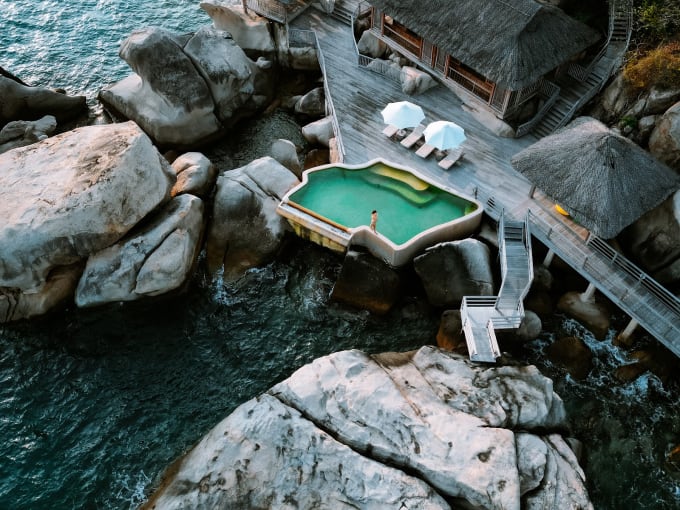
At MyConciergeHotel, we do not base our selections solely on reputation. Our assessment incorporates several concrete criteria. Firstly, the address itself. A remarkable location can transform the perception of a stay. Amanoi in Ninh Hải exemplifies this logic perfectly, as do Six Senses Ninh Van Bay and Six Senses Con Dao. Next, we consider the strength of the brand and its ability to deliver a clear promise. Capella Hanoi, Park Hyatt Saigon, Fairmont Hanoi, and Anantara Hoi An Resort each tell a different story of Vietnam. This is a crucial point. We also take into account architectural uniqueness, the expected level of service from a five-star establishment, the clarity of wellness offerings, and their relevance for an international clientele. It is important to remember that a great hotel is not just beautiful; it must also be appropriate for a specific purpose.
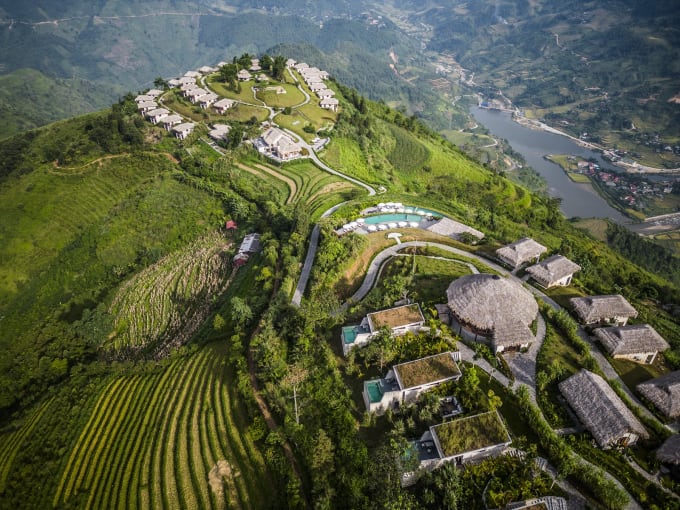
The Vietnamese panorama presented in this Top 10 is particularly rich. It encompasses major cities, established seaside resorts, and more secluded retreats. In Hanoi, Capella Hanoi and Fairmont Hanoi represent two distinct interpretations of urban luxury. In Ho Chi Minh City, Park Hyatt Saigon and Capella Ho Chi Minh City cater to different expectations, balancing classic addresses with more contemporary offerings. Along the coast, Anantara Ho Tram Resort, Meliá Ho Tram Beach Resort, Anantara Mui Ne Resort, The Anam Mui Ne, and Anantara Quy Nhon Villas illustrate how the Vietnamese beach experience has evolved. Further inland, Hyatt Regency Danang Resort & Spa embraces the concept of a comprehensive resort. Finally, Topas Ecolodge reminds us that Vietnam is never solely about its beaches; the country also offers a luxury of landscape, silence, and altitude.
For 2025 and 2026, several trends are becoming evident. The first is the rise of a more experiential luxury rather than a demonstrative one. Travellers are seeking less theatricality and more meaning in their stays. This favours addresses like Amanoi, Six Senses Con Dao, and Topas Ecolodge, where the location is as important as the room. The second trend is the resurgence of cities. Hanoi and Ho Chi Minh City are attracting a clientele that wishes to combine business, culture, and high-end hospitality. Capella Hanoi, Fairmont Hanoi, Capella Ho Chi Minh City, and Park Hyatt Saigon are well-positioned in this regard. The third evolution is that wellness is becoming more transversal; it is no longer limited to the spa but encompasses dining, sleep, space, and the relationship with nature. Our advisors are observing a growing demand for longer stays, with a genuine balance between discovery and recuperation.
There is also a very particular way of experiencing French luxury in Vietnam. Not as an imported decor, but as a demand for moderation. A great hotel must know how to orchestrate space, dining, discretion, and service. It must also allow the country to speak for itself. This is where certain establishments stand out. Anantara Hoi An Resort engages with a historic city of human scale. Park Hyatt Saigon fits into the rhythm of a major metropolis. Capella Hanoi explores a theatrical and cultural dimension. Six Senses Ninh Van Bay and Amanoi favour a more direct relationship with the landscape. My advice is simple: seek not the hotel that promises everything, but the one that best frames your journey. True luxury does not overshadow the destination; it makes it more comprehensible, fluid, and often deeper.
This ranking should therefore be read as an editorial selection, not as an absolute verdict. There is no single best hotel in Vietnam for all travellers. There are more compelling hotels depending on the moment, budget, duration, and intention of the stay. A couple on their honeymoon will not necessarily choose the same address as a business traveller. A family will not prioritise the same aspects as a wellness retreat enthusiast. This is why we favour solid justifications. Location, concept coherence, international brand reputation, and the ability to provide a complete experience matter more than superficial language. We avoid easy superlatives; they convey little. A useful ranking should help in decision-making while respecting the diversity of excellent addresses available in the country.
Our Top 10 best hotels in Vietnam thus brings together very different yet all relevant signatures. Some excel in their seclusion, others in their urban anchorage, and still others in their balance between resort, wellness, and regional access. Here are the ten addresses we consider the strongest today.