History & resort identity
Anantara Desaru Coast Resort belongs to a newer generation of seaside addresses designed to reveal a relatively unspoilt stretch of coastline, away from overbuilt resorts and the more theatrical codes of mass tourism. Its appeal is not that of a historic grand hotel in the European sense, with period salons and society lore, but rather a contemporary interpretation of a beachfront stay: architecture opened to the landscape, an unhurried rhythm, direct access to the shore, and a clear intention to balance international comfort with a tropical setting. In that respect, the Anantara signature provides a recognisable framework. The brand is generally associated with attentive hospitality, stays shaped as much by service details as by the quality of the location, and a discreet form of refinement that favours ease over display.
In Desaru, that philosophy takes on a particular resonance. The destination, on the south-eastern coast of Peninsular Malaysia, has developed a reputation for broad, bright beaches suited equally to family holidays and couples’ escapes. The resort contributes to that sense of place by adopting a presence that seeks less to dominate the scenery than to sit within it. Its story is therefore first and foremost that of an emerging coastal destination, gradually established as an upscale leisure retreat through the quality of its beaches, tropical climate and regional accessibility. Within that context, the hotel acts as an anchor: an address capable of giving shape and rhythm to a stay without distracting from what matters most — the sea, the light and a recovered sense of time.
What distinguishes the property is not an accumulation of effects, but coherence. The seafront is not merely a visual asset here; it structures the entire experience. Days naturally unfold between the beach, water-based activities, relaxation spaces and the breathing room that a resort of this category is expected to provide. This continuity between indoors and outdoors, between active hours and contemplative ones, is in many ways the true signature of the place. It answers a distinctly contemporary desire: to stay in a fully equipped hotel with modern facilities while still feeling genuinely elsewhere.
Anantara Desaru Coast Resort therefore suits several styles of travel. Families find a straightforward setting, easy to inhabit, where immediate beach access and a range of leisure options simplify the flow of the stay. Couples tend to seek the softness of the seafront, walks at first or last light, and the comfort of an address where activity and retreat can be alternated with ease. Solo travellers, meanwhile, often value it as a calm base from which to slow down, read, swim, walk and reconnect with a less fragmented rhythm. In every case, the hotel expresses a vision of luxury rooted not in ostentation but in quality of use: sleeping well, moving easily, dining comfortably, enjoying the sea without complication, and finding in the service that quiet attentiveness which becomes increasingly meaningful over several days.
The setting, between coastline and tropical ease
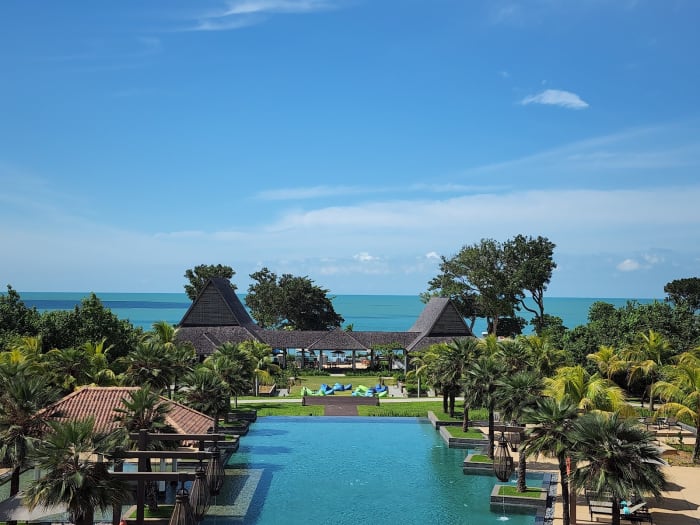
A stay at Anantara Desaru Coast Resort means choosing an address where the landscape is never a secondary backdrop. The resort unfolds directly on the seafront, with immediate beach access, and that changes the way the hotel is experienced from the outset. This is not simply a matter of sea views, but of a practical relationship with the shore: being able to reach the sand within moments, return from a swim without complication, walk early in the morning before the heat rises, or linger at day’s end facing the horizon. That proximity gives the stay a welcome simplicity. It also creates a sense of space, essential in beach destinations where one is often seeking not constant stimulation but a form of inward ease.
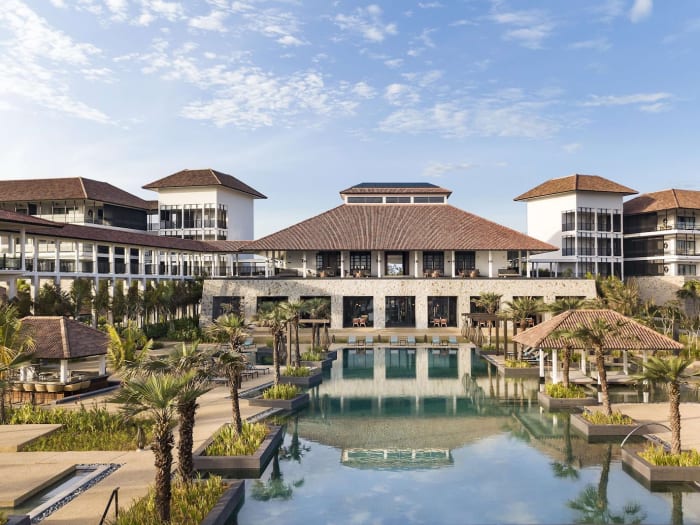
Desaru itself reinforces that impression. The coastline is known for its long beaches and a mood that is expansive rather than dramatic. Here, luxury often lies in the continuity of the setting: broad skies, a clear marine line, tropical greenery and light that shifts with the hours. The resort sits within this environment through a contemporary language that favours open volumes, fluid circulation and unobstructed outlooks. The modern facilities noted among the hotel’s strengths make particular sense in this context: they allow guests to enjoy the site in comfort without disturbing the balance between nature, relaxation and practicality.
The property is especially well suited to travellers looking for a stay without friction. Families benefit from an intuitive layout, with spaces that make it easy to alternate shared time and quieter moments. Couples appreciate the possibility of inhabiting the resort at their own pace, between the beach, unhurried meals and periods of rest. That versatility matters, because it prevents the address from being confined to a single promise. The hotel is neither exclusively family-oriented nor reserved for guests seeking complete seclusion. Instead, it offers a sufficiently flexible setting to accommodate several interpretations of an upscale coastal holiday.
The seafront remains, naturally, the centre of gravity. It shapes the light in the spaces, the overall mood of the stay and even one’s perception of time. In a resort such as this, days do not need to be overfilled in order to feel successful. A morning on the beach, a leisurely lunch, a shaded reading break, a few water-based activities, then a return to the room before dinner: that simple sequence is often enough to create the feeling of a fully realised holiday. This is precisely where the property finds its balance. It offers enough facilities and services to meet the expectations of a five-star hotel while still allowing the setting itself to speak.
For travellers discovering Desaru, the resort also provides a clear gateway into the destination. It gives access to what the coast offers most immediately — beach, sea, relaxation and water sports — without requiring prior knowledge of the area. And for those already familiar with beach destinations in South-East Asia, it presents a calmer alternative to more crowded names. This ability to combine clarity, comfort and a genuine sense of escape explains much of the address’s lasting appeal.
Rooms, suites and the art of rest
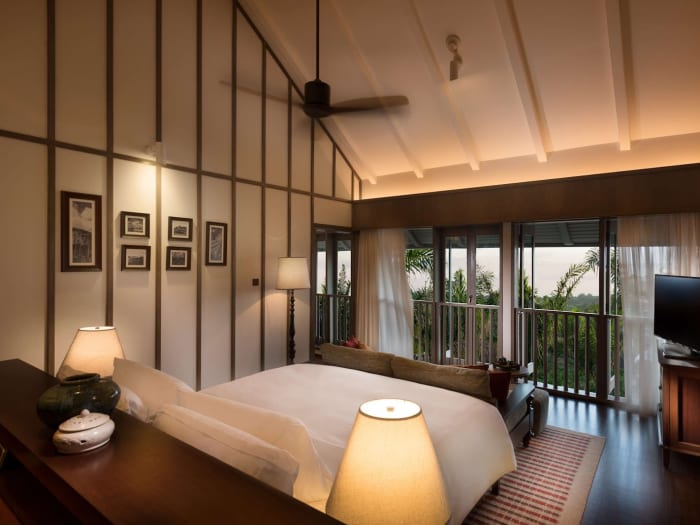
In a seaside resort, the room is never merely a place to sleep. It becomes a vantage point, a retreat after the beach, sometimes even a refuge from the midday heat. At Anantara Desaru Coast Resort, that dimension is central. Without relying on decorative excess, the expected experience is one of accommodation aligned with the setting: contemporary lines, legible comfort, fluid movement between bathroom, sleeping area and relaxation space, and above all a sense of coolness and calm. In a tropical climate, such elements matter as much as aesthetics. The real luxury here often lies in returning to a well-considered room after several hours outdoors, being able to rest there without interruption, and extending the holiday feeling within a setting that does not tire the eye.
Accommodation categories in a property of this level are generally designed to answer different needs. Some travellers favour an elegant, functional room, sufficient for making full use of the public spaces and the beach. Others seek greater volume, perhaps a suite that allows a clearer separation between the different moments of the stay: reading, resting, preparing for the evening, or spending time together as a family. In a resort suited to both couples and families, that flexibility is important. It allows each guest to choose not only a level of comfort, but a way of inhabiting the hotel. Family stays in particular benefit from accommodation able to absorb beach returns, staggered rhythms and the need for a space that is simply easy to live in.
The relationship with the outdoors remains a key point. In a seafront address, one expects generous openings, natural light, sometimes a terrace or balcony depending on category, and the feeling that the landscape continues to exist from the room even when one withdraws into it. That visual link with the environment contributes directly to the quality of rest. It avoids the sense of disconnection sometimes felt in overly standardised large resorts. Here, the ideal is instead to maintain a discreet dialogue with the coastline, the greenery and the daylight.
The modern comfort highlighted among the hotel’s strengths takes a very concrete form in the rooms: quality bedding, well-regulated air conditioning, a functional bathroom, connectivity suited to contemporary habits, sufficient storage and reliable housekeeping. These details may not be dramatic, but they are decisive over the course of a stay. They shape sleep quality, the ease of daily routines and, ultimately, the true success of the hotel experience.
For couples, the room often becomes an extension of a stay defined by slowing down: returning from the beach, a cool shower, a quiet pause before dinner, waking with the morning light. For families, it must provide a stable base between activities, a place to regroup and recover. In both cases, Anantara Desaru Coast Resort appears to uphold a simple but persuasive idea of upscale accommodation: a space in which everything is designed to make the stay easier, without ever distracting from what brings guests here in the first place — the sea, the climate and the promise of genuine rest.
Dining, between seaside simplicity and the rhythm of the stay
In a beachfront resort, dining plays a more structuring role than one might assume. It is not limited to the intrinsic quality of the dishes; it also shapes the day, accompanies returns from the beach, creates moments of rendezvous and contributes to that sense of a continuous stay in which one does not need to leave the hotel in order to live well. At Anantara Desaru Coast Resort, one can reasonably expect an offer conceived in that spirit: varied enough to support several days on site, flexible enough to suit both families and couples, and attuned to a tropical climate that calls for meals that are sometimes light, sometimes more generous depending on the hour and the day’s activity.
Breakfast, in this kind of address, is often a defining moment. Not only because it sets the tone for the day, but because it stages the relationship with the setting: morning light, proximity to the sea, a still-calm tempo before activities begin. In a well-conceived resort, this first meal should be both efficient and pleasurable, capable of accommodating very different travel habits. Families look for simplicity and choice; couples for a quieter experience; longer-stay guests for consistency without monotony. That ability to answer several rhythms is one of the markers of successful resort dining.
The rest of the day calls for other registers. After the beach or water sports, guests tend to appreciate lunches that do not weigh heavily, refreshing pauses, dishes that are easy to share, and service able to adapt to shifting schedules. In the evening, expectations change: atmosphere matters more, and one looks for a table where the day can be extended without haste, in a setting that remains coherent with the seafront. In a destination such as Desaru, gastronomy need not be demonstrative in order to be memorable. It often benefits from relying on freshness, clarity of flavour and the comfort of well-managed service.
In a five-star property, dining also contributes to the overall perception of luxury. That luxury is measured not only by culinary sophistication, but by the rightness of the whole: quality produce, well-judged cooking, attention to guest preferences, fluid service, and the ability to handle equally well a dinner for two and a family meal. In a resort welcoming varied profiles, such versatility is essential. It avoids the pitfall of dining that feels too formal for a holiday or, conversely, too standardised for a demanding clientele.
Finally, the seaside dimension shapes the very imagination of meals. Guests come here to live outdoors, feel the sea air and move from beach to table without excessive transition. The best moments are often the simplest: lunch after a swim, a cold drink in the shade, dinner taken in the slowly fading light. Anantara Desaru Coast Resort appears particularly well placed to offer that continuity between landscape, comfort and conviviality. It is a form of stay-led gastronomy rather than culinary display, where what matters most is eating well, at the right moment, in the right setting.
Wellbeing, relaxation and recovered time
Wellbeing, in a resort such as Anantara Desaru Coast Resort, is not limited to the existence of a spa in the strict sense. It belongs to a broader experience shaped by climate, space, light, proximity to the sea and the ability of a good hotel to reduce the frictions of daily life. Relaxation often begins before any treatment: in the possibility of walking barefoot to the beach, in the calm of a well-tempered room, in not having to organise every hour. This is worth underlining, because the best seaside stays are not those that multiply programmes, but those that restore a more natural sense of breadth to body and mind.
In that logic, the wellness facilities of a five-star property make most sense when they extend the character of the place. One expects spaces dedicated to rest, recovery and slowing down rather than abstract sophistication. After a day in the sun or time spent on the water, the body asks for simple things: coolness, hydration, stretching, massage, quiet. The resort, with its modern facilities, appears particularly suited to this alternation between active moments and restorative ones. That complementarity is essential for travellers who do not wish to choose between dynamic holidays and a genuinely regenerative stay.
Couples often find in this kind of environment a setting conducive to more intimate pauses: a treatment for two, a quiet moment after the beach, a late afternoon devoted to calm before dinner. Families, by contrast, tend to approach wellbeing differently. It is less about ritualising every moment than about benefiting from a hotel in which everything contributes to easing the stay: spaces that are simple to inhabit, quick access to activities, comfortable rooms and attentive service. Family wellbeing then depends as much on the resort’s overall fluidity as on any dedicated facilities.
The presence of the sea naturally plays a central role. Water, wind, walking on sand and an open horizon act as natural correctives to accumulated fatigue. Many travellers underestimate this very particular quality of coastal stays: they allow one to recover a more physical and simpler relationship with time. One rises earlier, moves more, rests better and accepts pauses more readily. In a well-conceived hotel, this gentle transformation is supported by the service, the design of the spaces and the possibility of shaping one’s days without constraint.
In Desaru, where the atmosphere lends itself to relaxation, Anantara Desaru Coast Resort appears to offer a form of wellbeing based on continuity rather than rupture. Guests do not necessarily come here in search of an ascetic retreat or an over-staged wellness narrative, but of a credible balance between seaside pleasure, modern comfort and real rest. It is precisely this sense of rightness that often brings travellers back: the feeling of having finally slowed down without effort, and of having found, for a few days, a more liveable rhythm.
Services, Leisure and Daily Hospitality
A grand resort is not solely judged by its location or the quality of its rooms. Its true value emerges in how it supports guests throughout their days, anticipates their needs, and facilitates a seamless stay. At Anantara Desaru Coast Resort, this service dimension is paramount. The property caters to a diverse clientele with varying expectations. Its beachfront location also necessitates particular logistics: beach access, return from activities, leisure organisation, family comfort, and staff availability. When an establishment successfully manages these elements, luxury becomes almost invisible. Everything appears effortless, thanks to precise organisation.
One of the resort's highlights lies in its on-site water activities. This asset transforms the nature of the stay. It introduces movement without complicating the experience. It allows for varied days without leaving the premises. It also fosters a more active relationship with the coastline. For some, these activities are the heart of the journey. For others, they remain an option depending on mood or weather. In both cases, their presence enhances the resort's appeal, particularly for families and couples.
In a five-star hotel, service is also reflected in its ability to adapt to the rhythms of its guests. Families require flexibility, practical assistance, and a responsive team. Couples expect more discretion, continuity, and measured attentiveness. Solo travellers often appreciate availability without insistence. The ability to seek advice, organise an activity, or simply enjoy the surroundings without constraints is highly valued. This relational intelligence is difficult to formalise, yet it is crucial in the lasting impression an hotel leaves.
The modern facilities here take on a very tangible dimension. They reflect a resort designed for contemporary use: comfort in communal spaces, amenities suited to an international clientele, intuitive circulation, and the ability to balance leisure, relaxation, and practical living. In a holiday destination, this is of utmost importance. A hotel may be stunning; if it is not easy to navigate, the experience can quickly become fragile. Conversely, when an establishment makes every step feel natural, it creates an immediately perceptible quality of stay.
Finally, the concierge service and personalised support find their true meaning in a resort like this. Booking activities in advance, adjusting the programme according to the season, guiding guests towards the best times of day to enjoy the beach or water activities: these gestures transform a good address into a successful stay. Anantara Desaru Coast Resort thus champions a hospitality of precision, characterised more by continuous attention than by ostentation. It is often this quality that sustainably distinguishes a great holiday hotel.
The Desaru way of life
Desaru is not defined by the sophisticated urbanity of a major capital, nor by the overworked folklore of an overexposed destination. Its appeal lies elsewhere: a broad coastline, a tropical climate, a direct relationship with the sea, and a way of travelling that privileges space, relaxation and outdoor leisure. For many travellers, that is precisely its strength. One does not come here to tick off an endless list of monuments or to live at a dense pace. One comes to inhabit a stretch of coast, recover a simpler relationship with the day, and let the landscape impose its own cadence. In that respect, Anantara Desaru Coast Resort serves as an excellent interpreter of the place.
The Desaru way of life often begins with the beach. Not merely as a place to swim, but as a structure for time itself. In the morning, it invites walking or the first activities; in the middle of the day, it calls for shade, pause and lunch; in the late afternoon, it becomes once again a space for strolling and contemplation. This natural modulation is one of the great qualities of well-preserved coastal destinations. It allows days to feel full without becoming overloaded. The resort, thanks to its direct beach access, gives this experience a rare obviousness: one moves from one space to another without interruption, as if the stay unfolded along a single line of comfort.
Desaru particularly suits travellers in search of a kind of climatic luxury. Heat, light, the presence of the sea and tropical greenery create an environment that acts almost physically upon the stay. One eats differently, sleeps differently, accepts periods of rest more readily. Children find a natural playground; adults, an opportunity to slow down without boredom. It is a destination that favours elemental yet essential pleasures: swimming, walking, reading, sharing a meal, watching the light change. In the landscape of upscale travel, that embraced simplicity is far from minor. On the contrary, it answers an increasingly strong aspiration: to recover holidays that are genuinely restorative.
Seasonality naturally deserves consideration. As is often the case in tropical latitudes, the quality of the stay depends greatly on the chosen period, especially if one wishes to make the most of water sports and beach life. The most agreeable times are generally those when conditions allow for more life outdoors, under steadier light and with a more inviting sea. Anticipating one’s trip, checking the climate and reserving certain activities in advance therefore form part of an intelligent approach to the destination.
Ultimately, the Desaru way of life rests on a subtle balance between simplicity and comfort. It is not a place that seeks to impress at all costs. Rather, it appeals through its ability to make the sea a daily horizon, the resort an easy refuge to inhabit, and free time a material that is finally available again. For French travellers accustomed to major international beach destinations, Desaru offers a calmer reading of the tropical stay: less demonstrative, often more breathable, and particularly well suited to those wishing to combine hotel quality with a genuine sense of escape.
Book via MyConciergeHotel
Booking the Anantara Desaru Coast Resort through MyConciergeHotel means approaching this beach getaway with precision. In a destination where the experience hinges on pace, season, and activities, this support is invaluable. It is not merely about securing a room in a five-star seaside resort; it is about crafting a stay that aligns with your expectations. Whether it’s a couple’s retreat focused on relaxation, a family break filled with water sports, or a few sun-soaked days away, each plan requires different considerations.
One of the first challenges is choosing the right tempo. Some travellers wish to make the most of the beach and on-site leisure activities, while others prioritise their room, rest, and unstructured days. MyConciergeHotel can assist in clarifying these priorities before departure. In a hotel suited for both families and couples, this step is crucial. It helps to steer the stay towards more space, logistical simplicity, or quieter moments.
The booking of activities also merits advance planning. It is wise to think ahead about the leisure pursuits you wish to engage in on-site. In a resort where water activities are prominent, waiting until the last moment can limit options, especially during peak periods. Concierge assistance ensures that the highlights of your stay are secured while allowing enough flexibility to maintain the holiday spirit. The goal is not to schedule everything but to reserve what truly matters.
Seasonality plays a decisive role as well. Desaru reveals itself differently throughout the months, particularly concerning beach conditions and outdoor living. Being advised on the most suitable period for your plans helps to avoid many disappointments. It is also a more nuanced approach to luxury: the adjustment between a place, a moment, and an expectation.
With MyConciergeHotel, booking becomes the first chapter of your journey. You benefit from a discerning editorial perspective and a meticulous attention to the details that matter: location, pace, activities, and overall comfort. For the Anantara Desaru Coast Resort, where everything hinges on the balance between sea, relaxation, and fluidity, this preparation often makes all the difference.