Shinbashi Enbujō
Shinbashi Enbujō is a Tokyo theatre linked with kabuki and other Japanese stage arts, near Ginza for an easy cultural stop.
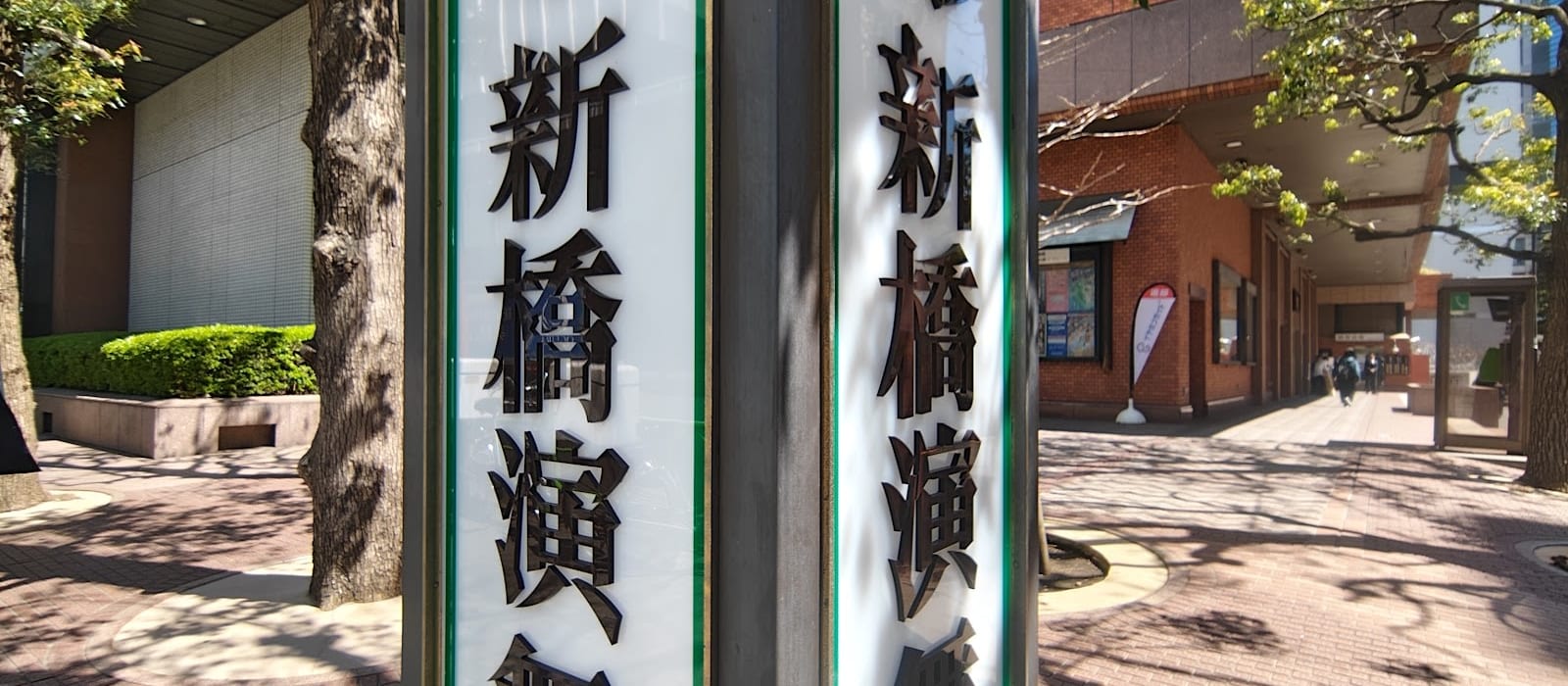
In pictures


About
Shinbashi Enbujō is a Tokyo theatre known for hosting kabuki. It also presents other forms of Japanese stage performance. For visitors, it is a practical option if you want a cultural evening without leaving central Tokyo.
What matters here is its living role. This is not a museum about kabuki. It is a working theatre where traditional performance still reaches the stage. Depending on the program, you may also find more contemporary productions or mixed theatrical formats.
A smart visit starts with choosing the right performance. Kabuki uses stylised movement, strong visual codes and storytelling that can run long. Even if you do not follow every detail, the acting, costumes and stage rhythm usually make the experience accessible.
Its position near Ginza makes it easy to pair with a walk, dinner or another cultural stop. If your main goal is Tokyo's best-known kabuki theatre, compare it with Kabukiza as well. If you want a well-located Japanese theatre experience with a strong traditional link, Shinbashi Enbujō is a sound choice.
The Concierge's Tip
Pick the performance first, then build the evening around it. Running times can be substantial, depending on the program. Arriving a little early makes the experience smoother, especially if the theatre is busy. In cooler months, pairing the show with an early Ginza walk works well. If schedules do not align, compare with Kabukiza for a clearer kabuki focus. Or keep Shinbashi Enbujō for a central theatre night with broader programming.
Ask the Concierge
Our Concierge arranges your visit: skip-the-line tickets, a private guide, off-hours access.
Ask the ConciergeFrequently asked questions
- What is kabuki in Japan?
- Kabuki is a Japanese theatre form built on stylised acting, music, dance and strong visual codes. You do not need to understand every word to follow its dramatic energy. At Shinbashi Enbujō, the appeal is seeing this tradition in a working theatre, not in a purely museum-like setting.
- How long does a kabuki performance last?
- It depends on the production, the number of acts and the format of the performance. Some kabuki programs take a significant part of an afternoon or evening. It is wise to check the specific show before planning dinner or transport. For a short stay, timing matters as much as location.
- Does kabuki still exist today?
- Yes. Kabuki is still actively performed in Japan, with audiences that include both locals and visitors. Tokyo remains one of the easiest places to experience it. Shinbashi Enbujō is useful in that sense, because it presents kabuki as a living stage practice rather than a historical idea.
- What should I wear to a kabuki performance?
- Smart casual is usually appropriate. You do not need formal evening wear, but a neat outfit fits the setting well. Comfort matters, especially for longer performances. In warmer months, theatres can still feel cool indoors, so a light layer is often practical.
- Is Shinbashi Enbujō a good choice for a first Japanese theatre experience?
- Yes, especially if you want a theatre outing in a central area. The key is choosing the right production. Kabuki can feel formal at first, yet it is often approachable through movement, costume and stage rhythm. If you prefer a simpler entry point, compare the current program with other Tokyo venues.
- What is the difference between Shinbashi Enbujō and Kabukiza in Tokyo?
- Both are connected to Japanese theatre in Tokyo, but they serve slightly different visitor expectations. Kabukiza is often the most immediately recognised name for kabuki. Shinbashi Enbujō can be a better fit if you want a central venue whose programming may extend beyond a single traditional format.
- Is it suitable for families?
- Yes, provided children are comfortable sitting through a structured performance. Kabuki has strong visual appeal, which helps, but the pace and length can still be demanding for younger visitors. For families, it works best when scheduled as the main event of the day rather than after a long sightseeing program.
Hotels nearby
Our selection of extraordinary hotels a short walk from this place.


