David
Michelangelo’s David in Florence is a landmark Renaissance sculpture. It is valued for its formal power and for its place in the city’s civic history.
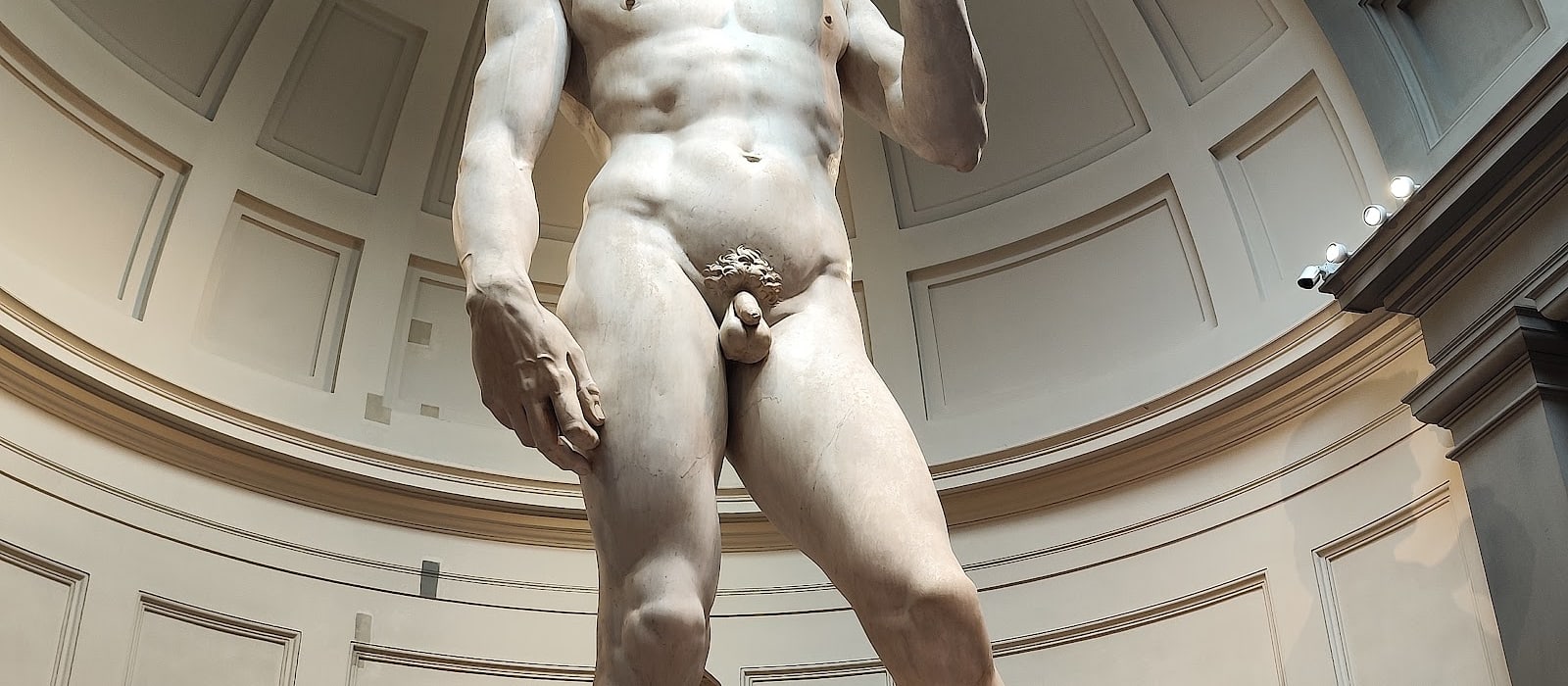
In pictures


About
Michelangelo’s David is one of the defining art experiences in Florence. The sculpture matters as a Renaissance masterpiece. It also carries a civic image tied to the city’s identity.
Visitors usually notice two things first. The scale is striking, and the figure feels intensely alert rather than triumphant. David is shown before action, which gives the statue its tension and clarity. You do not need deep art knowledge to feel that effect.
A smart visit is mostly about timing. Crowds tend to build quickly, especially from late morning onward. An early visit usually offers a calmer view and more space to read the figure from several angles.
Do not stop at the first frontal view. Step back, then circle slowly if the route allows. The hands, gaze, stance, and carved anatomy become more legible as you move.
If you are planning a broader Florence art day, David pairs well with another museum or a quieter church afterward. In warmer months, an early indoor visit also works well before afternoon heat and busier streets.
The Concierge's Tip
Go early and allow about 45 to 75 minutes. The first view has impact, but the statue reads better after a short pause at a distance. Start wide, then move in slowly. If the room feels crowded, stand slightly off-center for a few minutes instead of staying in the main line. In warmer seasons, this also makes a practical indoor stop before the city turns hotter and busier.
Ask the Concierge
Our Concierge arranges your visit: skip-the-line tickets, a private guide, off-hours access.
Ask the ConciergeFrequently asked questions
- Where is the original David in Florence?
- Michelangelo’s original David is displayed indoors in Florence, while an outdoor replica is seen elsewhere in the city. Many visitors mix the two up. If you want to see the original statue, check the venue on your ticket or itinerary before leaving your hotel.
- Why did Michelangelo create David?
- David represents the biblical hero before the fight with Goliath. Beyond the religious subject, the sculpture also carried a strong civic meaning in Florence. It came to symbolize courage, alertness, and resolve in the face of a stronger opponent.
- What is the meaning of Michelangelo’s David?
- Much of David’s meaning lies in the chosen moment. Michelangelo does not show victory, but the concentrated pause before action. That tension gives the statue its power. It brings together human ideal, technical control, and a civic message that made sense in Florence.
- How much time should I allow to see David?
- For a visit focused on David, allow roughly 45 minutes to 1 hour 15. That usually gives enough time for entry, possible waiting, and a proper look from several angles. If you like to linger over details or read contextual panels, give yourself a little longer.
- When is the best time to visit David?
- Early in the day is often the best choice, before visitor flow builds. The quality of the visit depends a lot on how calm the room feels. A morning arrival usually makes it easier to read the full figure and move around with less interruption.
- Is visiting David suitable for children and teenagers?
- Yes, especially if the visit stays focused and well paced. Families often find it accessible because the sculpture is immediately readable through its scale and stance. With younger visitors, it helps to give them two or three details to look for, such as the hands, gaze, or posture.
- Can you take photos of David?
- Photo rules can vary depending on the venue and current conditions, so it is best to confirm on site. If photography is allowed, avoid blocking the main viewing line. It is also worth taking a brief screen-free moment, because the statue reads differently in person.
Hotels nearby
Our selection of extraordinary hotels a short walk from this place.


