History & heritage
In Mumbai, the notion of hotel heritage is not only expressed through old stonework or listed façades. It is also found in the way an address settles into the rhythm of a city that never truly pauses, and in its ability to provide a stable, ceremonial and precise setting within a constantly moving metropolis. The St. Regis Mumbai belongs to this second category: contemporary luxury hotels that take the codes of a major international house and translate them into the particularly dense, sophisticated and demanding context of urban India.
The St. Regis name immediately suggests a certain art of hospitality, built on personalisation, discretion and ritualised service. In Mumbai, that promise takes on particular meaning. The city is one of the subcontinent’s economic and cultural capitals, a place of contrasts where business districts, cultural institutions, historic residences and newer addresses coexist without clear transition. In such an environment, a hotel of this calibre is not merely somewhere to stay: it becomes a point of reference, an address from which the city can be navigated.
The St. Regis heritage is visible here in a particular sense of continuity. Continuity of service first, with close attention paid to the practical details that genuinely matter in an upscale stay: round-the-clock welcome, individual assistance, smooth handling of requests, and an understanding of the tempo of international travel. Aesthetic continuity follows, through public spaces designed to create a feeling of calm, poise and elegance without disconnecting from the city outside. Finally, there is symbolic continuity, because a St. Regis address remains associated with a form of classic luxury more attached to manners and service than to display.
In a city such as Mumbai, this reading is essential. Luxury is never abstract here; it is measured by organisational quality, logistical control, and the ability to absorb urban intensity and transform it into a seamless experience. The St. Regis Mumbai fits squarely within that logic. It does not attempt to imitate a historic European palace or to romanticise its surroundings. Instead, it asserts an international identity suited to business travellers, leisure guests, couples and families seeking a dependable level of service and immediately legible standards.
What forms its heritage, ultimately, lies as much in usage as in brand lineage. One finds the idea of the hotel as a discreet stage for refined daily life: a lobby where one moves from meetings to departures into the city, butler service that simplifies practical details, concierge assistance capable of adjusting plans at short notice, and spaces where one may just as easily withdraw as entertain. In a metropolis as layered as Mumbai, this ability to combine presence with genuine comfort gives the address its relevance.
The St. Regis Mumbai therefore represents a contemporary form of grand-city luxury, shaped by the codes of a recognised house and by the specific demands of its setting. Its heritage is not that of a monument; it is the heritage of a service tradition rigorously adapted to one of Asia’s most intense cities.
The hotel
To stay at The St. Regis Mumbai is to choose an address conceived as a vertical refuge at the heart of an exceptionally dense city. The hotel takes its place within Mumbai’s urban landscape with a clear, contemporary presence and an equally clear purpose: to provide an ordered, elegant and legible setting for those passing through the city on business, for leisure, or for a stay combining both. That legibility is one of its most valuable qualities. In a metropolis of such scale and energy, the worth of a hotel is often measured by its ability to simplify the traveller’s experience without cutting them off from the reality of the city.
The address enjoys a central location, practical for reaching several of Mumbai’s major points of interest. This proximity to the city’s main attractions is not merely about easier sightseeing; it also allows guests to shape their stay more intelligently, alternating meetings, cultural visits, shopping, outings and periods of rest. For international travellers, such centrality has very practical consequences: it reduces friction, facilitates movement and makes each day more flexible, which matters greatly in a city where traffic is part of daily life.
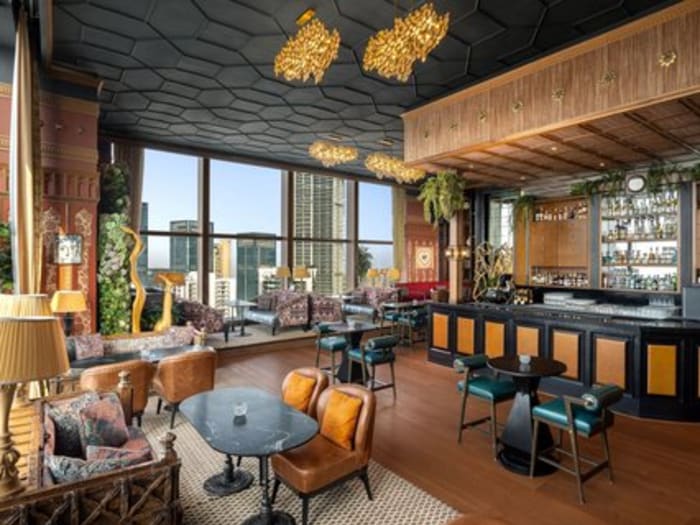
Inside, the atmosphere embraces an international elegance. The public spaces are designed to create an impression of composure and comfort rather than theatrical effect. One recognises the language of major urban luxury hotels: carefully proportioned volumes, seating arranged for waiting as much as for informal meetings, smooth circulation between areas, and service that remains present without becoming intrusive. The lobby and lounges play an essential role here. They act as a threshold between city and room, between the intensity outside and the more controlled tempo of the hotel.
This organisation of space particularly suits the diversity of the clientele. Couples find a sophisticated environment, well suited to a city stay shaped by outings and quieter moments. Families, for their part, appreciate the clarity of the services and the hotel’s ability to accommodate varied needs without undue rigidity. Business travellers benefit from a setting that allows them to move efficiently between work, meetings and rest. This is one of the strengths of well-run international luxury addresses: they can speak to several uses without losing coherence.
The St. Regis Mumbai also stands out for a form of organised calm. It is not a resort, nor a retreat removed from the world; it is a grand city hotel that fully embraces its urban role. Its luxury lies in the way it structures the experience: continuous welcome, clear reference points, personalised service, and spaces that allow guests to breathe, regroup or prepare before heading back into the city. This ability to offer respite without breaking from Mumbai’s movement is perhaps what makes it especially relevant.
For first-time visitors, the hotel provides a secure and comfortable base. For those who already know the city, it offers a level of consistency and service that encourages return. In both cases, it fulfils what one expects from a major five-star urban hotel: to be at once a point of departure, a place of transition and a space to come back to.
Rooms and suites
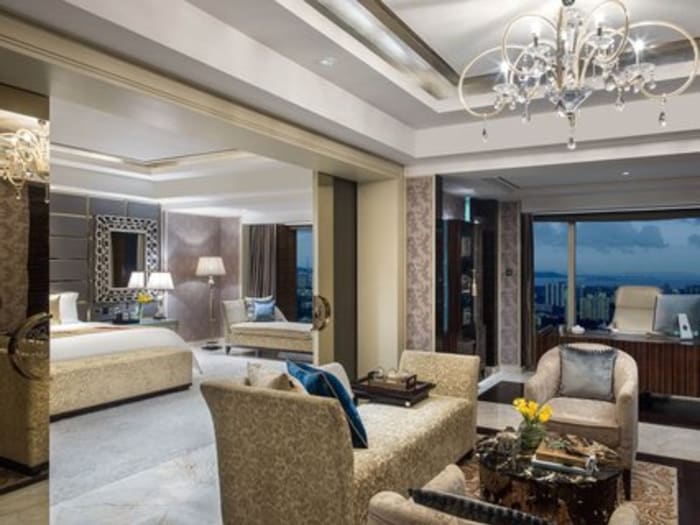
In an urban hotel of this calibre, the room is not merely a place to sleep. It must function as a private extension of the city, yet a calmer and more ordered one, capable of absorbing the noise of travel and the density of a full day’s schedule. At The St. Regis Mumbai, this logic naturally extends into the experience of the rooms and suites, conceived for an international clientele accustomed to high standards of comfort, service and clarity.
The primary expectation here is that of functional luxury. This means spaces designed to support several uses within the same day: sleeping, certainly, but also working, getting ready, receiving someone briefly, resting between appointments, or simply recovering a slower rhythm after hours spent in Mumbai’s traffic and intensity. In the best grand-hotel rooms, all of this should feel effortless. Comfort is not signalled by excess, but by proportion, the quality of daily upkeep, and the immediate sense of a well-managed space.
Service plays a decisive role. The presence of turndown service and daily housekeeping contributes to that impression of discreet continuity that distinguishes well-run houses. Returning to one’s room at the end of the day becomes a moment of reset: the space has been restored, practical details anticipated, and the stay made smoother. Butler service, when called upon, deepens this dimension further. In the St. Regis universe, it is not simply a badge of prestige, but a practical instrument of comfort, particularly useful in an urban stay where needs may shift quickly.
For couples, the room often becomes a refuge above the city, a place to recover calm after outings, visits or dinner. For families, it must offer enough flexibility to accommodate different rhythms, staggered rest times and a more complex daily organisation. For business travellers, meanwhile, it becomes a forward base: somewhere to prepare for a meeting, answer a few messages, or change quickly before dinner or an event. The success of a luxury hotel room lies precisely in this invisible versatility.
One also expects a certain aesthetic coherence from an address such as The St. Regis Mumbai. Without lapsing into display, the rooms and suites should extend the elegance felt in the public areas: clean lines, a composed atmosphere, a reassuring palette and a sense of preserved privacy. In an urban context, such coherence is essential, because it allows the traveller to move seamlessly from public space to private retreat.
What matters, ultimately, is not only the room category selected, but the quality of the experience it makes possible. A good grand-hotel room in Mumbai should allow one to inhabit the city better, even briefly. It should provide a setting in which to recover, organise and reconnect. At The St. Regis Mumbai, that is the real ambition: to make the room not merely accommodation, but a structuring place of comfort equal to the rhythm of the metropolis.
Dining
In a major urban address, dining is never simply a collection of restaurants. It forms part of the way the hotel structures the day, accommodates different uses and gives substance to its identity. At The St. Regis Mumbai, the culinary offering should be understood in that light: as part of a leading international hotel in the heart of a cosmopolitan metropolis, where one expects precision, flexibility and a certain discreet sense of occasion.
In the morning, food and beverage first serve as an anchor. In a city such as Mumbai, where days begin early and may stretch late, breakfast is not merely a pleasant ritual; it sets the pace of the stay. Business travellers look for efficiency and smooth organisation. Couples and families, by contrast, may find in it a more suspended moment, the point at which the day’s plans are shaped before heading out towards shopping districts, cultural venues or professional appointments. In a five-star hotel of this level, one expects attentive service capable of adapting to schedules as well as personal preferences.
At lunch or dinner, the hotel must answer to several scenarios. It may be the setting for a practical meal between obligations, a business meeting, a more settled dinner after a dense day, or simply a moment of comfort when one would rather not go back out. This is where the quality of hotel dining is truly measured: by its ability to remain credible across different registers without losing coherence. In Mumbai, a city open to multiple influences and home to a particularly lively culinary scene, that requirement is even stronger.
A St. Regis address is generally judged as much on service in the dining room as on what appears on the plate. Attention to the pace of the meal, the reading of guest expectations, the discretion of interactions and the consistency of execution matter as much as culinary style itself. In a grand hotel, dining must be able to accompany the day as it is actually lived: sometimes quick, sometimes ceremonial, sometimes improvised. When properly mastered, that flexibility becomes a form of luxury in its own right.
Dining should also be seen as an extension of the public spaces. Elegant lounges, a composed atmosphere and the overall quality of service create a setting suited to informal meetings, daytime pauses and calmer late evenings. Even without detailing a specific menu, one can say that the expected culinary experience here belongs to a complete art of hospitality, in which cuisine, service and décor all contribute to the same impression of poise.
For the traveller, the benefit is clear: the ability to rely on a dependable table suited to the variety of moments within a stay. In a city as stimulating as Mumbai, one will naturally want to explore the local scene. Yet it is equally valuable to know that on returning, the hotel can offer a well-run meal, frictionless service and a setting in which one immediately regains one’s bearings. That is often the true success of luxury hotel dining: not to compete with the whole city, but to become one of its most reliable addresses.
Spa & wellness
In a city such as Mumbai, hotel wellness takes on a particular meaning. It is not simply about adding a pleasant interlude to a stay, but about counterbalancing the intensity of the destination itself. Heat, traffic, sound density, a succession of meetings or visits: everything contributes to making recovery time a central part of the experience. In this context, the wellness approach of a major urban hotel must be thought of as a tool of balance rather than a mere amenity.
At The St. Regis Mumbai, this dimension fits naturally within the hotel’s broader promise: to provide a sophisticated, well-managed setting capable of adapting to individual needs. Wellness here first takes the form of organised slowing down. It begins in the room, with the comfort of the bed, the quality of housekeeping, turndown service and the impression of a space restored to order. Yet it also extends into facilities dedicated to self-care, whether through moments of relaxation, fitness or recovery after a particularly dense day.
In the world of international luxury, a hotel spa is not defined only by its treatment menu. It is defined by the quality of transition it offers: the ability to move the traveller from a state of urban tension to one of calmer availability. That transition rests on several often invisible elements: measured welcome, respect for time, a soothing environment, continuity of service and the feeling of being looked after without heaviness. In a metropolis as active as Mumbai, this quality of deceleration is especially valuable.
Needs differ according to profile. Business travellers often seek efficient ways to recover between work sequences, regain energy or simply recentre themselves. Couples may value more the enveloping dimension of the place, the ability to carve out time together in a protected setting. Families, meanwhile, appreciate the possibility for each person to recover their own rhythm between activity and rest. A good hotel wellness space must be able to answer these expectations without rigidity, with a fine reading of real-life use.
Wellness in a hotel such as this is not limited to the spa in the strict sense. It belongs to a broader whole: quality of sleep, fluidity of services, the ability to eat at one’s own pace, discreet concierge assistance, and a sense of safety and continuity. It is this accumulation of well-executed details that transforms a merely comfortable stay into one that is genuinely restorative. In a major city, luxury often lies precisely there: in the ability to preserve the traveller’s energy.
Choosing The St. Regis Mumbai therefore also means choosing a more controlled way of experiencing the city. One may spend the day in its movement, business, discoveries and contrasts, then return to an environment designed to restore balance. Wellness here is not an isolated promise; it forms part of the very architecture of the stay, as a coherent response to Mumbai’s intensity.
Concierge & Services
In the realm of luxury hospitality, service is not an add-on; it is the very essence of the product. In Mumbai, it significantly influences the quality of one’s stay.
The St. Regis Mumbai excels in this regard. The establishment focuses on personalised service and thoughtful gestures that lend coherence to the overall experience.
The 24-hour concierge and reception form a crucial foundation. For an international clientele, this continuity facilitates late arrivals and early departures. At any hour, someone is available to respond, guide, confirm, or rearrange.
Personalised service takes on real meaning here. It involves tailoring the stay to different profiles. A couple, a family, or a business traveller have distinct expectations. The support may encompass transfers, luggage assistance, or coordinating tight schedules.
The butler service extends this philosophy. Within the St. Regis universe, it embodies discreet care. Unpacking and repacking a suitcase, having a garment pressed, facilitating room requests, or synchronising the details of the stay. Luxury is expressed here through the elimination of friction.
Additional services reinforce this continuity. Daily housekeeping, turndown service, laundry, luggage storage, and wake-up calls collectively create a framework of comfort. They ensure that the stay remains seamless, even when it is brief or packed.
This is what one expects from a premier urban address: the ability to safeguard the guest's time. In Mumbai, this protection becomes a tangible luxury. A good concierge helps prioritise, book, and anticipate. An attentive reception assists in the transitions of the stay.
The St. Regis Mumbai remains committed to a demanding standard of hotel service. Being present without being intrusive, precise without rigidity, attentive without ostentation. For the traveller, this often makes all the difference.
The art of living in Mumbai
Mumbai never reveals itself all at once. To understand it, one must accept its intensity, contrasts and speed, but also its capacity to produce moments of real sophistication. The local art of living lies precisely in that coexistence: an almost continuous economic energy, a dense cultural life, highly codified social habits in certain circles, and a relationship to the city built through sequences rather than contemplation. Staying at The St. Regis Mumbai allows one to approach this world with a certain clarity and comfort.
The best way to experience Mumbai is often to alternate immersion and retreat. One sets out in the morning with an ambitious programme, knowing that the city will require time, patience and flexibility. One moves through districts with strongly marked identities, passes from a business environment to a shopping address, from a cultural venue to a more social engagement, then returns to the hotel to recover before heading out again. This alternation lies at the heart of how visitors and regulars alike live Mumbai: one must learn to work with the city rather than attempt to master it.
In this context, a central and well-serviced hotel becomes a genuine tool of experience. It allows days to be structured more intelligently, avoids unnecessary breaks and preserves energy for what matters most. This is especially true between November and February, often considered the most pleasant period in which to discover Mumbai, when the climate is milder and both movement and outings are more comfortable. It is a season that favours stays in which one wants to see a great deal without sacrificing comfort.
The art of living in Mumbai also means learning to appreciate the city through its details: the rhythm of early departures, the importance of arranging appointments in advance, the weight of logistics in shaping a day, and the value placed on reliable addresses. In such a city, refinement is not only aesthetic; it is organisational. Knowing where to go, when to go, how to get there and when to return matters almost as much as the place itself. Hence the value of a hotel capable of accompanying that tempo with precision.
For couples, Mumbai can offer a highly kinetic stay, made up of discoveries, dinners and quieter moments back at the hotel. For families, the city requires more attentive preparation, but rewards those who know how to preserve pauses. For business travellers, meanwhile, the local art of living often lies in making use of the intervals: a well-placed lunch, a quick visit between obligations, a return to the hotel to reorganise before the evening. In every case, the quality of the stay depends on the fluidity with which one moves between these sequences.
The St. Regis Mumbai fits naturally within that logic. Through its central location, personalised service and elegant atmosphere, it allows guests to inhabit the city without being overwhelmed by it. It offers a form of gentle discipline that is especially valuable in such a stimulating destination. And perhaps that is the true luxury in Mumbai: not withdrawing from the city, but learning to experience it accurately from an address that understands its rhythm.
Book with MyConciergeHotel
Booking The St. Regis Mumbai through MyConciergeHotel means approaching the property with a made-to-measure travel logic rather than a purely transactional one. In a city such as Mumbai, where comfort depends as much on preparation as on the hotel itself, the value of editorial and concierge support becomes especially clear. It is not simply about choosing a room in a major five-star hotel; it is about organising a coherent experience suited to the purpose of the trip, the desired rhythm and the real constraints of the destination.
The benefit of an assisted booking begins well before arrival. A stay in Mumbai may answer to very different objectives: a business trip, a stop within a wider Indian itinerary, an urban escape for two, or a family journey requiring more precise logistics. In each case, priorities differ. Some travellers will need an especially smooth arrival, others a stay centred on schedule flexibility, and others still a balance between discovering the city and recovering at the hotel. A concierge-led approach makes it possible to clarify these expectations in advance.
The most practical advice here remains to arrange the airport transfer ahead of time. In a metropolis as active as Mumbai, beginning the stay with an organised solution avoids unnecessary fatigue and allows guests to enter the right rhythm immediately. This kind of apparently simple detail has a strong influence on the overall perception of the trip. More broadly, everything that can be prepared in advance — timings, stay preferences, particular needs, the organisation of certain sequences — helps make the on-site experience smoother.
Booking through MyConciergeHotel also means benefiting from an editorial point of view. That perspective does not aim to produce generic luxury language, but to place the hotel within its real use: for whom it works best, what kind of stay it suits, what atmosphere it offers and how it fits into the city. In the case of The St. Regis Mumbai, that reading is especially useful. The address suits couples and families alike while remaining relevant for business travellers; it offers valuable centrality; it stands out for personalised service and the elegance of its public spaces. The key is knowing how to make the most of those qualities according to one’s own programme.
The aim, then, is not merely to book a night, but to compose a better stay. That may mean favouring certain dates, organising arrivals and departures with greater precision, planning recovery time in an intense city, or simply choosing an address capable of serving as a dependable base from the first day to the last. In that perspective, The St. Regis Mumbai appears as a strong option for travellers seeking a major urban hotel combining international reference points with adaptation to the local context.
With MyConciergeHotel, booking becomes the first step in a more intelligently managed stay. And in a destination such as Mumbai, that sense of control takes nothing away from the adventure; it improves its quality.