History & Urban Presence
In Mumbai, hotels often reveal as much about the city as about the travellers passing through them. Four Seasons Hotel Mumbai belongs to that contemporary category: less a heritage palace than an international luxury address designed to engage with the energy of a metropolis in constant motion. In a city where colonial legacies, business districts, shopping arteries, cultural institutions and ever-evolving dining scenes coexist, the hotel occupies a clear position: that of a structured, calm and elegant retreat within an intensely urban setting.
What makes the property compelling is precisely this distinctly Mumbai tension between pace and retreat. The familiar Four Seasons codes are present — attentive service, smooth circulation, careful daily comfort — yet applied to an Indian context where density, social diversity and the vitality of the street shape the stay. The hotel does not attempt to imitate the historic grande dames of South Mumbai, nor does it rely on an artificial narrative. Instead, it embraces a more current, more vertical, more metropolitan identity, suited to guests travelling as much for business as for discovery in one of Asia’s most compelling cities.
That urban presence is reflected in the way the hotel organises its spaces: public areas conceived as breathing zones, interiors favouring warm elegance over display, and service that supports without intruding. For international travellers, this translates into a highly legible experience: one enters a controlled environment with global standards, yet one anchored in the reality of Mumbai through its location, rhythm and relationship with the city.
The address is particularly well suited to those who value hotels able to function as a dependable base in a complex destination. In Mumbai, time management matters: distances shift with traffic, business meetings follow one another, and sightseeing often requires precise logistics. In that context, a property combining a central position, round-the-clock service and a calming atmosphere becomes genuinely valuable. Four Seasons Hotel Mumbai answers that need with a discreet efficiency.
It is also worth understanding that a hotel’s history in Mumbai is not defined only by dates or architecture; it is measured by its ability to accommodate multiple uses. Couples on a city break, families in transit, business travellers and international guests accustomed to high service standards all find a coherent setting here, without stiffness. That may well be its most tangible legacy: the ability to translate Mumbai’s intensity into an ordered, comfortable and contemporary hotel experience, while never losing sight of the essential purpose — to provide a reliable anchor in the heart of a city that never truly slows down.
The establishment, in the heart of Mumbai
Staying at the Four Seasons Hotel Mumbai means choosing a direct interpretation of the city: central, vibrant, and connected. The hotel is situated in a lively neighbourhood. In Mumbai, this location transforms the experience of your stay. Being at the heart of the city helps in organising your days more effectively. It allows for easier access to meetings, major points of interest, or the city itself.
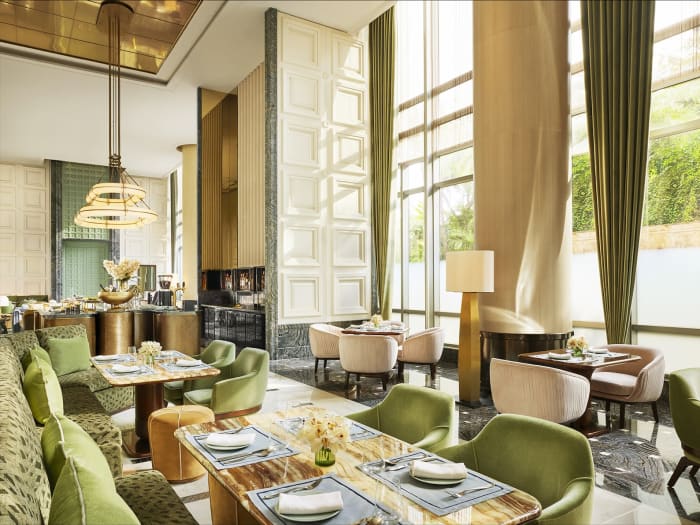
Mumbai is a city of contrasts, with shifting atmospheres from one street to another. In this context, a well-located hotel becomes both a vantage point and a refuge. The Four Seasons Hotel Mumbai offers this balance. Outside, the city pulses with intensity. Inside, there is a sense of comfort and continuity. The refined communal spaces play a crucial role here. They serve as a transition between the urban hustle and the slower pace of your stay. You can pause, reconnect with a loved one, work for a while, or simply catch your breath.
The interior aesthetic reinforces this impression. The elegant and warm interiors cater to the expectations of an international clientele in Mumbai. The atmosphere remains welcoming, clear, and restful. The materials, volumes, and light create a sense of serenity. It does not erase the city but allows for a better engagement with it. This is a hotel where you can return late after a busy day and immediately regain your bearings.
This address is suitable for travellers who wish to combine efficiency and comfort. For business stays, the central location facilitates movement and eases the agenda. For leisure visits, it allows for exploring Mumbai in segments, with a reliable point of return. Couples and families also find their place here, thanks to this blend of professionalism and relaxation.
In Mumbai, a lively neighbourhood engages a complete sensory experience: traffic, sounds, light, commercial activity, local life. The advantage of a large urban hotel is to filter this intensity without denying it. The Four Seasons Hotel Mumbai embodies this logic. One does not come here to isolate oneself from the world but to inhabit the city with greater comfort and fluidity.
Rooms and suites
In a city as dense as Mumbai, a hotel room is never just a place to pass through. It becomes a space for recovery, recalibration, and sometimes work.
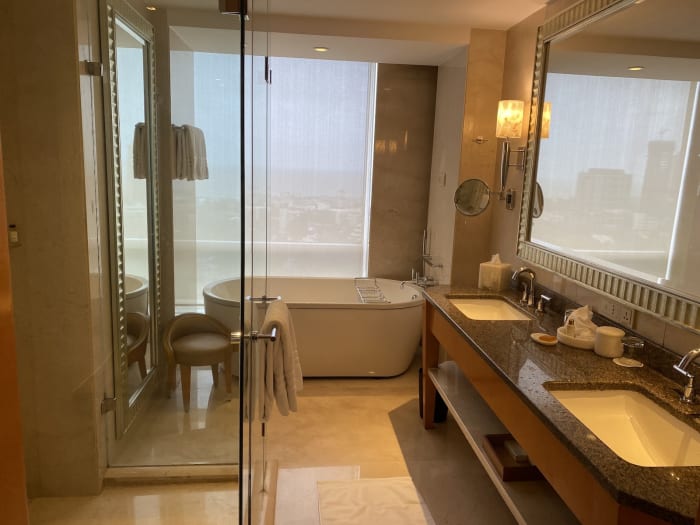
At the Four Seasons Hotel Mumbai, the rooms and suites cater to these multiple uses without sacrificing the feeling of welcome. The carefully designed, comfortable, and calming interiors counterbalance the external intensity.
In the realm of urban luxury, the ease with which one settles in is a key indicator. A good room in Mumbai should allow for recovery after a long-haul flight, preparation for a meeting, sleep despite the time zone difference, or the enjoyment of a slower morning.
Daily service, turn-down service, and attention to maintenance enhance this sense of continuity. Comfort is expressed effortlessly here.
The suites are ideal for longer stays, family trips, or the need for space to host and work. They recreate a more domestic rhythm, with smooth circulation, well-defined areas, and a coherent atmosphere.
In a metropolis like Mumbai, a room must also be genuinely restful. This requires high-quality bedding, impeccable maintenance, consistent cleanliness, and attentive housekeeping.
Daily upkeep and turn-down service contribute to this experience. After a day filled with traffic, heat, meetings, or visits, returning to a room prepared with care significantly enhances the quality of the stay.
For couples, the room becomes an urban cocoon. For families, a point of balance. For business travellers, a functional extension of the day.
The Four Seasons Hotel Mumbai meets this plurality of expectations with a sober and controlled approach to comfort. Here, you will find elegant interiors, clear hospitality, and a calmer rhythm at the heart of the city.
Dining and moments of conviviality
In a large urban hotel, dining is not merely a convenience. It punctuates the stay, especially in Mumbai, where the days are long.
The Concierge's advice to book a table upon arrival speaks volumes. The hotel’s dining options are significant for both residents and local clientele.
This suggests a vibrant establishment, integrated into its environment, rather than just a simple stopover restaurant.
In the Four Seasons universe, dining serves multiple purposes. Breakfast before a busy day, a working lunch, a more relaxed dinner, or an informal moment over a drink.
In Mumbai, this versatility takes on a particular dimension. International travellers alternate between culinary discovery and familiar touchstones.
Business residents appreciate spaces where they can host with simplicity. Couples and families seek a warm atmosphere.
Here, the essence lies in a coherent experience aligned with the hotel’s positioning. Elegant, well-orchestrated, and welcoming.
In a 5-star establishment in the heart of Mumbai, gastronomy must offer clarity. A menu designed for different times of the day.
Attentive service. An ambiance conducive to conversation as well as relaxation. And meals that are easy to organise despite scheduling constraints.
Breakfast plays a central role in such an establishment. For some, it is a moment of efficiency. For others, a transition before entering the city.
In both cases, the welcome, the pace of service, and the comfort of the space are as important as the food.
In the evening, the hotel dining table often becomes a choice of reason as much as pleasure. It avoids an extra journey. It extends the day without friction.
The refined communal spaces suggest venues conducive to encounters and exchanges. A coffee between meetings, a discreet aperitif, an impromptu dinner after a late arrival.
At the Four Seasons Hotel Mumbai, dining is a natural component of the art of hospitality. It is often this precision that makes one want to return.
Concierge & Services
The true test of a great urban hotel goes beyond aesthetics; it lies in its operations. In Mumbai, the quality of services makes all the difference.
The Four Seasons Hotel Mumbai offers a 24-hour concierge service and a reception that is always open. For the traveller, this immediately transforms the nature of their stay. Late arrivals, early departures, last-minute changes, or requests all become more manageable.
The concierge is not merely an ancillary service; it acts as a bridge between the hotel and Mumbai. In a vast and densely populated metropolis, having a point of contact who can provide guidance, confirm a reservation, or help structure a day holds significant value. An effective concierge service genuinely simplifies the experience.
The other mentioned services—daily housekeeping, turndown service, luggage storage, laundry, wake-up calls, and multilingual staff—create a hospitality experience grounded in continuity. Luggage storage is invaluable for those with irregular schedules. Laundry services become essential during business trips or longer itineraries. The wake-up call service remains relevant. Multilingual staff contribute to a more serene experience.
What distinguishes a good hotel from a great one often lies in how these services come together. It is not about accumulating offerings but about creating a seamless experience without rigidity. In a city like Mumbai, this flexibility is a luxury in itself.
For business travellers, it ensures better time management. For couples, it alleviates the burden of planning. For families, it provides a welcome sense of practical security. The Four Seasons Hotel Mumbai meets this expectation: to offer continuous, attentive, and transparent service capable of accommodating the unexpected twists of travel.
The Art of Living in Mumbai
Mumbai is not a city to be visited like a museum; it is to be experienced in layers and contrasts throughout a single day. It is a city of work and creativity, of bustling traffic and sea views, of markets, galleries, institutions, cafés, residential areas, and heavily frequented thoroughfares. Staying at the Four Seasons Hotel Mumbai allows one to engage with this urban lifestyle with a certain ease, thanks to its central location and tranquil setting.
For a first visit, one must accept that Mumbai does not reveal itself all at once. It is grasped in fragments: a morning in one neighbourhood, a pause at the hotel, a lunch or meeting, followed by another sequence that is more cultural or contemplative. This way of structuring one’s day aligns well with the spirit of a grand hotel in the heart of the city. One can set out early, return to rest, and then venture out again in the late afternoon. The hotel thus becomes an anchor point.
From October to March, the city is more conducive to travel and exploration. This is an important factor in a destination where the urban experience also unfolds in the streets, during commutes, and in transitions. For couples, this season makes outings more comfortable. For families, it simplifies planning. For business travellers, it allows for the easy addition of a discovery dimension to a professional agenda.
The art of living in Mumbai also hinges on the coexistence of very different registers. One can transition from a corporate environment to a cultural scene, from a discreet address to a frenetic artery, from a moment of efficiency to a more contemplative interlude. It is a city that rewards curiosity but also demands careful management of recovery time. In this context, a hotel with refined communal spaces and well-honed service becomes a true travel tool. It helps to alternate between immersion and retreat, intensity and rest.
The Four Seasons Hotel Mumbai is suited for those who wish to understand the city without sacrificing comfort. It does not offer a diluted version of Mumbai but rather a more fluid interpretation. Here, one can experience the city at their own pace, according to their priorities: business, culture, shopping, encounters, or simple urban curiosity. In a metropolis like this, true luxury perhaps lies in having a place that allows one to inhabit its energy with greater calm and method.
Book with MyConciergeHotel
Booking Four Seasons Hotel Mumbai through MyConciergeHotel means approaching the property with a stay-driven logic rather than a simple room-driven one. In a city such as Mumbai, where the success of a trip often depends as much on preparation as on the choice of hotel, that distinction matters. A well-considered booking is not merely about confirming dates; it allows guests to anticipate the rhythm of the stay, the travellers’ profile, arrival and departure times, service needs, and the way the hotel can genuinely support the experience on the ground.
For a business trip, the priority is often fluidity: a late arrival, efficient welcome, luggage handling, laundry, an early wake-up call, and the organisation of a tight schedule. For a couple’s stay, one may instead look for a room conducive to rest, a table reserved at the right moment, and an itinerary flexible enough to enjoy the city without pressure. For a family, the focus will be on ease of organisation, clarity of services and the reassurance of a team available at any hour. In every case, the role of editorial and concierge support is to turn a good address into a coherent stay.
MyConciergeHotel is particularly useful in that perspective. The point is not to overcomplicate matters, but to ask the right questions in advance: which period to choose, how best to use a central location, when to reserve the hotel restaurant, how to organise an early arrival or late departure, and which services will genuinely matter depending on the purpose of the trip. In Mumbai, such details have a concrete impact. They determine the level of comfort felt, the quality of transitions and, often, the final memory of the stay.
Four Seasons Hotel Mumbai attracts a varied clientele, and that is one of its strengths. Yet the booking needs to be calibrated accordingly. A business traveller will not expect the same things as a couple on an urban escape; a family will not use the hotel in the same way as a guest in transit. Booking through MyConciergeHotel means benefiting from a more nuanced reading of that fit between address and use. It allows for a more precise choice, and therefore for better travel.
Finally, in an international destination as active as Mumbai, booking ahead remains a matter of sound judgement, particularly during the most pleasant season of the year and when one wishes to dine at the hotel. Anticipation here does not diminish spontaneity; on the contrary, it gives it structure. And that is perhaps the best way to approach Four Seasons Hotel Mumbai: as an elegant, central and dependable base, best enjoyed when the stay has been thoughtfully shaped from the outset.