History & heritage
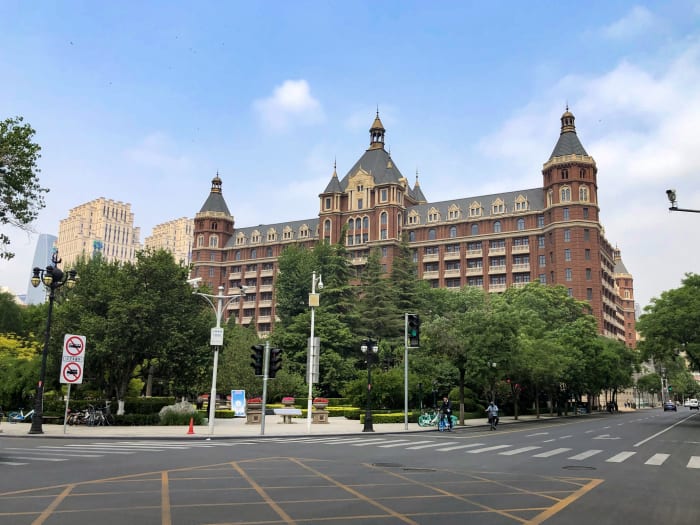
In Tianjin, a city shaped by concessions, trade and constant movement, the idea of the grand hotel carries a particular resonance. The Ritz-Carlton Tianjin belongs to this urban memory of layered influences, European-inspired architecture, ceremonial boulevards and riverfronts long oriented towards exchange. Without claiming the historic pedigree of Europe’s great palace hotels, the property adopts the codes of the classical grand hotel with discipline: a sense of arrival, generous proportions, careful materiality, and that distinctly Ritz-Carlton way of making service a language in itself.
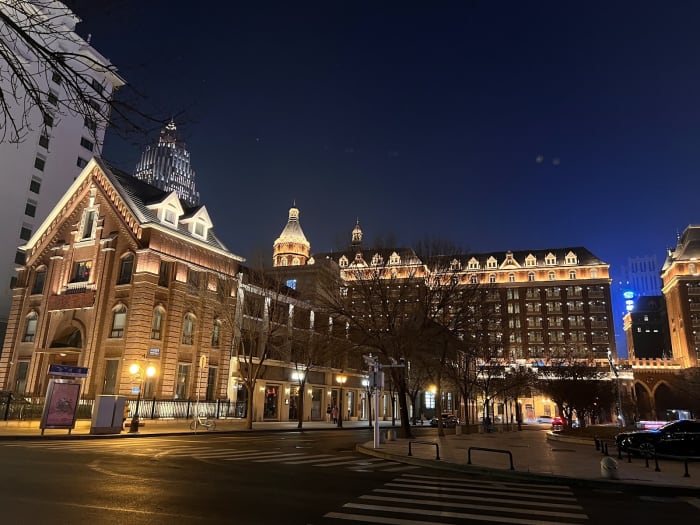
Tianjin has a singular identity in northern China. Long a maritime gateway to Beijing, the city developed through a juxtaposition of institutions, residences, banks, clubs and administrative buildings shaped by different architectural traditions. This stratified history left behind a more nuanced urban landscape than many expect, where Western-inspired façades coexist with the rhythms of a major contemporary metropolis. In this context, The Ritz-Carlton Tianjin feels less like a generic luxury address than a present-day interpretation of the cosmopolitan refinement that once defined parts of the city.
The Ritz-Carlton ethos gives the whole a clear framework. Guests will recognise a promise built on precision, courtesy and discretion, with a preference for hushed elegance rather than spectacle. That is the distinction between decorative luxury and lived luxury: the sense that everything has been considered to ease the stay, whether one arrives late, keeps a tightly timed business schedule or plans a quieter escape for two. This continuity of service lends the hotel a depth that décor alone could never achieve.
To speak of heritage here is therefore to speak of three overlapping layers: Tianjin itself, with its history of exchange; the international grand hotel tradition, with its rituals of welcome and representation; and a brand whose reputation rests on consistency and polished hospitality. The Ritz-Carlton Tianjin sits at the meeting point of these dimensions. Rather than recreating a specific past, it captures an atmosphere and translates it into a contemporary setting.
For first-time visitors, this grounding offers context. For returning guests, especially those travelling on business, it provides reassuring continuity. In both cases, the hotel works as a refined threshold between the city and private retreat: a place where familiar standards meet a distinctly local reading of hospitality.
The hotel
One of the first strengths of The Ritz-Carlton Tianjin lies in its setting within a lively neighbourhood, something that meaningfully shapes the experience of staying in a city of this scale. This is not a secluded resort but an urban address that embraces its surroundings: traffic, business appointments, evenings out, walks and discoveries all exist within the same lived radius. That urban anchoring particularly suits travellers who want Tianjin close at hand without giving up an interior environment that feels calmer, more ordered and almost ceremonial.
Arrival is part of that impression. Without relying on theatrics, the hotel follows the expected codes of an international five-star property: round-the-clock reception, 24-hour concierge service, smooth luggage handling and clearly organised public spaces. For long-haul travellers, often dealing with time differences, this continuity is not incidental; it directly affects the quality of the stay. The ability to arrive late, request assistance, organise an early departure or adapt service to a changing schedule is one of the most concrete expressions of luxury hospitality.
Inside, the decorative language tends towards a form of classical elegance consistent with both the brand and Tianjin’s urban context. Guests encounter spaces designed for representation as much as for use: a lobby suitable for informal meetings, lounges where waiting does not feel wasted, and circulation planned to preserve ease. In a hotel suited to business stays as well as couples and families, this versatility matters.
The overall atmosphere rests on a careful balance between formality and ease. The Ritz-Carlton Tianjin answers the expectations of an international clientele seeking reliable standards: polished welcome, discreet staff, rigorous daily housekeeping, evening turndown, and a team capable of supporting both a schedule of meetings and a more personal stay. In an active city, the hotel becomes an anchor point to which one returns for continuity of tone and service.
Its suitability for couples and families adds a welcome flexibility. Some business hotels feel cold outside a corporate context; others, too leisure-led, struggle to deliver the precision expected by business travellers. Here, the middle ground is part of the appeal. It is easy to imagine a mixed stay with obligations during the day and freer time afterwards, without any sense of changing worlds.
In essence, The Ritz-Carlton Tianjin reads as a true city hotel in the best sense: a property that does not cut itself off from its environment, but offers a more composed, elegant and liveable version of it.
Rooms and suites
In a grand urban hotel, the room is never merely a place to sleep. It must absorb the pace of the city, soften the fatigue of travel and offer a private continuity within what is often a fragmented stay. At The Ritz-Carlton Tianjin, that function appears central. Whether the visit is for business, a couple’s escape or a family trip, the expectation is similar: a space that feels legible, comfortable and calm enough to restore a sense of personal rhythm.
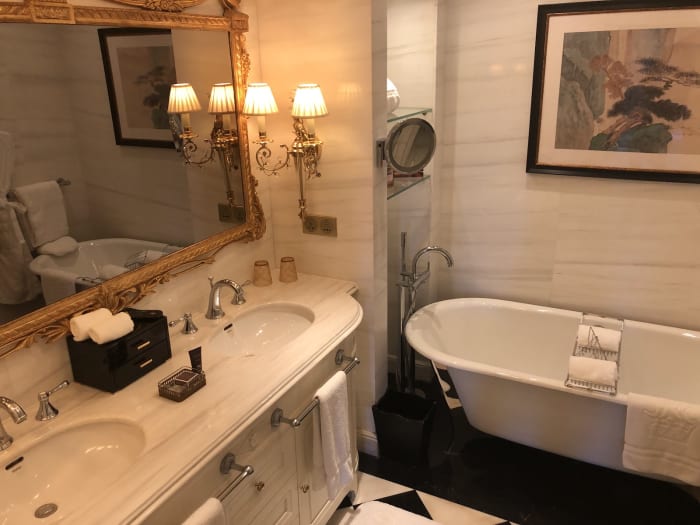
The rooms and suites generally belong to a classical aesthetic, with particular attention paid to order. In this category of hotel, luxury is less about accumulation than coherence: well-proportioned furnishings, a soothing palette, lighting designed for different moments of the day, and surfaces that immediately suggest rigorous upkeep. Daily housekeeping and evening turndown are integral to that experience. They are not simply traditional gestures; they maintain, from morning to night, the sense of freshness and control that distinguishes a truly well-run hotel.
For business travellers, the room must also function as a discreet extension of the working day. That means intuitive organisation, straightforward circulation and the ability to regain one’s bearings quickly after a succession of meetings. The hotel’s suitability for business stays suggests practical attention to these needs: late arrivals handled smoothly, wake-up service on request, laundry support, and staff able to respond efficiently as plans change.
For couples, the appeal lies elsewhere but is no less tangible. A fine city room should provide retreat without isolation, allowing guests to remain connected to Tianjin’s energy while being protected from it. One looks for an atmosphere conducive to reading, unwinding and returning quietly after dinner. In a suite, that feeling may be strengthened by a clearer separation of functions, especially useful over several nights.
Families, meanwhile, tend to value simplicity and support. In a hotel of this level, that comes less from overt family programming than from the quality of the overall organisation: 24-hour reception, concierge assistance, luggage storage before check-in or after departure, reliable housekeeping and multilingual staff. A successful room or suite becomes the centre of gravity of the stay.
What matters most is the feeling that remains after a few hours inside. If travel fatigue fades quickly, if unpacking feels easy, if one can prepare without haste, sleep well and return to a room restored by the evening, then the essential has been achieved. The Ritz-Carlton Tianjin appears to answer that demanding definition of the grand hotel room.
Dining
In a major urban hotel, dining plays a subtler role than it first appears. It is not merely a practical meal between appointments or a formal dinner; it shapes the stay, gives rhythm to the day and influences how one inhabits the hotel. At The Ritz-Carlton Tianjin, one can reasonably expect the dining culture associated with high-level international properties: attentive service, spaces suitable both for hosting and for retreat, and the ability to support very different uses, from a business breakfast to a more leisurely evening meal.
Breakfast is often the first important moment. In a hotel suited to business stays, it must be both efficient and pleasurable: structured enough for those leaving early, yet comfortable enough for guests who can begin the day more slowly. It is a delicate exercise, requiring flow without haste, variety without excess, and service that is present without becoming intrusive. Within a Ritz-Carlton framework, this morning sequence usually takes on a particular tone of precision and calm.
Lunch and dinner answer different expectations. For an international clientele, hotel dining often needs to serve several functions at once: meeting place, reliable option after a dense day, sociable setting for couples, and reassuring choice for families. The quality of such a service is measured by its flexibility. A convincing grand hotel knows how to accommodate a quick meal without making it feel rushed, and how to let a longer dinner unfold without unnecessary stiffness.
In a city such as Tianjin, hotel dining also gains meaning in relation to the outside world. It is not meant to replace local discovery, but to provide balance. After a day in the city, the hotel can become the place one returns to for legibility: steady service, a composed setting and a quieter atmosphere. For some travellers, especially those on business, dining on site is a decisive gain in comfort and time.
Room service, too, tends to matter in this category, even where details are not specified. Without overreaching, it is fair to say that a hotel of this level is also judged by its ability to bring dining into the privacy of a room or suite: late after arrival, early before departure, or simply when one prefers to remain undisturbed.
Ultimately, dining at The Ritz-Carlton Tianjin is best understood not as a standalone claim but as part of the wider experience. It supports the rhythms of the stay, serves professional needs, creates more personal moments and extends the hotel’s sense of elegance into both plate and service.
Wellbeing & the rhythm of the stay
Even when an urban hotel is not presented primarily as a wellness destination, the question of bodily comfort and personal rhythm remains essential. In a city as active as Tianjin, guests seek more than a comfortable bed; they also look for a setting capable of slowing the pace, offsetting travel fatigue and creating moments of recovery between denser parts of the day. At The Ritz-Carlton Tianjin, this dimension can be understood broadly: in sleep quality, in the precision of service, in the ability to organise one’s day without friction, and in the attention paid to what genuinely helps one feel better during a stay.
The first level of wellbeing is often invisible. It lies in the consistency of housekeeping, the evening turndown that prepares the night, the room restored during one’s absence, the 24-hour reception that supports irregular schedules, and the wake-up service that helps guests regain control of a busy agenda. These may seem simple, yet together they create a very tangible form of comfort.
For business travellers, this is especially important. Professional travel brings a particular kind of fatigue, shaped by flights, meetings, meals at changing hours and sustained concentration. In that context, true luxury often means preserving margins for recovery. A well-run hotel contributes decisively through laundry service, concierge support, multilingual staff and continuous service that reduces mental load.
For couples and families, the logic shifts but the need remains. A successful stay depends on being able to alternate between city time and retreat. After a day of appointments or exploration, returning to a hushed environment restores balance. In the best hotels, this quality of rest does not depend on a wellness narrative; it is felt in the way the stay unfolds.
Urban wellbeing is also a matter of time management. At The Ritz-Carlton Tianjin, the 24-hour availability of key services plays a fundamental role. It softens constraints, absorbs the unexpected and makes the stay more flexible. That flexibility is especially valuable in a metropolis where plans can stretch or change at short notice.
In the absence of detailed information about a spa or specific facilities, it is more accurate here to speak of a culture of hotel wellbeing rather than a programme. That culture rests on discretion, regularity and attention to real traveller needs. It promises not transformation, but something rarer in large cities: the ability to remain rested, composed and available to oneself.
Concierge & services
More than décor, it is often through service that a five-star hotel reveals its true level. In this respect, The Ritz-Carlton Tianjin has a clear and convincing foundation: 24-hour concierge, 24-hour front desk, daily housekeeping, turndown service, luggage storage, laundry, wake-up service and multilingual staff. Considered separately, each may seem expected. Taken together, however, they form a precise promise: a stay supported at every stage, without breaks in quality or logistical blind spots.
The round-the-clock concierge sits at the centre of this system. It is not only there for exceptional requests; it acts as the stay’s point of gravity. Arranging transport, helping to structure a day, advising on routes, smoothing an early arrival or departure where possible, and directing guests towards suitable local options all materially change the experience when handled with tact. Luxury here lies not in display but in the reduction of friction.
The 24-hour front desk answers another equally important need. In a hotel welcoming international travellers, standard hours mean very little. Late arrivals, pre-dawn departures, programme changes and unexpected developments are part of daily life. Knowing that a team is always present creates immediate reassurance.
Daily housekeeping and evening turndown belong to that maintenance-based hospitality that distinguishes serious houses. They create a perceptible continuity between different moments of the day. In the morning, the room is reset; in the evening, it is prepared for rest. This almost choreographed alternation is deeply reassuring.
Laundry is particularly valuable for business stays, though not only for them. In an active city, the ability to have clothes cared for efficiently simplifies travel considerably, especially over several days. Wake-up service, often underestimated, remains a marker of reliability. Luggage storage adds flexibility to arrival and departure days, allowing guests to make use of Tianjin without being burdened.
Multilingual staff complete the picture in an essential way. In an international hotel, the quality of communication matters as much as the quality of execution. Being able to express a request clearly, be understood accurately and receive a precise response directly contributes to comfort.
Ultimately, these services are not secondary; they form the invisible architecture of the stay. The Ritz-Carlton Tianjin appears to understand this well, translating it into an experience that is smoother, steadier and more composed.
The Tianjin way of life
Staying at The Ritz-Carlton Tianjin also means choosing a particular way of entering the city. Tianjin does not always reveal itself at once; it rewards an attentive eye, one sensitive to the details of its urban history, its contrasts of scale and its shifts in atmosphere. A major metropolis in northern China, it combines the memory of the concessions with monumental axes, commercial districts, riverfronts and more residential sequences. Its way of life is not overtly theatrical. It lies instead in a certain elegance of rhythm, a culture of movement, and the coexistence of the historic and the contemporary.
For travellers, this means a city that is best experienced through use. One alternates between walks, appointments, pauses in public places, crossings of neighbourhoods and returns to the hotel to regain one’s breath. Tianjin is not only a destination to visit; it is a city to inhabit temporarily. In that sense, The Ritz-Carlton Tianjin acts as an interface, offering a stable frame from which the city can be read more finely without being overwhelmed by it.
The local way of life can also be felt in the succession of daily rhythms. Morning often belongs to efficiency and obligations. Afternoon opens more readily to observation, strolling or less formal encounters. By evening, the city changes texture: lights, traffic, sociability, dinners and later returns to the hotel. A property with 24-hour reception and concierge naturally supports that range of hours.
For couples, the city may become an urban escape built on contrasts: architecture, perspectives, pauses, then a return to a more hushed setting. For families, it can be more flexible than expected, provided there is a reliable hotel base. For business travellers, Tianjin reveals yet another face: that of a structured, active working city, yet one crossed by cultural and historical traces that enrich the stay when there is time to notice them.
Luxury in this context may simply mean not overloading the experience. A good stay in Tianjin does not require constant staging; it requires a hotel capable of making the city legible and the return comfortable. The Ritz-Carlton Tianjin appears to answer that expectation through its urban positioning, service level and versatility.
Seen this way, the Tianjin way of life is neither cliché nor fixed programme. It is a manner of moving between intensity and retreat, history and present, obligation and the pleasure of staying. The hotel becomes more than accommodation: an elegant point of support for entering the city’s particular rhythm.
Book with MyConciergeHotel
Booking The Ritz-Carlton Tianjin through MyConciergeHotel means approaching the stay with a logic of precision rather than mere transaction. In luxury hospitality, the difference does not rest only on rate or raw availability; it lies in the quality of the fit between the traveller, the purpose of the trip and the right booking rhythm. An urban hotel of this kind can welcome very different profiles — business travel, a couple’s break, a family stay, or a blend of work and leisure — and each calls for a slightly different reading.
In Tianjin, that preparation is especially useful because the city lends itself to varied tempos. Some travellers will seek efficiency above all: a lively location, continuous services, round-the-clock reception and concierge, and smooth arrivals and departures. Others will prioritise balance between urban immersion and interior comfort. Families may value simplicity and logistical ease. Booking intelligently therefore means anticipating these uses rather than discovering them only on arrival.
MyConciergeHotel makes it possible to approach the reservation with greater discernment. Beyond access to the property itself, the value lies in contextualising the choice: ideal length of stay, the usefulness of an early arrival or later departure depending on transport schedules, the relevance of a room or suite category according to the number of travellers, and the practical value of the services available for a given programme.
This approach is particularly relevant for business travel. A dense schedule tolerates little approximation. Clarifying key needs in advance, flagging unusual timings, planning around essential services or simply confirming that the hotel matches the nature of the trip can save valuable time. For a couple’s stay, the logic shifts towards preserving comfort and making the hotel a true urban refuge. For families, flexibility on arrival and departure days may matter most.
Booking through MyConciergeHotel also means benefiting from an editorial eye that avoids vague promises. The aim is not to oversell, but to describe the experience accurately: a grand urban hotel, well suited to business travel, welcoming to couples and families, and set in a lively part of Tianjin.
Ultimately, choosing The Ritz-Carlton Tianjin through MyConciergeHotel is to favour a very contemporary form of luxury: a reservation that is better considered, more coherent and more useful. In that sense, the stay begins before arrival, in the quality of the decisions made beforehand.