History & heritage
In Nikko, heritage is never confined to the history of a single building. It belongs first to a wider landscape whose cultural depth extends far beyond the hotel itself. A stay at The Ritz-Carlton, Nikko is therefore rooted in a destination where nature, spirituality and hospitality form a coherent whole. The property reads this setting carefully: not as an urban luxury brand transplanted into the mountains, but as a contemporary interpretation of refined hospitality in a region where the landscape shapes rhythm, materials and even the way space is experienced.
Nikko immediately calls to mind cedar forests, mountain relief, lakes and sacred sites that have long defined its reputation in Japan and abroad. That symbolic density gives the stay a very particular tone. Here, luxury is not built on display, but on a sense of place. Silence, the seasons, shifting mountain light and the presence of water become as important as service or room comfort. The hotel’s distinction lies precisely in its ability to converse with an environment already rich in meaning.
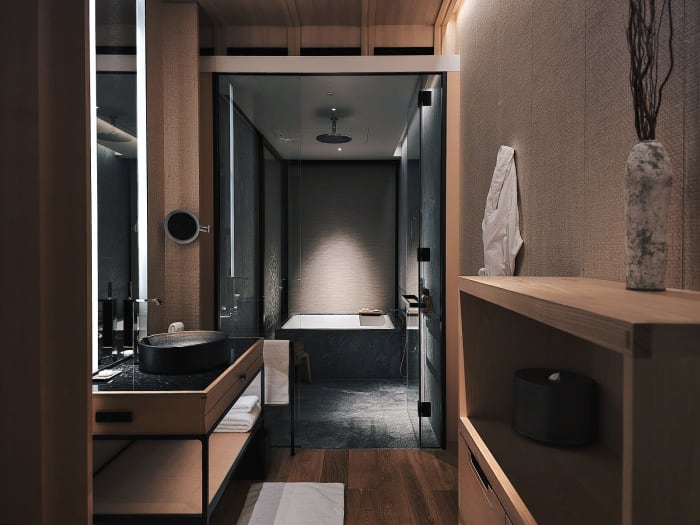
In its expression, the property favours restraint, drawing on Japanese codes without turning them into a theatrical backdrop. The language is one of balance: contemporary lines, hushed interiors, materials chosen for warmth rather than spectacle. This restraint is central to understanding the address. It preserves what makes Nikko so compelling: the feeling of being close to a natural world that remains legible, where hospitality accompanies the setting rather than overpowering it.
The heritage evoked here is also that of omotenashi, the Japanese art of attentive, discreet service. In a five-star context, this is felt less through overt gestures than through overall fluidity: a smooth arrival, calming spaces, staff who are present without intruding, and the sense that each stage of the stay has been considered in order to leave room for stillness. In a destination such as Nikko, where travellers often come in search of a more inward retreat, that quality of execution matters greatly.
The Ritz-Carlton, Nikko therefore stands at the meeting point of two continuities: the standards of an international luxury hotel and the slower, more elemental rhythm of mountain Japan. That balance gives the property its relevance. It does not attempt to compete with Nikko’s monumental history; rather, it offers a contemporary way into its atmosphere, its pace and its depth. For the traveller, that changes the nature of the stay entirely: it becomes not simply a fine room in a beautiful setting, but a more sensitive way of inhabiting the destination.
The property
The first luxury at The Ritz-Carlton, Nikko is its setting. In Nikko, the property benefits from a natural environment that immediately gives the stay its coherence. Mountains, forests and a palpable sense of remove create a backdrop that is anything but incidental. One does not come here merely to sleep in a high-end hotel, but to settle into a landscape. That direct relationship with the site alters one’s perception of time: days feel broader, transitions gentler, and returning to the hotel after an outing takes on the quality of a true refuge.
The property cultivates this sense of retreat without compromising the expectations of an international clientele. Its language is contemporary, yet never cold. The volumes, circulation and public spaces appear designed to create visual and emotional breathing room. Nothing feels overloaded. The eye can rest, follow a line, pause on a material, then return to the landscape. This apparent simplicity is in fact highly deliberate: to create a refined atmosphere that never competes with the surrounding nature.
The peaceful setting is not a generic promise. It is felt in the way the hotel filters the outdoors. Forest and mountain are not merely visible; they shape the overall mood. Light shifts through the day, weather changes are perceptible, mist or clear skies become part of the experience. The stay is therefore deeply responsive to the seasons, one of Nikko’s great strengths. Each time of year alters the palette of the place, and the hotel seems designed to let that variation enter daily life quietly.
This location also enables a rare form of luxury: the right degree of distance. Remote enough to offer calm, the property remains an excellent base from which to explore the destination. That balance is exactly what many discerning travellers seek: not to be cut off from the region, yet to be able to withdraw from it the moment they return. After a day of visits, walking or driving, the atmosphere here feels ordered, hushed and restorative.
The Ritz-Carlton, Nikko also stands out in the way it interprets Japanese traditions through a contemporary lens. This is not reconstruction, still less folklore. Modern comfort is fully present, yet integrated into an aesthetic of restraint. That alliance between international sophistication and Japanese sensibility gives the hotel its particular tone. It will appeal both to travellers already familiar with Japan and to those discovering the country for the first time and seeking an elegant, calming point of entry.
Ultimately, the property succeeds where many destination hotels do not: it does not merely occupy a good location. It makes place its primary material. The landscape is not simply viewed from the hotel as a panorama; it structures the experience from morning to night. That is what makes the address especially persuasive for a stay of several nights: it offers the comfort expected of a five-star hotel, the serenity of a mountain retreat and a genuine relationship with the spirit of Nikko.
Rooms and Suites
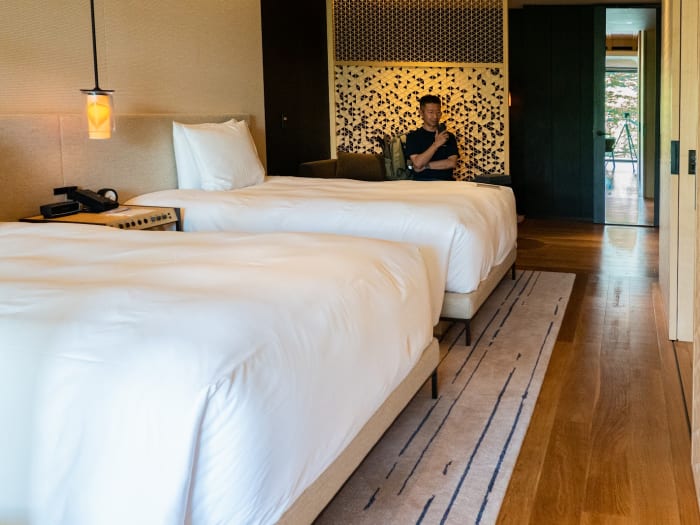
In Nikko, the room serves not merely as a place to rest but as a lens through which to appreciate the landscape.
At The Ritz-Carlton Nikko, this concept shapes the residential experience. Modern comfort is present, expressed in a serene and understated manner.
The rooms and suites reflect the hotel’s aesthetic continuity. Clean lines, a refined atmosphere, a calm palette, and controlled lighting create a harmonious ensemble.
Here, the spectacular is less important than the precise. Comfort is defined by rhythm, acoustics, and the clarity of space.
In Nikko, this quality takes on a special significance. After a day outdoors, returning to one’s room should evoke an immediate sense of relaxation.
The turndown service contributes to this attentive continuity. The day seamlessly transitions into evening in a setting prepared for rest.
The suites extend this philosophy with additional space. They are ideal for multi-night stays and for travellers alternating between excursions and moments of retreat.
The blend of contemporary comfort and Japanese traditions finds a compelling expression here. It is evident in the tranquility, the quality of sleep, and the relationship between the interior and the exterior.
For the European traveller, this approach reveals a refinement grounded in simplicity. Well-executed details take precedence over accumulation.
Staying here means choosing a contemporary refuge within a grand landscape. The standards of a prestigious international hotel meet a local sensitivity attuned to serenity.
Dining
At The Ritz-Carlton Nikko, gastronomy is an integral part of the destination experience. In such a striking environment, the dining experience extends the essence of the place, its rhythm, and its sensitivity. Early reservations for the main restaurant are recommended as soon as the stay is confirmed. Thus, the meal becomes part of the broader narrative of the journey.
In a hotel of this calibre in Japan, one expects precise, clear cuisine that is mindful of the seasons. The establishment is rooted in a tradition of discreet excellence, where the quality of the ingredients, the artistry of the preparation, and the setting are all equally important. Dining then becomes a moment of refocusing. After visits, mountain roads, or leisurely walks, sitting down to a meal in a calm atmosphere prolongs the feeling of retreat.
The context of Nikko enhances this dimension. The surrounding landscapes, the freshness of the air, the forests, and the water invite a more nuanced attention. One becomes more attuned to the timing of the service, the composition of a menu, and the balance of textures, temperatures, and flavours. The dining experience takes on an almost meditative function, without losing the conviviality and enjoyment expected from a grand hotel.
Breakfast also deserves to be regarded as a moment in its own right. It structures the day, especially in a destination where contemplation alternates with early departures to Nikko’s sites. A well-timed service, a serene setting, and an offering designed for an international clientele while remaining locally rooted make all the difference. It is often here that the true quality of a hotel is measured.
Here, refinement does not rely on a spectacular presentation. Sophistication lies in restraint: beautiful lighting, a well-set table, precise service, and an atmosphere that allows conversation to flow. For travellers who enjoy savouring their meals without fuss or excessive formality, the hotel meets this expectation.
Our recommendation is simple: plan ahead. In establishments where dining is part of the overall experience, the best availability fills up quickly. Reserving the main restaurant in advance avoids disappointment and contributes to a more harmonious stay. In Nikko, where evenings invite retreat, knowing that a table is secured makes a significant difference. Dinner ceases to be a logistical concern and becomes a highlight of the journey.
Spa & Wellness
In Nikko, wellness is not merely an added programme to the stay; it flows almost naturally from the location. The tranquillity, the relative altitude, and the presence of forests foster a deep sense of relaxation. In this context, the wellness approach of The Ritz-Carlton Nikko takes on its full meaning. It complements a territory that immediately invites one to slow down. This nuance alters how one experiences treatments, rest periods, and even the simplest of gestures.
In a five-star hotel of this nature, relaxation spaces should extend the overall atmosphere. Here, serenity serves as the guiding thread. Wellness is about a gradual rebalancing. Regaining a fuller breath, releasing the tensions of travel, allowing the body to adjust to the silence and the landscape. Travellers arriving from a bustling city quickly perceive its value.
Japan adds a particular sensitivity to this dimension. A stay in such an establishment often aligns with a culture of care that pays attention to rituals. To the temperature, the quality of the water, the rhythm of the gestures, and the discretion of the service. Wellness is not conceived as a performance but as a balance to be restored. This philosophy suits Nikko particularly well.
After a day of exploring the surroundings, walking, or spending time outdoors, returning to the hotel becomes restorative. A treatment, a moment of rest, or a silent pause before dinner can transform the perception of the stay. Luxury here lies in choosing one’s intensity. Remaining active, going on excursions, and then returning to a form of organised calm. This ebb and flow between movement and retreat often defines the success of great nature-focused establishments.
Wellness at The Ritz-Carlton Nikko is also reflected in more subtle elements. The quality of sleep, the softness of the turndown service, the sense of order in the spaces, and the possibility of having nothing to manage. In high-end hospitality, these details matter as much as a signature treatment. They determine how the body and mind truly settle. A hotel that creates this continuity between rooms, common areas, dining, and rest offers a more complete experience.
For many travellers, it is this coherence that lingers. Not just an isolated moment of relaxation, but an overall impression of a restorative stay. Nikko is particularly conducive to this. The hotel seems to have grasped this grammar. It does not overemphasise wellness but integrates it into every sequence of the journey. This is a compelling approach to luxury for those seeking the quality of silence. It is less about the accumulation of activities and more about the feeling of finally being available to oneself.
Concierge & Services
At The Ritz-Carlton Nikko, the quality of your stay is as much about the setting as it is about the service that accompanies it. The service remains discreet, enhancing the experience by making it smoother, clearer, and more relaxing.
In a natural destination, days alternate between travel, sightseeing, contemplation, and returns to the hotel at varying paces. The 24-hour concierge and continuously open reception provide genuine comfort, ensuring a seamless continuity of care that secures the journey without adding burden.
For international guests, this availability is essential. It allows for late arrivals, early departures, adjustments to itineraries, or practical assistance without the constraints of fixed hours. In luxury hospitality, this level of accessibility contributes to a sense of tranquillity. Someone is always there to respond, guide, confirm, recommend, or resolve.
The daily housekeeping service ensures that your private space is impeccably maintained. The turndown service extends the day with added comfort. Laundry, luggage storage, and wake-up calls are part of a discreet yet crucial logistics operation. These details enable light travel and help avoid unnecessary friction.
The multilingual staff also deserves special mention. In a Japanese destination that attracts an international clientele, the ability to communicate clearly is invaluable. It facilitates specific requests, sightseeing advice, and last-minute adjustments. More broadly, it reinforces the feeling of being understood.
The concierge plays a central role here. Beyond making reservations, they can structure a stay according to your desired pace. Whether it’s a packed day or a lighter itinerary, cultural discovery or contemplative pause, practical organisation or simple timing recommendations.
In Nikko, where the environment invites both seeing and feeling, this ability to calibrate the experience is invaluable. A good concierge does not overload the journey; instead, they shape it. They know when to suggest and when to allow space.
This is what one expects from a prestigious five-star establishment in such a soothing setting. Comprehensive services, yet never overwhelming. The efficiency remains discreet, almost invisible, leaving only an overall impression of ease. At The Ritz-Carlton Nikko, this translates very concretely into more time to enjoy the landscape, dine peacefully, and truly relax. Less energy is spent managing logistics.
The Nikko way of life
Nikko is not a destination to be consumed quickly. Even on a short stay, it imposes a different rhythm. Its way of life lies in a rare alliance between cultural depth and natural force. One comes here to see, certainly, but also to feel. Forests, relief, water, light and silence have a presence that exceeds the idea of mere scenery. Staying at The Ritz-Carlton, Nikko makes it possible to enter this slower temporality, where the experience of place is built as much through movement as through pauses.
Morning in Nikko particularly lends itself to a gradual beginning. The air, the clarity and the sense of space give the start of the day an almost ceremonial quality. Then come the discoveries, whether cultural or landscape-based. Nikko is one of those places where one moves naturally from one register to another: from a heritage site to a panoramic road, from a walk by the water to a moment of contemplation, from something highly visual to something more inward. That variety explains why the region appeals so strongly to travellers seeking more than a simple change of scene.
The hotel acts here as an interface. It allows one to experience Nikko without haste, punctuating the day with returns to calm. That is one of the stay’s great luxuries: not having to choose between immersion and comfort. One can go out exploring, then return to pause, have lunch or rest before heading out again. This flexibility is especially valuable in a destination where emotion is often linked to the quality of one’s attention. To see too quickly, to move on without breathing, would be to miss the essential. Nikko requires an available gaze.
The local way of life is also shaped by seasonality. Even without detailing every period, it is clear that mountain, forest and climate variations profoundly alter the experience. This is a destination read differently according to light, temperature, air density or the colour of the foliage. For the traveller, that sensitivity to the seasons enriches the stay. It encourages less rigid planning and leaves room for observation, for the mood of the day, for the desire to linger a little longer before the landscape.
In this context, luxury takes on a subtler meaning. It is no longer simply about accessing a high level of comfort, but about being able to experience a destination fully without suffering its constraints. Having a serene base, reliable service, a reserved table and a room in which one truly recovers makes it possible to become available to what Nikko offers most precious: a sense of depth. Few places combine visible beauty and genuine calm so naturally.
For travellers used to major capitals, Nikko often represents a necessary breath of air. For those already familiar with Japan, it is a reminder of how certain regions preserve a more direct relationship with nature and time. In both cases, The Ritz-Carlton, Nikko accompanies that discovery with accuracy. The property does not seek to divert attention from the territory; on the contrary, it helps one inhabit it more fully. That is perhaps the best definition of the local art of living: a form of luxury that does not separate one from place, but refines one’s perception of it.
Book with MyConciergeHotel
Booking The Ritz-Carlton, Nikko through MyConciergeHotel means approaching the stay in the right way: with anticipation and coherence. In a destination such as Nikko, where the experience depends as much on the place as on the way one inhabits it, a few decisions made in advance can materially improve the journey. The aim is not to over-plan everything, but to secure the elements that matter most so as to preserve freedom of rhythm afterwards. This is especially true for a property where dining forms a key part of the stay and the best availability can disappear quickly.
Our role is first to help calibrate the experience. Not all travellers come to Nikko for the same reasons. Some are looking for a short retreat centred on rest, landscape and dining. Others want to structure their stay around cultural discovery, walks or a broader itinerary in Japan. Others still seek a precise balance between exploration and recovery. Booking with MyConciergeHotel helps clarify that intention from the outset, so that room choice, meal timing and the overall pace align with expectations.
One of the most useful points concerns dining. As our concierge tip suggests, it is best to reserve the main restaurant as soon as the stay is confirmed. In hotels where the table is integral to the overall experience, waiting until arrival can leave only less desirable times. We help avoid that kind of friction, which may seem minor on paper but strongly shapes the perception of the stay. A well-timed dinner, in such a peaceful setting, directly contributes to the harmony of the journey.
Booking via MyConciergeHotel also means benefiting from both editorial judgement and practical guidance. We select hotels not for abstract promises, but for the coherence of their proposition. The Ritz-Carlton, Nikko is part of our selection because it brings together nature, Japanese traditions and contemporary comfort with genuine balance. That coherence deserves preparation of equal quality: an appropriate length of stay, the right dining slots, a realistic daily rhythm and attention to the details that make the whole experience smoother.
For the traveller, this translates into a very concrete form of peace of mind. Less time spent arbitrating logistics, more availability to enjoy the landscape, the room, the calm and the destination. In luxury travel, that organised simplicity is a decisive advantage. It allows one to arrive with a clear mind, without having to improvise what would have benefited from advance planning. In Nikko, where guests come precisely in search of a more peaceful experience, such preparation is fully part of the comfort.
If you are considering this address, our recommendation is simple: think of the stay as a whole. The right hotel, the right room category, the right tempo and the right dining reservations produce a result far greater than a mere sum of services. That is the overall vision we advocate at MyConciergeHotel. Booking The Ritz-Carlton, Nikko through us means choosing an approach that is more precise, more serene and more faithful to the spirit of the place.