History & Heritage
In Mexico City, the notion of hotel heritage is not solely about the age of a building. It also lies in the way an address positions itself within a city of layers, contrasts and overlapping narratives. The Ritz-Carlton Mexico City belongs to a generation of contemporary hotels that do not attempt to imitate a decorative past, but instead offer a current interpretation of international luxury in one of the most compelling capitals in the Americas. The property draws on the service codes associated with the Ritz-Carlton name — attentiveness, discretion, precision and seamlessness — while placing them in a deeply urban setting shaped by culture, business and constant movement.
Its relationship with Mexican tradition is expressed less through overt folklore than through balance. In a city where architecture shifts from monumental to intimate, from mineral to green, from institutional classicism to bold modernity, a hotel of this calibre must develop its own language. The Ritz-Carlton Mexico City follows that logic: to provide a sophisticated retreat without disconnecting from the city, and to deliver a recognisable brand experience while still allowing a sense of place to emerge. Guests find the reassuring markers of an international five-star hotel, but also an atmosphere that acknowledges that Mexico City is never merely a backdrop.
The property also reflects the evolution of luxury travel. Today’s guests expect a grand hotel to function at once as an anchor, an observatory and a place of respite. They want to work there, celebrate there, rest there, stay as a couple, with family or on business, without the experience losing coherence. That is precisely what an address such as The Ritz-Carlton Mexico City is designed to do: combine the rituals of classic hospitality with contemporary expectations around comfort, privacy, flexibility and ease.
In a city as vast as Mexico City, a hotel’s heritage is also built through its ability to become a reference point. Not simply because of the prestige of its name, but because of the quality of its daily execution: a welcome at any hour, impeccably maintained spaces, and the sense of being expected, understood and looked after. That continuity matters. It is what separates a beautiful hotel from one guests choose to return to. In that respect, The Ritz-Carlton Mexico City belongs to the enduring tradition of the great urban hotel, where luxury is not a performance but a discipline of detail.
The Hotel
Staying at The Ritz-Carlton Mexico City means choosing an address designed for travellers who want to experience the capital without giving up a sense of remove. The hotel’s first strength lies in its central location, with convenient access to key districts, major routes and many of the city’s cultural, institutional and business landmarks. In a metropolis where distances can quickly reshape the rhythm of a stay, that centrality matters: it allows days to unfold with greater ease, moving from meetings to museums, from sightseeing to dinner, without every transfer becoming an undertaking.
The property therefore suits several kinds of traveller without ever feeling unfocused. Couples will appreciate an elegant urban setting suited to city breaks and shared discoveries. Families value the clarity of the services and the comfort of a grand hotel accustomed to different travel rhythms. Business guests, meanwhile, benefit from a structured environment with the essentials expected from a high-level international hotel: round-the-clock reception, 24-hour concierge support, discreet service and dependable organisation. That versatility is one of the marks of a well-conceived hotel: each guest can shape a stay around their own priorities without the address losing its identity.
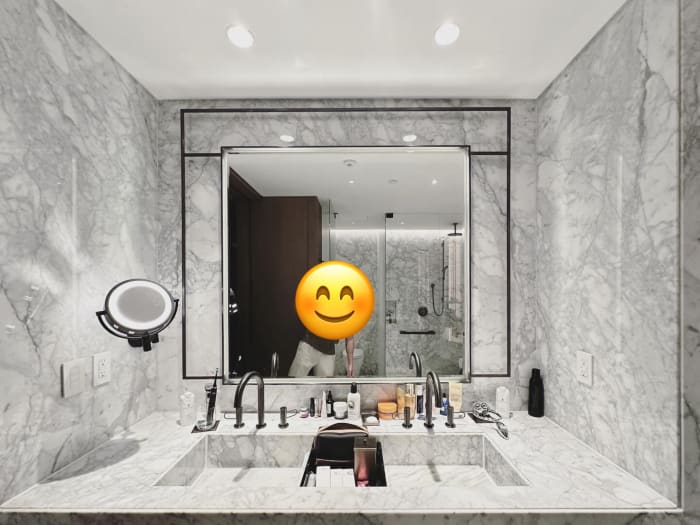
Aesthetically, the experience belongs to a controlled form of contemporary luxury. One expects clean lines, carefully chosen materials and spaces that favour light, visual calm and a sense of order. In a city as intense as Mexico City, that atmospheric quality has real value. A grand urban hotel is not meant to compete with the energy outside; rather, it should provide relief, a place where proportion and quiet return after the density of the street. The Ritz-Carlton Mexico City answers that expectation with a refined, warm yet understated ambience in which comfort is expressed through coherence rather than excess.
What also distinguishes the hotel is the way it balances modern luxury with Mexican traditions. Again, this is not about theatrical décor but about tone: attentiveness to hospitality, generosity of service and a certain warmth in the human exchange. Mexico City is a place of character, and a successful hotel here must know how to combine international standards with local intelligence. That balance gives the address its sense of rightness.
Finally, the hotel works as an ideal base from which to understand the city in its many dimensions. From this central point, it becomes easier to shape a tailored stay around heritage, contemporary art, gastronomy, shopping, business appointments, walks through emblematic neighbourhoods or a deeper exploration of the cultural scene. For a first visit or a return to the capital, The Ritz-Carlton Mexico City offers what one expects from a great urban address: strategic positioning, a clear reading of comfort and the feeling of being in the right place to grasp the city’s tempo.
Rooms & Suites
In a great urban hotel, a room is never simply a place to sleep. It becomes a vantage point, a place to recover, sometimes a temporary office and often a deeply personal refuge. At The Ritz-Carlton Mexico City, that multi-layered role makes particular sense. After the intensity of the capital, one expects a room to slow the pace, restore quiet and bring order back to the day. Luxury here is measured not only by the quality of the finishes but by the sense of ease: everything feels designed to allow guests to settle in immediately, with the rare impression that the space is working in their favour.
The expected universe is one of exacting contemporary comfort. Materials, lighting, bedding, furniture ergonomics and circulation within the room all contribute to the same idea: creating an environment equally suited to a one-night stop or a longer stay. In a hotel that welcomes couples, families and business travellers alike, that flexibility is essential. Some guests will want a cocoon after a day of sightseeing; others will need a setting conducive to concentration, calls and preparation before a meeting. A well-run hotel should answer those different uses without compromising the elegance of the whole.
Suites, for those choosing that category, naturally extend this logic by offering greater ease, clearer separation of spaces and a more residential sense of comfort. For families, they make it easier to organise rest and shared time. For couples, they add a more enveloping, composed dimension, especially valuable in a major metropolis. For business stays, they allow a clearer distinction between working time and private time. In every case, the appeal of a suite lies not only in its size but in the quality of rhythm it makes possible.
Service is decisive here. Daily housekeeping, turndown service and the constant availability of the teams contribute to that sense of discreet continuity that defines great hotels. Nothing theatrical, but a series of attentions that materially improve the stay: returning to a perfectly kept room at the end of the day, feeling that the obvious does not need to be requested, knowing that the organisation can be relied upon. It is often in such details that a hotel’s true calibre is revealed.
In Mexico City, where days can be long, dense and full of contrasts, returning to one’s room should provide a form of recentring. The Ritz-Carlton Mexico City appears conceived in that spirit: to offer rooms and suites that are not merely attractive or comfortable, but genuinely liveable. Spaces where one sleeps well, works properly if needed, takes time to prepare before heading back into the city, and finds at any hour that quality of calm which gives a great international address its value.
Dining
In a city such as Mexico City, dining can never be an afterthought. The capital ranks among the continent’s major gastronomic destinations, with a scene that ranges from highly accomplished popular cooking to some of the most inventive contemporary tables. For a hotel of The Ritz-Carlton Mexico City’s calibre, the culinary offering must therefore meet a dual expectation: to satisfy an international clientele accustomed to a certain level of service, while acknowledging that one is staying in a city where eating is one of the essential ways of understanding the culture.
Even without detailing a specific menu or named signatures that are not confirmed here, it is possible to describe what a traveller can reasonably expect from such an address. First, a breakfast worthy of the setting: a defining moment capable of supporting either a day of meetings or a programme of visits. In a great urban hotel, the morning often sets the tone for the stay. Guests look for precision, rhythm, quality of execution without heaviness, and that form of attentiveness which allows everyone to begin the day at their own pace. Then there is the need for dining flexible enough to answer different uses: a business lunch, a lighter pause, a more settled dinner, a drink in an elegant setting, or simply the wish to remain within the comfort of the hotel after a dense day in the city.
In Mexico City, however, the real question lies elsewhere: how does a luxury hotel interpret its local context? The best addresses avoid the trap of superficial Mexicanness. They prefer a more considered approach, grounded in ingredients, textures, seasoning, intelligent references and respect for the rhythms of service. The desired result is not a performance but a dining experience that makes sense in its surroundings. For the traveller, this translates into something more credible and more rooted, where one feels that the hotel is not merely importing an international standard but engaging with the city’s culinary culture.
That coherence matters all the more because hotel dining now fulfils several functions. It must be dependable enough for guests who wish to do everything on site, appealing enough to draw them back even after exploring the city’s wider scene, and flexible enough to adapt to the extended hours of a major metropolis. In that context, service matters as much as the plate: the welcome, the command of pace, the understanding of expectations and the ability to advise with judgement. At table, luxury often lies in that sense of ease.
For travellers wishing to discover Mexico City through its flavours, the hotel also serves as a useful point of support. The concierge can guide guests towards neighbourhoods, reservations or experiences suited to the nature of the stay, whether it is a first introduction or a more focused exploration. That may be the best definition of dining at a hotel such as The Ritz-Carlton Mexico City: certainly a place to eat well, but also an intelligent gateway to the gastronomic richness of a capital that tells much of its story through what it serves.
Spa & Wellness
In a city as vast and stimulating as Mexico City, wellness is not a decorative extra: it is a matter of rhythm. A great urban hotel must offer more than a simple relaxation area; it should provide a genuine transition between the intensity outside and time reclaimed for oneself. At The Ritz-Carlton Mexico City, that promise of wellbeing takes on particular meaning within a stay that may combine meetings, traffic, cultural discoveries and long days. The body absorbs the city as much as the mind does, and a hotel’s quality is also measured by its ability to support that expenditure of energy.
In this context, the expected spa and wellness universe belongs to a form of functional luxury. It is not only about soothing décor, but about a set of gestures, treatments and spaces designed to restore balance. The business traveller may look for a way to release accumulated tension and regain clarity before dinner or another day of work. A couple may see it as a suspended moment at the heart of the stay, a way to slow down without leaving the hotel. Families, depending on the pace of their trip, may appreciate the possibility of creating a calm interlude between more active sequences. In every case, wellness becomes a genuine part of the stay rather than a mere amenity.
The value of a spa in a hotel of this calibre also lies in continuity. Guests do not come only for an isolated treatment, but to extend a quality of care already perceptible throughout the property. Tone matters as much as technique: measured welcome, attention to needs, and the ability to adapt the moment to fatigue levels, available time or the desired outcome. Some guests will prefer a targeted approach, others a more enveloping pause. The role of the team is then to translate that expectation into a clear, unforced experience.
Wellness in travel also depends on quieter elements: quality of sleep, evening turndown, the pleasure of returning to an immaculate room, and the assurance that the day can be organised flexibly thanks to service available at any hour. These dimensions do not always belong to the spa in the strict sense, yet they contribute fully to the feeling of recovery. In a great hotel, rest is a complete architecture.
In Mexico City, where one can move within hours from a historic district to a contemporary art scene, from a business appointment to a late dinner, that ability to recenter becomes especially valuable. The Ritz-Carlton Mexico City answers that expectation with an approach to wellbeing consistent with the property as a whole: elegance, control, discretion and lasting comfort. More than a simple moment of relaxation, wellness here becomes a way of inhabiting the city more fully, while always keeping a place to return to and breathe.
Concierge & Services
Service is perhaps the most legible language of a Ritz-Carlton hotel, and this is especially true in an urban destination such as Mexico City. In a major capital, needs change quickly: a transfer to arrange, a last-minute reservation, a schedule to adjust, neighbourhood advice, practical assistance at any hour. What distinguishes a great five-star hotel is not simply its list of amenities, but the way it turns those needs into a seamless experience. The Ritz-Carlton Mexico City appears to be built around precisely that idea of continuity: available without being intrusive, efficient without becoming rigid, attentive without excess.
The known essentials of the property already establish a very strong framework. The 24-hour concierge and round-the-clock reception first provide an essential sense of security in the rhythm of a stay, especially in an international city where late arrivals, early departures and changes of plan are common. That permanent availability is not a minor detail; it shapes peace of mind. Knowing that a team can respond at any hour, handle an unexpected request or simply smooth a logistical transition profoundly changes the experience of travel.
Daily housekeeping and turndown service contribute to another dimension of luxury: consistency. A great hotel does not merely welcome; it sustains a level of care throughout the stay. Returning each day to a perfectly kept space, coming back in the evening to a room prepared for the night, noticing that details are followed with regularity — all this creates a very particular kind of trust. The traveller does not need to monitor the functioning of the hotel; they are free to focus on the stay itself.
Added to this are services which, though not spectacular, are decisive in practice: luggage storage, laundry, wake-up service and multilingual staff. Each answers a concrete situation. Luggage storage allows guests to make useful use of a final day in the city or absorb a gap between flight times and room availability. Laundry becomes invaluable during a stay of several days, a business trip or a longer itinerary. Wake-up service remains highly relevant for early departures and tightly managed schedules. As for multilingual staff, they contribute to that sense of international ease which matters so much in a hotel welcoming guests from around the world.
Yet the true value of a concierge lies not only in execution but in judgement. In a city as rich as Mexico City, being directed towards the right experience at the right moment makes all the difference. Recommending a neighbourhood according to the time of day, suggesting a realistic itinerary, organising a visit suited to the traveller’s profile, helping to avoid wasted time: this is the kind of service intelligence that transforms a stay. In that sense, The Ritz-Carlton Mexico City answers one of the central expectations of contemporary luxury: not only to provide comfort, but also to save time, create clarity and bring a measure of simplicity to a city whose scale can otherwise feel overwhelming.
The Art of Living in Mexico City
A stay at The Ritz-Carlton Mexico City fully reveals its value when seen as a gateway to the singular art of living of the Mexican capital. Mexico City is not a place that can be reduced to a few monuments or a simple list of addresses. It is a metropolis of historical layers, contrasting neighbourhoods, multiple creative scenes and deeply rooted daily rituals. One moves from a monumental avenue to a tree-lined square, from a major museum to a local café, from modernist architecture to older traces, with a continuity based less on uniformity than on intensity. For the traveller, the challenge is not to see everything, but to find the right rhythm for entering that density.
The hotel’s central location makes precisely that approach easier. It allows days to be shaped with balance, without being overwhelmed by the city’s scale. One might imagine a morning devoted to a major cultural site, lunch in a lively district, an afternoon of wandering or shopping, and then a return to the hotel before heading out again for dinner. This alternation between immersion and retreat is essential in Mexico City. The city reveals itself more fully when experienced in sequences, with pauses built in. A well-located grand hotel then becomes a true travel instrument.
Local art de vivre also lies in attention to daily details: the way time is taken over breakfast, the importance of the table as a social space, the pleasure of walking in certain neighbourhoods, and the preference for cultural places that are inhabited rather than merely visited. Mexico City is a place where one can organise a highly structured stay or, on the contrary, be guided by atmospheres. Both approaches are valid, provided one is well directed. That is where a hotel such as The Ritz-Carlton Mexico City becomes valuable: it offers both a stable framework and the resources needed to refine one’s route.
For couples, the city offers a rare combination of culture, gastronomy and urban energy, with enough variety to create a highly personal stay. Families can find it an unexpectedly rich destination, provided distances and highlights are well balanced. Business travellers, meanwhile, often discover that a work trip to Mexico City can easily open into a broader urban experience, such is the density of the cultural and culinary offering. In every case, the hotel acts as a point of equilibrium between the intensity outside and the comfort within.
Ultimately, the art of living in Mexico City lies in its ability to make grandeur and intimacy, sophistication and warmth, heritage and invention coexist. The Ritz-Carlton Mexico City allows guests to enter that dynamic with the right reference points: a central address, structured service and the possibility of experiencing the capital according to one’s own priorities. That is what makes a stay here successful: not the accumulation of experiences, but the creation of a balanced relationship with a vast, vibrant and deeply cultural city.
Book with MyConciergeHotel
Booking The Ritz-Carlton Mexico City through MyConciergeHotel means choosing a more guided way to approach a stay in a capital that often benefits from a degree of preparation. Mexico City rewards curious travellers, yet it can also feel formidable because of its scale, pace and the sheer diversity of what it offers. In that context, the value of a well-advised booking does not lie only in selecting the hotel itself; it lies in the ability to shape a coherent stay suited to the traveller’s profile, the length of the trip and the season.
The address already answers a number of clear expectations: a five-star hotel in the heart of the city, close to major attractions, and suited alike to couples, families and business travellers. But between knowing that a hotel fits and knowing how to make the most of it, there is all the difference of editorial and concierge guidance. Should the programme be tightly structured or left more open? Which districts should be prioritised according to the time available? How should cultural visits, rest and outside reservations be balanced? What is the best way to organise a late arrival or an early departure? These practical questions are what determine the real quality of a stay.
MyConciergeHotel makes it possible to approach the booking with greater precision. The aim is not to overload the trip with options, but to clarify the essentials: the right type of stay, the right rhythm and the right priorities. For a couple, that may mean favouring a more composed city break with a few well-chosen highlights and regular returns to the hotel. For a family, the challenge is often to optimise movements and alternate active and quieter sequences. For a business trip, the emphasis may be on securing logistics and identifying the best moments to experience the city without burdening the agenda. In every case, the hotel becomes more than accommodation: it becomes a genuinely considered base.
Booking through MyConciergeHotel also means benefiting from a qualitative reading of the property. The Ritz-Carlton Mexico City is not simply a recognised name; it is a proposition of contemporary urban luxury built around service, centrality and a refined atmosphere. That reading helps confirm the fit between the hotel and the travel plan. It also makes it easier to anticipate uses: taking advantage of the 24-hour concierge, relying on round-the-clock reception, organising arrivals and departures more smoothly, or integrating city experiences without losing the flow of the stay.
For a destination such as Mexico City, this quality of preparation can make all the difference. It allows guests to travel with greater confidence, save time and avoid the trap of an overambitious or poorly calibrated programme. With MyConciergeHotel, booking thus becomes the first gesture of a successful stay: choosing the right address, at the right moment, with the right level of guidance. In the case of The Ritz-Carlton Mexico City, that means securing an elegant, well-structured base from which to discover one of the great cultural capitals of the Americas under the best possible conditions.