History & heritage
On California’s coastline, The Ritz-Carlton Half Moon Bay belongs less to the tradition of a historic landmark than to that of a grand destination hotel conceived around a dramatic setting. Its heritage is not defined by aristocratic centuries or palace history in the European sense, but by a distinctly high-end American resort ethos: an address where architecture, service and location are all designed to frame the landscape. The Ritz-Carlton name provides an immediate point of reference, suggesting codified hospitality, close attention to detail and a style of service that seeks continuity from arrival to departure.
In Half Moon Bay, that promise takes on a particular tone. The region, south of San Francisco, is part of a Pacific shoreline where nature sets the pace: wind-swept bluffs, shifting light, morning mist and, when the sky clears, broad open horizons. The hotel has established itself as one of the coast’s notable seaside retreats, not in the spirit of a lively resort town but as an elegant refuge facing the open ocean. That direct relationship with the landscape is its true signature. In an environment where the sea is ever-present, the property embraces a form of contemporary classicism, with interiors designed both to look outward and to offer retreat.
What shapes the hotel’s identity is also the way it interprets American coastal luxury. Guests do not come merely to tick off a prestigious address, but to inhabit, for a few days, a way of life made up of cliffside walks, returns to the warmth of the fire, slow mornings overlooking the Pacific and evenings in which the weather becomes part of the spectacle. The atmosphere remains refined without tipping into display. It rests on established codes: attentive service, generous public spaces, soothing tones and comfort suited equally to restorative breaks and celebratory stays.
In that sense, the hotel’s heritage is also that of a destination. Half Moon Bay retains the image of a preserved coastline, within reach of the Bay Area’s major urban centres yet capable of creating a genuine sense of remove. The Ritz-Carlton Half Moon Bay contributes to that reputation. For many travellers, it stands as one of the region’s emblematic addresses, a place sought out for the contrast between the energy of Northern California and the serenity of a waterfront retreat facing the horizon. That ability to combine an international luxury brand, a retreat-like spirit and a powerful sense of place explains the hotel’s singular position on this stretch of coast.
The property
The Ritz-Carlton Half Moon Bay owes much to its setting. The property faces the Pacific Ocean from a site that privileges space, relative quiet and the feeling of having reached the end of the road. That sense of remove is central to its appeal. Guests remain within the wider orbit of San Francisco, yet feel distinctly elsewhere: the landscape opens out, the air changes, the light becomes either crisp or milky depending on the hour, and the stay immediately takes on a contemplative quality. For travellers seeking an address able to erase the tempo of the city without requiring a lengthy transfer, the location is a clear advantage.
The hotel stands out for its peaceful environment, reflected in the simplest elements of the experience: proximity to the beach, the constant presence of the ocean and outdoor spaces that invite walking, pausing and looking. Luxury here is not only a matter of materials or amenities; it also lies in the availability of the landscape. At any hour, the Pacific acts as a living backdrop. Conditions shift quickly, and that variability is part of the place’s charm. A clear morning is unlike a late afternoon wrapped in mist, and a windy evening carries a different mood from a sharply defined sunset over the horizon.
The overall atmosphere remains elegant without becoming rigid. This is one of the property’s more successful balances: offering a polished environment in keeping with expectations of a five-star hotel while allowing room for a certain coastal ease. One can easily imagine stays for two centred on rest and long conversations facing the sea, but also family breaks in which each guest finds a rhythm between shared moments and private breathing space. The address suits those marking an occasion as much as those simply seeking a few days of distance in a structured, comfortable setting.
The public spaces contribute to that sense of refuge. They are designed to extend the experience of the outdoors rather than oppose it. There is a sense of gentle transition between the coastal climate and interior comfort: a place to return to after a walk, to settle in with a book, to take a drink or to wait for the light to change. Service, discreet yet present, supports that staging without weighing it down. This is not an urban hotel driven by constant movement, but a property that embraces slower time and stays in which guests allow themselves to decelerate.
That positioning makes The Ritz-Carlton Half Moon Bay a destination in its own right. The region certainly offers complementary attractions, yet the hotel has enough character to justify the journey on its own. Its strength lies in the alliance between international prestige and local identity: a major hospitality name set within a landscape that requires no embellishment. For many travellers, it is precisely this meeting of polished service and open nature that defines the place.
Rooms and suites
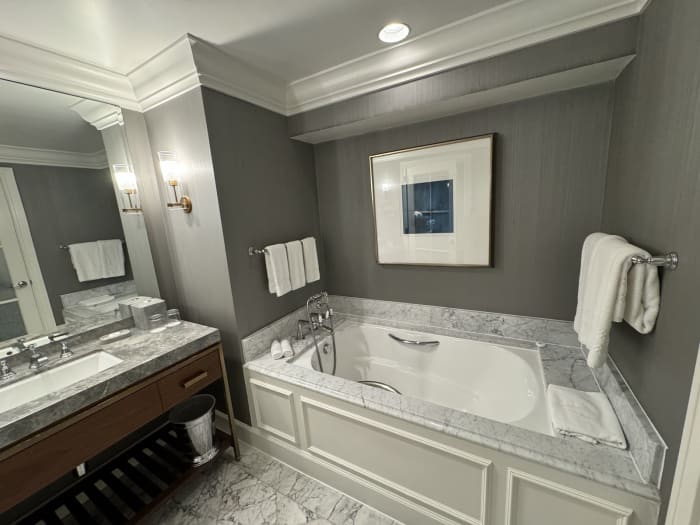
In a hotel of this calibre, a room is never merely a place to sleep. At The Ritz-Carlton Half Moon Bay, it extends the experience of the setting in a more intimate register. Even without listing precise categories here, the overall spirit is clear: to offer spaces in which comfort is expressed through generous proportions, legible layouts and an immediate sense of calm. Guests expect a seamless execution from a Ritz-Carlton address, and it is precisely that feeling of ease that matters: nothing should distract from rest, from the possible view, or from the simple pleasure of feeling properly settled.
In this kind of coastal property, design generally seeks balance rather than effect. The aim is to create an elegant environment consistent with the hotel’s standing while allowing the landscape to retain the leading role. Rooms and suites are therefore conceived as ordered refuges, equally suited to a romantic break or a longer stay. One looks for a soothing palette, comfortable materials, seating in which to linger and that essential quality of good hotels: the ability to make guests want to remain in their room without ever feeling cut off from the place.
The presence of the ocean, when it is felt from certain categories or through the property’s overall atmosphere, changes the way the space is inhabited. A room facing the Pacific is not simply a room with a view; it is an observation point over a living coastline shaped by wind, light and shifting skies. Even if guests spend relatively little time indoors, that relationship with the outdoors structures the stay. In the morning, it sets the tone for the day. In the evening, it accompanies the return to quiet. Between the two, the room becomes a comfortable threshold between walks, meals, activities and moments of rest.
Hotel services naturally reinforce that sense of continuous care. Daily housekeeping and turndown service contribute to the grammar of discreet comfort that seasoned travellers recognise immediately. These are not spectacular gestures, but they matter. Returning to a room restored to order, finding an atmosphere prepared for the night, sensing that practical details have been anticipated: all of this does more for the quality of a stay than many decorative flourishes.
For couples, the rooms and suites provide the expected setting for an elegant retreat by the ocean. For families, they should above all allow for a stay that feels simple, legible and free of friction. In both cases, the essentials remain the same: a comfortable base in an environment that encourages guests to slow down. In Half Moon Bay, one does not choose a room merely in order to sleep; one chooses a way of inhabiting the coast, with the blend of refinement, serenity and openness to the landscape that defines the hotel’s character.
Dining
At The Ritz-Carlton Half Moon Bay, the culinary dimension is first appreciated through its context. Dining with the Pacific Ocean as a backdrop carries a different significance than a meal in an urban setting. The landscape influences the experience, whetting the appetite, slowing the pace, and inviting one to linger over breakfast. It transforms lunch into a delightful interlude and elevates dinner into a moment of conclusion rather than mere consumption. In such a coastal resort, the dining experience is an integral part of the art of staying.
An establishment of this calibre is expected to excel on multiple fronts. The quality of service, consistency in execution, and the ability to cater to different moments throughout the day are equally important. Couples will seek a setting conducive to a leisurely meal, with the ocean as their backdrop. Families will appreciate the flexibility of an offering that can accommodate varied rhythms. In both cases, dining should not be a mere ancillary service; it should seamlessly integrate into the overall experience.
The great advantage of a hotel like this lies in its atmosphere. An elegant environment for relaxation implies a controlled simplicity. One expects a carefully curated setting that never feels oppressive, with spaces where one feels at ease at any hour. Attentive service should not interrupt conversation or contemplation. In an environment where weather and light play significant roles, dining benefits from maintaining a dialogue with the outdoors, whether it’s a morning coffee, an evening drink, or dinner as dusk falls.
Breakfast often takes on symbolic value in such establishments. It marks the beginning of the day and sets the tone for the stay. With the ocean in view, it becomes almost a ritual. Taking the time to observe the day’s conditions, deciding whether to embark on a walk, stay at the hotel, or explore the surroundings. Lunch and dinner extend this logic of comfortable respite. The traveller does not seek a constant display; rather, they look for precision, consistency, and the feeling that everything is designed to make their stay more fluid.
Dining at The Ritz-Carlton Half Moon Bay thus fits into a broader vision of hotel luxury—one of hospitality that does not strictly separate the landscape, service, and culinary pleasures. A grand coastal hotel succeeds in its culinary proposition when it inspires guests to stay on site, to experience the hours of day and night without breaking the thread of the experience. It is this continuity, more than mere sophistication, that defines the value of such a destination.
Spa & wellness
In a place such as The Ritz-Carlton Half Moon Bay, wellness is not confined to a dedicated facility; it begins with the site itself. The Pacific, the proximity of the beach, the peaceful character of Half Moon Bay and the overall sense of retreat already amount to a form of environmental therapy. Simply walking by the water, breathing the sea air, listening to the wind or watching the changing sky contributes to a deep kind of relaxation, often more lasting than any single treatment. This is one of the privileges of great coastal hotels: they possess a first open-air spa provided by the landscape.
Within a five-star property, that natural dimension is generally accompanied by a more structured approach to wellbeing. Travellers choose this kind of address in order to regain balance, release accumulated pressure and reintroduce slower time into often crowded schedules. Luxury here lies in making that deceleration effortless. Everything should contribute to a sense of lightness: the quality of the bed, the quiet of the room, the fluidity of service, the possibility of doing nothing without ever feeling bored. Wellness therefore extends beyond a treatment menu; it permeates the entire experience.
What makes Half Moon Bay especially suited to this logic is the immediacy with which nature asserts itself. Unlike some more demonstrative seaside destinations, the coastline here retains a gentle gravity. Its beauty lies in clear lines, bluffs, open stretches and a light that can at times feel dramatic, inviting contemplation more than agitation. For many travellers, it is precisely this setting that encourages genuine recentring. One sleeps better here, walks more willingly and rediscovers the appeal of simple routines: rising early, lingering over breakfast, going out to breathe, returning to rest and beginning again.
In a hotel of this standing, one naturally expects service to support that search for comfort. A concierge available around the clock, a 24-hour front desk, daily housekeeping and turndown service all help remove unnecessary friction. Hotel wellbeing often depends on exactly that: not having to think about organisation, being able to let oneself be carried along and feeling that the stay is being handled with tact. These are operational details, yet they create the conditions for genuine relaxation.
For couples, wellness at The Ritz-Carlton Half Moon Bay takes the form of an elegant retreat punctuated by quiet moments, ocean views and simple gestures. For families, it may mean something slightly different: a setting calm enough for each person to slow down at their own pace. In both cases, the hotel offers a quality that has become rare: the ability to disconnect without feeling isolated, to rest without giving up comfort and to recover, facing the ocean, a more measured sense of time.
Concierge & Services
Hotel luxury is often measured by the quality of its most discreet services. At The Ritz-Carlton Half Moon Bay, the experience partly relies on this invisible mechanism, allowing the stay to unfold seamlessly. A 24-hour concierge, 24-hour reception, daily housekeeping, turn-down service, luggage storage, laundry, wake-up calls, and multilingual staff comprise this ensemble. Together, they create a precise promise: that of a hotel capable of accommodating the practical needs of the traveller.
The concierge plays a central role here. In a destination like Half Moon Bay, it structures the stay. Booking activities, organising the day’s rhythm, recommending a stroll, or facilitating transport—all of this constitutes a support system that makes a difference. Reserving activities in advance, especially during peak season, allows for a smoother experience. Anticipation is part of the service.
The continuously open reception provides essential operational security. Late arrivals, early departures, unexpected requests, and last-minute adjustments all find a response here. The multilingual staff contributes to this quality of welcome, bridging distances and simplifying exchanges.
Daily maintenance and comfort services are equally important. Daily cleaning and turn-down service fall under this silent hospitality, ensuring a continuity of well-being throughout the day. Laundry, luggage storage, and wake-up calls follow the same logic: removing any potential constraints from the journey.
At The Ritz-Carlton Half Moon Bay, these services support a peaceful experience focused on relaxation. The best service is often that which recedes into the background. When everything operates with precision, the stay feels simpler and more restful. This controlled discretion remains one of the hallmarks of hotel luxury.
The Art of Living in Half Moon Bay
Staying at The Ritz-Carlton Half Moon Bay offers a unique way to experience the Californian coast. Half Moon Bay is far from being a bustling seaside resort; its charm lies in its measured scale, direct connection with nature, and a gentleness that contrasts with the intensity of nearby cities. Visitors come for the fresh ocean air, the light, the sense of space, and also for the preserved simplicity that makes luxury feel more authentic.
Local living revolves around the coastline. The proximity to the beach shapes daily routines. Morning walks, observing the cliffs, following the rhythm of the tides, pausing before the ever-changing ocean—these simple gestures take on real significance here. For European travellers, this Pacific coast often feels cinematic. Yet, what stands out is not the spectacular but the continuity of the landscape, making it easy to understand why so many visitors choose to slow down.
Half Moon Bay also allows for a taste of a more tranquil Northern California, where the stay is not dictated by performance. One can plan activities, explore the surroundings, and organise outings, but the essence lies elsewhere. It resides in the quality of transitions: leaving the room for a stroll, returning for a coffee, heading back to the beach, lingering in the late afternoon as the light fades. This way of experiencing time without the need to fill it at all costs aligns perfectly with the spirit of the hotel.
For couples, Half Moon Bay provides a backdrop conducive to a romantic interlude, filled with slow conversations, open views, and unscripted moments. For families, the destination offers another advantage: the opportunity to share simple, accessible activities without relying on a heavy schedule. The beach, walks, fresh air, and the comfort of returning to the hotel create a balance that suits multiple generations.
Ultimately, the art of living in Half Moon Bay rests on a very contemporary idea of luxury: being available to what surrounds us. In a world saturated with distractions, gazing at the ocean, walking without urgency, settling into a beautiful hotel, and allowing the day to unfold naturally already constitutes a form of privilege. The Ritz-Carlton Half Moon Bay captures this particular quality. It does not merely provide high-end accommodation; it grants access, for the duration of a stay, to a coastal rhythm where elegance is measured by serenity.
Book via MyConciergeHotel
Choosing The Ritz-Carlton Half Moon Bay through MyConciergeHotel means approaching your stay with precision, transcending a mere reservation. An establishment of this calibre cannot be reduced to a room category or a price point. It necessitates consideration of the season, the type of trip, and the guests' expectations. A weekend for two is not prepared in the same way as a family getaway, a retreat for disconnection, or a celebratory journey.
The advantage of a guided reservation is primarily practical. Certain activities are best booked in advance, especially during peak season. This foresight avoids last-minute compromises and aids in crafting a balanced itinerary. MyConciergeHotel can thus assist in conceptualising the stay as a whole: selecting the right moment, aligning the travellers' profiles with the hotel's atmosphere, and prioritising desires between relaxation, walks, dining, and local discoveries.
However, the support extends beyond mere organisation. It also involves understanding the essence of the place. The Ritz-Carlton Half Moon Bay lends itself to a tranquil stay, with the beach nearby, a view of the Pacific, and an elegant atmosphere. Intelligent booking preserves this promise. This may mean allowing sufficient time to unwind, ensuring free moments, or adjusting expectations.
For travellers accustomed to grand hotels, this mediation goes beyond generalities. It enables the right questions to be asked: are we primarily seeking a view, tranquillity, ease of access, a romantic getaway, a family setting, or a restful stop after a busy itinerary? The clearer the answers, the more relevant the choice becomes. In luxury hospitality, relevance often outweighs the mere accumulation of options.
Booking through MyConciergeHotel also offers an editorial perspective that contextualises the hotel. For a venue like The Ritz-Carlton Half Moon Bay, this discernment reveals that the luxury of the place is as much about its surroundings as it is about its service. When well-prepared, the stay truly comes into its own.