History & heritage
In Georgetown, luxury is never merely a matter of display. It begins with context, with the way an address belongs to an old, lived-in district shaped by urban memory. The Ritz-Carlton Georgetown is defined precisely by that idea. Its identity rests as much on the Ritz-Carlton signature as on its setting in one of Washington D.C.’s most recognisable neighbourhoods, where brick façades, intimate streets and a more human scale stand apart from the capital’s institutional grandeur. The experience therefore starts before one crosses the threshold: it is rooted in a historic quarter whose atmosphere feels more residential, more discreet, and deeply connected to the city’s architectural past.
What makes the property compelling is this meeting point between local heritage and international hospitality. On one side, Georgetown suggests an older Washington, preceding ceremonial avenues and monumental perspectives, a district of smaller streets, historic houses, considered shops and a certain kind of understated elegance. On the other, the Ritz-Carlton name brings a codified service culture, close attention to detail and a highly controlled understanding of refined comfort. The hotel stands at the intersection of these two narratives: that of a historic neighbourhood and that of a hospitality house known for continuity, restraint and precision.
This combination shapes the tone of the property. It does not pursue ostentation, but rather a sense of aesthetic depth: carefully chosen materials, public spaces designed for calm, and a balance between classical references and more contemporary lines. The result feels neither museum-like nor anonymous. Instead, it is an urban form of luxury that acknowledges its surroundings and speaks to travellers who wish to experience Washington beyond its political symbols alone. Staying here means choosing a more nuanced, more everyday capital, without giving up access to the city’s major cultural and institutional landmarks.
For European travellers in particular, this quality is easy to appreciate. Georgetown recalls those historic districts where one likes to walk without a fixed plan, noticing the details of a façade, moving between visits and pauses, from a characterful address to a livelier corner. The Ritz-Carlton Georgetown translates that same idea into hospitality: a deeply comfortable hotel that does not isolate itself from the city, but offers a more sensitive reading of it. Its heritage lies not only in the reputation of a brand, but also in the character of a neighbourhood that gives the stay its depth and distinction.
The property
The Ritz-Carlton Georgetown stands out first through its sense of scale. In a capital often associated with grand official buildings, monumental perspectives and institutions, this address offers another measure of a stay: more intimate, more residential and more closely tied to the rhythm of a neighbourhood. That feeling matters. It gives travellers the impression not merely of sleeping in Washington D.C., but of inhabiting, for a few days, a specific part of the city, with its own character, habits and architectural texture. Georgetown is especially well suited to those who wish to combine access to the city’s major sights with a subtler urban experience.
The hotel enjoys a location that makes it easy to reach Washington D.C.’s attractions while preserving a certain distance from the more formal energy of the institutional centre. This is one of its clearest strengths: the ability to spend the day among the capital’s principal landmarks, then return to a calmer, more discreet setting where the streets invite walking and where there is a sense of continuity between outside and inside. That transition, from monumental to domestic, from ceremonial to personal, is fully part of the comfort of the stay.
Aesthetically, the property embraces an elegant and refined atmosphere, shaped by a decorative language that combines classical and contemporary elements. In practice, this usually means measured volumes, warm materials, controlled tones and spatial design that favours clarity over effect. In a hotel of this category, such restraint is often more convincing than an overly demonstrative decorative statement. It allows each guest to project a personal use of the place: a restorative pause after a day of meetings, a cultural stay, a couple’s escape or a comfortable base for family travel.
The public spaces play an essential role here. They are not simply transitional areas, but places of pause. One waits for a meeting, reviews an itinerary, or simply finds that sense of continuity typical of well-run grand hotels. Service reinforces this impression without overplaying it. At its best, it is expressed through fluidity: a smooth arrival, a request handled precisely, a constant yet never intrusive presence. This is often where the true quality of an urban luxury hotel is measured.
The Ritz-Carlton Georgetown therefore suits a range of travellers, united by the same expectation: a reliable, elegant and well-located base in the American capital. It works equally well for business travel and for a more exploratory stay, precisely because it does not impose a single narrative. It provides a setting, a tone and a standard of service, then allows the city and the guest to shape the rest.
Rooms and Suites
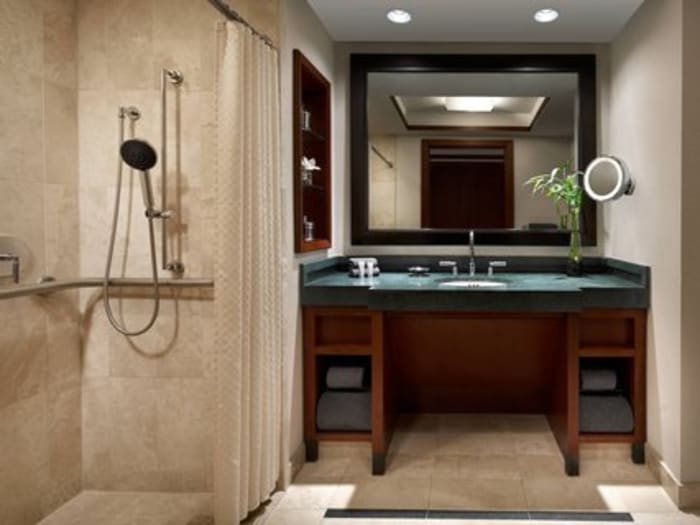
In a luxury urban hotel, the room is never just an extension of the lobby. It must create a shift in rhythm. After the city, its appointments, museums, and journeys, it becomes a space for retreat and silence. This perspective is essential when considering the rooms and suites at The Ritz-Carlton Georgetown.
The classic and contemporary styles seek a balance here. The classic brings stability and a sense of permanence, while the contemporary introduces fluidity, user comfort, and understated lines.
For the traveller, this balance translates into a feeling of coherence. The volumes, lighting, materials, furniture, and spatial organisation make the stay simple and enjoyable. This versatility suits both business trips and stays with a partner or family. A good hotel room should accommodate multiple uses without losing its identity.
The suites extend this logic by offering more space. In a capital like Washington, this additional breathing room is particularly meaningful. It allows for hosting, isolation, or enjoying the stay with greater ease. Beyond the surface, everything rests on the quality of the atmosphere. A successful room is not only well-equipped; it possesses the right tone.
The turndown service and daily maintenance directly contribute to this perceived quality. In luxury hospitality, comfort often relies on discreet gestures. A room tidied at the right moment is enough to instil a constant sense of care.
At The Ritz-Carlton Georgetown, the rooms and suites reflect the overall identity of the establishment. Measured elegance, attentive comfort, and a style that is not rigid. For the French visitor accustomed to fine urban addresses, the appeal is clear: to find a sophisticated and coherent refuge capable of accommodating different stays without losing its poise.
Dining
In Georgetown, a hotel's gastronomic offering is in tune with the rhythm of the neighbourhood. It aligns with the habits of the locals and the expectations of a mobile clientele.
At The Ritz-Carlton Georgetown, the dining experience extends the overall offering. It is integrated into the service, atmosphere, and urban elegance of the establishment.
In such venues, dining serves multiple functions. It provides a suitable setting for breakfast, business lunches, a quick break, or an on-site dinner.
This versatility is particularly important in Washington D.C. The city alternates between appointments, cultural visits, and neighbourhood strolls.
The announced style, both classic and contemporary, suggests a dining experience that reflects the character of the house. The overall emphasis is on clarity, comfort, and a certain discretion.
The enjoyment also lies in how dining integrates into the stay. Discreet service, a clear menu, and the option to dine on-site make a significant difference.
In Georgetown, the culinary experience naturally extends beyond the hotel walls. The neighbourhood is best discovered on foot, with a variety of addresses and impromptu meals.
In this context, the hotel’s dining plays an elegant supporting role. Guests return for its convenience, atmosphere, and quality of service.
For travellers alternating between outings and moments of retreat, this balance is highly appreciated. Here, gastronomy is as much about hospitality as it is about the plate.
Spa & Well-being
In a capital like Washington D.C., well-being takes on a unique significance. It is not merely about relaxation; it also encompasses the ability to carve out moments of recovery in a city characterised by its relentless pace and constant movement. For a luxury hotel, the wellness space is not just an added bonus; it can transform a functional stay into a more balanced experience.
In this context, the foremost luxury is often tranquillity. A well-designed hotel knows how to create zones of deceleration in the heart of the city. This is achieved through acoustic quality, gentle circulation, and softer lighting. For business travellers, this function is essential, allowing them to regain composure after a day of meetings. For couples, it adds a more intimate dimension to their stay. For families, it provides a useful counterpoint to the intensity of sightseeing.
Within the Ritz-Carlton universe, well-being is founded on a structured, discreet, and personalised approach. Less emphasis on effects, more on the quality of execution. Precise welcome, meticulously maintained environment, and respect for time. In an urban hotel, guests do not always come for a full half-day. Sometimes, they seek to quickly regain energy, relieve the tension of travel, or rebalance after a time zone shift.
At The Ritz-Carlton Georgetown, well-being aligns with this philosophy of adjustment. Here, the focus is less on spectacular escapism and more on returning to a sense of equilibrium. An hour well spent in a serene setting can alter the perception of a stay. It restores the energy needed to explore the city, enjoy a dinner, or rediscover that inner comfort which is so vital in high-end hospitality.
For the French traveller, this nuance is significant. Well-being does not need to be overstated to be convincing; it should naturally integrate into the stay, presenting itself as an opportunity at the right moment. It is often in this controlled discretion that the quality of a great urban establishment is revealed.
Concierge & Services
In luxury hospitality, the services are valued not only for their individual offerings but also for how they interconnect to create a seamless stay. The Ritz-Carlton Georgetown features a 24-hour concierge, a 24-hour reception, daily room service, a turndown service, luggage storage, laundry services, a wake-up call service, and multilingual staff. Together, they embody the promise of a hotel capable of accommodating very different rhythms of stay, with consistency and precision.
The continuously open reception is a tangible advantage in an international city like Washington D.C. Late arrivals, early departures, changes in plans, or transport mishaps are all part of the travel reality. Knowing that the reception is available at any hour alters the perception of the stay. Guests feel less constrained, better supported, and more liberated in organising their days. The 24-hour concierge extends this sense of security, steering it towards enhancing the experience. It helps shape the stay, whether it involves arranging transportation, recommending an itinerary, facilitating a reservation, or addressing a specific request.
The daily room service and turndown service exemplify that silent hospitality which often makes a difference. They maintain the room in a constant state of comfort without the guest needing to think about it. This discretion allows travellers to focus their attention on the city, their work, or their loved ones.
Laundry services, luggage storage, and wake-up calls cater to very practical needs. For business trips, stays with multiple stops, or arrivals before the room is available, these services quickly become crucial. They ease transitions, reduce friction, and contribute to a sense of continuity.
Finally, the presence of multilingual staff deserves special mention. In an international hotel, the quality of human interaction is as important as operational efficiency. Being understood accurately, being able to articulate nuanced requests, and receiving clear recommendations all contribute to comfort. At The Ritz-Carlton Georgetown, the services seem designed to support. Luxury, especially in the city, often lies in making things simple, clear, and perfectly executed.
Washington living, from Georgetown
Choosing Georgetown for a stay in Washington D.C. means embracing a particular way of inhabiting the capital. One discovers it not only through its institutions, museums and grand perspectives, but also through its neighbourhoods, its walking rhythms and its subtler transitions between culture, commerce, architecture and daily life. The Ritz-Carlton Georgetown finds its full meaning within that reading of the city. Its location allows easy access to Washington’s major attractions while offering a distinct place to return to, almost a change of register. After official buildings, museum collections and emblematic avenues, one comes back here to a gentler, more lived-in scale, better suited to wandering.
Georgetown is one of those districts that lend themselves especially well to exploration without an overly rigid plan. One walks willingly, noticing rows of houses, brick details and the changing light throughout the day. It is an urban setting that has retained a strong personality without becoming frozen into a postcard. For visitors, that quality is valuable: it allows Washington to be experienced in a less abstract, more sensory way. One moves from one address to another, from a coffee break to a stroll, from a cultural visit to a lighter moment, with the impression that the city reveals itself in successive layers.
From the hotel, it becomes possible to shape a highly personal stay. Some guests will focus on the major landmarks of the American capital, others on galleries, bookshops, neighbourhood walks or professional engagements. The virtue of a well-located, well-run address is precisely that it does not impose a single use. It serves as a base, a refuge and a point of balance. One leaves early, returns between appointments, goes out again for dinner, or instead chooses to slow down and enjoy the immediate surroundings.
For European travellers, this combination of cultural intensity and residential comfort is especially appealing. It is a reminder that a great urban journey is measured not only by the number of sights visited, but by the quality of the in-between moments: the morning walk, the late-afternoon return, the feeling of a neighbourhood becoming briefly familiar. The Ritz-Carlton Georgetown supports that experience particularly well because it belongs to an environment that already possesses its own elegance.
Ultimately, the art of living in Washington from Georgetown lies in accepting the city’s plurality. It is a political capital, certainly, but also a city of neighbourhoods, details and chosen routes. The hotel provides a clear and comfortable way into that complexity, offering an address that connects major highlights with a more intimate experience of the destination.
Book with MyConciergeHotel
Booking The Ritz-Carlton Georgetown through MyConciergeHotel means approaching the property in the right way: not simply as a room to confirm, but as a stay to shape. In a city such as Washington D.C., where travel purposes vary widely and where location profoundly alters the tone of the experience, thoughtful guidance before arrival has real value. Georgetown does not offer the same reading of the capital as a hotel in the heart of the institutional district; it is therefore useful, at the time of booking, to identify what one truly expects from the stay. Is the aim an elegant setting for business travel? A refined base for discovering the city as a couple? An address able to combine comfort, logistics and flexibility for a family trip?
The value of an editorial and concierge intermediary such as MyConciergeHotel lies precisely in placing the hotel back into its practical use. Beyond the five-star status, the question is to understand for whom this address works especially well, what rhythm of travel it suits, and how best to make use of its strengths. The Ritz-Carlton Georgetown stands out for its setting in a historic district, its easy access to Washington’s attractions, its elegant atmosphere and its blend of classical and contemporary style. These elements matter, but they become more meaningful still when related to your programme, the length of stay, the season and your priorities on site.
Booking intelligently also means anticipating the needs that make a difference once there. Business travellers will appreciate the reliability of round-the-clock services and the ease of movement. Couples may prefer an arrangement that leaves room for walking, returning during the day and discovering the city in a more nuanced way. Families benefit from thinking in terms of fluidity: arrival times, luggage handling, the rhythm of visits and moments of rest. It is precisely these adjustments, modest though they may appear, that turn a good address into a successful stay.
MyConciergeHotel makes it possible to approach the booking with greater discernment. The aim is not to overcomplicate matters, but to get them right: choosing the right dates, clarifying expectations, arranging useful reservations in advance and leaving enough space for Georgetown and Washington to be discovered without rigidity. In a destination as layered as this one, such light yet precise preparation makes a genuine difference.
Ultimately, The Ritz-Carlton Georgetown speaks to travellers seeking a capital that feels more lived-in, more elegant and more balanced. Booking through MyConciergeHotel means giving yourself the best conditions in which to experience the address, with a finer reading of the place and a constant concern for coherence between the hotel, the city and your own way of travelling.