History & heritage
In Charlotte, The Ritz-Carlton Charlotte belongs less to the tradition of a historic landmark than to that of a contemporary grand urban address, conceived to reflect the city’s own evolution. The appeal here does not lie in aristocratic lineage or the décor of a former palace, but in a distinctly early twenty-first-century idea of American luxury: one built on precision, service and efficiency, set in the heart of a downtown district that has become one of the South-East’s major business hubs. This distinction matters, because it defines the property’s character. Guests do not come solely for decorative escapism; they find an address that moves in step with Charlotte while offering a measured sense of calm.
The Ritz-Carlton name carries an immediately recognisable hotel heritage: a sense of ceremony, exacting service standards, close attention to everyday details, and the ability to welcome business travellers and leisure guests without allowing one to dominate the other. In Charlotte, that promise takes on a particularly clear form. The hotel reflects the image of a city long associated with finance and commerce, yet increasingly shaped by a broader cultural, culinary and sporting identity. In that setting, the property acts as an anchor. It offers the stability of an international grande dame while adapting to local energy.
Its heritage is therefore above all one of brand and method. This is evident in the way spaces are designed to be immediately legible, in the importance placed on arrival, and in the sense of ease that distinguishes a well-run hotel from one that is merely well decorated. Turndown service, a concierge available around the clock, a 24-hour front desk and daily housekeeping are, of course, the expected foundations of a five-star stay, yet here they contribute to a consistent tone. Nothing feels theatrical for its own sake; everything is intended to make the stay feel coherent and free of unnecessary friction.
In a city such as Charlotte, where business travel is significant, that coherence matters all the more. The hotel must be able to host an early meeting, a weekend for two, a cultural break or a longer stay without seeming to change personality as the day unfolds. That is precisely where its form of heritage lies: in a codified tradition of hospitality, yet one flexible enough to answer contemporary needs. The Ritz-Carlton Charlotte does not tell an ancient story; it tells that of a modern metropolis that has chosen refinement as its language of welcome.
The hotel
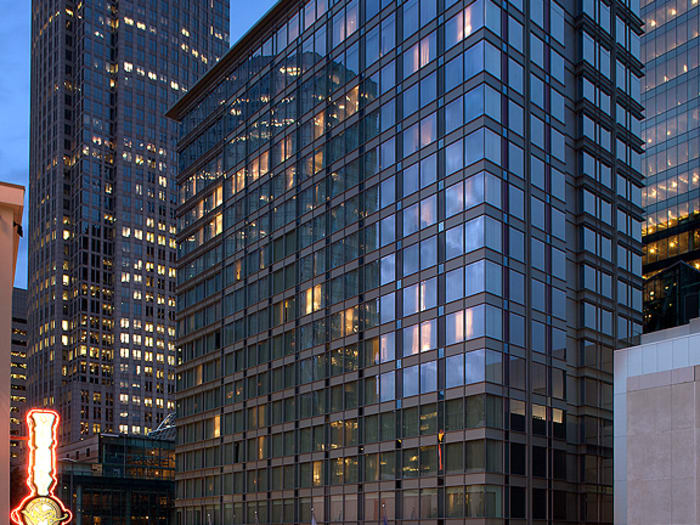
One of the most obvious strengths of The Ritz-Carlton Charlotte lies in its central location. Being in the heart of Charlotte is not merely a convenient phrase here: it means staying in an environment where movement is simplified, where business appointments, cultural outings and moments of rest can follow one another without cumbersome logistics. For the business traveller, that centrality saves valuable time; for the visitor wishing to discover the city, it provides a natural point of departure towards its main areas of interest. The hotel is designed precisely for this dual expectation, offering an address that combines accessibility with a sense of retreat.
The arrival experience plays an important role in shaping that impression. In a major American city, urban luxury is often measured by a property’s ability to create a clear break from the pace outside. Once across the threshold, the rhythm changes. The public spaces favour clarity: the language is that of a contemporary five-star hotel, with materials chosen for their lasting quality, lighting calibrated to flatter without excess, and a layout intended to make movement feel instinctive. The atmosphere described as sophisticated and welcoming is not contradictory; it rests on a careful balance between formality and comfort.
That mood matters greatly in a destination such as Charlotte, whose identity combines office towers, cultural institutions, sporting events and a quieter local life. The hotel acts as an elegant filter between city and guest. One can reconnect with downtown energy without feeling overwhelmed by it. This ability to create transitions is one of the most valuable qualities of a well-conceived urban address. It allows a guest to move from a full day to a calmer evening, from business commitments to dinner, or from an active weekend to a few restorative hours, without any sense of artificial contrast.
Its proximity to local attractions further reinforces this versatility. Without promising exhaustive immersion, the property positions itself as a dependable base from which to explore Charlotte at one’s own pace. Some guests will favour museums, performance venues or shopping districts; others will simply want a practical address from which to move between meetings and engagements. In both cases, the hotel answers with the same quality of presence: discreet, steady and legible.
What stands out, finally, is the way the property fully embraces its identity as a grand downtown hotel. It does not attempt to imitate a resort, nor does it force a residential character. Its elegance is that of a metropolitan address that understands what its guests expect: a well-judged location, controlled spaces, continuous hospitality and that rare sensation of being fully in the city while remaining slightly removed from it. In Charlotte, that balance is already a form of luxury.
Rooms and suites
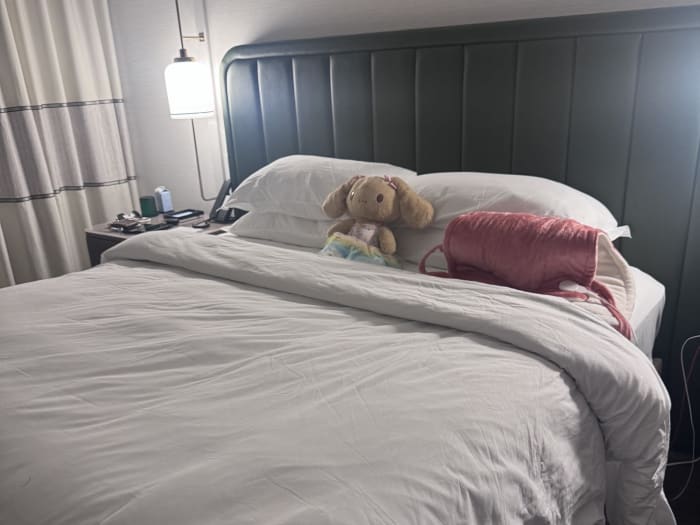
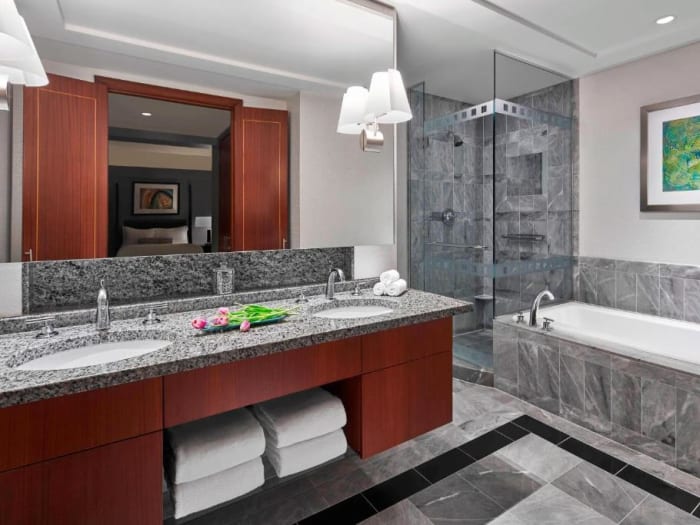
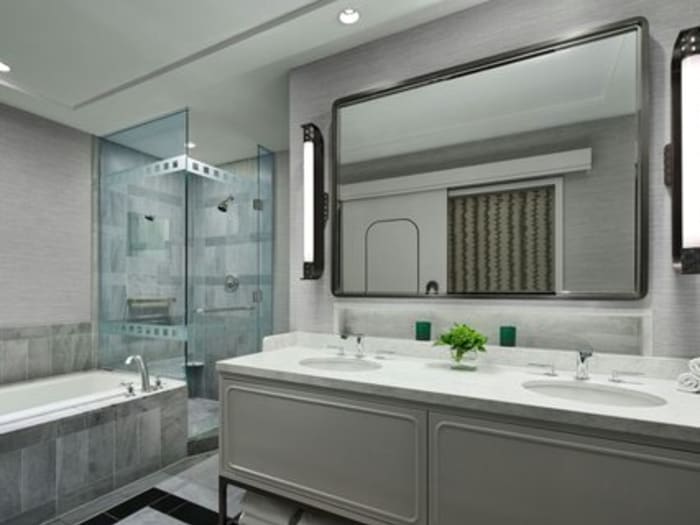
In a hotel of this calibre, the room is never merely a place to sleep. It must provide genuine rest, but also serve as an occasional workspace, a refuge between appointments and, at times, a private sitting room for a few hours. At The Ritz-Carlton Charlotte, that versatility is central to the experience. Rooms and suites are conceived to answer a range of uses, with the exacting standards expected of a grand urban address: everything should feel easy to inhabit, immediately comfortable and sufficiently well orchestrated that one scarcely notices the effort behind it.
The style one expects in such a property generally favours restrained elegance over overly emphatic decoration. This suits Charlotte particularly well, where the clientele includes business travellers, couples on a city break and visitors in town for an event or an extended weekend. In that context, a successful room is one that never tires the eye, that soothes without feeling cold and that allows guests to settle in quickly. Tones, materials and layout all serve a precise purpose: to create an environment that is legible, calm and coherent with the rest of the hotel.
The care devoted to service strengthens that impression. Daily housekeeping and turndown service, both among the known amenities, are not mere routines; they contribute to the sense of a stay being attentively followed. Returning after a full day to find the room restored and prepared for the evening is a discreet yet essential comfort. It is often in such details, more than in any theatrical gesture, that the quality of a five-star hotel is measured. Luxury here lies in the continuity of care.
Suites, for their part, usually answer a different rhythm of stay. They suit those who seek greater ease, wish to host an informal meeting, extend a business stopover or simply enjoy more generous surroundings. In an urban hotel, that difference in scale changes the experience considerably: one is no longer merely sleeping in the city, but inhabiting it temporarily. Even without detailing a precise room typology, the value of these higher categories lies in their ability to offer more mental space as much as more physical space.
Another element matters greatly in a downtown address: the symbolic insulation the room provides. After the intensity of streets, meetings and movement, it must recreate a form of inner quiet. That does not mean erasing the city entirely, but placing it at enough of a remove for guests to rediscover their own rhythm. The Ritz-Carlton Charlotte answers that expectation with a promise of controlled comfort, where the codes of an international grand hotel remain present without losing the sense of being in Charlotte.
For couples, the rooms and suites offer an elegant setting for a restful stay; for business travellers, they become a dependable base; for all guests, they embody what one expects of a great address: hospitality expressed through the quality of rest, the precision of service and the feeling of being anticipated without ever being watched.
Dining
In a grand urban hotel, the dining offer plays a subtler role than one might first assume. It does not merely feed guests; it structures the day, provides elegant answers to scheduling constraints and helps define the property’s tone. At The Ritz-Carlton Charlotte, one can reasonably expect dining in keeping with its dual role as both business address and leisure stay: service that is precise in the morning, flexible at lunchtime, more settled in the evening and always faithful to the idea of frictionless hospitality.
Breakfast, in this context, is often the first true indicator of a hotel’s level. In an active city such as Charlotte, it must answer several rhythms at once: coffee taken quickly before a meeting, a slower weekend start, or a full meal before heading out to explore the city. Perceived quality depends as much on freshness and consistency as on presentation. A grand hotel persuades less through abundance than through judgement: attentive service, well-managed waiting times, a pleasant dining room and the impression that everything has been arranged to let the day begin smoothly.
At lunchtime, the table in a property such as this must speak to a varied clientele. Some guests seek an appropriate setting for a business meeting; others prefer a lighter pause between visits. In both cases, what matters most is clarity of offer and consistency of execution. Contemporary luxury, especially in the city, is not necessarily about constant culinary display. It can also take the form of well-handled cooking, exact service and an atmosphere that allows for both conversation and repose.
In the evening, dining often becomes one of the hotel’s most memorable faces. After the intensity of downtown, choosing to dine in-house can be as much about comfort as pleasure. In a Ritz-Carlton property, one expects a certain poise: careful table settings, staff attentive without excess, and the ability to provide an experience suited equally to dinner for two and to a more formal business meal. Even without precise details on concepts or signature venues, the general idea remains clear: to offer dining worthy of the place itself, namely elegant, dependable and adapted to the real habits of travellers.
Room service must also be considered, particularly important in a hotel welcoming a mixed clientele. The ability to dine late, arrange a private breakfast or simply extend the comfort of one’s room forms an integral part of the experience. Here again, what matters is not theatricality but quality of execution.
In short, dining at The Ritz-Carlton Charlotte should be understood as a natural extension of the hotel’s wider service culture: an art of hospitality that accompanies the rhythms of a stay, elevates ordinary moments and gives the life of the hotel additional depth from morning through to evening.
Spa & wellness
In an upscale urban address, the wellness area does not serve the same purpose as it does in a resort. The point is not necessarily to organise an entire day around the spa, but rather to offer a counterpoint to the city’s tempo. In Charlotte, where stays may be shaped by business, events or a busy programme of visits, that dimension takes on particular value. Wellness becomes a way of reintroducing slowness, focus and a form of inner comfort into what is often a dense schedule.
Even without detailing unconfirmed facilities, one can understand what travellers seek in a property of this calibre: spaces conceived to release pressure, treatments that privilege quality of execution, and an atmosphere controlled enough to create a genuine sense of transition. The luxury of urban wellness lies not only in the breadth of a treatment menu; it is measured by a place’s ability to make guests forget, for an hour or two, the noise outside, their obligations and the speed of the day.
For business travellers, this offer often represents more than a pleasant extra. Between journeys, meetings and possible time-zone fatigue, the chance to carve out a restorative moment becomes a concrete element of overall comfort. A massage, a facial or simply quiet time in a dedicated environment can transform the perception of a stay. For couples, the spa plays another role: it introduces breathing space into a city break, creating a shared moment that depends neither on the city’s timetable nor on the crowds elsewhere.
Wellness in a grand hotel such as The Ritz-Carlton Charlotte should also be understood as an extension of service. The experience does not begin and end in the treatment room; it starts with the way staff welcome, advise and guide. A well-run house knows how to adapt the pace, suggest without imposing, and ensure that a treatment fits naturally into the wider flow of the stay. That intelligence of attention is often what separates a merely pleasant spa from one that proves genuinely memorable.
It is also worth underlining the mental framework such a space provides. In a large city, rest does not always come naturally. Sometimes a dedicated place is needed in order to recover a sense of availability to oneself. The spa answers that expectation by offering a structured pause, almost a silent echo chamber within the hotel. Guests come to recover, to recentre themselves, or simply to rebalance an overfull day.
Thus, even when it forms part of a brief stay, wellness contributes fully to the quality of the experience. It reminds us that a grand hotel does more than provide accommodation: it creates the conditions for a more harmonious stay. At The Ritz-Carlton Charlotte, that promise takes on particular meaning in the context of an active city, where true luxury often consists in regaining, if only for a moment, command of one’s own rhythm.
Concierge & services
What consistently distinguishes a grand hotel from a merely attractive address is rarely décor alone; it is the quality of service in its continuity. At The Ritz-Carlton Charlotte, the known amenities already outline a clear promise: 24-hour concierge service, a front desk open at all times, daily housekeeping, turndown service, luggage storage, laundry, wake-up service and multilingual staff. Taken individually, each may seem expected in a five-star property. Together, however, they form a genuine architecture of comfort, particularly valuable in a downtown hotel where arrival and departure patterns are often irregular.
The round-the-clock concierge plays a central role here. In a city such as Charlotte, the function goes beyond arranging transport or pointing guests towards an address; above all, it helps make the stay flow. A great concierge knows how to read needs before they become formal requests. He or she helps shape a day, optimise a tight schedule, suggest an outing suited to the time available or discreetly solve an unforeseen issue. That anticipatory capacity marks the difference between competent service and true high-level hospitality.
The 24-hour front desk answers another reality of contemporary travel: delayed schedules, late arrivals, early departures and last-minute changes of plan. In this setting, constant reception is not merely convenient; it is a form of reassurance. The traveller knows there will always be a presence, an answer, a point of support. That continuity is especially valuable on business stays, but it matters just as much for couples or international visitors discovering the city.
Room-related services belong to that silent excellence that defines great houses. Daily housekeeping ensures a consistently high standard of stay; turndown introduces a more personal attention, almost domestic in the best sense. Laundry, luggage storage and wake-up service extend the same logic of support. They answer highly practical needs, often underestimated, yet in reality decisive to the smoothness of travel. A suit returned in time, luggage looked after before a late flight, a reliable wake-up call before an important meeting: these are the details that turn a good address into a trusted base.
Multilingual staff add another essential dimension to the international experience of a hotel such as this. To be understood precisely, to make a request without approximation, to feel one can rely on clear communication: all of this contributes directly to comfort.
Ultimately, the services at The Ritz-Carlton Charlotte express a particular idea of luxury: not the accumulation of effects, but the methodical removal of friction. The stay becomes simpler, clearer and calmer. And it is often there, in that almost invisible ease, that true hotel sophistication resides.
The Charlotte way of life
Staying at The Ritz-Carlton Charlotte also means approaching a certain idea of Charlotte itself. The city does not always reveal itself at first glance. It lacks the immediately legible tourist obviousness of some capitals, and equally the ready-made folklore of more demonstrative destinations. Its interest lies instead in a combination of modernity, efficiency and gradually asserted cultural confidence. One discovers a structured downtown, a strong economic presence, but also artistic institutions, events, evolving neighbourhoods and a way of living the American South that is expressed more through tone and rhythm than through display.
In that context, a central hotel such as this allows Charlotte to be understood in layers. One may begin with its major urban functions: business, conventions, corporate headquarters, the activity that gives downtown its particular energy. Then, little by little, other dimensions emerge: museums, performance venues, restaurants, public spaces and sporting fixtures that play an important role in local life. The city reveals itself less as a postcard destination than as a contemporary American metropolis, with its habits, codes and its own discreet elegance.
For the European traveller, Charlotte can be surprising in its balance. It is at once highly functional and more nuanced than it first appears. One senses the influence of the South in the courtesy and in a certain gentleness of interaction, but also the assurance of a city oriented towards the future. That duality forms part of its charm. A stay here is best approached without overly fixed expectations: the point is not to tick off universally known icons, but to grasp an atmosphere, an urban way of life, an American manner of reconciling work, culture and comfort.
The hotel supports that reading particularly well. Because it is suited equally to business stays and leisure breaks, it reflects the city’s own profile. One can move from an appointment to a more relaxed evening, from a cultural visit to dinner, from a tightly structured programme to a few freer hours. Charlotte lends itself to that flexibility. It does not force itself upon the eye; rather, it rewards attention.
For couples, this means a different sort of city break, less saturated with expected images and more focused on the quality of time spent. For business travellers, it offers the chance to extend a work trip into a more personal discovery of the city. In both cases, the local way of life is read in transitions: the ease of moving around, the energy of downtown, the possibility of finding calm moments, and the impression of a city that is growing without abandoning a certain sense of measure.
Charlotte may not be the loudest expression of American urban luxury. That is precisely what can make it appealing. And The Ritz-Carlton Charlotte, through its location and positioning, offers a particularly accurate reading of it: that of a contemporary metropolis where refinement is expressed less through excess than through the quality of experience.
Book with MyConciergeHotel
Booking The Ritz-Carlton Charlotte through MyConciergeHotel means approaching the stay with a sense of judgement rather than as a mere transaction. In an urban address of this calibre, the quality of the experience often depends on details prepared in advance: the right room type according to the purpose of the trip, the rhythm of the stay, arrival and departure times, needs linked to business travel or, conversely, the wish to preserve a more relaxed atmosphere for a weekend away. A well-supported reservation makes it possible to adjust those parameters before arrival.
The value of an editorial and booking concierge lies in this more nuanced reading of a stay. The point is not simply to confirm a night, but to guide guests towards the most coherent option. A business traveller will not have the same priorities as a couple on a short break; a very brief midweek stay is not lived in the same way as an extended weekend; a late arrival may call for a different kind of organisation. In each of these cases, support creates tangible comfort. One chooses better, anticipates more effectively and avoids the last-minute compromises that so often disrupt the flow of travel.
The Ritz-Carlton Charlotte is particularly well suited to this approach precisely because it welcomes varied profiles. Its central location, sophisticated yet welcoming atmosphere and continuous services make it a flexible address, but that flexibility is best used intelligently. Depending on the nature of the stay, it may be wise to favour a quieter room category, a suite offering greater ease, or a more advanced booking window, particularly when the city is busy with business activity, events or periods of stronger demand.
Booking ahead remains, moreover, a simple but decisive recommendation. In an active destination such as Charlotte, rates and availability may shift according to the local calendar. Anticipation not only gives access to better choice, but also helps create a calmer stay. This advice applies as much to business travellers working to precise schedules as to leisure stays, where guests often wish to secure the best room options.
Through MyConciergeHotel, the reservation becomes part of a more qualitative relationship with the property. The aim is not to overpromise, but to clarify. What are the hotel’s real strengths? What type of stay does it suit best? How can one make the most of its location and services? This work of perspective is particularly useful in a major city such as Charlotte, where habits may vary according to district, events and the purpose of travel.
Ultimately, booking well is already the beginning of staying well. And for an address such as The Ritz-Carlton Charlotte, where the experience rests on precision, continuity and a balance between efficiency and refinement, that preparation is very much part of the luxury.