History & heritage
In Beijing, some hotels matter less for spectacle than for the way they interpret a particular moment in the city. The Ritz-Carlton Beijing Financial Street belongs to that category: an address shaped for a capital whose international profile has grown alongside the rise of modern business districts. Its identity is not rooted in an aristocratic past or the conversion of a historic palace, but in another kind of heritage: that of grand international hospitality, where service, composure and discretion form a lasting signature.
Its affiliation with The Ritz-Carlton provides an immediate point of reference. For travellers, the name suggests a certain vision of luxury hospitality: polished yet unforced service, interiors designed to reassure as much as impress, and constant attention to everyday comfort. In Beijing, that language takes on a distinct tone. The city brings together imperial traces, broad administrative avenues, newer business quarters and an evolving cultural scene. In that context, a hotel such as this acts as an interface between different tempos: the structured rhythm of business travel and the freer pace of discovery, from hutongs and museums to temples and shopping districts.
The hotel’s heritage also lies in its place within the development of Financial Street, now one of the capital’s key economic centres. Staying here means choosing a version of Beijing defined by efficiency, clear lines and well-organised movement, without giving up access to the city’s historic depth. That duality matters. The property does not attempt to recreate a traditional setting; instead, it offers a contemporary interpretation of refinement, more urban, more composed and more attuned to the practical needs of today’s travellers.
Accordingly, one finds the hallmarks of an established international house: attention to detail, consistency of service, a carefully managed atmosphere in public spaces, and the promise of a stay in which practical matters are handled with ease. For business guests, that means early starts, late returns made simpler by smooth organisation, and the reassurance of a stable environment within a vast and demanding city. For couples, the appeal is different yet equally clear: the sense of an elegant retreat, removed from the city’s intensity, from which to shape a stay around culture, dining and rest.
The story of the hotel is therefore less a matter of patrimony than of precise placement within modern Beijing. It is a property that accepts its era, its district and its purpose, while drawing on the codes of classic luxury: carefully chosen materials, attentive service, quietness, and a preference for seamless transitions between the outside world and the interior. In a city whose scale can at times feel overwhelming, that coherence matters. It gives the stay a welcome clarity, especially when business obligations, cultural visits and private downtime must coexist.
In that sense, The Ritz-Carlton Beijing Financial Street reflects an essential side of Beijing: a capital defined neither solely by its monuments nor solely by its towers, but by the coexistence of both. The hotel offers a calm, structured and contemporary reading of that reality, faithful to the idea that a great hotel does more than accommodate its guests: it gives them a framework through which to understand the city.
The property
Choosing The Ritz-Carlton Beijing Financial Street is, above all, choosing an address. In a metropolis as vast as Beijing, location is never a mere logistical detail: it shapes the way one experiences the city, moves between appointments, reaches major landmarks and, more subtly, absorbs its energy. Set in the heart of the financial district, the hotel naturally appeals to travellers seeking a central base within an organised, efficient and unmistakably urban environment. That setting gives it a distinctive profile: a deeply comfortable hotel designed to meet the demands of contemporary travel, whether the purpose is business, a couple’s escape or a combination of both.
Financial Street is defined by modern architecture, broad perspectives and a concentration of economic institutions. Its atmosphere is more ordered than that of the historic quarters, quieter too at certain times of day, with the sense of a city constantly at work and in transition. For travellers, this location offers a practical advantage: proximity to business hubs, but also relatively easy access to several of the capital’s cultural and commercial areas. Beijing is rarely explored on foot over long distances; it is better understood in sequences, moving between districts of very different character. In that sense, staying here allows for fluid days combining professional commitments, visits and returns to the hotel for a pause or dinner.
The property itself cultivates elegance without fuss. As one would expect from a major international address, the decorative language favours legible spaces, visual comfort and a controlled sense of calm. Public areas are designed to support different uses: arrival after a long-haul flight, waiting between meetings, an informal conversation, tea in a hushed setting, or simply that transition from the pace of the street to a more composed interior atmosphere. This ability to absorb the movements of the day is among the hotel’s most valuable qualities.
The word “sophisticated”, often used in relation to the hotel, has a precise meaning here. This is not demonstrative luxury, but a discreet staging of comfort: balanced proportions, materials chosen for their lasting quality, lighting designed to flatter without becoming theatrical, and service that is present without being intrusive. That restraint suits Beijing particularly well, a city of contrasts where one can move within hours from a highly contemporary business district to the quiet enclosure of a temple or the animation of a shopping street. Returning to a hotel that privileges harmony over effect helps preserve a sense of continuity throughout the stay.
The address therefore suits several kinds of traveller. Business guests find an environment aligned with their needs: efficiency, responsive teams and a reassuring sense of control over time. Couples, meanwhile, value the chance to experience Beijing from an elegant setting conducive to more private interludes. The hotel does not impose a single narrative; it allows each guest to shape their own, which is often the mark of the best-conceived houses.
Finally, the property benefits from an advantage that is never trivial in major Asian capitals: the ability to offer a convincing refuge. After the intensity of transfers, dense traffic and the scale of the city’s sites, returning to a place where everything feels ordered, where service gestures are well rehearsed and where the atmosphere remains constant can transform the quality of a stay. The Ritz-Carlton Beijing Financial Street stands out precisely for that stability. More than a place to stay, it functions as a serene base within a contemporary, ambitious and many-layered Beijing.
Rooms and suites
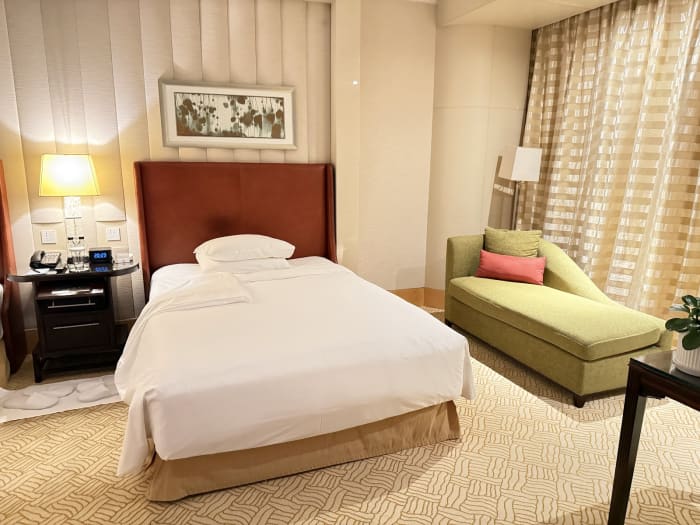
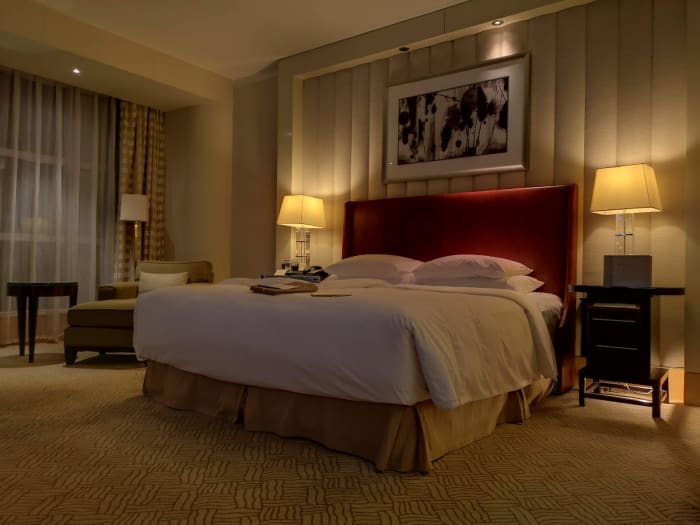
In a city where one may move from an early meeting to a museum visit and then to a late dinner, the hotel room is not merely a place to sleep: it becomes a space for recovery, preparation and sometimes work. At The Ritz-Carlton Beijing Financial Street, rooms and suites are conceived with that full range of uses in mind. Their primary promise is not decorative eccentricity, but balance: to provide an environment elegant enough to feel special, yet calm enough to support the real rhythm of travel.
The overall aesthetic belongs to the classic-contemporary register associated with many leading international houses. One expects clean lines, carefully selected materials, furniture designed to last and a palette of tones that encourages rest rather than stimulation. This approach suits a clientele combining business and leisure particularly well. After Beijing’s visual intensity, its broad avenues, architectural contrasts and often lengthy transfers, returning to a room where everything feels ordered can be genuinely restorative. Luxury here lies less in accumulation than in the quality of the sensory experience: a proper chair, well-judged lighting, fluid circulation, sufficient storage, and the sense that each element has been placed to simplify the stay.
The suites extend that philosophy with more space and clearer separation between functions. They answer the needs of guests who wish to receive visitors, work in quiet or simply enjoy a more flexible rhythm during the day. In a capital where schedules can shift quickly, that adaptability is valuable. It allows the room to become a private sitting room, a temporary office or a silent retreat depending on the hour. For couples, this generosity of space also changes the tone of the stay: one does not merely sleep there, but lingers over a late breakfast, reads in peace or pauses before heading back out towards the historic quarters.
One of the most appreciated markers in this category of hotel remains the continuity of in-room service. Daily housekeeping, evening turndown and attention to practical details all contribute to that frictionless comfort sought by experienced travellers. Nothing theatrical, but a series of gestures that lighten the day: returning to a room restored to order, arriving late without concern for essentials, and relying on a consistent environment from one evening to the next. It is often in these details, more than in visible effects, that the quality of a grand hotel is measured.
For business travellers, the room must also support concentration. A properly considered desk, a comfortable chair, a quiet atmosphere and a legible organisation of space make all the difference when preparing a presentation, answering messages or simply catching one’s breath between appointments. Leisure travellers have similar expectations, though directed differently: bed comfort, quality of rest, a sense of privacy and the ability to slow down. The Ritz-Carlton Beijing Financial Street appears designed precisely to satisfy both readings without forcing a choice between them.
Ultimately, the hotel’s rooms and suites extend the house’s broader idea: controlled elegance directed towards real use rather than display. In a destination as dense as Beijing, that sense of proportion matters. It allows the room to become not only a place to stay, but a space that actively supports the quality of the journey, whether professional, cultural or simply personal.
Dining
In a major urban hotel, dining plays a more complex role than it first appears. It must answer to very different rhythms: an efficient breakfast before a day of meetings, a business lunch, a more leisurely dinner, and sometimes a late snack after an arrival or an evening out. At The Ritz-Carlton Beijing Financial Street, dining belongs to that logic of controlled versatility. The advice to reserve the main restaurant upon arrival already says something about the property: food here matters, not as a secondary service but as a full component of the experience.
In a hotel affiliated with The Ritz-Carlton, one expects rigorous execution, a dining room run with precision and cuisine conceived for an international clientele without losing sight of the local setting. In Beijing, that equation is especially compelling. The city has one of Asia’s richest culinary scenes, shaped by imperial traditions, regional specialities from across China and newer cosmopolitan addresses. A hotel of this calibre can neither compete with the full diversity outside nor ignore it altogether. Instead, it must offer a reliable, elegant and coherent setting capable of hosting a business meal, a dinner for two or a more informal pause during the day.
The main restaurant often forms the centre of that proposition. What matters here is less fashion than consistency: quality of welcome, well-judged service pace, a clear menu and dependable execution. For business travellers, such reliability is essential. It allows meetings to be arranged without uncertainty, guests to be received in a polished environment, and conversations to continue in a setting that remains suitably discreet. For couples, the appeal is different yet equally clear: dining on site can spare lengthy evening transfers and preserve a more intimate atmosphere, especially after a full day in the capital.
Breakfast deserves particular attention, as it often sets the tone of the stay. In leading international houses, it is expected to be both practical and pleasurable, capable of accommodating very different habits. In Beijing, where days often begin early and travel times can be significant, the quality of that first meal matters all the more. Well-orchestrated service, a sufficiently varied offering and a calm setting help guests begin the day with a sense of control that is never trivial.
Hotel dining also comes into its own in the spaces between fixed plans: tea or coffee between appointments, a discreet pause in a lounge, a meal taken without leaving the property when time is short or one simply wishes to slow down. This is where the quality of an urban address becomes clear: in its ability to offer several degrees of experience without any break in tone. Elegance is not limited to dinner; it lies equally in the way each moment is supported.
Without burdening the description with unnecessary promises, one can say that dining at The Ritz-Carlton Beijing Financial Street fully contributes to the hotel’s identity: serious, polished, international in its codes, yet attentive to its Beijing context. It answers a very contemporary expectation of luxury hospitality: the ability to eat well on site, in a controlled setting, without having to choose between efficiency and pleasure. In a city as vast and demanding as Beijing, that possibility is far from incidental. It is one of the decisive comforts that turns a good stay into a genuinely seamless one.
Spa and wellness
In a capital as intense as Beijing, wellness is not a decorative extra: it is a functional necessity. Jet lag, long days, traffic, seasonal variations and the sheer density of the city create a very real need for recovery. In a hotel such as The Ritz-Carlton Beijing Financial Street, the wellness offering should therefore be understood as a natural extension of the overall experience, on a par with the room, dining and service. The point is not merely to provide a pleasant interlude, but to give travellers the conditions for genuine rebalancing.
The first luxury here is the luxury of slowing down. After a day structured by meetings, or conversely after several hours spent exploring the capital’s major sites, returning to a space devoted to calm immediately changes one’s perception of the stay. A well-conceived spa is not simply about indulgence; it helps restore body and mind, recover a steadier rhythm, ease the fatigue of travel and recreate a sense of inner continuity in a city that demands a great deal. This is especially true in Beijing, where the scale of movement and the intensity of the urban environment can quickly be felt.
In a hotel of this category, one expects a hushed environment, impeccable welcome and a treatment menu able to address simple yet essential needs: muscular relaxation, recovery after a flight, release of work-related tension, or a shared pause for two in a more intimate setting. The appeal of a hotel spa often lies in that immediate accessibility. There is no need to organise an additional journey or step outside one’s comfort zone; one simply goes down, lets oneself be guided, and returns to the room with the sense of having truly interrupted the day’s pace.
Wellness, however, is not limited to treatments. It extends to everything that contributes to balance during the stay: quality of sleep, turndown service, the calming atmosphere of public spaces, and the possibility of building pauses between obligations. A great hotel understands that rest is created in successive layers. The spa is its most visible expression, but it belongs to a broader architecture of comfort. At The Ritz-Carlton Beijing Financial Street, that logic seems particularly relevant given the clientele it serves: business travellers needing to release pressure, couples seeking a pause, and international visitors looking to soften the effects of long-haul travel.
For a stay for two, the wellness dimension takes on a gentler tone. It becomes a moment of retreat, almost a counterpoint to Beijing’s monumentality. After the city’s grand perspectives, palaces, avenues and continuous energy, returning to simple gestures — taking time, unwinding, rediscovering silence — gives the journey a different depth. Luxury in this context is not ostentation, but the possibility of feeling better, more available and more present to the experience.
This is perhaps the best way to understand the hotel’s wellness dimension: not as a spectacular promise, but as a discreet and essential framework supporting the quality of the stay. In an address of this level, the spa and associated attentions contribute to that rare impression of being looked after without losing one’s own rhythm. In Beijing, where one can easily be carried away by the scale of the city, that ability to recreate a personal centre of gravity is in itself a compelling reason to choose a grand hotel.
Concierge and services
The true luxury of a major urban hotel is often measured less by what is visible than by what works without apparent effort. At The Ritz-Carlton Beijing Financial Street, the quality of the stay rests largely on that discreet machinery of service: a 24-hour front desk, round-the-clock concierge, daily housekeeping, turndown service, luggage storage, laundry, wake-up calls and multilingual staff. Taken individually, these elements may seem expected in a five-star hotel; brought together and well executed, they profoundly alter the traveller’s experience.
In a city such as Beijing, this organisation takes on particular value. Arrivals may be late, departures very early, schedules fluid and logistical needs numerous. Being able to rely on a reception desk at any hour provides an immediate sense of reassurance, especially after a long-haul flight or during a stay shaped by meetings. The concierge quickly becomes an essential point of support. In a vast capital where distances, traffic and language barriers can complicate even simple plans, having people able to guide, recommend and organise with precision is not a minor detail: it saves time, comfort and often mental energy.
Daily housekeeping and evening turndown contribute to another dimension of luxury: continuity. The traveller does not have to manage the practical upkeep of the stay. One returns to a room restored to order and ready to receive again, creating a sense of ease that is especially valuable when days are full. Laundry service answers an equally concrete need, particularly during multi-day business trips or longer itineraries through Asia. These are the services often least visible in promotional narratives, yet they are what allow a hotel to move from being merely comfortable to becoming a genuinely operational base.
The presence of multilingual staff also deserves emphasis. In an international context such as Financial Street, it enables exchanges that are simpler, more precise and more reassuring. For foreign travellers, the ability to be understood quickly is a discreet but very real relief. It helps with practical requests as much as with more nuanced recommendations: arranging a transfer, adjusting a schedule, handling a specific need or simply asking a question about the city. The wake-up service may seem modest, yet it remains one of those classic gestures that signal a hotel attentive to the concrete rhythms of its guests.
Beyond the list of amenities, what matters is the way they work together. A great hotel does not merely add services; it integrates them into a coherent experience. Guests should not have to think about logistics more than necessary. That is the central challenge: to absorb the complexity of travel and leave room for what matters, whether that means working well, discovering Beijing or enjoying time together.
The Ritz-Carlton Beijing Financial Street appears to answer that expectation precisely. Its service offering sketches the portrait of a house designed to support demanding stays, where every practical detail matters. In a dense and international urban environment, that quality of execution makes all the difference. It turns the hotel into a silent partner in the journey, able to anticipate, support and simplify. And it is often there, in that unshowy efficiency, that the most convincing form of contemporary luxury resides.
The art of living in Beijing
Staying at The Ritz-Carlton Beijing Financial Street also means choosing a particular way of approaching Beijing. China’s capital does not reveal itself in a single glance. It requires time, transitions and a certain inner availability in order to move from one register to another: imperial monumentality, administrative rigour, vertical modernity, the memory of older quarters, commercial vitality, and evolving artistic and culinary scenes. From the financial district, that plurality appears with particular clarity. One begins in a contemporary, structured and rational environment, then reaches, layer by layer, the city’s different depths.
The Beijing art of living cannot be reduced to a list of monuments. It lies in the way days are composed. Morning may begin early, often with beautiful light on the broad avenues and a city already in motion. Then come visits to major cultural sites, museums, temples and older neighbourhoods where fragments of a lower, more domestic and quieter life still remain. Then Beijing changes again: cafés, galleries, boutiques, shopping centres, restaurants and theatres. In the evening, the city does not really shut down; it rearranges itself. In that context, having a hotel that offers a stable point of return is essential. One can recentre there before going out again, or decide to remain within and hold the city at a distance for a few hours.
Financial Street is interesting in this respect. It does not have the immediate picturesque appeal of historic districts, yet it offers access to another understanding of Beijing: that of a capital that also sees itself as a centre of decision-making, circulation and exchange. For many travellers, this contemporary dimension usefully completes the more expected image of the imperial city. It reminds one that Beijing is not a fixed backdrop, but an active, complex, at times demanding and always layered metropolis. Staying in this area means accepting that reality and inhabiting it, even briefly.
For couples, the Beijing art of living may take a more sensorial form: alternating major sights with moments of retreat, seeking contrasts rather than a continuous programme, taking time for tea, an elegant dinner or a walk through a quieter district. For business travellers, it often means grasping the city in fragments: a free late afternoon, an open morning, a dinner that becomes an opportunity to discover something beyond the meeting room. In both cases, the hotel acts as a mediator. It allows guests to maintain a quality of presence in the city without constantly absorbing its intensity.
Beijing rewards those willing to accept its changes of scale. A single stay can contain the protocol of a professional appointment, the silence of a place of worship, the animation of a commercial artery and the restored serenity of a well-kept room. That coexistence is precisely what defines its art of living: not a uniform gentleness, but a succession of contrasts made inhabitable by the right base.
From that perspective, The Ritz-Carlton Beijing Financial Street offers a particularly apt way into the city. Its location, atmosphere and level of service make it possible to compose a personal Beijing, both efficient and sensitive. One discovers that luxury, in a capital of this scale, may above all consist in being able to choose one’s own rhythm: to accelerate, slow down, observe, withdraw and then set out again. More than anything else, it is that freedom that gives the stay its depth.
Book with MyConciergeHotel
Booking The Ritz-Carlton Beijing Financial Street through MyConciergeHotel means approaching the stay with a sense of clarity and support rather than as a simple transaction. In a destination such as Beijing, where the scale of the city, seasonality, peak periods and scheduling constraints can quickly complicate planning, the quality of preparation matters almost as much as the quality of the hotel itself. A well-considered booking is not limited to choosing a room category; it means aligning the address, the pace of the trip and the practical expectations of the stay.
The value of editorial and concierge support lies first in that perspective. The Ritz-Carlton Beijing Financial Street does not answer the same needs as a hotel in a historic district or a more residential area. Its principal strength lies in its location at the heart of the financial district, its suitability for business stays and its elegant atmosphere, which also works well for a couple’s escape. Booking with discernment therefore means asking which Beijing one wishes to experience: an efficient, well-connected, contemporary Beijing, with the possibility of reaching cultural sites while keeping a highly structured base. For many travellers, that is precisely the right balance.
MyConciergeHotel also helps anticipate the details that genuinely shape the experience. The advice to reserve the main restaurant upon arrival is a good example: in a major urban hotel, certain moments are better planned in order to avoid last-minute compromises. In the same way, considering arrival time, any service needs on the first evening, the management of an early departure, or the relevance of a suite for a trip combining work and rest can significantly improve overall comfort. Luxury often begins before check-in, in the quality of the choices made in advance.
For a business trip, booking through MyConciergeHotel helps prioritise fluidity: an address coherent with centres of decision-making, continuous services and a setting suited to meetings as well as recovery. For a stay for two, that support helps shape a more nuanced experience, combining the efficiency of the location with more personal moments: dining on site, wellness time, pauses between visits and returning to a room prepared with care. In both cases, the aim remains the same: to reduce friction and leave more room for what matters.
It is also worth considering the Beijing calendar. Certain periods of the year bring higher concentrations of business or leisure travel, which can affect availability and the city’s general rhythm. Booking ahead therefore remains a wise precaution, especially for an address of this category. It not only secures the stay, but also makes it easier to organise the related elements that determine its quality: timings, dining, rest periods and the sequence of meetings or visits.
Ultimately, booking The Ritz-Carlton Beijing Financial Street through MyConciergeHotel means treating the hotel not as simple accommodation, but as a central component of a stay in Beijing. It is choosing an address capable of supporting a demanding trip and ensuring that this promise is considered in its practical details as much as in its style. In a capital where everything can move very quickly, that preparation makes a tangible difference. It gives the journey grounding, coherence and serenity that already belong, in themselves, to a certain idea of luxury.