History & Spirit of the Place
In Tokyo, the concept of luxury transcends mere ostentation. It often manifests in subtlety, the precision of gestures, and a form of silent attentiveness that transforms a stay into a profoundly calming experience. The Kitano Hotel Tokyo embodies this Japanese urban tradition where hospitality is expressed not through flamboyance but through the quality of detail, the fluidity of service, and the balance of spaces. Its affiliation with Relais & Châteaux provides a clear framework: that of a characterful establishment designed as a human-sized address, with a more intimate identity than a large, standardised international hotel.
The charm of this establishment lies precisely in its unique position. In the heart of a vast, fast-paced, and sometimes dizzying metropolis, it offers a different rhythm. Here, one can find that quintessentially Tokyoite way of creating moments of calm within a dense urban fabric. The hotel does not seek to compete with the city's grand hotel monuments through excess; rather, it prefers to cultivate a more personal relationship with its guests, grounded in discretion, consistency, and a pronounced sense of contemporary comfort.
This warm atmosphere, noted among the distinctive traits of the establishment, is not merely a marketing ploy. It reflects a way of welcoming that holds significant value in a city like Tokyo, where efficiency is ubiquitous but true warmth of service remains a rarity. The traveller finds a stable anchor here, whether arriving for a few nights of exploration, a business stay, or a more contemplative stopover. The sought-after feeling is not one of constant spectacle, but rather that of a reliable, elegant, and peaceful address, where one is happy to return after a day in the city.
The name Kitano also evokes a certain notion of Japanese hospitality that is open to the international, capable of welcoming travellers from around the globe without diluting its local identity. In such an establishment, refinement is measured by coherence: attentive service, comprehensible spaces, a room designed for rest, dining that complements the rhythm of the stay, and teams that can anticipate needs without imposing. It is often this coherence that distinguishes truly exceptional addresses from hotels that are merely well-located.
For the French or European visitor, The Kitano Hotel Tokyo thus offers an accessible interpretation of contemporary Japanese elegance. One does not come here merely to sleep in Tokyo, but to understand a certain way of temporarily inhabiting the city: with calm, comfort, and a rare sense of protection in such a vast capital. This almost residential dimension, combined with the demands of a five-star experience, shapes the identity of the establishment. It also explains why the hotel appeals to a diverse range of profiles, from business travellers to couples, from Japan regulars to first-time visitors seeking a serene and centrally located address.
The hotel and its place in Tokyo
Staying in central Tokyo is often a question of balance. Travellers want access without constant noise, convenience without feeling swallowed by the city. The Kitano Hotel Tokyo appears to answer that equation well. Its central location makes it easy to reach the capital’s major districts, yet the setting remains notably peaceful — a very real luxury in a city of this scale.
This is especially valuable in Tokyo, where the quality of a stay is shaped as much by rhythm as by geography. Efficient public transport allows guests to move easily between cultural, commercial and business areas, then return to a hotel that restores a sense of calm. That alternation between urban intensity and quiet retreat is one of the city’s most understated pleasures.
The property itself seems designed as a gentle transition between the outside world and private space. In the best urban hotels in Japan, arrival matters: the pace should immediately soften. Reception, circulation, acoustics and service all contribute to a sense of order and ease. Even with an international clientele, the prevailing impression is one of care and composure.
For discerning travellers, this location is therefore more than a practical advantage. In a city as vast as Tokyo, a hotel becomes a point of gravity. When it is central, well connected and calm, it allows the city to be experienced with more freedom, less fatigue and greater pleasure.
Rooms and Suites
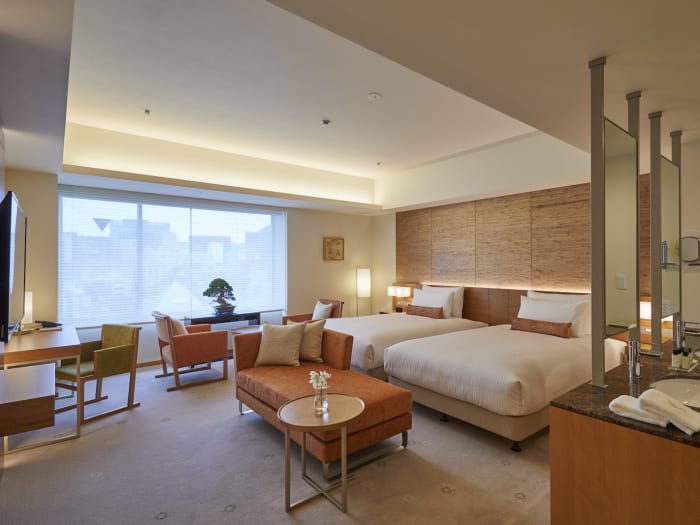
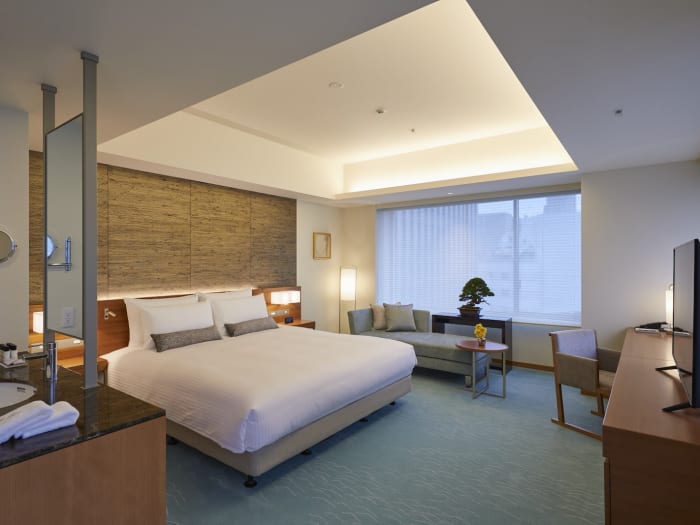
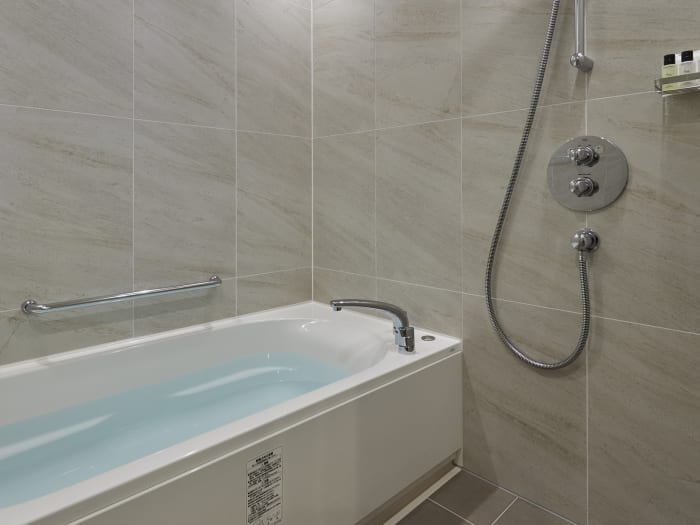
In a city where space is at a premium, the hotel room plays a crucial role. It is not merely a place to sleep; it becomes a vantage point, a refuge, and sometimes even a psychological counterpoint to the external intensity. At The Kitano Hotel Tokyo, one naturally expects a five-star establishment to master this art of retreat. Comfort should be evident from the very first moments: quality bedding, smooth circulation, well-thought-out storage, functional bathrooms, lighting tailored to different times of the day, and that sense of order which is so significant in Japanese hospitality.
The overall atmosphere of the hotel, described as warm and welcoming, suggests rooms designed more for rest than for show. This is often where the difference lies between a pleasant stay and a truly restorative one. After days spent exploring Tokyo, navigating numerous subway stations, meetings, or visits, one appreciates a room that no longer demands attention but instead soothes it. The lines may be contemporary, the decor understated, and the materials chosen for their visual softness as well as their practicality. In such establishments, luxury is often manifested through precision: nothing excessive, nothing neglected.
Business travellers will appreciate the room's ability to support multiple functions. It should allow for occasional work, preparation for a meeting, making a call, and then effortlessly transitioning to a time of rest. Couples, on the other hand, seek a sense of intimacy and cocooning, particularly valuable in such a dense capital. Solo travellers recognise the quality of a room that simplifies life: well-organised space, turn-down service, daily housekeeping, and a feeling of being welcomed without being watched.
The concept of a suite in a hotel of this calibre generally extends this logic by offering greater ease, functional separation, and residential comfort. Whether for a long weekend, a discreet honeymoon, an extended business stay, or a first exploration of the city, this quality of space alters how one experiences the hotel.
It is also essential to highlight the importance of associated services. Daily housekeeping, turn-down service, reception and concierge available around the clock, baggage management, and laundry services all contribute significantly to the room experience. Comfort is never merely material; it depends on how the hotel meets the concrete needs of the stay. An immaculate room but poorly supported by service quickly loses its value. Conversely, an attentive team adds depth to even the simplest experience.
Ultimately, the rooms and suites at The Kitano Hotel Tokyo should be viewed as the most intimate expression of the hotel’s promise: to provide, in the heart of Tokyo, a peaceful, refined, and personal environment. It is in this private space that the city distills, that the journey takes shape, and where one measures the true quality of a home. Here, true luxury may well be the ability to close the door and immediately feel the rhythm change.
Dining and the Rhythm of Your Stay
In an urban hotel of this calibre, dining goes beyond a mere practical function. It structures the stay, sets a tempo, and creates reference points. The first coffee of the morning, a discreet lunch between meetings, a more relaxed dinner after a busy day: each of these moments contributes to the memory of the place. At The Kitano Hotel Tokyo, a member of Relais & Châteaux, expectations regarding dining are naturally high, even when one opts to remain cautious about unconfirmed details. However, it can be asserted that such an establishment places particular importance on the quality of the culinary experience, the coherence of service, and the atmosphere in which meals are enjoyed.
In Tokyo, gastronomy is ubiquitous, from the humblest counters to grand institutions. This imposes a particular level of expectation on hotels: they cannot settle for a generic offering. Travellers expect a cuisine that is clear, refined, and adapted to the local context and the international rhythm of clientele. In a venue like this, the dining experience must therefore likely strike a balance: sufficiently refined to meet the expectations of a five-star establishment, yet welcoming enough to suit both a leisurely breakfast and a more formal meal.
Breakfast deserves special attention. In a city where days start early and schedules are often packed, it becomes a true moment of initiation. The setting, the quality of service, the precision of preparations, the option to take one’s time or, conversely, to be served efficiently: all of this matters. A good hotel breakfast in Tokyo is not just nourishing; it puts the traveller in the right frame of mind, balancing energy and calm. It is often one of the most lasting memories of a successful stay.
In the evening, hotel dining takes on another role. It helps avoid distraction, especially after a long day, and offers a comfortable alternative to the bustling city outside. In a capital so rich in dining options, choosing to dine at the hotel only makes sense if the experience possesses genuine quality: attentive service, a pleasant setting, cuisine executed with care, and a sense of continuity with the rest of the stay. The traveller is not necessarily seeking a gastronomic event every night; they often appreciate a reliable, elegant, and serene dining experience more.
The art of hospitality also lies in peripheral details: how a team considers preferences, the attention paid to the pace of diners, and the ability to advise without being insistent. For an international clientele, these nuances make all the difference. They reflect a mature professionalism, particularly important in an establishment that prides itself on personalised service.
Finally, it is worth noting that in Tokyo, dining is a way to read the city. Even when exploring the surrounding neighbourhoods extensively, returning to the hotel for a meal reintroduces a sense of continuity. One finds a familiar setting, a known team, and a consistent level of comfort. The Kitano Hotel Tokyo thus seems to offer not just a place to dine, but a space where the stay rebalances. In such a stimulating metropolis, this function is invaluable. A good hotel dining experience is not an extra; it is one of the elements that makes travel smoother, more enriching, and ultimately, more enjoyable.
Wellness, Rest and Rejuvenation
Even when an urban hotel does not primarily define itself by a grand destination spa, the question of wellness remains central. In Tokyo more than anywhere else, rest is not merely a luxury: it is a necessity. The visual, auditory, and logistical intensity of the city constantly demands attention. In this context, a five-star establishment must provide tangible means to recover, slow down, and regain a sense of balance. The Kitano Hotel Tokyo, with its tranquil environment and warm atmosphere, appears particularly well-suited to meet this expectation. The existing advice suggests booking a massage after a day of sightseeing. It implies that the experience of relaxation is part of the overall logic of the stay. A massage in an urban hotel is not just a treatment; it is a way to reset the body after the miles walked, the hours spent standing, the shifts in pace, and sometimes the effects of jet lag. For the international traveller, such a pause can transform the quality of a getaway, especially in the initial days. However, wellness is not limited to a treatment menu. It begins with the overall ambience of the establishment. The relative silence, the quality of the welcome, the smoothness of the services, the feeling of security, the impeccable cleanliness, and the ability to entrust one’s needs to a team available at all hours—all contribute to a restorative experience. In the best Japanese hotels, one often senses that the concept of rest has been thoughtfully considered. It does not rely solely on a dedicated space but rather on a philosophy of hospitality. The room itself thus becomes the primary place of wellness. The turn-down service, daily maintenance, attention to bed comfort, and preparation for the night all hold real significance. In a city where one walks extensively and accumulates stimuli, returning each evening to a perfectly maintained space acts almost as a treatment in itself. Contemporary luxury, especially in an urban context, often consists of reducing friction: fewer decisions to make, fewer surprises to manage, and more time to refocus. For some travellers, wellness takes an even more subtle form: a leisurely awakening, a quiet cup of tea or coffee, a few minutes of breathing before setting out again, and the assurance that upon return, the hotel will offer the same level of serenity. This continuity is invaluable. It allows one to experience Tokyo intensely without becoming exhausted. It also distinguishes a merely comfortable address from a truly hospitable home. Thus, one can consider the wellness dimension of The Kitano Hotel Tokyo as a coherent whole rather than a single amenity. Yes, a massage or a moment of relaxation may be the highlight. But the essence lies elsewhere: in the hotel’s ability to shield the guest from the noise of the world, to accompany the transitions of the day, and to make rest feel natural. In a capital that never truly stops, this ability to create calm is one of the most compelling forms of luxury.
Concierge and services
Service is often what remains most clearly in memory after a stay at a fine hotel. Décor may impress and location may help enormously, but it is the quality of support that gives travel its real texture. The Kitano Hotel Tokyo highlights personalised service, and the known facilities support that promise: 24-hour concierge, 24-hour front desk, daily housekeeping, turndown service, luggage storage, laundry, wake-up service and multilingual staff.
In a city such as Tokyo, that kind of operational smoothness matters greatly. Even experienced travellers must navigate a vast metropolis, local habits and often demanding schedules. A concierge available around the clock is therefore not an abstract luxury. It offers practical assistance whenever needed, whether for orientation, logistics, recommendations or last-minute adjustments. Multilingual staff further reinforce that sense of ease for international guests.
Housekeeping and support services are equally important. Daily care ensures consistency, turndown adds a discreet layer of comfort, laundry becomes invaluable on longer stays, and luggage storage makes arrival and departure days far easier. Together, these elements create a form of hospitality based less on display than on intelligent support.
Ultimately, personalised service here seems to mean something precise: not constant intervention, but the ability to make a stay simpler, calmer and more coherent.
Tokyo living from a peaceful address
Tokyo never reveals itself all at once. It is discovered in layers, through contrasts and successive neighbourhoods: a shrine followed by an office district, a contemporary gallery near a quiet lane of restaurants, a garden not far from a major station. In such a city, the choice of hotel shapes perception profoundly. A peaceful, central address such as The Kitano Hotel Tokyo allows travellers to experience Tokyo not as a performance, but as something to be composed at their own pace.
In the morning, the city is often defined by clarity and discipline. Efficient transport and a well-placed hotel make it easy to reach museums, gardens, shopping districts or business appointments without exhausting transfers. That practical ease matters because it frees mental space.
By afternoon, Tokyo reveals another texture: bookshops, department stores, cafés, tea rooms and neighbourhood walks. The city rewards patient curiosity as much as checklist sightseeing. In the evening, it shifts again, offering both intensity and restraint depending on where one goes. In all cases, knowing that one will return to a calm hotel changes the quality of the experience.
That may be one of the truest luxuries in Tokyo: not seeing everything, but seeing well; not rushing, but choosing intelligently. From that perspective, the hotel functions not just as accommodation, but as a point of balance.
Book with MyConciergeHotel
Choosing a hotel such as The Kitano Hotel Tokyo is not simply a matter of comparing star ratings or facilities. It is about finding an address that answers a more nuanced brief: staying in central Tokyo without sacrificing calm, enjoying genuinely personalised service and selecting a property with a clear identity rather than a generic base. That is where booking through MyConciergeHotel becomes meaningful.
A trip to Tokyo involves many variables: the scale of the city, different hotel styles, varying travel rhythms and distinct priorities depending on whether one is travelling for business, as a couple, with family or alone. Booking with guidance allows those factors to be read more intelligently: desired location, need for quiet, importance of service, access to transport and the overall structure of the stay.
In the case of The Kitano Hotel Tokyo, several strengths stand out clearly: a peaceful setting, central location, Relais & Châteaux membership, a warm atmosphere and personalised service. For travellers who value coherence over spectacle, that combination is particularly persuasive.
Booking with MyConciergeHotel therefore means more than securing a room. It means shaping the stay with greater precision, so that the hotel genuinely supports the way one wants to experience Tokyo.