History & heritage
In London, some hotels make their mark through scale, others through the relationship they maintain with their neighbourhood. The Capital Hotel clearly belongs to the latter category. Its identity is first expressed through its deliberately intimate size, through that distinctly British way of combining restraint, elegance and attention to detail. In Knightsbridge, where major international addresses sit alongside long-established London institutions, the hotel cultivates a discreet classicism: that of a city hotel designed for travellers who prefer precision of service to ostentation, and the intimacy of a well-run house to the anonymity of larger establishments.
Its membership of Small Luxury Hotels of the World says much about its positioning. This affiliation does not merely suggest a certain level of comfort; it points to a particular philosophy of hospitality. Here, luxury is measured less by spectacle than by the quality of the welcome, the ease of service and the sense that guests are entering a human-scale address attuned to the rhythm of a London stay. In a city as dense and theatrical as London, that distinction matters. It places The Capital Hotel within a refined hotel tradition that values continuity, courtesy and the feeling of being genuinely expected.
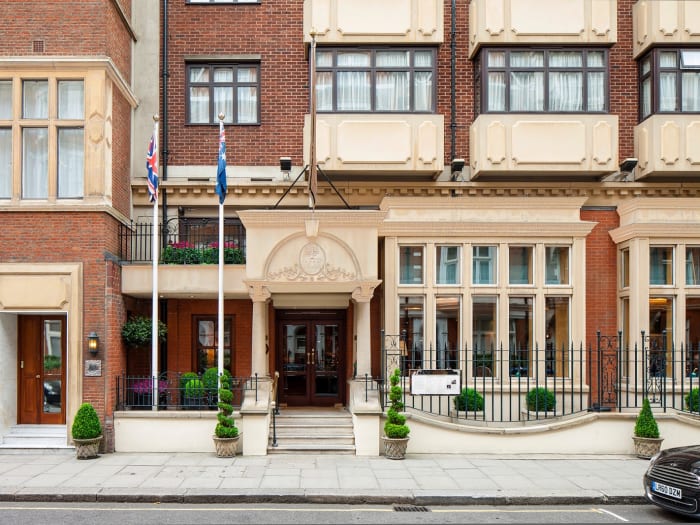
Its heritage is also that of Knightsbridge itself, a district whose history mirrors the transformations of the capital from the Georgian and Victorian eras to contemporary London. Staying here means settling into an environment shaped by embassies, townhouses, private gardens, cultural institutions and the great department stores that have made the area internationally known. The Capital Hotel engages with this setting without overplaying it. It adopts its essential codes: an urban façade integrated into the neighbourhood, interiors where one expects a certain polish, and a relationship with time that favours permanence over fashion.
That sense of heritage also lies in the atmosphere. Guests find here what London offers at its most convincing when it avoids cliché: muted elegance, discreet sociability and the feeling of refuge in the heart of a lively district. The hotel does not attempt to compete with the city; it accompanies it. It allows guests to move through London with ease, then return in the evening to a stable point of reference. This is often what distinguishes addresses that endure: they understand that a great urban stay depends as much on the energy outside as on the quality of the return.
For couples, this heritage translates into a more personal, almost residential experience. For business travellers, it becomes calm efficiency without stiffness. For seasoned London visitors, it is a reminder that the capital still offers hotels capable of a more nuanced relationship with luxury: less demonstrative, more civilised, deeply connected to their setting. The Capital Hotel belongs to that lineage. Its heritage is not one of spectacle, but of an address that has long understood that the most lasting elegance is often the kind that never needs to insist.
The Establishment
One of the great privileges of The Capital Hotel lies in its address. Knightsbridge encapsulates several facets of London. Here, one finds commercial refinement, proximity to museums and cultural institutions, quick access to the grand parks, and a more subtle neighbourhood life. The hotel benefits precisely from this balance, allowing guests to be at the heart of a sought-after London without sacrificing a sense of retreat.
For visitors discovering the capital, this location simplifies their stay. Luxury boutiques are within walking distance, enabling a day that seamlessly blends shopping, strolling, café breaks, cultural visits, and a return to the hotel without the constant need for transport. For those more familiar with London, Knightsbridge serves as a strategic starting point for Belgravia, South Kensington, Hyde Park, Mayfair, and the major artistic and institutional venues of West London. It is a neighbourhood that allows one to navigate the city at their own pace.
The Capital Hotel coherently fits into this geography. Its intimate atmosphere corresponds to the scale of the area and the notion of urban luxury that does not merge with the hustle and bustle. In a metropolis where intensity can quickly become exhausting, the hotel acts as a calm interstice. One enters as if returning to a familiar address. Everything seems designed to cushion the external tumult. This quality is particularly valuable in London, where the density of days demands a genuinely restful place to return to.
The establishment thus caters to various uses without losing its coherence. Couples find an elegant base to explore the city on foot and extend their evenings in a more subdued setting. Business travellers appreciate the centrality, discretion, and the ability to quickly reach various key districts. Culture enthusiasts benefit from the proximity to attractions, with genuine flexibility in organising their stay.
What ultimately distinguishes The Capital Hotel is its ability to translate London into a livable version. The address does not attempt to summarise the entire city but offers a precise reading focused on what Knightsbridge has to offer: a prime location, the proximity of leading brands and institutions, and that very London luxury of being able to do everything without ever feeling rushed. For many travellers, this is precisely what one expects from a grand urban hotel: a place that genuinely enhances the way one experiences the destination.
Rooms and Suites
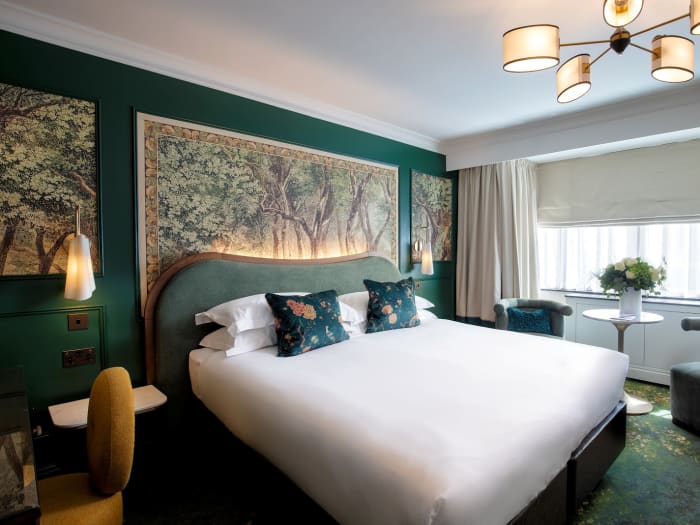
At The Capital Hotel, the room naturally extends the experience of the establishment. Here, one expects a London interpretation of high-end comfort. An understated elegance, thoughtfully designed spaces for real life, and an atmosphere conducive to relaxation and reading. The rooms and suites are meant to be lived in, not merely admired.
In the context of Knightsbridge, this type of hotel often prioritises a refined aesthetic. The materials, tones, and furnishings seek coherence over impact. Nothing appears garish, nothing interrupts the gaze, and the overall effect establishes a discreet comfort. This is a just approach to luxury in a capital where much of life occurs outside the room. In return, one expects a genuine sense of refuge.
The rooms cater to various needs. For a weekend getaway for two, they offer the tranquillity of an urban escape. For a business trip, they allow for occasional work and recovery between meetings. For a longer stay, they must facilitate a more permanent settlement. Daily service and turn-down service enhance this continuity.
The care taken in maintenance plays a crucial role here. In high-end hospitality, comfort also depends on the upkeep of the room during the stay. A discreet tidying up, evening preparation, and attention to simple needs create an impression of ease. It is often here that traveller loyalty is built.
The suites cater to those seeking more space or a more residential experience. In London, this format makes perfect sense. It allows for brief entertaining, provides a genuine pause, or enables a more comfortable stay. Regardless of the chosen category, the essence remains the same. A muted comfort, consistent with the spirit of the hotel. The Capital Hotel favours a well-thought-out, well-maintained room that is serene enough to momentarily forget the intensity of London.
Dining
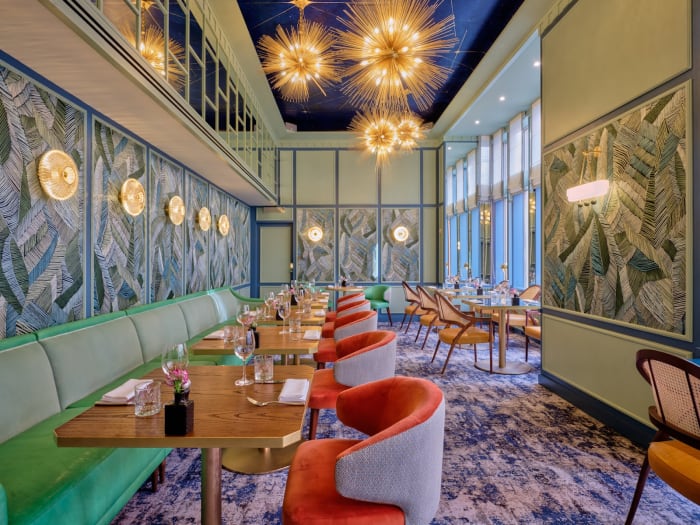
At The Capital Hotel, dining is enveloped in a discreet London elegance. The hotel's restaurant prioritises a refined dining experience, crafted with a focus on precision rather than ostentation.
The service complements this rhythm with subtlety. The atmosphere remains intimate, conducive to a leisurely meal, whether it be a measured lunch or a more relaxed dinner.
The venue also features a bar, The Capital Bar, which asserts a clear identity centred around whisky. The selection takes centre stage, offering a broad palette that allows for the exploration of various styles and expressions.
This establishment is equally suited for a quiet drink or a prolonged moment at the beginning or end of the evening. The tone remains classic, yet without rigidity.
Overall, the offering is simple to navigate and coherent. A restaurant for the dining experience. A bar for conversation and spirits. In this balance, The Capital Hotel nurtures a particular notion of London hospitality, attentive to detail and the comfort of the moment.
Concierge & Services
In luxury hospitality, service is not an add-on; it is the invisible structure that ensures a seamless stay. The Capital Hotel exemplifies this with its 24-hour concierge, 24-hour reception, daily room service, turn-down service, luggage storage, laundry service, wake-up calls, and multilingual staff.
Taken together, these services create a clear promise: that of constant, discreet, and precise support tailored to the demands of a London stay.
The 24-hour concierge plays a central role here. In London, days are often tailored to individual needs. A reservation to confirm, a car to arrange, local advice to seek, an early departure to prepare: all require a flexible and available team. In an intimate hotel, this function takes on a particular significance. The concierge becomes one of the faces of the establishment.
The continuously open reception extends this availability. For international travellers, this continuity is essential. Late arrivals, very early departures, changes in plans, ad-hoc requests: the hotel accommodates these variations without friction.
Maintenance and housekeeping services are equally crucial. Daily room service and turn-down service contribute to a sense of regular care. The laundry service becomes invaluable as the stay extends. Luggage storage allows guests to enjoy their first or last day in London without constraints. The wake-up call service reflects the attention given to the fundamentals.
The multilingual staff also deserves mention. In a global capital like London, this skill is vital for the quality of interaction, contributing to a seamless hospitality experience.
Ultimately, the services at The Capital Hotel align with what one expects from a characterful five-star urban establishment. A chain of useful, coherent, and well-executed competencies. Here, luxury resides in the continuity of attention.
The London Way of Life from Knightsbridge
Staying at The Capital Hotel means choosing a particular way of inhabiting London. The city can be discovered by neighbourhoods, habits, and at a more leisurely pace. Knightsbridge precisely encourages this approach. The area allows for transitions from a grand department store to a museum, from a park to a residential street, from a gastronomic address to a cultural institution. It offers a dense yet comprehensible London, elegant without being static, international while maintaining a strong local grounding.
From the hotel, days can be organised with flexibility. In the morning, one can enjoy the light on the façades and a still measured activity. Later, the neighbourhood reveals its most vibrant face. Then come the quieter hours of the afternoon, ideal for a stroll or a cultural interlude. In the evening, London changes texture. Theatres, restaurants, bars, and lounges take over, while Knightsbridge remains desirable without becoming boisterous. The Capital Hotel accommodates this rhythm well, offering a coherent return point between intensity and retreat.
For shopping enthusiasts, the location is strategic. However, to reduce Knightsbridge to its boutiques would overlook its true appeal. The neighbourhood also serves as an observatory of London taste. The art of window dressing, the culture of service, the relationship to tradition, and the mix of clientele are all clearly visible. Additionally, there is a coexistence of the highly codified and the very contemporary. A hotel like The Capital Hotel then makes perfect sense, extending this spirit through its subdued atmosphere and attentive service.
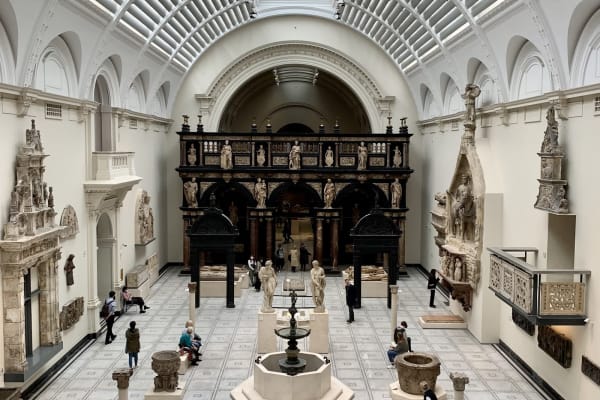
Travellers sensitive to culture will also appreciate the proximity of cultural attractions. In London, this proximity transforms the quality of a stay. It allows for visits without haste, easy returns to the hotel, and greater spontaneity. One no longer consumes the city; one frequents it.
Finally, the London way of life also involves a certain discipline of comfort. Knowing how to walk, stopping at the right moment, booking the right tables, allowing time for a park, a museum, or tea, and then returning in the evening to a calm and well-served hotel: this is often the key to a successful stay. The Capital Hotel responds to this logic, offering a livable, elegant, and well-regulated version of London.
Booking via MyConciergeHotel
Booking The Capital Hotel through MyConciergeHotel means approaching this address with a focus on the experience rather than merely on price. An establishment like this is not chosen solely for its five-star rating or its location; it is selected because it aligns with a certain way of experiencing London. The aim is not just to find a room available, but to identify the right moment, the appropriate pace of stay, and the category that best suits your itinerary.
The Capital Hotel caters to various types of travellers. For couples, the appeal often lies in the intimate atmosphere of the venue, its ability to provide a calm retreat in a sought-after neighbourhood, and the opportunity to create a stay without cumbersome logistics. For business trips, the central location, 24-hour reception and concierge services, as well as the support services, become major criteria. For longer stays, greater attention is paid to daily comfort, the fluidity of services, and how the hotel integrates into the traveller's rhythm.
Booking in advance is particularly relevant for this type of establishment. It is advisable to reserve ahead to take advantage of the best offers and secure your stay at this popular hotel. This recommendation is even more pertinent in London, where demand fluctuates according to seasons, major events, school holidays, and the cultural calendar. Spring and autumn are among the pleasant times to visit the city. Anticipating allows for securing availability and better planning the entire trip.
Through MyConciergeHotel, the goal is also to determine whether The Capital Hotel is the right fit for your style of stay. Do you wish to be within walking distance of luxury boutiques? Do you prefer an intimate atmosphere rather than a large, bustling palace? Are you looking for a discreet base to alternate between meetings, museums, and relaxation? If the answer is yes, the hotel offers a rare coherence.
Booking with a concierge's perspective is already the beginning of the journey. It allows for anticipating useful needs: early or late arrival, luggage management, neighbourhood recommendations, organisation of key moments during the stay, and external reservations. The Capital Hotel is designed for this type of traveller: one who appreciates luxury when it simplifies, soothes, and concretely enhances the way of experiencing the city.