History & identity
In Seoul, some hotels tell the story of the city through ornament, others through spectacle. Park Hyatt Seoul takes a quieter route: that of urban luxury shaped by restraint, clarity of line and a direct relationship with the contemporary rhythm of the Korean capital. Its identity is not built on heritage in the European sense, but on a more current idea of high-end hospitality: creating a calm, legible refuge in the middle of a dense, fast-moving metropolis. That promise defines the property and explains its singular place within Seoul’s luxury hotel landscape.
The Park Hyatt name immediately sets the tone. Within the brand’s world, luxury is expressed less through excess than through precision: interiors designed to endure, attentive yet understated service, and an atmosphere that feels residential rather than theatrical. Park Hyatt Seoul clearly belongs to that philosophy. Its contemporary, pared-back design matters, but even more important is the way it allows guests to inhabit the city without being overwhelmed by it. The hotel does not attempt to compete with the energy outside; it offers a counterpoint to it. That balance between metropolitan intensity and inner calm is perhaps its most persuasive quality.
Seoul is a capital of permanent contrasts: skyscrapers and royal palaces, business districts and lively side streets, digital culture and long-standing traditions. In that context, an international luxury hotel can easily become little more than an efficient base. Here, the ambition seems different. Park Hyatt Seoul creates an experience that speaks equally to business travellers and leisure guests because it reflects a certain idea of Seoul itself: fast, sophisticated and demanding, yet still capable of making room for silence, comfort and composure.
Its contemporary design is therefore more than an aesthetic choice. It becomes a way of reading the city and of receiving guests. Materials, proportions and visual restraint create a reassuring continuity for travellers arriving for meetings, a long weekend or a first discovery of South Korea. That coherence gives the hotel a form of timelessness. Rather than chasing decorative trends, it relies on a disciplined vocabulary that remains relevant over time.
What stands out, finally, is a sense of balance. In many urban hotels, efficiency overrides pleasure, or the reverse. Here, the two meet. The central location, practical access to public transport and the service standards associated with the brand answer the most concrete needs. At the same time, the calm, refined atmosphere often noted by guests creates a rarer quality of stay: that of a hotel that does not exhaust you. It offers breathing space, something especially valuable in a city as intense as Seoul.
To speak of the history of Park Hyatt Seoul is therefore less about recounting a detailed chronology than about describing a stance: that of a contemporary grand hotel that has chosen measure over effect, consistency over display, and made that discipline its true legacy.
The hotel in the heart of Seoul
Park Hyatt Seoul’s first and most obvious strength is its location in the heart of the capital. For travellers discovering Seoul for the first time, or returning regularly, that central position changes the way the city is experienced. This is not a retreat on the margins, removed from daily life, but a base within a connected, active and highly practical part of town, allowing guests to move easily between business appointments, cultural visits, shopping districts and the city’s better-known sights. That centrality is not merely convenient; it creates the feeling of being immediately engaged with Seoul as it is actually lived.
In Seoul, getting around matters. Distances that look manageable on a map can become more complex once one encounters the scale and rhythm of the city. The hotel’s easy access to public transport is therefore a concrete advantage. For business travellers, it simplifies tightly organised days. For leisure guests, it opens up the possibility of exploring several faces of the city without relying entirely on private transport. In a metropolis as large and dynamic as Seoul, that freedom of movement is part of the comfort.
What makes the property particularly appealing, however, is its ability to turn that centrality into a calm experience. This is one of the hotel’s most attractive paradoxes: to be in the middle of Seoul without constantly absorbing its intensity. From arrival, the contrast between the pace outside and the atmosphere within becomes apparent. The contemporary, pared-back design acts almost as a filter. Public spaces favour clarity, breathing room and a certain economy of gesture that settles the eye and mind.
That sense of calm matters. In a major Asian capital, a hotel often serves as the interface between visitor and city. At Park Hyatt Seoul, that role is especially well handled. The property allows guests to enjoy Seoul’s major attractions while maintaining an elegant, coherent and quiet place to return to. After hours spent among shopping streets, cultural institutions, business centres or urban walks, coming back to a refined and measured environment has real value. Luxury here also lies in emotional continuity: the city stimulates, the hotel recentres.
The interiors reinforce that impression of order. Without becoming cold, the overall aesthetic favours clean lines, contemporary materials and a restrained palette well suited to an international clientele. Travellers accustomed to grand decorative hotels will find here another form of sophistication: quieter, more architectural, at times almost meditative.
Ultimately, Park Hyatt Seoul is not simply well located. It offers a specific way of living Seoul: with access, with pace, but without overload. Many hotels promise centrality; few turn it into genuine urban comfort.
Rooms and Suites
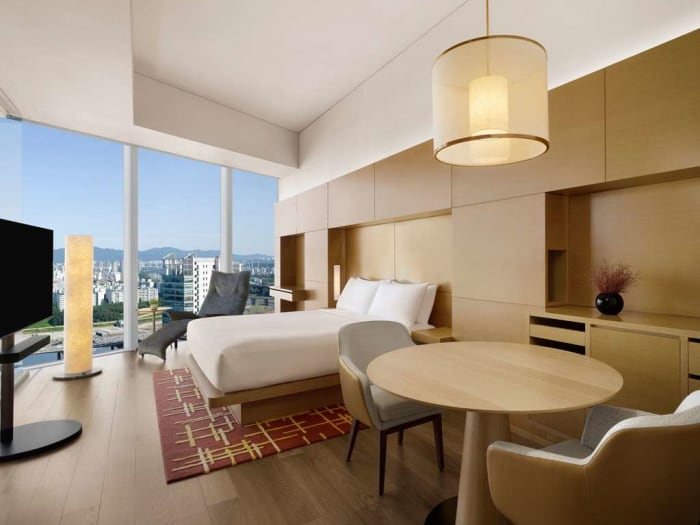
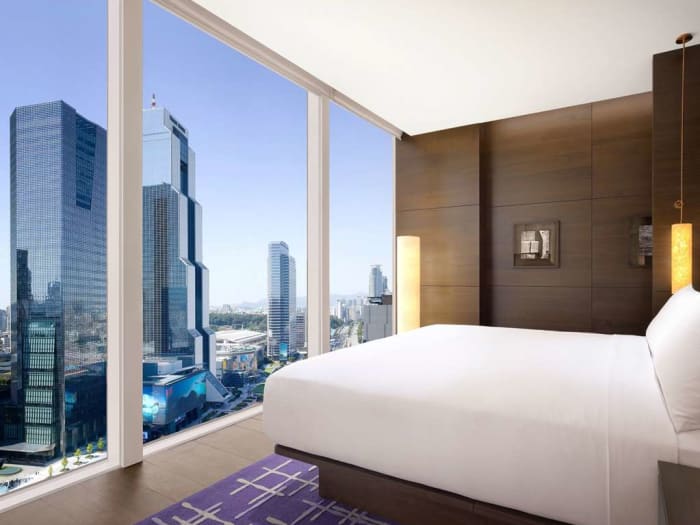
In a city hotel of this calibre, the room is not merely a place to sleep. It transforms into a vantage point, a space for recuperation, and often, a temporary office. At the Park Hyatt Seoul, this versatility is central to the experience. The design of the common areas extends seamlessly into the rooms and suites. Contemporary design, clean lines, and thoughtful comfort devoid of decorative excess characterise the spaces. This coherence prevents any disconnection between the hotel's image and the in-room experience.
What is expected here is not ostentatious opulence, but rather a sense of order and control. In a city as vibrant as Seoul, the ideal room must provide protection without isolation. The modern and understated aesthetic meets this requirement, facilitating an immediate understanding of the space, intuitive use, and smooth circulation throughout the day. This apparent simplicity often reveals a true commitment to hospitality.
Business travellers will naturally appreciate this approach. A well-designed room allows for note-taking, meeting preparation, or a moment of focus. Couples will find a cosy setting conducive to relaxation and a form of urban intimacy. Visitors exploring Seoul will benefit from a stable, elegant, and restful base.
The service significantly contributes to this quality of experience. Daily housekeeping, turndown service, and round-the-clock reception and concierge create an attentive environment. Comfort relies not only on the layout but also on the meticulous attention to detail. A well-maintained room, discreetly tidied, greatly enhances the perception of a premium stay.
In the Park Hyatt spirit, the luxury of the room also lies in its atmosphere. A serene, refined environment free from visual clutter is expected. The materials and lighting contribute to a sense of calm. The contemporary traveller seeks less theatrical decor and more a space capable of slowing the pace. A good hotel room is not merely beautiful; it alters the mindset of its occupant.
The suites, designed for guests who prefer more space or a longer stay, extend this philosophy with a more residential feel. Their appeal lies in the ability to better segment the phases of the stay. Entertaining, working, resting, or taking a moment for oneself. In an international capital like Seoul, this flexibility holds real value.
Ultimately, the rooms and suites at the Park Hyatt Seoul embody a clear ambition. To offer precise luxury, tailored to contemporary travel. Neither austere nor ostentatious, they align with a measured vision of five-star comfort. For the guest, this translates into a rare sensation: an immediate sense of belonging in a space that enhances the stay rather than complicates it.
Dining and the rhythm of the day
In a major urban hotel, dining is never just about the presence of a restaurant; it shapes the rhythm of the stay. Breakfast before meetings, a discreet lunch, dinner without leaving the property, a quiet drink between engagements: the table becomes a direct extension of the hotel experience. At Park Hyatt Seoul, everything suggests that this dimension follows the same logic as the rest of the house: contemporary elegance, precise service and a carefully controlled atmosphere.
The first issue here is rhythm. A hotel in the heart of Seoul naturally welcomes travellers with very different schedules. Some leave early and expect flawless execution; others want to take their time and make breakfast a genuine moment. In both cases, the quality of a five-star address is measured by its ability to support those needs without friction. The Park Hyatt name is associated with exactly that kind of fluid luxury, in which dining contributes to the overall harmony rather than standing apart as a separate performance.
Setting matters as much as the plate. In a property described as contemporary and pared back, the dining experience often gains in clarity: well-composed spaces, calm ambience, careful attention to light, acoustics and the right balance between attentive service and privacy. For an international clientele, that restraint is an advantage. It suits both business meals and dinners for two without imposing excessive ceremony.
Ultimately, the culinary proposition in such a hotel is best understood not as a theatrical statement but as an essential component of comfort. In a city as intense as Seoul, being able to rely on dining that is elegant, dependable and suited to different moments of the day is a genuine luxury.
Wellness, Breath and Serenity
In a metropolis like Seoul, hotel wellness addresses a contemporary necessity. Travel can lead to a form of saturation, with jet lag, busy schedules, visual and auditory stimuli, and a succession of meetings or visits. In this context, a well-appointed five-star hotel must provide genuine spaces for recovery. At the Park Hyatt Seoul, tranquillity, refinement, sleek design, and quality service all contribute to this experience.
The first level of wellness is atmospheric. It lies in how a place encourages you to slow down without imposing it. The tranquil and refined ambience is felt from the common areas, extending into the rooms, the corridors, and the overall relationship with time. The traveller senses that they can catch their breath here. This ability to create calm within a dense urban environment already constitutes a sought-after form of luxury.
Contemporary and minimalist design plays a central role in this sensation. Thoughtfully designed, understated interiors reduce cognitive fatigue. They allow the eyes to rest and the mind to reorganise. During a short stay, this effect is particularly valuable. A few hours in a harmonious setting can rebalance an entire day. Therefore, wellness is not limited to specific facilities; it is also reflected in the overall coherence of the environment.
For business travellers, this restorative function is crucial. Between meetings, travel, and representation duties, it is essential to find a place that requires no additional effort. For couples or city break visitors, wellness takes on another form: a refuge after the city's intensity. A moment to reconnect, slow down, and shed the day's agenda. In both cases, the hotel becomes a tool for regulating the stay.
The services enhance this sense of care. A reception available at all hours, continuous concierge service, rigorous daily maintenance, and turn-down service are all elements contributing to a deeply comfortable experience. Hotel wellness often arises from this accumulation of invisible details, preventing the guest from having to think about logistics. The less one has to manage, the more one can relax.
The relationship with the city also matters. Being centrally located in Seoul, with easy access to transport, allows for better pacing of one’s days. Exiting becomes easier, returning is uncomplicated, and one can alternate between activity and pause. This fluidity reduces fatigue and enhances the quality of the stay. Here, luxury also lies in an intelligent organisation of the experience.
Ultimately, the Park Hyatt Seoul offers a very urban and contemporary vision of wellness. Less ostentatious than a grand resort, yet often more relevant for the modern traveller. It is about creating the conditions for a return to calm, for genuine recovery, and for mental as well as physical comfort. In a capital that rarely slows down, this promise holds particular value, making the hotel a place for rebalancing.
Concierge and services
In luxury hospitality, services matter not only because they exist, but because of the way they genuinely simplify a stay. According to the confirmed information, Park Hyatt Seoul offers a particularly solid foundation: 24-hour concierge, 24-hour front desk, daily housekeeping, turndown service, luggage storage, laundry, wake-up service and multilingual staff. Taken individually, these may seem expected in a five-star hotel. Taken together, however, they create something more important: continuity of care that allows guests to focus on what matters, whether that is work, sightseeing or simply enjoying the city.
The concierge is especially significant. In a city as large and dynamic as Seoul, having someone who can guide, recommend and help organise reservations or movement can materially improve the experience. For first-time visitors, it reduces hesitation and helps structure priorities. For returning guests, it becomes a way to refine plans and use time better. The true luxury of concierge service is not to promise everything, but to make the city more accessible.
Round-the-clock reception answers another reality of international travel: irregular schedules. Late arrivals, early departures, changes of plan and last-minute requests are all part of life in a hotel of this level. Knowing that a team is present at any hour provides a discreet but essential sense of security.
Ultimately, the services at Park Hyatt Seoul appear to be conceived not as extras, but as the framework of the stay itself. They extend the hotel’s aesthetic through a form of calm efficiency — and that is often how a strong urban luxury address reveals itself.
Seoul: A Guide from the Hotel
Staying at the Park Hyatt Seoul also means choosing a particular way to approach the city. The South Korean capital can impress with its density, scale, and pace. A centrally located hotel, well-connected and capable of offering a genuine return to calm, becomes a useful starting point for understanding the city.
For a first exploration, it is advisable to embrace Seoul's plurality. The city reveals itself in sequences: business districts, shopping areas, cultural spaces, historical traces, cafés, promenades, and viewpoints. From a hotel situated in the heart of the capital and close to transport, this diversity becomes easier to grasp.
Spring and autumn are particularly conducive to this exploration. The milder climate encourages walking, transitioning between neighbourhoods, and spontaneous breaks. A hotel like the Park Hyatt Seoul becomes all the more meaningful, accompanying this alternation between movement and tranquillity.
Business travellers can also benefit from this location. Even with a tight schedule, a few hours are sometimes enough to capture an atmosphere or explore a neighbourhood. Convenient access to transport and the presence of a concierge facilitate these excursions.
For couples or visitors on a getaway, the appeal of such a location lies in its flexibility. One can set off early, maximise discoveries, and then return to a calm base before heading out for dinner. This organisation prevents excessive fatigue and preserves the joy of exploration.
The simplest advice remains to plan ahead. Booking certain activities in advance is often wise in such a dynamic capital. This applies to visits, specific restaurants, or structuring the highlights of the stay.
Ultimately, experiencing Seoul from the Park Hyatt Seoul is about balance. Enjoying the centrality without being overwhelmed. Using the hotel as an anchor point rather than merely a room.
Book through MyConciergeHotel
Booking Park Hyatt Seoul through MyConciergeHotel means choosing an editorial, curated approach to high-end travel. In a city as dense as Seoul, the choice of hotel determines far more than comfort alone: it shapes the ease of movement, the quality of rest, access to major points of interest and, more broadly, the tone of the stay. A central, contemporary and calm address such as this one is therefore best selected with discernment, taking into account the traveller’s profile, the season and the desired rhythm.
The value of booking through a specialist platform lies not only in the reservation itself, but in the quality of interpretation offered beforehand. MyConciergeHotel speaks to travellers who are not simply looking for a ranking or a list of facilities, but for a more precise understanding of what a property genuinely offers. In the case of Park Hyatt Seoul, that reading is especially useful. The hotel is defined less by exuberance than by balance: centrality, practical access, pared-back design, refined atmosphere and continuous service.
Ultimately, booking through MyConciergeHotel means choosing a stay considered as a whole. In a demanding city, that quality of organisation makes a meaningful difference.