Maison Bréguet Paris 11: a neighbourhood address on the Right Bank
Maison Bréguet Paris 11 belongs to that distinct category of Paris hotels best understood through their setting. Here, luxury is not performative; it lies in the precision of the address itself: the 11th arrondissement, just moments from Bastille, in a part of the city where Paris shifts tempo. One leaves the grand boulevards and finds a more inhabited, more local capital, shaped by lively streets, discreet façades and terraces shared by residents and travellers alike. Hôtel Maison Bréguet fits exactly into that geography, balancing urban energy with a sense of retreat.
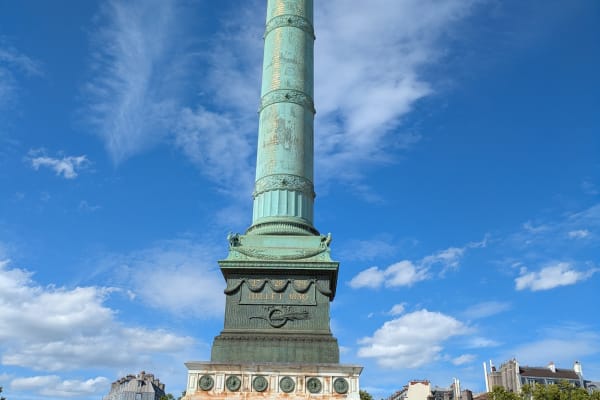
The neighbourhood has a particular density. Bastille, with its column and revolutionary memory, sets the historical tone; a few streets away, the atmosphere becomes almost residential. Square Saint-Gilles Grand Veneur offers one of those rare pockets of calm so prized in eastern Paris, while the Maison de Victor Hugo reminds visitors how deeply this area remains tied to the city’s intellectual and political history. To stay here is to choose a Paris less ceremonial than certain western districts, yet often more compelling in the way it combines heritage, contemporary culture and everyday life.
This location shapes the experience. Maison Bréguet is not cut off from its surroundings; it is in dialogue with them. Guests can walk towards Place des Vosges, browse galleries, cafés and independent shops, or simply follow the streets of the 11th, which still retain an element of unpredictability. In the evening, the address takes on another dimension: the area comes alive, tables fill, bars glow, and one understands why so many travellers now seek a base in this part of Paris rather than beside the major monuments.
Part of Maison Bréguet’s appeal lies in this balance. The hotel meets the expectations of a five-star property, yet never severs the connection with the city outside. It suits a discovery-led stay, a weekend of wandering, a discreet interlude, or a business trip extended by a few hours of freedom in the surrounding streets. That versatility is unusual in Paris and helps explain the address’s lasting appeal.
For those searching Maison Bréguet Paris, Maison Bréguet hotel or Maison Bréguet Paris 11, the essential point is clear: this is an address that captures the spirit of a changing arrondissement without giving up comfort, calm or service. In a city where so many hotels define themselves by a view or a prestigious avenue, Maison Bréguet takes a subtler path: that of a Paris lived from within.
Rue Bréguet Paris: the discreet elegance of a well-placed address
Some Paris streets immediately suggest a monument or a grand perspective; others charm through restraint. Rue Bréguet belongs firmly to the latter category. It is not ostentatious, and that is precisely its strength. For travellers, it offers a more nuanced way into the capital: not through postcard imagery, but through the city’s actual fabric. Maison Bréguet sits here with real coherence, as an address that understands its surroundings and moves at their pace.
To look up 17 rue Bréguet Paris 11 is to arrive in an area where several versions of Paris meet. Bastille is close at hand, acting as a crossroads between the Marais, the 11th arrondissement and the riverbanks. Walks can unfold in very different directions depending on mood: towards historic squares, towards the more creative streets of eastern Paris, or towards hidden gardens known mostly to those who linger. That geographical flexibility is one of the hotel’s great advantages. It allows guests to shape a stay around culture, food, independent shopping and the simple pleasure of walking.
The address also speaks to travellers who like to understand a city through its details. In this neighbourhood, older buildings stand beside more contemporary places to gather; heritage institutions sit near confidential addresses. The proximity of the Maison de Victor Hugo places the stay within a historical continuum, while more unexpected venues such as the nearby Moonshiner speakeasy remind visitors that eastern Paris has a marked taste for surprise. Maison Bréguet benefits from that happy tension between memory and modernity.
For anyone wondering about a rue Bréguet Paris route or itinerary, the truest answer is perhaps the simplest: it is an ideal starting point for exploring Paris on foot. Few addresses allow for such a natural sequence of a cultural morning, lunch in the neighbourhood, a pause in a garden, then an evening extended over cocktails or dinner. One can reach emblematic places quickly and still return at night to a street that retains a degree of calm.
This setting gives the hotel a distinct identity. It does not try to compete with the grand palace hotels on the major avenues; it offers something else, more contemporary in spirit and more urban in its relationship with the city. That is what makes it valuable for a certain kind of traveller: one who wants Paris, truly Paris, without giving up the standards of an upscale property. In that sense, rue Bréguet is not merely a practical location; it becomes the promise of a more inhabited stay.
Hôtel Maison Bréguet: a five-star urban retreat
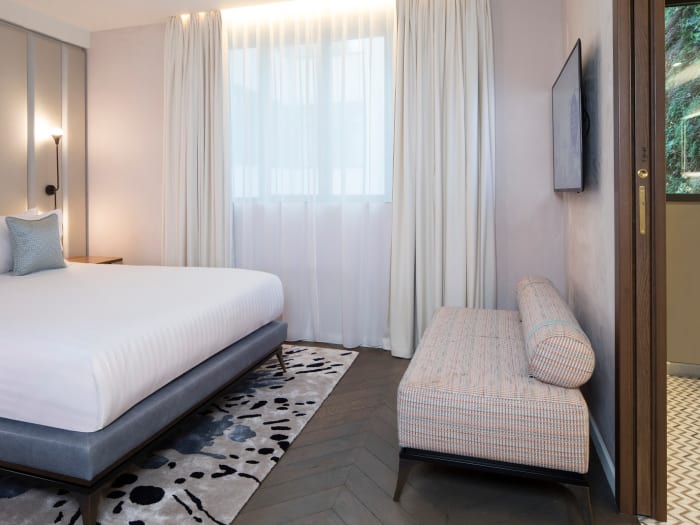
Hôtel Maison Bréguet embodies a version of five-star hospitality particularly suited to contemporary Paris. Rather than leaning on overt ceremony, the property favours a form of modern refinement that feels more fluid, more intimate and more aligned with guests who want not only to stay somewhere beautiful, but also to inhabit a neighbourhood. The result is an urban retreat: a place that shields one from the city’s pace without ever severing the connection to it.
That feeling begins with scale. Maison Bréguet does not pursue monumentality; it relies on proportion. This changes the stay in meaningful ways. One enters a hotel where atmosphere matters as much as display, where the shared spaces invite guests to slow down, read, have a drink, extend a meeting or prepare for the day ahead. In a capital that can be fast and often noisy, that sense of breathing room is no small thing.
The hotel’s internal vocabulary appears to support this idea. The presence of a veranda, a bar and a room dedicated to wine suggests a way of hosting that extends well beyond the bedroom. The property is also experienced in transitions: coffee in the morning light, a quieter pause in the late afternoon, a drink in the evening before going out or after walking the neighbourhood. These rituals, very Parisian in spirit, give depth to an address.
Its five-star status is also expressed through the practicalities of daily service. A round-the-clock front desk and concierge, daily housekeeping, turndown, luggage storage, laundry and multilingual staff all shape the experience without making it feel heavy. The real luxury here lies in continuity. Everything should feel simple and frictionless, from arrival to departure. For international travellers and Paris regulars alike, that reliability matters.
The hotel is also notable for its ability to accommodate different kinds of stay. Some will see it as an elegant base for exploring the 11th and the Marais; others as a calm refuge between appointments; others still as a Paris interlude chosen for atmosphere rather than a dramatic view. That is often the mark of hotels that endure: they do not rely on a single argument, but on an overall coherence.
Searches around Maison Bréguet reviews reflect the curiosity surrounding an address that cannot be reduced to a slogan. Guests come for the location, for the restaurant, for the mood of the neighbourhood, for the promise of attentive service. What they find is a hotel that prefers precision to emphasis. In the Paris landscape, that restraint is less a form of discretion than a signature.
Maison Bréguet restaurant: Cucina, the bar, the veranda and the art of extending the evening
At Maison Bréguet, dining is fully part of the property’s identity. The hotel does not merely contain a restaurant; it creates a small ecosystem of moods and moments, moving from table to drink, from a light-filled pause to a more intimate late evening. For anyone searching Maison Bréguet restaurant, Maison Bréguet menu or rue Bréguet restaurant, it is this variety that deserves attention.
The first name to note is Cucina, the hotel’s Italian restaurant led by Matteo Lorenzini. In a Paris neighbourhood where culinary choice is abundant, the decision to embrace a clearly Italian identity gives the place a distinct tone. This is not simply a convenient Mediterranean accent, but a proposition conceived as such, with the idea of cooking that is legible, warm and grounded in accurate flavour. That Italian presence creates a pleasing contrast with the deeply Parisian setting of the hotel: one stays in the eastern part of the capital, yet finds at table another light, another tempo, another way of hosting.
Around this restaurant are other spaces that deepen the experience. The wine room naturally appeals to wine lovers, with its promise of a sensory journey through aromas and labels. More than a mere add-on, it suggests an approach to wine shaped by discovery and conversation. The bar, meanwhile, extends the evening in a more intimate register. Guests come for cocktails and for that particular sociability found in well-designed hotels, where one can meet as a pair or enjoy a solitary moment after a day in Paris.
The veranda introduces a different note. Filled with natural light, it seems made for quieter hours: a late breakfast, a coffee, a discreet meeting, a pause between outings. In an urban hotel, these in-between spaces are often the ones guests remember most clearly, because they give the stay its internal rhythm.
Searches around reviews of brunch at Maison Bréguet show how central the food offering is to the hotel’s reputation. Without reducing the experience to a single meal, that says something important: guests do not come here only to sleep, but also to enjoy a certain art of the Paris pause. The restaurant and its companion spaces contribute to the sense of a complete hotel, where one may choose to remain on site as readily as to go out and explore the neighbourhood.
In a city where so many addresses multiply concepts, Maison Bréguet takes a more coherent route. A clearly defined Italian table, a bar, a wine room and a veranda together create a continuous form of hospitality from morning to night. More than a collection of venues, it is a way of inhabiting the hotel.
24-hour concierge and services: the comfort of a seamless stay
In a hotel of this category, service should never feel theatrical; it should feel perfectly integrated. Maison Bréguet appears to follow that principle. A 24-hour concierge and round-the-clock reception set the tone immediately: that of a house able to accommodate very different travel rhythms, whether a late arrival, an early departure, a last-minute reservation or a practical request after a day in Paris.
That kind of availability changes a great deal, especially in a city like Paris. International travellers do not always arrive at convenient hours; weekends run late; dinners in the neighbourhood can extend into the night; early visits may require careful organisation. Knowing that the hotel remains fully operational at all times brings an immediate sense of ease. It is a discreet luxury, but a fundamental one.
The other known services point in the same direction. Daily housekeeping and turndown belong to that regular attentiveness which structures an upscale stay without making it feel heavy. Luggage storage allows guests to enjoy the city before check-in or after check-out, which is particularly valuable in a district so well suited to walking. Laundry service supports longer stays, business trips or simply the desire to travel light. Even the wake-up service, often overlooked in hotel descriptions, suggests a property that thinks carefully about practical details.
Multilingual staff also play an important role in the quality of the welcome. In a Paris address receiving an international clientele, this is not merely functional; it shapes the fluidity of exchanges, the accuracy of recommendations and the ability to establish trust from the outset. A good concierge does not simply execute requests; it knows how to guide, prioritise and simplify. In the context of Maison Bréguet, one readily imagines assistance oriented as much towards the neighbourhood as towards the classic Paris sights: planning a day around Bastille and the Marais, recommending a walk to the Maison de Victor Hugo, suggesting a detour through a hidden garden or a more confidential address to end the evening.
This is often where the difference lies between a simple upscale place to stay and a true hotel of residence. Facilities matter, certainly, but the memory of an address is also built through the quality of transitions: a well-managed arrival, attention at the right moment, a request handled without delay, a departure freed of friction. Maison Bréguet appears to stand for that vision of service: precise and unforced.
In the Paris hotel landscape, this kind of quiet professionalism matters as much as design. It allows the traveller to devote energy to the city, the neighbourhood, appointments or discoveries, while the hotel takes care of the background. That may be the clearest definition of contemporary comfort.
Bastille, the Marais and hidden gardens: the art of living around Maison Bréguet
One of the great pleasures of staying at Maison Bréguet lies in what it enables beyond its walls. Few Paris addresses offer such natural access to urban worlds that are so different and yet so complementary. Bastille provides momentum, with its historical charge and constant animation; the Marais brings heritage, culture and shopping density; the 11th adds the spontaneity that often creates the best travel memories.
Beginning with Bastille is almost inevitable. The July Column speaks to the depth of the site’s history, yet the square is also a point of departure, a crossroads between several versions of Paris. From here, one can move towards older streets, linger in courtyards, cross over to Place des Vosges or simply follow a more instinctive route shaped by façades and shopfronts. This immediate proximity to a district so rich in meaning gives the stay a particular foundation: one is not merely well located, but in contact with a highly legible piece of Parisian history.
A short walk away, the Maison de Victor Hugo offers another register. More intimate and literary, it suggests that Paris can also be experienced through interiors, voices, works and memory. Square Saint-Gilles Grand Veneur introduces a pause. In a dense city, such hidden gardens have an almost initiatory value. They allow movement to stop, reading to begin, observation to sharpen. The fact that a five-star hotel stands close to such places changes the quality of a stay in meaningful ways: one can alternate urban intensity and retreat with ease.
The neighbourhood also knows how to be playful. The presence of Moonshiner, a speakeasy hidden behind a pizzeria, says much about the local spirit: sophistication without rigidity, a taste for addresses passed from one person to another, for evenings that begin without a fixed plan and extend naturally. This kind of surrounding atmosphere suits Maison Bréguet perfectly, as the hotel shares the same idea of refinement that is less declarative and more companionable.
For visitors, the local art of living lies precisely in combining these contrasts. A heritage-filled morning, an Italian lunch at the hotel or nearby, a walk through the Marais, a pause in a garden, a drink at the bar, then a night out a few streets away: the stay almost arranges itself. That is perhaps what separates good addresses from truly memorable ones. The former offer comfort; the latter give a rhythm.
Maison Bréguet belongs to the latter category. By choosing this address, one is not simply booking a room in Paris; one is choosing a way of living the city, between history, movement, culture and more secret discoveries. In a Paris often saturated with images, that more nuanced experience has real value.
Maison Bréguet reviews: what kind of stay is this address best for?
Searches around Maison Bréguet reviews reveal something very contemporary: before booking, travellers are looking less for an abstract promise of luxury than for a real fit between an address and a way of travelling. Maison Bréguet answers that expectation particularly well because it is not defined by a single argument. Its appeal comes from the combination of a lively neighbourhood, an intimate scale, an integrated food offering and solid service standards. The real question, then, is not whether the hotel is luxurious in a spectacular sense, but whether it suits the kind of Paris stay one wants to have.
For a weekend for two, the address works especially well. The proximity of Bastille, the Marais, hidden gardens and local bars allows for a rich programme without depending heavily on transport. One can move easily between culture, walking, dining and nightlife. In the evening, returning to a hotel that privileges atmosphere over display extends the feeling of having found a more personal Paris.
For a longer urban stay, Maison Bréguet offers another advantage: it gives access to a liveable city. The 11th arrondissement is not merely a backdrop; it is a neighbourhood in which one can form habits, revisit the same streets, recognise a terrace and vary one’s routes. This matters greatly to travellers staying several days who wish to avoid the fatigue of areas that are too exclusively touristic. The hotel then becomes a fixed point within a Paris gradually made one’s own.
The address also suits business trips that do not wish to sacrifice all sense of pleasure. Continuous service, a 24-hour front desk and concierge, the possibility of dining on site, and spaces such as the bar or veranda all support a stay in which appointments alternate with moments of pause. In this context, the location is especially relevant, allowing quick access to several parts of the capital while offering, in the evening, a more animated environment than certain business districts.
By contrast, travellers seeking above all the decorum of the grand historic palace hotels, monumental views or the experience of a museum-like address will encounter a different language here. Maison Bréguet speaks to those who prefer intimacy to staging, neighbourhood to avenue, coherence to display. That nuance matters, and it is likely the key to choosing well.
Ultimately, the most insightful Maison Bréguet reviews are often those that understand this identity. The hotel does not try to be everything to everyone. It offers a more inhabited, more mobile, more contemporary Paris, with the comfort and attentiveness expected of a five-star property. For many travellers today, that is precisely what makes it relevant.