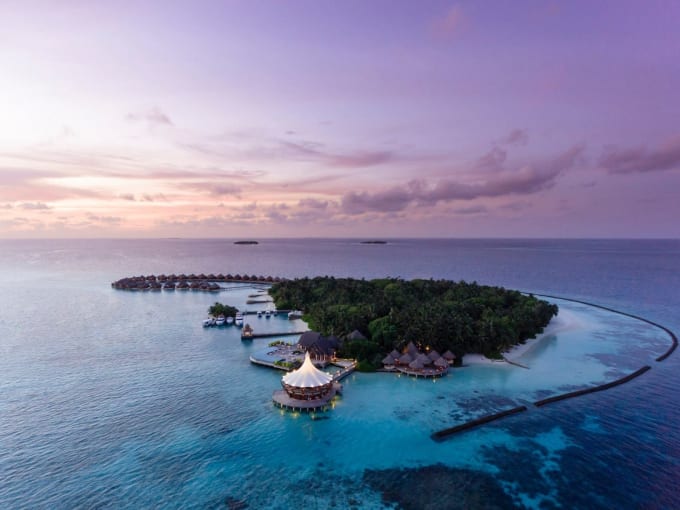
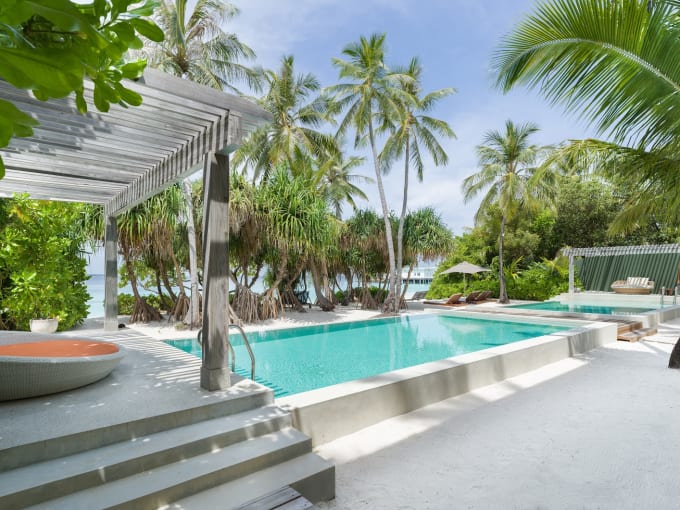
In the Maldives, the prevailing narrative tends to focus on large hotel islands, emphasising scale, numerous villas, and extensive facilities. However, an alternative perspective has emerged over recent seasons, highlighting more intimate, comprehensible, and often more personal addresses. The Small Luxury Hotels of the World label aptly illuminates this category of hotels, showcasing independence, character, and a more direct connection to the locale. In an archipelago where isolation is part of the journey, this approach takes on a particular significance, allowing for a search not for the most spectacular, but for the most authentic. In the Maldives, this can mean a human-scale island, coherent design, and a service that quickly recognises your preferences.
To establish this ranking, we do not seek an abstract definition of charm. Instead, we observe concrete criteria and their overall coherence. First, the identity of the address. An independent hotel must express a vision, not merely an international standard. Next, the quality of the island experience. The arrival, movement around the island, the intimacy of the villas, and the perception of the lagoon are all crucial. We also consider the level of service personalisation. In the Maldives, this is measured in the details. The rhythm of meals, the flexibility of activities, and the ability to maintain tranquillity are decisive. Finally, we assess the local anchoring, which can be reflected in architecture, materials, marine narratives, or the relationship with the biosphere. What our advisors particularly observe is the balance between uniqueness and execution.
The four selected hotels demonstrate that this segment is far from uniform. Amilla Maldives, in the Baa Atoll, champions a contemporary vision of the private island. The volumes are bold, the aesthetic more architectural than decorative, and the relationship to space very clear. Baros Maldives, in the Malé Atoll, plays a different tune. This address is known for its more intimate format and hospitality that prioritises continuity. Huvafen Fushi, also in the Malé Atoll, appeals to travellers attuned to design, marine life, and a more subdued atmosphere. Milaidhoo Maldives, finally, in the Baa Atoll, offers a softer interpretation of island luxury. Notably, this ranking brings together distinct personalities, not mere copies of a single model.
The trends for 2025-2026 reinforce this search for meaning. Experienced travellers are seeking less spectacle and more precision. They want to understand why a particular address exists here and not elsewhere. A simple catalogue of activities is no longer sufficient. The clarity of the hotel project becomes a central criterion. In the Maldives, this translates into several expectations. First, better integration into the marine landscape. Next, villas designed for real life, with shade, ventilation, intimacy, and smooth access to the lagoon. Well-being is also evolving. It no longer relies solely on the spa, but on sleep quality, silence, the island's rhythm, and the ease of disconnecting. My advice for this segment is simple: focus less on the size of the island and more on the coherence between your travel tempo and that of the hotel.
This selection also speaks to a certain idea of luxury, close to our concierge culture. French luxury is not about accumulation; it is a clear hierarchy of priorities. The first is attention. The second is moderation. The third is the ability to make the stay seamless, without excessive theatrics. In a charming independent hotel, this becomes apparent very quickly. The welcome is not standardised. The spaces have a human scale. The staff knows when to intervene and when to step back. In the Maldives, this philosophy takes on particular value. The natural decor is already very strong, so the hotel does not need to overdo it. It should frame the experience, refine it, and allow the sea to do part of the work. This is often where the best addresses stand out most clearly.
It is also important to view this ranking without the reflex of an absolute podium. The number one hotel is not the ideal choice for everyone. Each address serves a specific purpose. Some are better suited for a first visit to the Maldives, while others appeal more to regulars seeking a more confidential atmosphere. Some attract with their design, others with the gentleness of service or the ease of experiencing the island without a packed itinerary. We do not rank hotels against one another; we organise travel propositions. This is an important nuance that avoids hollow superlatives and aids in making more accurate choices. What our advisors ultimately focus on is the quality of the harmony between a place, a rhythm, and a couple of travellers. Here, intimacy matters as much as reputation.
Thus, here is our Top 4 of Small Luxury Hotels in the Maldives. You will find four credible ways to inhabit the archipelago, four scales of intimacy, four signatures, and, above all, four serious responses to the idea of an independent, refined, and personal stay.