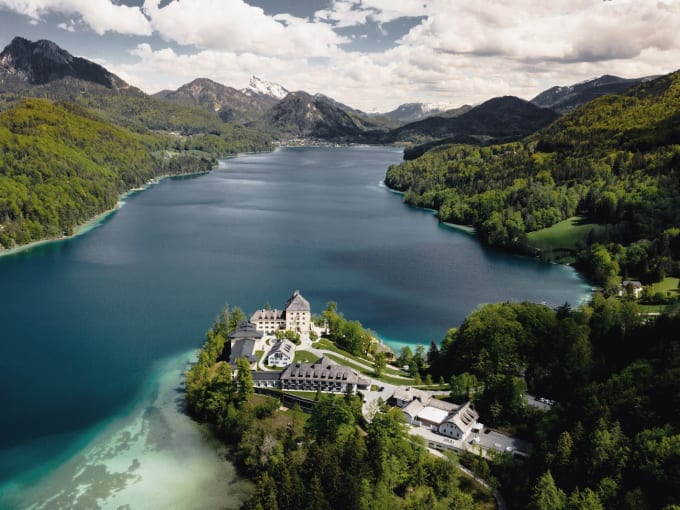
In Austria, a hotel with a spa is not merely an additional service; it extends a culture of stay that is intertwined with the seasons, landscapes, and the body's rhythm. From Vienna, Salzburg, Tyrol, Vorarlberg, to the lakes of Carinthia, wellness takes on many different forms. It can be found in an urban setting, such as the Hotel Sacher in Vienna, or in an alpine retreat like DasPosthotel in Zell am Ziller. It can also engage with the heritage of a property, as seen at Hotel Post Bezau & Susanne Kaufmann Spa. This is precisely what makes Austria so intriguing. The spa is not just a backdrop; it becomes a way to inhabit the place, to recover after mountain activities, or to slow down in a bustling cultural capital.
To establish this ranking, we do not rely on an abstract promise of wellness. We observe concrete criteria. First, the coherence between the hotel's identity and its spa offering. Next, the location, as a spa has different meanings by the shores of Lake Wörthersee, in the Kitzbühel Alps, or in the heart of Vienna. We also consider the reputation of the establishment, its five-star positioning, the clarity of the experience, and the actual emphasis placed on wellness during the stay. What our advisors observe is crucial. A large spa is not defined solely by its size; it is also judged by the quality of the journey, the atmosphere, the intimacy, and how it complements the destination rather than detracting from it.
The Austrian panorama presented here is more varied than one might imagine. Some establishments are associated with a strong hotel tradition, such as Hotel Goldener Hirsch, A Luxury Collection Hotel in Salzburg, or Hotel Sacher Salzburg. Others focus on a more contemporary interpretation of wellness, like Falkensteiner Schlosshotel Velden, located on the shores of the lake. Tyrol and Vorarlberg offer a more immersive experience. Kempinski Hotel Das Tirol Kitzbühel Alps, Hotel Tennerhof, Le Posthotel, and DasPosthotel are situated in regions where après-ski, hiking, and recovery naturally shape the use of the spa. Conversely, addresses like Altstadt Vienna, Ambassador Wien, or Hotel Das Tyrol remind us that in the city, wellness can take a more discreet, intimate form, often conceived as a breath of fresh air.
For 2025 and 2026, several trends are emerging in Austrian wellness hospitality. The first concerns the search for less ostentatious spaces. Travellers are seeking less spectacle and more coherence. They desire a spa that reflects its surroundings. The second trend relates to time. Stays may sometimes be shorter, but expectations are rising. A weekend in Vienna or Salzburg must provide immediate recovery. In the mountains, demand is shifting towards four-season experiences. The spa is no longer solely associated with winter; it now accompanies summer stays, active retreats, and inter-season breaks. Finally, we are seeing a growing interest in establishments that can articulate hospitality, nature, and a calming rhythm, without succumbing to a overly standardised narrative of international wellness.
At MyConciergeHotel, we approach this segment with a French sensibility towards luxury. This means paying particular attention to the quality of the establishment, the level of service, attention to detail, and the appropriateness of the setting. An exceptional spa is valued not just for its facilities, but for the entirety of the experience. The arrival, the room, the light, the silence, the relationship to the landscape, and the fluidity of service all matter equally. In Austria, this approach finds particularly fertile ground. The country knows how to blend imperial heritage, alpine culture, and high-level hospitality. My advice is simple: do not choose solely a spa; choose a way of staying. A lake does not offer the same tranquillity as a musical capital. A Tyrolean chalet tells a different story than a grand historical address in Salzburg.
This ranking should also be viewed without a reflex for superlatives. The first does not negate the tenth. Each hotel meets a different expectation. Some travellers seek a dedicated spa destination, while others want a grand hotel with a solid wellness area to balance a cultural or sporting itinerary. A couple seeking an alpine retreat will not make the same choice as a regular visitor to elegant city breaks. This is why we value relevance over mere publicity. Hotel Post Lech Arlberg, Kristiania Lech, Hotel Schloss Seefels, and Falkensteiner Schlosshotel Velden do not play the same tune. Yet, each can be the right choice depending on the season, travel style, and desired level of intimacy. It should be remembered as a curated selection, not as a universal verdict.
The following top list distinguishes Austrian hotels where the spa genuinely enriches the experience. We have prioritised establishments where wellness has a clear, credible, and sustainable presence.