Our selection criteria
Our selection weighs altitude, ski access, spa quality, local character, service consistency, and true four-season relevance.
The heritage of American mountain hotels
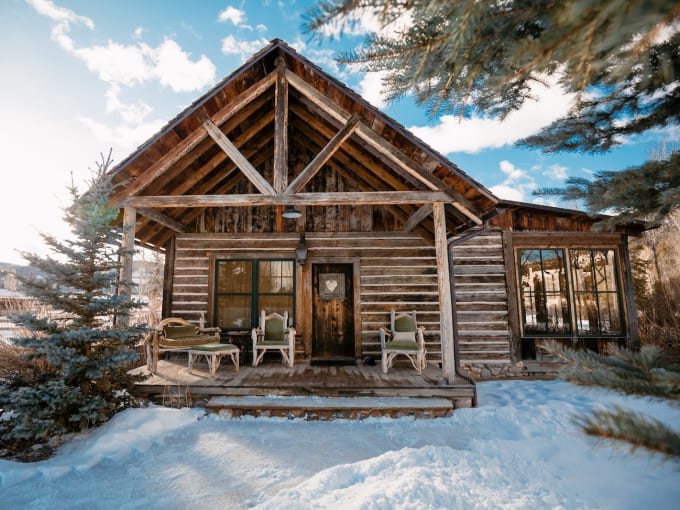
American mountain hotels evolved from national park lodges into full-service ski and four-season resorts, while keeping wood, stone, fireplaces and a strong link to the landscape.
Spa and Wellness at Altitude
In the mountains, a spa is not merely a luxury; it often shapes the entire stay, especially after a day of skiing, hiking, or experiencing dry altitude. In the United States, the finest mountain hotels have recognised this. They invest in comprehensive spaces designed for recovery and the rhythm of alpine climates. It is important to note that the distinction lies less in the size of the spa than in its coherence. An outdoor heated pool with mountain views, a well-designed water circuit, or a genuine offering of sports treatments can significantly enhance the experience. Our advisors have observed a simple trend: clients often choose between two comparable hotels based on the spa, rather than the room alone.
In Aspen, Vail, Deer Valley, Jackson Hole, and Big Sky, several establishments stand out for their precise understanding of wellness. The Little Nell in Aspen remains a benchmark for travellers seeking the energy of the resort without sacrificing exceptional service. Its ski-in ski-out positioning is important, but so is its wellness approach. In Vail, Four Seasons Resort and Residences Vail and The Arrabelle at Vail Square, A RockResort meet a clear expectation: the ability to alternate between exertion, warmth, water, and rest, without complicated logistics. In Deer Valley, Montage Deer Valley has long set a high standard in this regard. In Jackson Hole, Four Seasons Resort and Residences Jackson Hole combines direct mountain access with highly sought-after recovery facilities. Further north, Montage Big Sky confirms that the new large American resorts are also focusing on the spa as a cornerstone rather than an adjunct.
The primary differentiating criterion remains the relationship between water and landscape. In the mountains, an outdoor heated pool holds a different status than in the city. It extends the day, slows the body down, and brings the scenery back into focus. This is particularly true in large ski resorts, where a seamless transition between the slopes and the evening is sought. Hot baths, outdoor jacuzzis, and thermal terraces cater to this immediate expectation. They allow for simple, clear, almost instinctive recovery. My advice for a short stay is to favour a hotel where these facilities are easily accessible without complex navigation. After skiing, usability matters more than marketing promises. A good mountain spa should be easy to enjoy, even with children, even in the late afternoon, even when the resort is busy.
The second criterion concerns the depth of the offering. Not all spas interpret the body at altitude in the same way. The best establishments develop targeted treatments for heavy legs, muscle recovery, hydration, and sleep. This is where places like Montage Deer Valley, Four Seasons Resort and Residences Jackson Hole, or Four Seasons Resort and Residences Vail capture attention. Their strength lies in the balance between classic protocols, wet areas, facial treatments, and recovery-oriented massages. Some travellers also seek more holistic practices: yoga, meditation, breathing, multi-day wellness programmes, or more comprehensive support. This demand is clearly growing in high-end American resorts. It accompanies the evolution of mountain stays, now designed for four seasons. The spa no longer serves solely to repair; it also aids in better sleep, improved recovery, and sometimes better acclimatisation to the local rhythm.
Finally, the spa should be viewed as a reflection of the hotel's style. The Little Nell appeals more to those wanting Aspen in its most fluid and central version. Montage Big Sky and Montage Deer Valley attract with a more immersive approach, where one can almost organise the day around wellness. Four Seasons Resort and Residences Vail and Four Seasons Resort and Residences Jackson Hole reassure with their consistent service. The Arrabelle at Vail Square, A RockResort, offers a very clear, practical, and elegant resort experience. It is worth noting that altitude changes the tempo of the stay. One tends to leave the slopes earlier, dine earlier, and seek warmth, water, and calm more. In this context, the spa becomes a decisive criterion, not an extra. A good American mountain hotel is often recognised by this understanding: wellness is not separate from the stay; it is part of it.
Questions about this section
What defines a strong wellness experience at altitude in a mountain hotel?
At altitude, wellness works best when recovery spaces, calm, and practical flow support the outdoor rhythm.
Best options for families
For families, the best mountain hotels are the ones that make every part of the stay feel easy.
Mountain hotel trends 2025-2026
American mountain hotels are shifting toward four-season stays, guided outdoor experiences, sport-led wellness, residential design, and stronger sustainability expectations.
Questions about this section
Is a U.S. mountain hotel worth booking outside ski season?
Yes; summer and early fall can offer a calmer, more spacious mountain experience.
Resort and mountain gastronomy
Dining is often the clearest difference between a practical mountain stay and a hotel worth choosing for the table itself.
What this ranking shows
A great mountain hotel is defined by the whole experience, not by location alone.