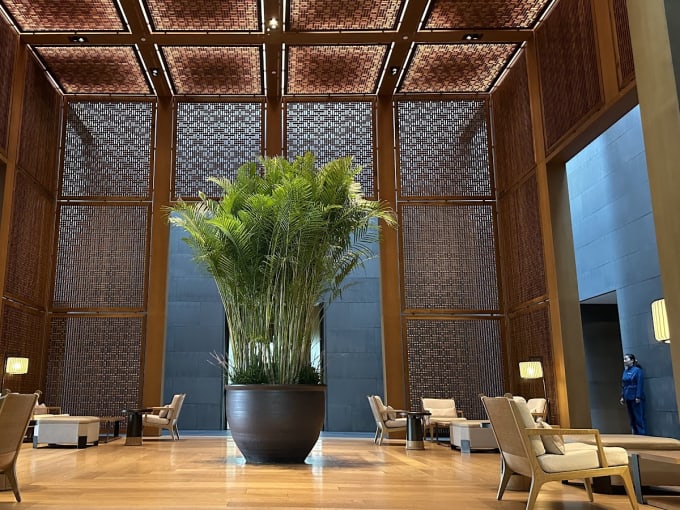
Travelling in China with family requires a true sense of timing. Distances are vast. Climates change rapidly. Urban rhythms can be surprising. This is precisely why hospitality plays a crucial role. A great family hotel is not just about a larger room. It must simplify arrivals. It should offer clear spaces. It needs to allow parents to relax without interrupting the flow of the journey. In China, this issue takes on a particular dimension. Beijing, Shanghai, Hangzhou, Lijiang, Sanya, or Xishuangbanna come with different expectations and customs. Some families seek a first cultural trip. Others desire a beach holiday. Still others prioritise nature, tranquillity, or a more heritage-focused immersion. Our role is to identify the addresses that make this journey smoother, more comfortable, and more coherent for multiple generations.
To establish this ranking, we have only considered an editorial reading based on verifiable elements. We first observe the destination. A family-friendly address holds different value depending on whether it allows exploration of the Forbidden City, the districts of Shanghai, the landscapes of Yunnan, or the beaches of Hainan. Next, we look at the overall configuration of the hotel. The size of accommodations matters. The presence of villas, suites, or outdoor spaces also counts. The level of service carries significant weight. For families, the quality of a concierge, the smoothness of transfers, the flexibility of meals, and the ability to organise simple days often make the difference. We also take into account the brand's reputation, the coherence of its positioning, and the actual capacity of the address to welcome children without detracting from the adult experience.
The Chinese landscape is particularly interesting, as it avoids uniformity. Some addresses are set in a strong historical context. Aman Summer Palace in Beijing immediately appeals to families wanting to connect their hotel stay with imperial heritage. Others favour a more contemplative relationship with the landscape. Amandayan in Lijiang or Banyan Tree Ringha in Shangri-La open up a China of varied terrains, regional cultures, and rarer horizons. Conversely, Four Seasons Hotel Beijing, Bulgari Hotel Beijing, and Fairmont Beijing cater to an urban logic. They suit families looking for an efficient base in a major capital. Further south, Capella Sanya and Anantara Xishuangbanna Resort shift the focus towards the resort experience. Here, the stay revolves more around leisure time, outdoor spaces, and a more relaxed pace.
For 2025 and 2026, we observe several clear trends in high-end family travel in China. The first concerns the length of stays. Families are increasingly opting for shorter but better-structured itineraries. They want fewer hotels and better transitions. The second trend relates to mixed ages. Trips involving children, parents, and grandparents are on the rise. This highlights hotels capable of offering accessibility, tranquillity, flexible dining, and activities without heavy logistics. Thirdly, the demand for meaningful experiences is growing. Families are no longer just looking for a swimming pool and a large lobby. They want a place that tells a story about the territory. Hangzhou, Lijiang, or Shanghai meet this expectation well. Finally, beach holidays remain strong, but with heightened demands for privacy, quality of private spaces, and daily convenience.
At MyConciergeHotel, we advocate for a certain idea of French luxury. It relies less on ostentation and more on precision. For a family, this precision is measured very concretely. A breakfast that avoids waiting is important. A well-coordinated car matters. A room that allows everyone to find their place is essential. A resort that knows how to balance shared moments and separate times is equally significant. What our advisors often observe is that the best memories arise from invisible organisation. Parents should not have to negotiate every detail. Children should feel genuinely welcomed, not merely tolerated. Grandparents should not feel lost in an overly complex setup. This quality of service, discreet yet structuring, remains the true hallmark of a great family hotel, far more than a spectacular decor or an overly demonstrative signature.
It is also important to approach this ranking methodically. It does not designate a perfect hotel for all families. It ranks usage profiles. A family with young children will not necessarily choose the same address as a group with teenagers. A first trip to China often calls for a reassuring urban base. A second visit may favour a more immersive destination, such as Lijiang or Xishuangbanna. Similarly, a well-maintained city hotel may be more relevant than a distant resort if the main goal remains cultural discovery. It is also worth noting that the term family does not only mean dedicated facilities. It includes perceived safety, clarity of spaces, sleep quality, ease of meals, and the hotel's ability to adapt to rapidly changing days. It is within this logic that we have built our selection.
My advice, before delving into the Top 10, is simple. Think of your hotel as a rhythm base. In China, this choice structures the entire journey. Here are the addresses we consider most compelling for a family stay.