MC
Editorial ranking

The best hotels design in Chine in 2026

Editorial selection of 10 design hotels in China, 2026: urban addresses, architect signatures, skyline or garden views.

Ranking reviewed on 25 June 2026.

The top of the ranking in pictures

The verdict at a glance

  1. AmanyangyunAmanyangyun stands out here for the rare coherence of its architectural language.
  2. The Middle HouseThe Middle House deserves a very high place for a simple reason.
  3. Upper House Hong KongUpper House Hong Kong remains a benchmark for design hotels in China.

Our methodology

Discussing the best design hotels in China necessitates a clarification of a key point. Here, design is not merely a decorative layer atop luxury; it shapes the experience, the rhythm, the light, and the relationship to the space. In China, this interpretation takes on a particular depth. The country juxtaposes political capitals, financial metropolises, historic concession districts, Tibetan landscapes, and imperial legacies. This density results in hotels that are markedly different, yet rarely interchangeable. In Beijing, Shanghai, Hong Kong, Tianjin, Nanjing, Chengdu, or Shangri-La, design engages in dialogue with history, urban verticality, or the memory of sites. Aman Summer Palace, Amanyangyun, Bulgari Hotel Beijing, and Capella Shanghai each showcase a distinct way of inhabiting contemporary China. It is precisely this diversity that makes the subject editorially compelling.

To establish this ranking, we do not focus on a mere showcase aesthetic. We observe the overall coherence of the project. A great design hotel succeeds when architecture, volumes, materials, landscape, and service speak the same language. Our advisors also consider the legibility of the place. Is the arrival clear? Do the public spaces possess a true identity? Do the rooms extend the narrative? Does the design enhance daily comfort? We also place weight on local anchoring. In China, this can manifest through a reinterpretation of historic houses, a dialogue with a garden, a view of the river, or a measured insertion into a business district. Finally, the brand's reputation and operational consistency matter. A beautiful object without operational integrity does not sustainably enter our selection.

The Chinese hotel design landscape cannot be reduced to a single school of thought. Rather, it is more apt to envision several families. The first is heritage-based. Aman Summer Palace, Capella Shanghai, Fairmont Peace Hotel, and Hotel Yihe Mansions engage with built memory, each according to its context. The second is urban and contemporary. Bulgari Hotel Beijing, Bulgari Hotel Shanghai, EAST Hong Kong, Conrad Hong Kong, and Four Seasons Hotel Tianjin embrace sharper lines, often linked to the skyline and the needs of an international clientele. The third explores the relationship with landscape and retreat. Amanyangyun, Banyan Tree Ringha, and Hotel Su Shien Valley remind us that design can also be a distancing from noise. Even within the same group, expressions diverge. This is what gives this ranking its substance.

For 2025 and 2026, several trends are solidifying in Chinese design hospitality. Firstly, there is a quest for visually quieter spaces. Luxury is no longer solely defined by ornamentation but by the mastery of emptiness, circulation, and natural light. Secondly, there is a resurgence of precise local narratives. Savvy travellers seek less a globalised style than a venue capable of explaining its neighbourhood, building, or landscape. Shanghai remains exemplary in this regard, with hotels that articulate heritage and modernity without resorting to folklore. Beijing retains an institutional strength, more mineral, sometimes more museum-like. Hong Kong continues to be a laboratory of elegant density. Finally, we observe a rise in hybrid stays. Guests desire a photogenic hotel, certainly, but also one that is livable, fluid, and credible for multiple nights.

At MyConciergeHotel, we advocate a simple idea of French luxury. Refinement is measured less by effect than by accuracy. A convincing design hotel does not strive to impress from every angle; rather, it knows how to establish an obviousness. This could be a preserved courtyard, a perfectly proportioned corridor, a room where the view frames the city, or a lobby that remains pleasant at all hours. What our advisors often observe in China is the success of venues that embrace their tempo. Some invite urban display. Others prioritise retreat, contemplation, or memory. Our role is not to homogenise these experiences but to methodically rank them and then guide each traveller to the address that truly corresponds to them.

Thus, this ranking should be read without expecting an absolute verdict. A number one does not negate the uniqueness of a number eight. Each hotel caters to a specific use, sensitivity, and type of stay. Some will appeal to lovers of contemporary lines and large metropolises, while others will resonate more with travellers seeking cultural depth, a more residential address, or a more direct relationship with the landscape. We avoid hollow superlatives, as they muddle the reading. It is important to remember that a design hotel is not merely one that photographs well; it is one that endures, from the first glance to the last morning. In this Chinese selection, several establishments achieve this through very different means. It is this plurality, more than the fleeting effect of trends, that interests us.

Before entering the Top 10, keep this idea in mind. China does not offer a unique hotel design; it offers several, sometimes opposing, often complementary. Our ranking puts them into perspective.

Our criteria for ranking China’s design hotels

We rank China’s design hotels by architecture, interior coherence, local grounding, spatial consistency, and real comfort in use.

Questions about this section

What makes a design hotel in China successful beyond beautiful decor?

Successful design combines aesthetics, function, comfort, and a strong relationship with place.

Between Chinese heritage and international modernity

Read design through the place first, and the décor second.

Questions about this section

How do China’s best design hotels balance heritage and modernity?

The best properties reinterpret heritage through materials, proportions, and spatial logic rather than nostalgic imitation.

When design extends the dining experience

In China’s best design hotels, the restaurant often completes the architectural story.

Questions about this section

Does gastronomy really matter in the overall experience of a design hotel in China?

Yes, dining is part of the design narrative and helps confirm the hotel’s overall positioning.

Design, wellness, and urban retreats

In China’s best design hotels, wellness works best when architecture, silence and pace are conceived together.

The Most Compelling Design Hotels in China for a Romantic Getaway

For a romantic getaway, we favour hotels where design primarily enhances the rhythm of the stay. Visual impact alone is insufficient. A genuine sense of intimacy, soothing circulation, appropriate lighting, and communal spaces that invite you to linger are essential. In China, several establishments achieve this with very different styles. Notably, the most compelling hotels for couples are not always the most ostentatious. Often, they are those that manage to create a distance from the city or, conversely, frame its energy with precision.

In Shanghai, The Middle House naturally stands out for couples seeking a contemporary aesthetic without coldness. Its design identity is clear yet never theatrical. The volumes remain comprehensible, the materials are calming, and the overall ambiance retains a genuine elegance in the evening. This is crucial for a couple's escape. A hotel can be very successful during the day but lose its atmosphere after 8 PM. Here, the communal spaces maintain a subdued presence. The PuLi Hotel and Spa offers a different experience, one that is more introspective. Its location in Shanghai remains a reference for those wishing to slow down. The relationship between interior architecture, soft lighting, and relaxation spaces fosters a rare sense of retreat in a large metropolis. Our advisors note its ability to make the urban density fade away without severing ties with it.

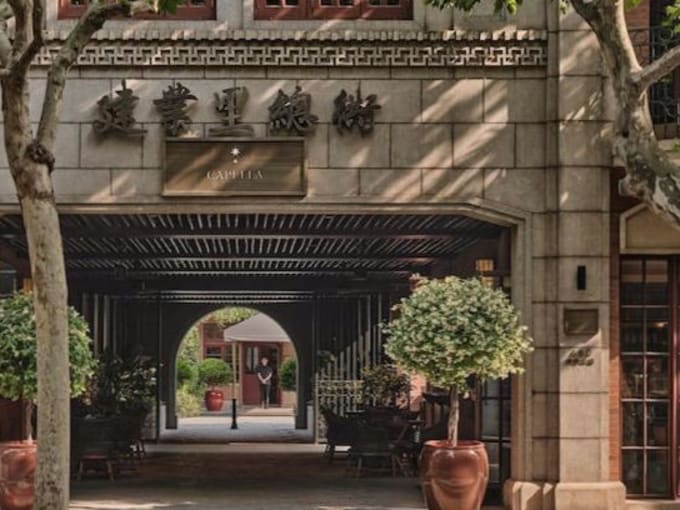
Still in Shanghai, Capella Shanghai, Jian Ye Li particularly appeals to couples sensitive to their surroundings. The hotel is set within a collection of restored shikumen, profoundly altering the sensation of the stay. It is not merely a heritage backdrop. Guests enjoy a more residential, discreet scale, which suits a romantic trip very well. The suites gain character, and the pathways create an intimacy that is difficult to replicate in a large tower. In contrast, The Shanghai EDITION is better suited for couples seeking a more urban and nocturnal atmosphere. Its central location, contemporary interpretation of luxury, and the quality of its views make it a very solid option. My advice is to choose it if the stay will combine design, nightlife, and a genuine hotel experience in the evening.

In Beijing, The Opposite House remains one of the most relevant addresses for a duo that appreciates design as a complete language. The hotel has a strong, immediately recognisable identity while maintaining a great sobriety of use. This is essential. For a romantic stay, the aesthetics must support relational comfort, not hinder it. The volumes, the fluidity of spaces, and the overall atmosphere create this setting. The Temple House in Chengdu also deserves special attention. Its dialogue between heritage and contemporary lines produces a more composed than spectacular ambiance. For a couple, this restraint is significant. It allows space for the stay itself. Finally, The Upper House in Hong Kong remains one of the best choices for those seeking height, tranquillity, and views. Its highly controlled design, relationship with light, and sense of space perfectly serve a couple's retreat.

Other addresses clearly enter this conversation. Rosewood Hong Kong appeals to couples wishing to combine design, panorama, and urban intensity. The level of finish, the quality of communal spaces, and the relationship to the waterfront play a significant role here. Mandarin Oriental Wangfujing, Beijing, more discreet in scale, is interesting for those wanting a quieter experience of Beijing. Amanyangyun, near Shanghai, caters to a different type of romantic getaway. Here, design relies on space, landscape, and a slower pace of life. Finally, The Sukhothai Shanghai and The PuXuan Hotel and Spa deserve mention for their balance. They avoid forced effects. This is often where the difference lies. The most compelling design hotels for couples are those that allow room for silence, views, and shared time.

How to choose the right design hotel in China

Choose the hotel that best expresses your relationship with the place, because in China, good design should serve the journey, not distract from it.
Comparison tables

Comparison of the best design hotels in China
HotelAtmosphereHighlightsBadgeIndicative budget
Amanyangyun — ShanghaiRetraite contemporaine, très espacée, inspirée du patrimoine chinois.Villas et suites, campus paysager, approche Aman, design sobre et méditatif.Amanà partir de 900€/nuit
Capella Shanghai — ShanghaiÉlégance résidentielle dans des shikumen restaurés.Adresse de caractère, architecture historique réinterprétée, échelle intime.Capellaà partir de 500€/nuit
Bulgari Hotel Shanghai — ShanghaiLuxe urbain, lignes italiennes, vues de skyline.Design signé Bulgari, esthétique contemporaine, positionnement très lifestyle.Bulgari Hotelsà partir de 700€/nuit
Bulgari Hotel Beijing — BeijingContemporain feutré, grand format, esprit galerie.Signature Bulgari, volumes généreux, lecture design très internationale.Bulgari Hotelsà partir de 600€/nuit
Aman Summer Palace — BeijingSobriété patrimoniale à proximité du Palais d’Été.Adresse rare, inspiration impériale, design discret et culturellement ancré.Amanà partir de 800€/nuit
Hotel Eclat Beijing — PékinBoutique-hôtel arty, théâtral, très collectionneur.Œuvres d’art, parti pris décoratif affirmé, expérience design immédiate.Boutique-hôtelà partir de 300€/nuit

Editorial selection based on architectural signature, decorative coherence, local identity and international reputation.

Budget guide by service level
LevelHotel profileRange
Design accessibleBoutique-hôtel ou grand hôtel contemporain bien situé.250€ à 450€/nuit
Design premiumMaison de marque internationale avec forte identité décorative.450€ à 800€/nuit
Design signatureAdresse iconique, architecture marquante, service très abouti.800€ à 1500€/nuit
Ultra-luxe designVillas, patrimoine rare ou marque de référence mondiale.1500€+/nuit selon saison

These ranges are indicative. They vary with season, events and room category.

The ranking

  1. Amanyangyun, Shanghai

    #1Amanyangyun

    Shanghai · Top design pick

    Amanyangyun stands out here for the rare coherence of its architectural language. Few addresses in China articulate displaced heritage, landscape, and contemporary hospitality as clearly. The project is known for having reassembled old houses and integrated a camphor forest. This creates a design interpretation that transcends mere decoration. We speak here of composition, proportions, and a relationship with time. In Shanghai, where luxury offerings are often vertical and urban, this address takes a counterpoint. It offers a horizontal, almost meditative experience without compromising hotel standards. The Aman signature enhances this impression of visual rigour. The lines remain understated, the materials speak for themselves, and each space seems designed to slow the gaze. Our advisors often observe its ability to attract design enthusiasts without being ostentatious. Note: a grand design hotel, as it creates a complete universe, not just a beautiful image.

  2. The Middle House, Shanghai

    #2The Middle House

    Shanghai · Contemporary city icon

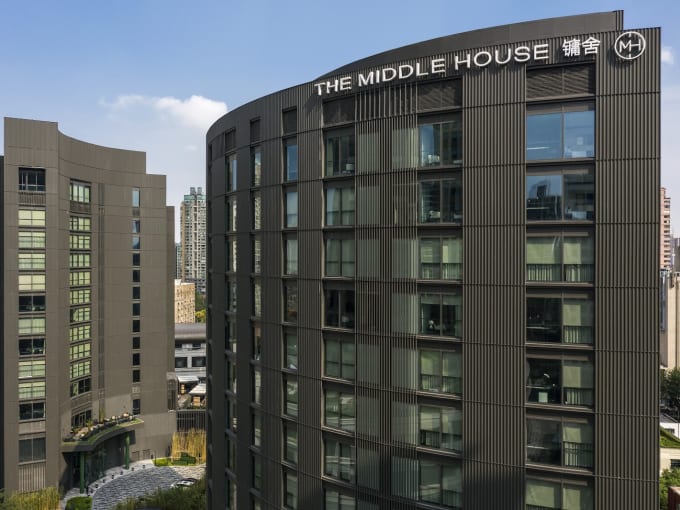
    The Middle House deserves a very high place for a simple reason. Its design is immediately recognisable without being theatrical. In Shanghai, this address embodies a contemporary vision of urban luxury. It relies on clean volumes, a measured palette, and a carefully crafted residential atmosphere. The brand name 'House' also works in its favour. In this collection, the interior identity matters as much as the service. Here, this translates into spaces that remain calm despite the energy of the neighbourhood. The result appeals to travellers seeking a city hotel with a genuine visual personality. What our advisors note is the balance. The hotel is neither historicist nor coldly minimalist. It strikes a just tone between international design and local grounding. For a ranking dedicated to design in China, this is a strong criterion. My advice: choose it if you appreciate hotels where interior architecture truly shapes the stay experience.

  3. Upper House Hong Kong, Hong Kong

    #3Upper House Hong Kong

    Hong Kong · Urban minimalist benchmark

    Upper House Hong Kong remains a benchmark for design hotels in China. This address has made a lasting impact on the Asian scene with its minimalist approach and sense of space. In a dense city like Hong Kong, this breathing space is invaluable. The project prioritises fluid circulation, height, light, and an uncluttered aesthetic. This is precisely what gives it strength. The design never overshadows comfort; it organises it. We rank it above several renowned names for its clear and instantly recognisable identity. It does not rely on spectacular decor or historical heritage. It convinces through mastery of volumes and a contemporary elegance that has become almost timeless. Our advisors note its ability to appeal to both luxury regulars and travellers attuned to interior architecture. Noteworthy: a major design hotel conceived as a vertical refuge above the city.

  4. Capella Shanghai, Shanghai

    #4Capella Shanghai

    Shanghai · Reinvented heritage

    Capella Shanghai earns its place in this top list for its precise interpretation of heritage design. The address stands out for its location in shikumen reimagined as a luxury hotel. This is an important point. Many design hotels excel in new builds, but fewer achieve such a clear conversion. Here, the historical charm does not serve as an excuse; it becomes the raw material for a coherent project, where domestic scale, courtyards, and architectural details create a unique experience in Shanghai. The Capella brand also brings a highly refined approach to intimacy and service. This enhances the feeling of inhabiting a space rather than merely occupying it. In our editorial view, this address deserves its place as it showcases an alternative path in contemporary Chinese design—less overt, more contextualised. My advice: favour it if you appreciate hotels where local identity truly shapes the aesthetic, without folklore or pastiche.

  5. Park Hyatt Shanghai, Shanghai

    #5Park Hyatt Shanghai

    Shanghai · Skyline design icon

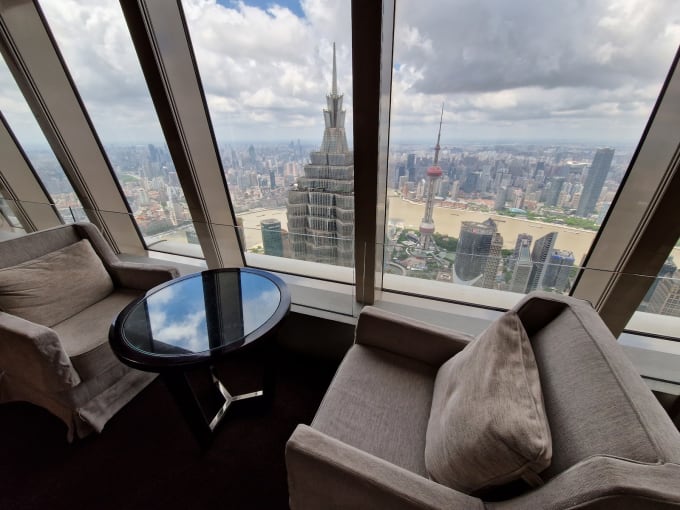
    Park Hyatt Shanghai merits its place in this ranking for a simple reason: its design identity is inseparable from its location. Situated in the Shanghai World Financial Center, it engages with verticality like few hotels in China. The volumes, clean lines, and understated palette create a highly controlled aesthetic. Here, the décor does not seek effect; it organises sight, light, and the sensation of space. It is a design of height, almost silent, that suits the energy of Pudong. Our advisors also note the coherence of the Park Hyatt brand, which often favours contemporary, minimalist, architectural luxury. In a design-focused selection, this consistency matters. The hotel appeals to travellers seeking a graphic urban experience, devoid of decorative overload. Also noteworthy is the view of Shanghai, which acts as a natural extension of the aesthetic project.

  6. Bulgari Hotel Beijing, Beijing

    #6Bulgari Hotel Beijing

    Beijing · Contemporary Beijing style

    Bulgari Hotel Beijing stands out with its highly identifiable design. The Bulgari brand embodies a contemporary, precise, and instantly readable style. In Beijing, this signature takes on an urban, refined, and structured form. The result appeals to travellers who appreciate rigorously composed interiors. Materials, proportions, and atmosphere are as important as the location. This is not a heritage hotel; it is a stylish establishment designed for those who choose a place for its visual language. In a Chinese ranking, it offers an international perspective on hotel design, which is useful against more historical or residential properties. Our advisors also observe that Beijing gains interest when a venue successfully filters the city's intensity. Bulgari achieves this through a more subdued, highly controlled approach. My advice: consider it if you seek a contemporary, elegant, and clear vision of China, devoid of decorative folklore.

  7. Rosewood Hong Kong, Hong Kong

    #7Rosewood Hong Kong

    Hong Kong · Harbourfront residential design

    Rosewood Hong Kong naturally fits into this list, as its design is based on a comprehensive vision. The hotel is not merely luxurious; it creates a coherent visual experience from the urban setting to the interior spaces. In Hong Kong, this ability to generate calm amidst the harbour is significant. The design serves both comfort and staging. The Rosewood brand also brings a residential sensibility, often more nuanced than demonstrative. This is a strong point for our selection. A great design hotel is not just photogenic; it must remain livable, readable, and sustainable in its aesthetics. Rosewood Hong Kong meets this requirement well. Its waterfront location further enhances its impact. The views contribute to the decorative project without overwhelming it. What our advisors observe is this rare alliance of international scale, contemporary sophistication, and a sense of private address.

  8. Hotel Eclat Beijing, Pékin

    #8Hotel Eclat Beijing

    Pékin · Gallery-style Beijing stay

    Hotel Eclat Beijing deserves a place in this top tier for its unique positioning. Few hotels in China so clearly embrace a design identity akin to a gallery. In Beijing, this proposition stands apart from the grand codes of international hospitality. The address primarily appeals to travellers seeking a decor with character. Its editorial interest lies in this willingness to take risks. While others opt for neutrality, Hotel Eclat Beijing chooses a more assertive expression. In a design-focused ranking, this difference truly matters. It enriches the selection and avoids an overly homogeneous list. Our advisors often recommend it to clients who appreciate places that tell a story from the moment of arrival. It may not be the most consensus-driven option, but that is precisely its strength. My advice: choose it if you enjoy hotels that embrace a strong, urban, and immediately memorable visual personality.

  9. Bulgari Hotel Shanghai, Shanghai

    #9Bulgari Hotel Shanghai

    Shanghai · Strong design signature

    Bulgari Hotel Shanghai naturally enters this ranking due to its immediately identifiable aesthetic language. The Bulgari brand imposes a precise visual grammar everywhere, characterised by clean lines, noble materials, and highly controlled atmospheres. In Shanghai, this signature matters. It provides a coherent design perspective without relying on pre-existing historical decor. This is an important point against other prominent Chinese addresses, often more heritage-focused or classic. Our advisors also highlight its location in Shanghai, a city where hotel design is measured against dense competition. Being readable in this context is no small feat. Here, the project impresses with its aesthetic discipline rather than spectacular effects. This is often what distinguishes a true design hotel from a merely well-decorated luxury hotel. Worth noting if you seek an urban, contemporary address with a strong brand identity and a clear visual identity from the lobby to the rooms.

  10. The Sukhothai Shanghai, Shanghai

    #10The Sukhothai Shanghai

    Shanghai · Refined urban design

    The Sukhothai Shanghai earns its place for a simple reason. Its positioning is based on a contemporary, understated, and highly urban aesthetic. In a design-focused ranking, this clarity matters more than mere hotel pedigree. The address is set within Shanghai, a demanding landscape where the most compelling projects manage to avoid excess. Here, the design operates through balance. The lines remain current, the atmosphere is controlled, and the overall appeal speaks to a clientele more attuned to interiors than to prestige effects. What our advisors often observe is that the most authentic design hotels are those that uphold their promise over time. The Sukhothai Shanghai aligns with this principle. It offers a credible contemporary perspective, free from heritage pastiche or excessive demonstration. My advice: it is a relevant choice for a stay in Shanghai if you prioritise aesthetic coherence, visual calm, and a more edited approach to luxury.

Glossary

Boutique hotel
A smaller-scale property, often more personal. Design is usually more assertive than in a classic large hotel.
Brand signature
The set of aesthetic codes specific to a brand. Bulgari or Aman, for example, create an immediately recognizable visual language.
Design hotel
A hotel whose identity relies on a clear artistic direction. Architecture, furniture, lighting and materials matter as much as service.
Reinterpreted heritage
An approach that restores a historic building while adapting it to contemporary hospitality. It is a key criterion in several Chinese properties.
Shikumen
A historic Shanghai residential typology. It blends Chinese and Western influences and is often sought after for character-driven hotel projects.
Skyline view
An open urban view over towers and waterfronts. In China, it strongly shapes the experience of metropolitan design hotels.

Going further

The best design hotel in China is the one whose architecture, rhythm, and setting align with the journey you want to live.

Frequently asked questions

How is this ranking of China’s best design hotels built?

It is based on architecture, interiors, sense of place, execution, location, brand reputation, and overall luxury experience.

What sets the selected design hotels apart in China?

They stand out through coherent identity, strong execution, comfort, and a meaningful connection to place.

What is the difference between a design hotel, a palace, and a luxury five-star hotel in China?

A design hotel is defined by aesthetic vision; a luxury five-star is defined more by service, facilities, and comfort.

When is the best time to book a design hotel in China?

Book early for major cities, holidays, trade fairs, and high-demand suite categories.

What nightly price ranges should travelers expect for design hotels in China?

Rates vary widely by city, season, room category, and demand peaks.

Do these design hotels offer loyalty programs or direct-booking perks?

Yes, especially with international brands, though benefits vary by hotel and booking channel.

Can travelers expect strong concierge service and personalized stays?

Yes, top hotels can tailor logistics, dining, timing, and local experiences when briefed in advance.

Are China’s design hotels suitable for guests with reduced mobility and for families?

Usually yes, but accessibility and family suitability vary by building, layout, and brand standards.

How can travelers book through MyConciergeHotel.com, and why choose it over an OTA?

Booking through MyConciergeHotel.com adds expert guidance, room selection support, and better trip framing than a standard OTA.

Sources & references

This editorial article is based on the following authoritative sources, listed here for transparency and reader verification.

Encyclopaedias