MC
Editorial ranking

The best hotels in China in 2026

Editorial selection of 10 exceptional hotels in China, 2026: city addresses, nature retreats, established luxury hotel brands.

Ranking reviewed on 22 June 2026.

The top of the ranking in pictures

The verdict at a glance

  1. AmanyangyunAmanyangyun takes the top spot because few hotels in China balance a structured retreat with access to a major city as clearly as this one.
  2. The Peninsula ShanghaiThe Peninsula Shanghai earns its No.
  3. Aman Summer PalaceAman Summer Palace ranks 3rd because few hotels in China create such a direct conversation with a major imperial landmark.

Our methodology

China holds a unique position in the global luxury hotel landscape. The country encompasses political capitals, financial metropolises, artistic cities, seaside resorts, and rare cultural landscapes. For the discerning traveller, this diversity makes all the difference. One does not book Beijing as one would book Shanghai. A stay in Hangzhou is not the same as choosing Sanya or Lijiang. This is precisely what makes a ranking useful. It must distinguish addresses that embody a place, not just a level of comfort. In this selection, we view China as a collection of complementary hotel scenes. Aman Summer Palace, Amanfayun, Amandayan, Amanyangyun, Capella Shanghai, and Bulgari Hotel Shanghai each narrate a different idea of a stay. It is important to remember that the best hotel is never abstract. It depends on a rhythm, a setting, and a travel intention.

Our methodology is based on consistent editorial criteria. We first assess the strength of the address. A great hotel must have a clear relationship with its city, neighbourhood, or landscape. We then examine the coherence between architecture, service, accommodation, and overall experience. Brand reputation matters, but it is never enough. An Aman, a Capella, a Bulgari, a Four Seasons, a Fairmont, a Conrad, or an EAST does not serve the same purpose in a journey. We also consider the clarity of positioning. Some establishments excel for a first discovery, while others are better suited for a return stay, more leisurely and focused. What our advisors often observe is that a great address in China must simplify a complex country. It should provide a reference point without erasing the local context.

The panorama of this selection showcases the extent of Chinese hotel luxury. Beijing stands out with addresses that engage with power, history, and the contemporary scene. Aman Summer Palace, Bulgari Hotel Beijing, and Fairmont Beijing illustrate three distinct interpretations of the capital. Shanghai plays a different tune. The city combines international memory, creative energy, and business life. Amanyangyun, Capella Shanghai, Bulgari Hotel Shanghai, and Fairmont Peace Hotel create a particularly rich spectrum there. Further south, Hong Kong maintains a unique role, with Conrad Hong Kong, EAST Hong Kong, and Four Seasons Hong Kong serving as solid references for urban travellers. Finally, Lijiang, Hangzhou, Xishuangbanna, and Sanya remind us that the hotel landscape in China is not limited to towering skyscrapers. Amandayan, Amanfayun, Anantara Xishuangbanna Resort, and Capella Sanya open up stays focused on landscape, silence, or leisure.

For 2025 and 2026, several trends are confirmed in the Chinese high-end market. The first concerns the return of slower stays. Travellers no longer seek merely a well-located room. They look for a setting that justifies staying put, sometimes for an entire day. This favours hotels with a strong heritage or landscape connection. The second trend relates to scale. Major metropolises remain essential, but addresses that offer space, calm, and architectural narrative are gaining ground. The third concerns service. The most compelling establishments no longer overplay the pomp. They prioritise fluidity, discretion, and precision. My advice in China is simple. Focus less on the general promise of luxury and more on how the hotel organises your time. This is often where the true difference lies between a beautiful address and one that is merely adequate.

At MyConciergeHotel, we advocate a distinctly French interpretation of luxury. It is not based on ostentation or accumulation. It relies on moderation, a culture of detail, and a hotel's ability to create continuity between the place and the stay. In China, this approach is particularly relevant. The country can impress with its scale, density, and contrasts. A great hotel must then become an intelligent filter. It should make the journey more comprehensible without impoverishing it. This is what establishments like Amanfayun in Hangzhou, Amandayan in Lijiang, or Capella Shanghai in the former concession achieve, each in their own way. Conversely, a very contemporary urban address can also be appropriate if it clearly embraces its style. Bulgari Hotel Beijing, EAST Hong Kong, or Conrad Hong Kong adhere to this logic. Here, luxury is less about effect and more about suitability.

It is also important to explain how to read this ranking. A top 10 is not a universal verdict. It is an editorial hierarchy, constructed to assist in decision-making. Some addresses are more comprehensive, while others are more specialised. Some shine due to their historical context, others for their urban efficiency, and still others for their ability to offer a retreat away from expected circuits. We do not seek to harshly oppose hotels that serve different purposes. Fairmont Peace Hotel does not have the same vocation as Amanyangyun. Four Seasons Hong Kong does not meet the same need as Aman Summer Palace. Capella Sanya cannot be directly compared to Amandayan. What we are ranking is the quality of the offering in its category. The discerning reader will thus keep a simple idea in mind. The rank matters, but the right match between the hotel and the journey matters more.

In the pages that follow, our top 10 best hotels in China prioritises addresses that leave a lasting mark on an itinerary. Some are already classics. Others stand out for their contemporary precision. All deserve careful consideration before booking.

How we rank the best hotels in China

Our ranking balances address, service consistency, hotel identity, views, dining, wellness, and the weight of recognized distinctions.

From heritage hotels to contemporary icons

China’s luxury hotel scene is shaped by a clear duality: historic urban landmarks and contemporary skyline icons, extended by a fast-rising resort culture.

Questions about this section

Should travelers choose a heritage hotel or a modern icon in China?

Choose heritage for atmosphere, or a modern icon for views, facilities, and smoother logistics.

Why dining matters so much in this top 10

In China, a great hotel is often judged as much by its restaurants, bars, and tea lounges as by its rooms.

Questions about this section

Is gastronomy an important factor when choosing a luxury hotel in China?

Yes, but dining should complement, not replace, strong rooms, service, and location.

Spa, pool and recovery: the new stay standard

In China, wellness now shapes the final hotel choice as much as location or dining.

Which hotel to choose in China for your travel style

Choose your China hotel by trip purpose first, not by prestige alone.

Comparison tables

Comparison table of the best hotels in China
HotelAtmosphereHighlightsBadgeIndicative budget
AmanyangyunHeritage retreat on the outskirts of ShanghaiSpacious villas, wooded setting, rare resort positioning near a major metropolisAman, 5★, Shanghaifrom €900-1,500/night
Aman Summer PalaceConfidential address close to Beijing's imperial heritageImmediate vicinity of the Summer Palace, cultural experience, Aman signatureAman, 5★, Beijingfrom €800-1,400/night
Capella ShanghaiUrban elegance in Shanghai's shikumenHistoric architecture, intimate scale, address suited for cultural staysCapella, 5★, Shanghaifrom €700-1,200/night
Bulgari Hotel ShanghaiContemporary luxury with urban viewsBrand design, Shanghai skyline, strong lifestyle profileBulgari, 5★, Shanghaifrom €700-1,300/night
Four Seasons Hong KongGrand international hotel on the waterfrontBusiness and leisure address, Four Seasons standards, central locationFour Seasons, 5★, Hong Kongfrom €600-1,100/night
Fairmont Peace HotelHistoric grande dame of the BundIconic address in Shanghai, Art Deco heritage, position on the BundFairmont, 5★, Shanghaifrom €400-800/night
AmandayanMountain refuge in LijiangLocal anchorage, views of the old town and landscapes, contemplative atmosphereAman, 5★, Lijiangfrom €700-1,200/night
AmanfayunSpiritual retreat in HangzhouVillage setting, close to cultural sites, slow and immersive experienceAman, 5★, Hangzhoufrom €700-1,200/night

Editorial selection built only from the hotels provided. Budgets are indicative and vary by season and room category.

Budget benchmarks by service level
LevelHotel profileObserved range
International signatureMajor urban brands in Hong Kong, Beijing or Shanghaiapproximately €400-900/night
Lifestyle luxuryDesign addresses with strong brand identityapproximately €700-1300/night
Exceptional resortCultural or nature retreats with villas and large spacesapproximately €800-1500/night
Very high confidentialityAman and comparable addresses with limited inventoriesoften €900+/night

These ranges are benchmarks only. They do not replace a live quotation from our advisors.

The ranking

  1. Amanyangyun, Shanghai

    #1Amanyangyun

    Shanghai · Our top pick in China

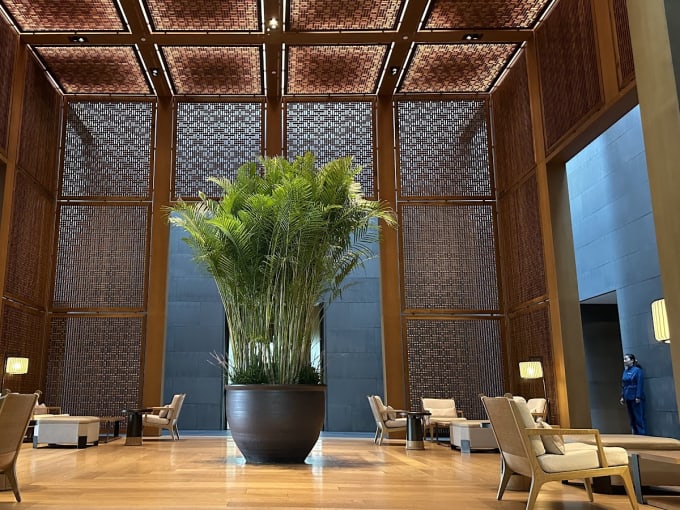
    Amanyangyun takes the top spot because few hotels in China balance a structured retreat with access to a major city as clearly as this one. The address sits in Minhang, near Maqiao Relic Site and Qi Zhong Stadium, rather than in the centre. That decision changes the stay. You move between Shanghai and seclusion without absorbing the city’s tempo all day. The estate gives that promise a precise form. A private walk through the grounds, breakfast in the quiet of the gardens, tea and reading, then a tailored day between Shanghai and a peaceful retreat. The spa extends the same logic with a personalised wellness ritual, delivered in Aman’s restrained style. Dining follows suit with Arva, Lazhu, Yinlu, Bei TeaHouse, The Bar and Cigar Lounge. In a national ranking, that clarity of use matters more than a simple 5-star label.

  2. The Peninsula Shanghai, Shanghai

    #2The Peninsula Shanghai

    Shanghai · Shanghai grand hotel

    The Peninsula Shanghai earns its No. 2 spot for a clear reason: it reads Shanghai with precision, without compromising the pace of a stay. Its address, in the heart of the city, places the Bund, Waitan and the Bund Sightseeing Tunnel within easy reach. The Oriental Pearl Tower, Shanghai Ocean Aquarium and Shanghai Port International Cruise Terminal complete a tightly drawn sightseeing radius. For a first visit, that geography removes wasted time. The Peninsula Hotels signature brings a continuity of service that business travellers recognise quickly. A stress-free airport arrival, an urban morning in the heart of Shanghai and a flawlessly orchestrated business stopover define its rhythm well. On the dining front, Sir Elly’s Restaurant, with 1 Michelin star, grounds the experience in a grand urban hotel that also knows how to stage an evening for two. The Forbes Travel Guide Five-Star label confirms that level of execution.

  3. Aman Summer Palace, Beijing

    #3Aman Summer Palace

    Beijing · Heritage pick

    Aman Summer Palace ranks 3rd because few hotels in China create such a direct conversation with a major imperial landmark. In Beijing, the hotel sits close to the Summer Palace, which changes the whole rhythm of a stay. You can have breakfast in calm before the gardens open, then return after the city’s intensity has peaked. Its architecture, inspired by imperial palaces, avoids stage-set theatrics and instead creates continuity with the setting. That is exactly what matters in a culturally led hotel in Beijing. The Aman signature also carries weight here. Personalised service, a tailored wellness ritual, and dinner in a setting inspired by imperial residences keep the experience coherent from morning to night. Compared with urban hotels that feel more detached from their destination, Aman Summer Palace offers a lived reading of Beijing through retreat, heritage and quiet.

  4. Four Seasons Hotel Hangzhou at West Lake, Hangzhou

    #4Four Seasons Hotel Hangzhou at West Lake

    Hangzhou · Scenic choice

    Ranked No. 4, Four Seasons Hotel Hangzhou at West Lake earns its place through a finely judged reading of Hangzhou: the stay begins with the landscape. West Lake shapes each moment here, from breakfast in the gardens to an early walk towards 苏堤 or 断桥. Few hotels connect retreat, water and city with such clarity. Yue Fei Temple, Three Pools Mirroring the Moon, Lingyin Temple and Leifeng Pagoda bring immediate cultural reach. That geography matters in a national ranking. It opens onto a more contemplative China, without losing the service codes of Four Seasons Hotels & Resorts. On the dining side, Jin Sha by Wang Yong grounds the hotel locally, while L’éclat 19, led by Olivier Elzer, holds 1 Michelin star. Add a personalised wellness pause, then tea after the city, and the balance feels exact.

  5. Rosewood Hong Kong, Hong Kong

    #5Rosewood Hong Kong

    Hong Kong · Harbourfront icon

    Rosewood Hong Kong earns its No. 5 spot because it reads Hong Kong at the right scale. Opened in 2018, it anchors a stay at Victoria Dockside, facing the harbour. Its 504 keys include 91 suites and 18 signature suites. Entry-level rooms start at 53 sq m, a rare footprint here. The stay follows a clear rhythm: the Victoria Dockside arrival ritual, sunrise breakfast over the harbour, and evening turndown facing the water. Asaya shapes the day with its infinity pool, hammam, sauna and full treatment menu. Dining has real depth, with Sushi Shikon by chef Masahiro Yoshitake, 3 Michelin stars, Kappo Rin, 1 Michelin star, and Amber by chef Richard Ekkebus, 3 Michelin stars. DarkSide adds a bar with standing on the local scene. Avenue of Stars, the Hong Kong Cultural Centre, M+ and the West Kowloon Cultural District all sit within easy reach. Its place in The World’s 50 Best Hotels 2025 supports this ranking.

  6. The Peninsula Hong Kong, Hong Kong

    #6The Peninsula Hong Kong

    Hong Kong · Heritage icon

    The Peninsula Hong Kong earns this position through rare continuity in Hong Kong. Opened in 1928 at 22 Salisbury Road in Tsim Sha Tsui, it was the first hotel in the Peninsula group. That heritage matters, but it is not enough on its own. The address still feels current through its scale, unusual here, and its exacting delivery. Even entry-level rooms start at 54 sq m. The Peninsula Suite reaches 377 sq m. On the dining front, Gaddi’s by Albin Gobil holds 1 Michelin star. Spring Moon by chef Lam Yuk Ming holds 1 Michelin star as well. The historic afternoon tea remains part of the ritual, alongside the Grand Hong Kong concierge approach. The Peninsula Spa works with Margy’s Monte Carlo, with an indoor pool, fitness room and sauna. The hotel also appears in The World’s 50 Best Hotels 2025, a short walk from the Hong Kong Cultural Centre and the Avenue of Stars.

  7. The Peninsula Beijing, Beijing

    #7The Peninsula Beijing

    Beijing · Beijing reference

    Ranked No. 7 among the best hotels in China, The Peninsula Beijing stands for a clear-cut vision of the capital city grand hotel. Its strongest asset is location, in the heart of Beijing, close to Wangfujing Pedestrian Street, the Imperial Ancestral Temple, the Forbidden City, Meridian Gate and the National Museum of China. In a city of this scale, that centrality changes the pace of a stay. You move from heritage to meetings, then back to calm, without heavy logistics. The other reason is Peninsula discipline, an Asian hallmark recognised for smooth, highly structured service. Here, it extends to an on-site spa and to Jing, where William Mahi leads a restaurant awarded 1 Michelin star. The Forbes Travel Guide Five-Star label confirms that consistency. In this ranking, the hotel captures the urban, composed and cultural side of a stay in China with precision.

  8. Mandarin Oriental Wangfujing, Beijing, Beijing

    #8Mandarin Oriental Wangfujing, Beijing

    Beijing · Prime Beijing stay

    Mandarin Oriental Wangfujing, Beijing earns its No. 8 spot for one clear reason: few hotels read Beijing with such geographic precision. The address places Wangfujing Pedestrian Street within easy reach, then links naturally to Meridian Gate, Tiananmen, the National Museum of China and the Forbidden City. For a short stay, that centrality changes the pace entirely. You begin with breakfast before the city stirs, then follow a concierge-led route through the historic centre without cumbersome logistics. The return matters just as much. Dinner in the main restaurant, a wellness pause after the flight, then an evening easing back into calm: the stay feels seamless to the last detail. The Mandarin Oriental signature brings a clear framework for international travellers without losing touch with Beijing itself. The Forbes Travel Guide Five-Star distinction confirms that level of execution. In a ranking of China’s best hotels, this balance of brand, address and urban access fully earns its place.

  9. Regent Hong Kong, Hong Kong

    #9Regent Hong Kong

    Hong Kong · Harbourfront icon

    Ranked ninth in this China list, Regent Hong Kong earns its place for one clear reason: its direct setting on Victoria Harbour at 18 Salisbury Road, Kowloon. Few city hotels bring together a true waterfront position, an immediate sense of Hong Kong, and such smooth logistics. The hotel has 497 keys, including 129 suites, a rare scale with this degree of calm. Our concierge team also values the specifics of the stay: Victoria Harbour Lounge at sunrise, the harbour twilight ritual, and a frictionless late-night arrival. On foot, you can reach the Avenue of Stars and the Hong Kong Cultural Centre within minutes. M+ Museum and the West Kowloon Cultural District are also easy to access. Recognised in the Travel + Leisure World’s Best Awards 2025, this 5-star hotel delivers the combination that matters here: views, location, legible service, and an urban stay without compromise.

  10. Amanfayun, Hangzhou

    #10Amanfayun

    Hangzhou · Quiet retreat

    Amanfayun earns its place here for a clear reason: it reveals a different face of luxury in China, in Hangzhou, far from the urban grand hotel. The Aman name matters, too, as a trusted marker for travellers who value calm, privacy and a strong sense of place. Here, the stay unfolds across a peaceful estate, rural scenery and rice fields, with breakfast taken quietly on site and gentle walks through the landscape. Its setting carries real weight in a national ranking. Lingyin Temple, 法喜寺, Meijiawu, Inquiring About Tea at Dragon Well, the 中国茶叶博物馆 and Yue Fei Temple create an unusually rich cultural orbit. The spa, with personalised treatments, deepens that retreat-led rhythm. We rank it for that precise balance: a major destination, Hangzhou, experienced at a more contemplative pace.

Glossary

5-star hotel
A high hotel rating. It indicates a structured level of service, facilities and comfort, without fully defining the experience.
Boutique hotel
A more intimate hotel, often focused on design, location and a stronger personality than a large-scale property.
Heritage address
A hotel valued for its historical, architectural or cultural setting, beyond comfort alone.
Resort
A property designed for an on-site stay. It often combines accommodation, dining, spa, leisure and generous grounds.
Shikumen
A historic Shanghai architectural typology. It blends Chinese and Western influences in distinctive row houses.
Skyline
A view over the urban skyline. In China, this matters especially in Shanghai, Beijing and Hong Kong.
Villa
An independent or semi-independent accommodation unit. It often provides more space, privacy and sometimes a garden or pool.

Going further

In China, the right luxury hotel is the one that best fits your pace, city, and reason for travel.

Frequently asked questions

How is this ranking of China’s best hotels built?

It combines service consistency, location, design identity, global reputation, and overall relevance for a luxury stay in China.

What sets the selected hotels apart in China?

They stand out through clear positioning, reliable execution, strong sense of place, and service consistency.

What is the difference between a Palace and a five-star hotel in China?

In China, travelers mainly compare luxury five-star hotels, not the French Palace designation.

When is the best time to book a luxury hotel in China?

Book early around Chinese holidays, and favor spring or autumn for major cities.

What nightly price ranges should travelers expect?

Expect wide ranges, from premium city rates to much higher suite and resort pricing.

Are there loyalty perks or direct booking benefits?

Yes, major brands offer loyalty perks, but the best overall value is not always direct booking.

Does concierge service really make a difference in China’s best hotels?

Yes, strong concierge support is especially valuable for smooth, personalized travel in China.

Are these hotels suitable for reduced mobility guests and families?

Usually yes, but accessibility and family setup should always be confirmed before booking.

How can travelers book these hotels through MyConciergeHotel.com?

You book with expert guidance, tailored hotel matching, and support beyond a standard OTA flow.

Sources & references

This editorial article is based on the following authoritative sources, listed here for transparency and reader verification.

Encyclopaedias

MICHELIN Guide