Saudi Arabia is undergoing a transformation in its hospitality landscape. The country is no longer limited to the major business addresses in Riyadh, Jeddah, or Al Khobar. It is now assembling multiple scenes of luxury. The capital is home to international signatures and representative hotels. The Red Sea coast is advancing with highly selective projects. AlUla offers a more scenic, tranquil, and almost archaeological interpretation of high-end stays. Meanwhile, Makkah maintains a hospitality logic tied to pilgrimage and proximity to holy sites. For the discerning traveller, this diversity changes everything. It compels comparisons between hotels that do not pursue the same promise. This is precisely what makes this ranking useful. It is not about opposing styles; it is about identifying the addresses that best embody their Saudi context.
At MyConciergeHotel, we view a hotel as a coherent whole. The brand certainly matters. A Four Seasons Hotel Riyadh, a Mandarin Oriental Al Faisaliah, Riyadh, a Fairmont Riyadh, or an Assila, A Luxury Collection Hotel come with recognised standards. However, the brand is never enough. We also consider the exact location, the clarity of the experience, the ability to cater to a specific journey, and the architectural uniqueness. Finally, we assess the maturity of the destination. An isolated resort on the Red Sea is not judged in the same way as a grand urban hotel. What our advisors primarily observe is the alignment between the promise and the actual experience. A business stay, a wellness retreat, a cultural stopover in AlUla, or a spiritual journey each demand different qualities. The ranking takes this plurality into account.
The current Saudi panorama is remarkably contrasted. In Riyadh, Al Mashreq Boutique Hotel, Anantara Riyadh, Fairmont Riyadh, Four Seasons Hotel Riyadh, and Mandarin Oriental Al Faisaliah, Riyadh illustrate various ways of inhabiting the capital. Some addresses favour institutional stature, while others opt for a more subdued scale. In Jeddah, Assila, A Luxury Collection Hotel recalls the city’s role as a commercial and cultural gateway to the Red Sea. In Al Khobar, Kempinski Al Othman Hotel Al Khobar caters to a regional business clientele. Makkah follows its own logic with Jumeirah Jabal Omar Makkah, where location weighs as heavily as comfort. Then come the experimental territories. Banyan Tree AlUla, Our Habitas AlUla, Caravan by Our Habitas AlUla, and Dar Tantora showcase more narrative formats. Nujuma, a Ritz-Carlton Reserve, Desert Rock, and Capella Amaala signal a very targeted elevation in luxury.
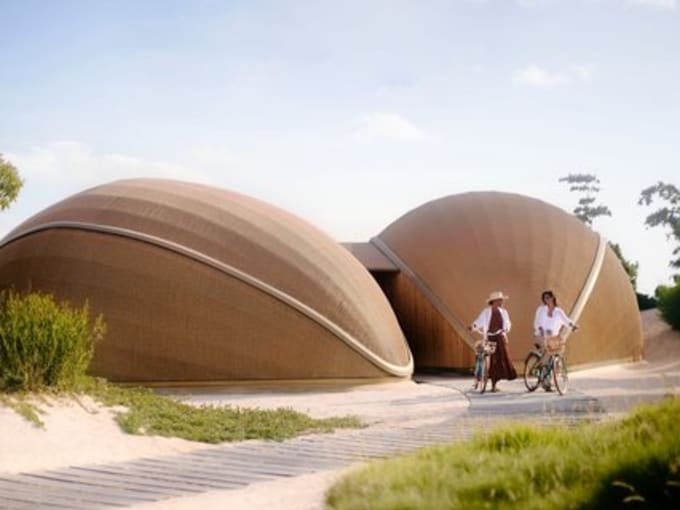
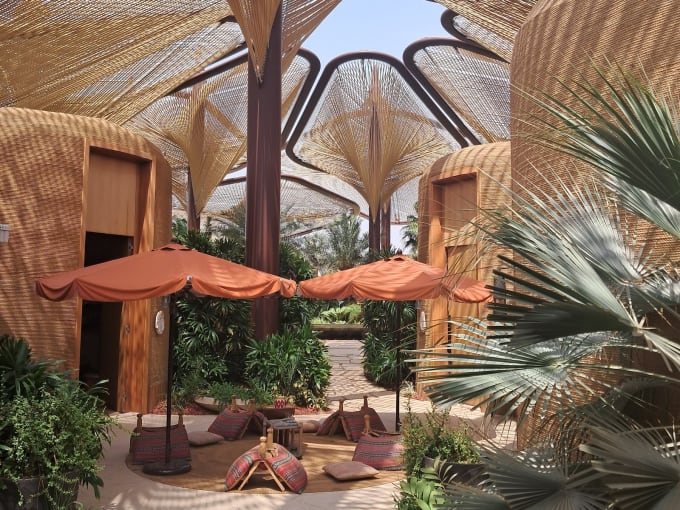
For 2025 and 2026, several trends are solidifying. The first is the rise of destination luxury. The traveller is no longer seeking just a beautiful room; they are looking for a landscape, a narrative, a sense of disconnection, and sometimes a low density of keys. AlUla and the Red Sea directly respond to this expectation. The second trend is architectural integration. Desert Rock, by its very positioning, illustrates the desire to embed the hotel within the terrain rather than imposing it upon the site. The third is the return of the resort as a complete experience. Nujuma, a Ritz-Carlton Reserve, and Capella Amaala align with this logic. Finally, regional capitals are not disappearing. Riyadh remains essential, concentrating meetings, headquarters, lounges, and short stays. My advice is simple: in Saudi Arabia, one must first choose a travel rhythm, then the hotel.
This evolution resonates with an idea of luxury that we willingly advocate. A grand hotel is not merely a backdrop; it embodies a quality of welcome, precision of service, and intelligence of place. In a rapidly transforming country, this precision becomes crucial. The French-speaking traveller is often sensitive to this. They appreciate addresses capable of orchestrating discretion, space, and extended time without overplaying the pomp. This is why very different hotels can coexist in our assessment. A boutique hotel like Al Mashreq Boutique Hotel does not offer the same experience as a major international name. Yet, it can hold its own in a discerning selection if it brings a true identity. Also to note is the question of cultural context. In Saudi Arabia, hospitality is never abstract; it is rooted in distinct practices, rhythms, and geographies.
Thus, this ranking should be read without automatic reflexes. The number one hotel is not the ideal choice for everyone. A business traveller in Riyadh does not have the same priorities as a couple drawn to AlUla. A stay in Makkah responds to very specific imperatives. A retreat on the Red Sea implies an expectation of privacy and destination. We rank excellent hotels in categories of use that may sometimes be distant from one another. The ranking reflects an editorial synthesis, not a universal truth. It values coherence, sustainable desirability, and the ability to represent Saudi hospitality at its best. It never devalues other addresses; some will suit better depending on the season, the purpose of travel, or the desired style. This is also the role of the Concierge: to place the right traveller in the right hotel at the right time.
Here, then, is our interpretation of the best hotels in Saudi Arabia. It highlights addresses that combine identity, execution, and destination relevance. You will find capitals, deserts, and the Red Sea. Above all, you will witness a country’s hospitality landscape in full definition.