MC
Editorial ranking

The best 5-star hotels in Chine in 2026

Editorial selection of 10 five-star hotels in China, 2026: city addresses, island resorts, spas, and sea views.

Ranking reviewed on 25 June 2026.

The top of the ranking in pictures

The verdict at a glance

  1. AmanyangyunAmanyangyun takes the lead for a simple reason.
  2. Aman Summer PalaceAman Summer Palace almost naturally asserts itself in a top Chinese ranking.
  3. The Peninsula ShanghaiThe Peninsula Shanghai deserves a podium place for its rare balance between international luxury and local grounding.

Our methodology

China presents a unique hotel landscape. The country cannot be reduced to its major capitals or seaside resorts. It comprises vertical metropolises, historic cities, sacred landscapes, and lesser-known holiday regions still unfamiliar to Europe. In this context, the 5-star segment takes on a special significance. It is not merely about comfort or international branding; it is about interpreting a vast territory, its rhythms, its heritage, and its contemporary practices. From Beijing, Shanghai, Hangzhou, Lijiang, Shangri-La, Lhasa, Sanya, Xishuangbanna to Hong Kong, Chinese luxury hospitality reveals multiple facets. It is precisely this plurality that makes a ranking useful, provided it is approached methodically.

At MyConciergeHotel, we do not rank addresses based on fleeting impressions. We first observe the overall coherence of the experience. Location matters, of course, but never in isolation. We consider the strength of the hotel project, the clarity of the architecture, the quality of service execution, and a property's ability to embody its destination. The reputation of an international brand carries weight when accompanied by a genuine local identity. Conversely, a more discreet address can rank highly if it offers a rare and consistent experience. Our advisors also rely on the actual desirability of hotels among discerning clientele. A great 5-star hotel must endure over time, not just charm at its opening.

The Chinese panorama is remarkable for its diversity. On one hand, there are highly structured urban hotels designed for business stays, cultural weekends, and prestigious stopovers. This is true in Beijing, Shanghai, or Hong Kong, where the address becomes a vantage point over the city. On the other hand, there are destination retreats, often more horizontal, rooted in a landscape or heritage narrative. Aman Summer Palace engages with Beijing's imperial history. Amanfayun is set in a more contemplative Hangzhou. Amandayan gazes towards Lijiang and its cultural surroundings. Banyan Tree Ringha, Arro Khampa Lhasa, or Anantara Xishuangbanna Resort shift the focus further towards mountainous, spiritual, or tropical territories. This geographical breadth gives Chinese luxury a rare depth.

For 2025 and 2026, several trends are confirmed. The first concerns the search for grounding. Wealthy travellers are demanding less standardisation and more context. They wish to understand where they are sleeping, even while remaining in very comfortable surroundings. The second relates to length of stay. Major cities continue to attract, but combined stays are on the rise. A duo of Shanghai and Hangzhou, or Beijing followed by Lijiang, better meets current expectations. What our advisors also observe is the growing importance of hotels capable of offering calm without total isolation. Finally, wellness is becoming more discreet and integrated. It is not merely displayed through a spa; it is reflected in the space, light, flow, and quality of silence.

Our perspective remains that of French luxury. This means a particular attention to precision rather than effect. A great hotel is not just one that accumulates square metres, views, or signatures. It is one that knows how to host with precision. The arrival must be simple. The room must have meaning. Common areas must serve a clear purpose. Service must anticipate without overwhelming. In China, this lens is particularly interesting, as it allows us to distinguish addresses that truly reflect their location. My advice is simple. Do not seek a hotel merely to tick off a brand. Look for an address that aligns with your way of travelling in the country.

It is also essential to read this ranking carefully. A number one does not negate the qualities of number eight. Each hotel responds to a different project. Some are better suited for a first discovery of China. Others cater to travellers already familiar with the country, seeking a more immersive experience. A Bulgari Hotel Beijing does not play the same tune as a Banyan Tree Ringha. A Capella Shanghai serves a different purpose than a Capella Sanya. This editorial hierarchy rewards a combination of criteria, not a universal truth. It is worth noting that the best hotel is often the one that fits best with your itinerary, your travel season, and your personal relationship with luxury.

In the following Top 10, you will find major urban addresses, cultural retreats, and destination resorts. All are 5-star. All deserve attention. Our role is to help you make the right choice.

Our selection criteria

Our ranking favors five-star hotels that embody their city through address, service, design, wellness, and dining.

Between heritage hotels and new icons

A reading of China’s best five-star hotels reveals several hotel cultures, from established international classics to newer addresses with a stronger local point of view.

Questions about this section

For a first trip, should I choose an iconic urban hotel or a more heritage-driven address in China?

Urban icons suit first trips best, while heritage-led stays add depth once logistics are secured.

Hotels where dining matters most

We highlight the Chinese luxury hotels where dining genuinely shapes the stay, especially for short breaks and business travel.

Questions about this section

Does gastronomy really matter when choosing a five-star hotel in China?

Yes, but dining matters most when it complements strong rooms, service, and location.

Spa, Recovery, and Urban Wellness

In China's major cities, a spa is not merely an amenity; it has become a central criterion for choice. After a day spent in Shanghai, Beijing, Shenzhen, or Guangzhou, the quality of recovery can significantly enhance the overall experience. Our advisors focus on three key aspects. Firstly, the clarity of the wellness offerings. Secondly, the quality of wet facilities, including the pool. Finally, the hotel's ability to create a distinct separation from the urban pace. The best establishments do not simply offer treatment rooms; they curate a cohesive journey. Thoughtfully designed changing rooms, thermal areas, appropriate lighting, flexible hours, and a well-equipped gym are as important as the treatment menu. It is also essential that a good urban spa caters to two types of clientele: it should serve the busy business traveller and also accommodate those seeking a slower-paced stay focused on recovery.

Value through service, location and experience

In China, value in luxury hospitality is measured by coherence between address, purpose of stay, and service level.

Questions about this section

How should I assess experience-to-price value among China’s five-star hotels?

True value comes from inclusions, location, room quality, and time saved, not just headline rate.

How to choose the right 5-star hotel in China

Choose first by city, then by service style and the quality of shared spaces.
Comparison tables

Comparison table of the best 5-star hotels in China
HotelAtmosphereHighlightsBadgeIndicative budget
AmanyangyunRetraite patrimoniale aux portes de ShanghaiMaisons anciennes relocalisées, grand domaine paysager, signature AmanAman | Shanghaià partir de 900-1500€/nuit
Aman Summer PalaceAdresse culturelle près du Palais d'ÉtéProximité d'un site majeur de Pékin, atmosphère de cour impériale, signature AmanAman | Beijingà partir de 800-1400€/nuit
AmandayanRefuge de montagne à LijiangArchitecture inspirée du Yunnan, vues sur Lijiang, position élevéeAman | Lijiangà partir de 700-1200€/nuit
AmanfayunVillage paisible à HangzhouMaisons traditionnelles, environnement boisé, immersion patrimonialeAman | Hangzhouà partir de 700-1200€/nuit
Capella ShanghaiÉlégance urbaine dans les shikumenAdresse de caractère, architecture historique, base idéale à ShanghaiCapella | Shanghaià partir de 600-1000€/nuit
Bulgari Hotel ShanghaiLuxe contemporain en skylineDesign Bulgari, position centrale, vues urbainesBulgari | Shanghaià partir de 700-1300€/nuit
Bulgari Hotel BeijingDesign contemporain à PékinSignature Bulgari, adresse lifestyle, ancrage dans la capitaleBulgari | Beijingà partir de 600-1100€/nuit
Fairmont Peace HotelGrande dame historique du BundAdresse iconique de Shanghai, héritage hôtelier, emplacement de premier planFairmont | Shanghaià partir de 350-700€/nuit
Capella SanyaSéjour balnéaire en bord de merDestination resort, cadre tropical, marque reconnueCapella | Sanyaà partir de 500-900€/nuit
Banyan Tree RinghaRetraite d'altitude à Shangri-LaImmersion himalayenne, isolement recherché, identité Banyan TreeBanyan Tree | Shangri-Laà partir de 450-850€/nuit

Editorial selection based on brand recognition, geographic setting, sense of place, and relevance for high-end travel.

Budget guide by service level
LevelHotel profileIndicative range
SignatureGrandes marques urbaines et adresses historiquesenviron 350-800€/nuit
Premium resortResorts balnéaires ou nature de haut niveauenviron 450-1000€/nuit
Ultra-luxe discretAman, Capella et retraites patrimonialesenviron 700-1500€/nuit

These ranges are indicative. They vary by season, room category, and local events.

The ranking

  1. Amanyangyun, Shanghai

    #1Amanyangyun

    Shanghai · Our top pick in China

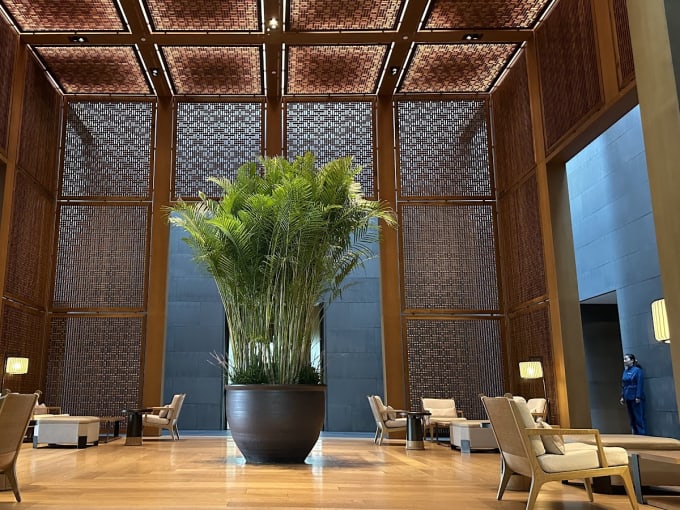
    Amanyangyun takes the lead for a simple reason. Few hotels in China articulate heritage, space, and discretion with such coherence. The address is in Shanghai, but its identity transcends the typical urban hotel. The name Aman already sets a clear service standard. Here, it is complemented by a project known for bringing together historic residences and a rare landscaped environment. For a national ranking, this cultural weight is as significant as comfort. Our advisors also note its ability to engage international travellers without losing its Chinese roots. It is neither a historic palace in the city centre nor a simple peripheral resort. It is precisely this uniqueness that makes the difference. The experience suits both an ambitious first trip and a more contemplative return to China. Remember, it is a complete destination address, with the strength of the Aman brand and a proposition that is hard to confuse.

  2. Aman Summer Palace, Beijing

    #2Aman Summer Palace

    Beijing · Imperial Beijing arrival

    Aman Summer Palace almost naturally asserts itself in a top Chinese ranking. Its decisive advantage lies in its location, adjacent to the Summer Palace in Beijing. Few five-star hotels can claim such a dialogue with an imperial site so well-known. The Aman brand reinforces this perspective, promising calm, measured service, and unostentatious aesthetics. For our teams, it is one of the most relevant options for experiencing Beijing beyond the major business hotels. The hotel appeals to both cultural travellers and those accustomed to international luxury. Its strength is not in being centrally located in the traditional sense. Its strength lies in offering an immediate connection to history and landscape. In a country where the five-star offering is vast, this heritage proximity makes a difference. My advice: choose it if your journey in China begins in Beijing and if you wish to set a strong tone for your stay from the outset.

  3. The Peninsula Shanghai, Shanghai

    #3The Peninsula Shanghai

    Shanghai · The Bund classic

    The Peninsula Shanghai deserves a podium place for its rare balance between international luxury and local grounding. The address on the Bund remains a major asset in a ranking dedicated to China. Shanghai is presented here in its most comprehensible form. The river, historical facades, and the energy of the centre create an immediately engaging backdrop. The Peninsula brand adds considerable trust capital, evoking a well-established service tradition in Asia without needing any showmanship. What our advisors observe is its consistency. For a first high-end stay in Shanghai, this choice is particularly reliable. The hotel meets several strong editorial criteria: an iconic address, a reference brand, and an urban location that is hard to dispute. It does not have the secluded character of an Aman. However, it perfectly expresses the grand metropolitan China, both refined and historical. This is what earns it this third place.

  4. Four Seasons Hotel Hangzhou at West Lake, Hangzhou

    #4Four Seasons Hotel Hangzhou at West Lake

    Hangzhou · Landscape and serenity

    Four Seasons Hotel Hangzhou at West Lake enters this top list due to a decisive criterion. Its connection to West Lake, one of the most famous landscapes in China. In a geographical ranking, this relationship to the location is immensely significant. It provides immediate depth to the experience. The Four Seasons signature offers a very clear interpretation: structured service, high standards, and generally reliable execution. The address thus achieves a valuable combination: a major cultural and scenic site, paired with a recognised global brand. Our advisors appreciate it for stays that seek more breathing space than display. Hangzhou may not have the symbolic power of Beijing or Shanghai. Yet, for some travellers, it better encapsulates a certain idea of classical China. This is precisely why this hotel deserves its place here. My advice: favour it for an itinerary that aims to balance metropolises with a more contemplative interlude, without sacrificing the setting of a grand five-star.

  5. Rosewood Hong Kong, Hong Kong

    #5Rosewood Hong Kong

    Hong Kong · Urban icon

    Rosewood Hong Kong naturally secures its place in this ranking due to its location in Hong Kong and the weight of the Rosewood brand. In the Chinese ultra-luxury landscape, it stands as a contemporary reference, particularly relevant for travellers favouring a major international city. Its editorial appeal also lies in its urban positioning, facing the waterfront of Kowloon, in a destination where prestigious hospitality remains a strong marker. Our advisors note a clientele that chooses it for both leisure stays and demanding business trips. The hotel speaks to those seeking a metropolitan, connected, and contemporary China. It also represents a different facet of Chinese luxury, less heritage-focused than some top-tier options, yet very coherent. In a national ranking, it deserves its place for its prominence, brand signature, and its anchoring in one of Asia's most competitive hotel scenes.

  6. The Ritz-Carlton Hong Kong, Hong Kong

    #6The Ritz-Carlton Hong Kong

    Hong Kong · Hong Kong classic

    The Ritz-Carlton Hong Kong deserves a high ranking due to a rare combination. The Ritz-Carlton brand remains a global signature of five-star excellence, and Hong Kong is a reference market. The address is particularly significant for its location within one of the most recognisable urban horizons in China. In a geographical ranking, this point carries weight. My advice is to view it as a reliable choice for travellers seeking an immediately comprehensible experience in a city where hotel execution is crucial. It is neither a retreat hotel nor a countryside address. It is a grand hotel of panoramic views, verticality, and metropolitan stays. What our advisors note is its relevance for a first high-end discovery of Hong Kong or for a well-structured short stay. Amidst dense local competition, it retains a genuine editorial strength. It embodies an international, spectacular China, perfectly aligned with the expectations of a five-star journey.

  7. The Peninsula Hong Kong, Hong Kong

    #7The Peninsula Hong Kong

    Hong Kong · Heritage address

    The Peninsula Hong Kong logically belongs in this selection for a simple reason. The Peninsula name is one of Asia's most historically significant signatures. In a ranking focused on China, Hong Kong remains central, and this address is one of its key landmarks. The fact that The Peninsula Shanghai is already ranked higher further reinforces the consistency of this brand presence. Here, the emphasis is on the name's deep heritage, its international recognition, and its role in the luxury travel imagination of the Far East. It appeals equally to regular visitors and first-timers. Our advisors note that it remains a reassuring choice for those seeking a grand classic hotel in a dense, fast-paced city. It does not compete with the more discreet retreats at the top of the rankings. It offers something different: continuity, a hotel memory, and a Hong Kong anchorage that fully justifies its presence here.

  8. Mandarin Oriental Wangfujing, Beijing, Beijing

    #8Mandarin Oriental Wangfujing, Beijing

    Beijing · Capital address

    Mandarin Oriental Wangfujing, Beijing deserves this rank for its balance between a major international brand and a central location in the Chinese capital. Beijing is indispensable in a national ranking, and Wangfujing is an immediately recognisable district for high-end travellers. The editorial interest of this hotel lies in its clarity of purpose. One knows exactly why to go there: to stay in the heart of a political, cultural, and historical city, with the standards of a recognised brand. Our advisors highlight its relevance for a first stay in Beijing, where location is as important as service level. The Mandarin Oriental brand provides a strong reference point without needing further embellishment. In this selection, the hotel represents the essence of major capital cities in China, offering a more urban experience than a contemplative one. It complements the top ranks already awarded to Shanghai and Hangzhou. Notably, it is a capital address, very clear in its positioning, and credible within a top five-star Chinese list.

  9. Waldorf Astoria Shanghai on the Bund, Shanghai

    #9Waldorf Astoria Shanghai on the Bund

    Shanghai · Bund landmark

    Waldorf Astoria Shanghai on the Bund earns its place for a simple reason. It embodies a grand international address in one of the country's most recognisable settings. Its location on the Bund is significant in a geographical ranking focused on China, placing the hotel directly alongside Shanghai's most iconic riverside. The Waldorf Astoria signature also provides an immediately identifiable service reference. This is a useful criterion when several excellent five-star hotels compete for the last spots. Our advisors particularly note the balance between urban heritage and contemporary comfort. The address appeals to both business travellers and those seeking discovery. It offers a very clear interpretation of Shanghai, between historic architecture and the Pudong skyline. In a national top ten, this ability to encapsulate a destination carries considerable weight. My advice: it is a particularly relevant choice for a first high-end stay in the metropolis.

  10. The Peninsula Beijing, Beijing

    #10The Peninsula Beijing

    Beijing · Beijing classic

    The Peninsula Beijing concludes this ranking with evident legitimacy. The Peninsula brand is among the most recognised in Asian luxury hospitality, a strong argument in a national selection. Beijing needed to maintain a strong presence beyond the already ranked Mandarin Oriental Wangfujing. This address offers another perspective on the capital: more institutional, more classic, yet still highly relevant for a discerning traveller. Its location in Beijing also enhances the balance of the rankings between Shanghai, Hong Kong, and the major cities of the continent. Our advisors observe that many travellers choose Peninsula for the consistency of service and the clarity of the experience. In a ranking of the best five-star hotels in China, this reliability is as important as the address's appeal. Here, the focus is less on spectacular gestures and more on a well-executed experience. This is precisely why it earns this tenth place.

Glossary

5-star hotel
Top hotel category. It indicates a high level of comfort, service, and facilities.
Boutique hotel
A smaller-scale hotel with a strong identity, often shaped by design or sense of place.
Destination spa
A spa that is a reason to stay. It goes beyond a simple supporting wellness facility.
Heritage property
A hotel set in a historic place or shaped by a clearly identifiable architectural heritage.
Resort
A property designed for on-site stays. It combines accommodation, dining, leisure, and often a spa.
Shikumen
A historic residential typology in Shanghai. It blends Chinese and Western influences.
Skyline view
An open view over towers and the urban silhouette. It matters greatly in major Chinese cities.

Going further

The right 5-star hotel in China depends on your route, your pace, and the kind of destination experience you want.

Frequently asked questions

How is this ranking of the best five-star hotels in China built?

It combines five-star status, service consistency, location, facilities, and real travel relevance in China.

What sets the selected hotels apart in China?

They stand out through service reliability, strong identity, and facilities that truly support a luxury stay.

What is the difference between a Palace and a five-star hotel in China?

In China, five-star is the main category, while Palace is a separate French distinction.

When is the best time to book a five-star hotel in China?

Book early for peak holidays, trade fairs, and top room categories in major Chinese cities.

What budget should I expect for a night in a top five-star hotel in China?

Rates vary widely by city, season, room type, and included benefits.

Are loyalty programs or direct-booking perks worth it?

Yes, loyalty programs and direct-booking perks can add value when rates remain competitive.

Does concierge service really make a difference in a five-star hotel in China?

Yes, strong concierge teams improve logistics, dining access, and overall trip efficiency.

Are these five-star hotels in China suitable for families and guests with reduced mobility?

Many are family-friendly, but accessibility features should always be confirmed case by case.

How do I book these Chinese five-star hotels through MyConciergeHotel.com, and why not use an OTA?

We help compare real value, room strategy, and flexibility beyond standard OTA listings.

Sources & references

This editorial article is based on the following authoritative sources, listed here for transparency and reader verification.

Encyclopaedias

Press of reference