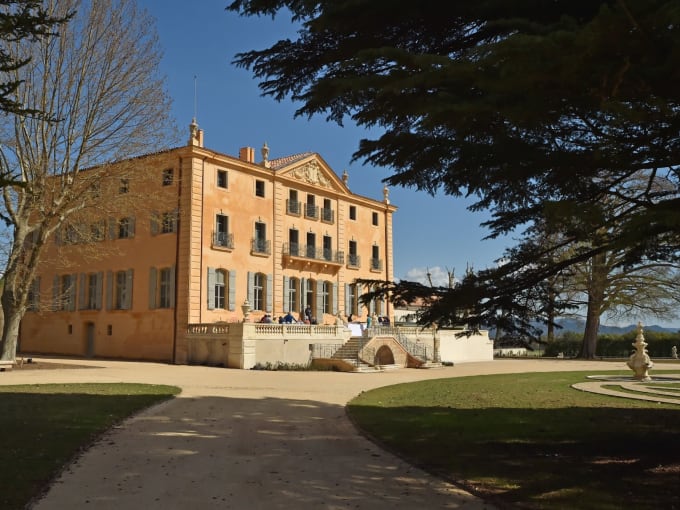
Provence holds a unique place in French hospitality. Few regions boast such a concentration of remarkable addresses within such a navigable territory. In just a few kilometres, travellers can journey from the hills of Aix-en-Provence to the perched villages of the Luberon. They can then reach the Alpilles, Arles, or the mineral landscapes of Les Baux-de-Provence. This density creates a subtle yet real competition among characterful establishments, allowing for a rare variety of experiences. Airelles Gordes, La Bastide, Villa Gallici, and Villa La Coste embody three very different visions of a Provençal stay. Alongside them, Baumanière Les Baux-de-Provence, Château de Fonscolombe, and Domaine de Manville demonstrate that in Provence, luxury is defined as much by the location as by the pace of life.
To establish this ranking, we first consider tangible criteria. The Palace status from Atout France matters, as it signifies a controlled level of service. Brand positioning also carries weight when it is backed by an established reputation. We then assess the quality of the location. An address in Gordes, Les Baux-de-Provence, or Saint-Rémy-de-Provence tells a different story of Provence. Architecture, decorative coherence, and the ability to create a complete experience are also taken into account. Finally, we evaluate the relevance of the stay according to various uses: a cultural escape in Aix-en-Provence, a discreet retreat in the Luberon, a wellness break in the Alpilles, or a more contemplative stay centred around art and wine. This ranking does not reward a single style; rather, it ranks well-rounded hotel offerings.
The Provençal panorama presented here is particularly broad. Some hotels are rooted in a heritage logic. Château de Fonscolombe, Hôtel Château des Alpilles, and Le Prieuré Baumanière speak of history, gardens, and local anchorage. Others prioritise urban intimacy. Villa Gallici, Hotel Le Pigonnet, Château de la Gaude, and Hôtel Particulier cater to a demand for cultured city breaks, where both the address and the destination are sought. Conversely, Villa La Coste and Domaine de Manville focus on space, breathing room, and the immediate environment. Les Bories & Spa, Le Saint Rémy & Spa, Le Vallon de Valrugues & Spa, and Hôtel de Tourrel illustrate yet more nuances. Between village refuge, wellness hotel, charming house, and discreet resort, Provence defies overly simplistic categories.
For 2025 and 2026, several trends are emerging in this region. The first concerns the relationship with time. Stays are sometimes shorter, yet they become more intentional. Travellers seek fewer stacked activities and more meaning. They look for a hotel capable of organising an entire day without distraction. The second trend relates to anchorage. Décor alone is no longer sufficient. Clients expect a precise interpretation of the territory, its landscapes, materials, and uses. Finally, wellness is evolving. It is no longer limited to the spa; it encompasses silence, light, the size of the hotel, access to nature, and the fluidity of service. What our advisors observe is clear: in Provence, the most compelling establishments are those that know how to slow down without boring.
When well interpreted, Provençal luxury is anything but ostentatious. It rests on a form of accuracy. A beautiful arrival matters, but it is not enough. What truly stands out is the harmony between the building, the landscape, and the way the spaces are inhabited. In this region, light reveals everything. It highlights the golden stones, cypress trees, terraces, and gardens, while also exposing inconsistencies. The best hotels in Provence understand this demand. They cultivate a sense of obviousness rather than effect. My advice is simple: observe how a house accompanies the day. Breakfast, the temperature of the spaces, the flow between indoors and outdoors, the quality of rest, and the relationship to the village or estate are often where the difference lies between a fine address and a memorable one.
This ranking should also be read methodically. A number one is not a universal verdict. Each hotel responds to a specific desire. Some travellers seek views and grandeur, while others prioritise proximity to a historic centre. Some look for a destination house where they willingly stay for several nights, while others prefer an elegant base from which to explore. Thus, we do not rank interchangeable hotels; we organise distinct experiences based on their level of execution, coherence, and ability to represent contemporary Provence. This explains why a Palace may sit alongside a large non-Palace establishment, as well as the presence of more confidential addresses. It is also important to note that no establishment here should be chosen by reflex. The right hotel is the one that corresponds to your vision of Provence.
The top 10 that follows distinguishes the addresses we consider the most accomplished today. Some excel due to their location, others due to their consistency, and still others due to their personality. Together, they outline a precise, cultured, and very contemporary hotel scene in Provence.