Our criteria for ranking mountain hotels in Provence
We rank Provence mountain hotels by landscape, access, service, wellness, dining, and sense of place, not by altitude alone.
Mountain travel trends 2025-2026 in Provence
Mountain stays in Provence are shifting toward four-season, wellness-led, shorter escapes with a strong sense of place.
Questions about this section
What mountain travel trends for 2025-2026 matter when choosing a Provence hotel?
Travelers increasingly favor shorter, better-curated stays centered on nature, wellness, and easy logistics.
Why Provence’s mountain hotels form a distinct segment
Provence’s mountain hotels are best understood as elegant exploration bases, not only scenic retreats.
Dining, terroir and mountain produce
In Provençal mountain hotels, the table often matters as much as the view.
Questions about this section
Why does gastronomy matter so much in a Provence mountain stay?
Dining often shapes the whole stay, making culinary coherence a key differentiator between comparable hotels.
Spa, Recovery and Well-being in the Mountains
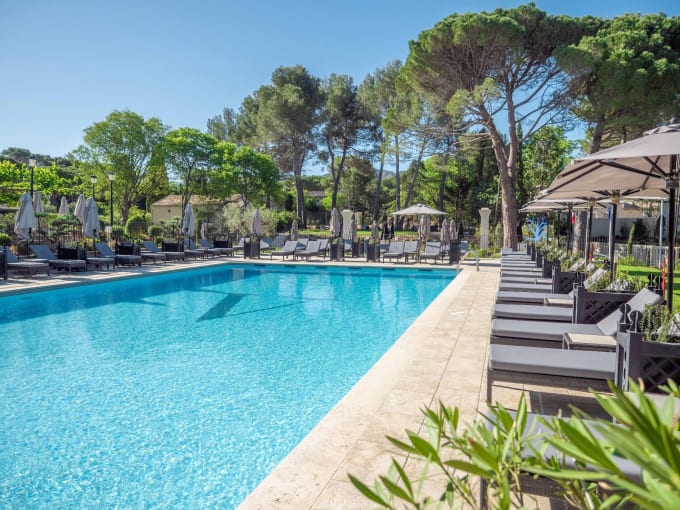
In the Provençal mountains, the spa is no longer just an added extra. It often plays a crucial role in the final choice, especially when snow is no longer the main attraction. After a hike, a cycling excursion, or a day of scenic driving, travellers seek a genuine recovery space. An indoor pool, heated pool, treatment room, hammam, or simply a calming view from a relaxation area become decisive criteria. It is important to note that in this segment, well-being is as significant as location. Our advisors frequently observe this outside school holidays. The stay is then built around the body's rhythm, not just the landscape.
What we first consider is the coherence between altitude, relative isolation, and the quality of facilities. A convincing mountain spa is not limited to a massage menu. It should extend the territory. Natural light, understated materials, fluid circulation between water, heat, and rest, and flexible hours that accommodate excursion returns are all essential. A pool with a view can make a difference, but only if the experience follows suit. Water temperature, genuine tranquillity, and the venue's capacity to accommodate multiple uses throughout the day distinguish the best addresses. My advice: prioritise hotels where well-being is evident year-round. This is often where the hotel investment has been thoughtfully planned for the long term.
We also compare recovery in a broader sense. In high-altitude Provence, guests alternate between walking, trail running, cycling, and skiing depending on the area and season. The ideal spa must therefore meet concrete needs: muscle relaxation, sleep, digital disconnection, and gentle recovery after exertion. The most relevant establishments are those that articulate several phases. A moment in water, a targeted treatment, followed by a truly quiet resting space. This continuity weighs more than a long list of services. What our advisors observe is that many travellers now use the spa as the pivot of their stay. They schedule their day around a treatment in the late afternoon or choose a venue specifically to secure this recovery interlude.
Atmosphere is just as important as equipment. In the Provençal mountains, the expected well-being is not that of a large urban resort. Travellers seek a form of retreat. They want to feel the disconnection from the plains, the noise, and the tight schedules. This involves well-proportioned spaces, soft lighting, open views, and a sense of refuge without confinement. A successful spa should accompany this transition. It must neither overplay luxury nor fall into austerity. The balance is subtle. When it is just right, the stay gains in depth. Guests are more inclined to remain at the hotel during the off-season. They book an extra night. They may even accept mediocre weather because the venue offers a genuine quality of retreat.
Finally, we pay particular attention to the clarity of the offering. In this category, vague promises quickly disappoint. We value hotels that clearly present their spaces, hours, treatments, and actual access to facilities. This is a straightforward yet decisive point. A spa can appear elegant on paper but be frustrating in practice. Conversely, a more concise offering can prove very effective if well executed. Our perspective is therefore pragmatic. In the mountains of Provence, the best well-being is not necessarily the most ostentatious. It is the one that complements the terrain, supports recovery, and encourages a slower pace. Outside the winter season, this criterion can even shift the entire ranking.
The best mountain hotels for couples
Ideal for couples, Provence’s mountain hotels work best when privacy, views, generous suites, and an unhurried pace come together.
Value for experience: what really matters
Value here is not about price alone, but about the balance between setting, service, comfort, dining and easy access to the mountain experience.
Our final take on mountain hotels in Provence
Choose the hotel that matches your pace first, then your priorities: nature, dining, spa, or active exploration.