History & heritage
In Aix-en-Provence, some addresses are defined less by spectacle than by continuity. Le Pigonnet belongs to that rare category of hotels whose appeal rests as much on the memory of the place as on the comfort of the present stay. Its identity is rooted in a recognisably Provençal tradition: measured proportions, an essential relationship with the garden, omnipresent light, and that distinctly Aixois balance between bourgeois elegance and southern ease, never tipping into excess. Here, luxury is not expressed through display, but through permanence: a house settled into its landscape, close to town yet sheltered from its immediate bustle.
The Provençal architecture noted among the hotel’s defining features is not merely decorative. It shapes the experience. The façades, openings, circulation towards the outdoors and the importance given to the gardens all speak of a southern way of inhabiting space, where life unfolds as much outside as within, where shade matters as much as sun, and where the rhythm of a stay is set by gentle transitions between terrace, lounge, tree-lined paths and bedroom. This organic relationship with climate and landscape gives the hotel a very different presence from that of a conventional urban luxury property. One does not come here simply to sleep in Aix, but to settle into an enclave that extends the spirit of the city.
Aix-en-Provence itself offers a particularly rich cultural backdrop. Former capital of Provence, a city of townhouses, fountains, markets and studios, it has long cultivated an art of living based on conversation, strolling and a taste for fine proportions. Le Pigonnet naturally enters into dialogue with that heritage. Its proximity to the centre allows guests to reach the city’s cultural and architectural life easily, then return to a more hushed environment, almost domestic in atmosphere. Much of the address’s deeper appeal lies in that movement between urban intensity and garden retreat.
Its membership of Small Luxury Hotels of the World also helps clarify its place within the hospitality landscape. The affiliation suggests a certain scale, a sense of individuality and a focus on experience rather than standardisation. For the traveller, this translates less into a prescribed style than into a promise of character: a place that retains its own personality, pace and way of welcoming. In a destination as sought-after as Aix-en-Provence, that distinction matters.
Le Pigonnet can therefore be read as an address of transmission rather than rupture. One finds here enduring codes of French hospitality — discreet service, the importance of setting, attention to everyday detail — in a southern version that feels brighter, more open and more breathable. The heritage of the place is not frozen into a museum-like narrative; it is felt in the overall coherence, in the balance between refinement and simplicity, and in the convincing impression of being received in a house of character that has, over time, found its proper measure.
The Establishment
The primary asset of Le Pigonnet lies in a rare equation: remaining close to the centre of Aix-en-Provence while offering a genuine retreat. One can explore the city on foot or within a few minutes, then return to an environment dominated by greenery. In Aix, this breathing space is essential. The city unfolds in motion, and its charm is heightened when it culminates in a tranquil garden, far from the density of the historic streets.
The lush gardens are much more than a mere enhancement; they form the true stage of the location. In the South of France, a garden regulates the temperature, filters the views, and creates sanctuaries. At Le Pigonnet, this presence of nature adds a unique texture to the stay. One transitions from one atmosphere to another, from a pathway to a terrace, from a shaded corner to a more open vista. This landscape composition reinforces the sense of intimacy.
The swimming pool, nestled at the heart of the gardens, extends this philosophy. It fits seamlessly into a coherent ensemble. Guests come to swim, but also to slow down, read, or take a break between outings. In a destination where sunny days abound, such a space alters the rhythm of the stay, making the experience more flexible and Mediterranean.
The Provençal architecture of the establishment contributes to this coherence. It provides a clear framework, free from pastiche, where materials, volumes, and the relationship with the outdoors follow a local logic. This type of architecture is particularly suited to an urban resort hotel, adding depth to the place without overwhelming it. Le Pigonnet appears to belong to its surroundings rather than merely overlaying them.
The overall atmosphere is refined without being intimidating. The communal spaces invite a tranquil appropriation rather than a staged performance. One can stay here as a couple, with family, or for business without feeling out of place. This versatility often indicates that a hotel is well thought out.
Finally, its affiliation with Small Luxury Hotels of the World confirms this interpretation. Le Pigonnet is experienced as a characterful address, intimate in its feel. Guests seek a more personal experience here, with the impression of finding in Aix a place they wish to return to.
Rooms and Suites
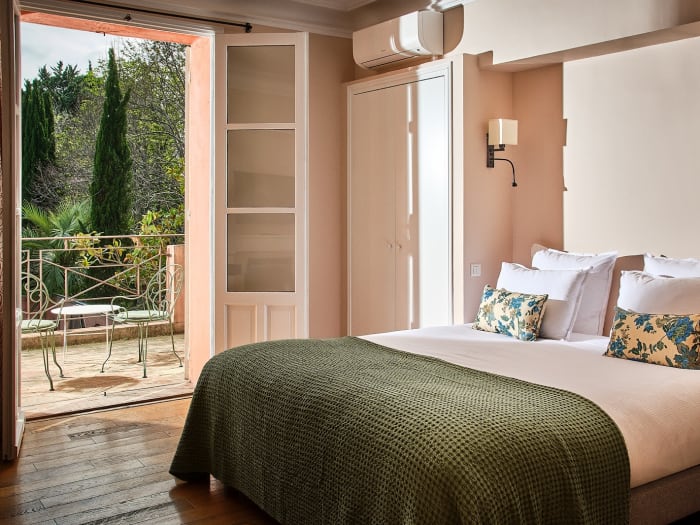
At Le Pigonnet, the room extends the experience of your stay. Gardens, proximity to the city, Provençal architecture, and an intimate atmosphere call for coherent private spaces.
Here, one expects rooms and suites that combine the comfort of a five-star hotel with the character of a distinctive address. These spaces are designed to immerse the traveller in a specific ambiance.
The carefully curated décor suggests a focus on materials, tones, and the clarity of spaces. Brightness takes precedence over ostentation.
Light palettes, pleasant textiles, measured furniture, and decorative touches root the rooms in their territory. The overall effect remains restful, which is their essential function.
The relationship with the garden plays a significant role in the perception of the accommodations. The hotel offers views, openings, and transitions to the outside.
In the Aix climate, this permeability between indoors and outdoors is crucial. Morning light, an open window onto the greenery, and the evening's coolness shape the memory of the stay.
This quality of habitation meets diverse expectations. Couples seek an atmosphere conducive to slowing down and conversation.
Business travellers appreciate the tranquillity, a well-organised space, and reliable service. Families value safety and the flexibility of their stay.
Le Pigonnet caters to this plurality without losing its identity. Comfort also lies in what is not immediately visible.
The quality of bedding, rigorous daily maintenance, turn-down service, staff discretion, and the smooth handling of simple requests form a solid service foundation.
Staying at Le Pigonnet means choosing a balanced travel rhythm. Enjoy Aix, then return in the evening to a peaceful interior, in harmony with the spirit of the place.
Dining
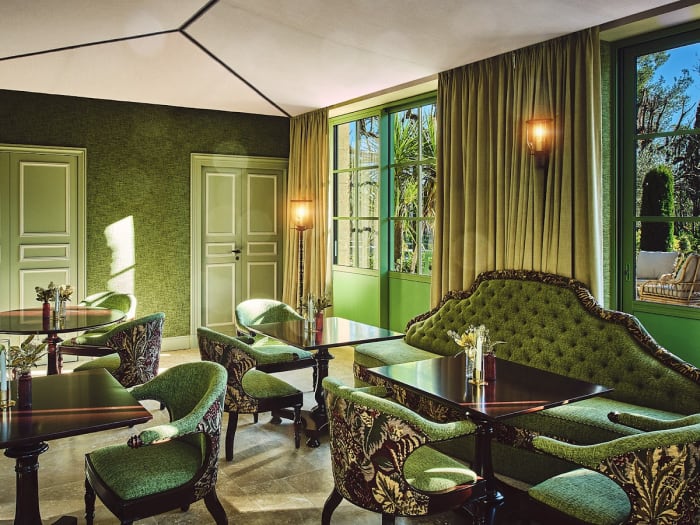
In Aix-en-Provence, dining belongs to the cultural landscape as much as to the hotel stay. One does not eat merely to be fed; one enters into a rhythm, a light, a way of sharing time. In a property such as Le Pigonnet, that dimension naturally takes on importance. Even without making overly precise claims in the absence of a full culinary brief, one can say that the hotel is particularly well suited to a dining experience shaped by setting, season and continuity with the gardens. The greenery, Provençal architecture and intimate atmosphere call for a table that favours clarity of flavour and the pleasure of lingering.
Breakfast, in this kind of address, is often one of the most revealing moments. In Aix, it is best lived as a gradual beginning to the day: coffee taken without haste, pastries or breads still warm, fruit, well-chosen simple products, and that privileged relationship to the terrace or morning light which immediately alters one’s perception of the stay. When a hotel has gardens as present as those of Le Pigonnet, the first meal of the day becomes more than a service: it is a quiet scene of observation, a moment of reset before the city, museums, markets or Provençal roads.
Lunch and dinner also find particularly favourable ground here. The proximity of central Aix naturally offers many options outside, but that is precisely why a hotel restaurant must offer more than convenience. It must make one want to stay. In a place like Le Pigonnet, that desire often begins with the setting: lunch in the shade, dinner in a more hushed atmosphere, extending the evening without interruption after an apéritif or a walk through the gardens. Contemporary luxury, especially in the South, often lies in that fluidity. Being able to decide at the last minute to remain on site because the atmosphere invites it is a genuine comfort.
One readily imagines a cuisine in affinity with its surroundings, attentive to seasonality and the Provençal spirit without reducing itself to a folkloric reading of terroir. The best hotel gastronomy in this region often consists in working with recognisable products, respecting texture, allowing freshness to speak, while delivering the precision of service expected in a five-star property. International travellers find an accurate introduction to local culture; those already familiar with Provence appreciate the avoidance of heavy-handed clichés.
Conviviality also plays a central role. In a house with an intimate atmosphere, dining spaces can become natural extensions of the stay: a morning rendezvous before exploring the city, a light pause after the pool, a peaceful dinner after a full day, a drink taken in calm surroundings rather than in the bustle of the centre. These uses matter as much as the menu itself. They shape a complete hospitality in which dining is not isolated from the rest of the experience but integrated into the life of the place.
For travellers who like to alternate between outward discovery and moments of retreat, Le Pigonnet offers a particularly convincing setting. One can go out to taste Aix through its cafés, markets and central addresses, then return to a hotel table that extends the same art of living in a calmer, more enveloping, more garden-oriented register.
Pool, Relaxation & Well-being
At Le Pigonnet, well-being is primarily expressed through the setting, the rhythm, and the quality of the outdoor spaces. The pool, nestled in the heart of the gardens, serves as its natural centre. It embodies a Mediterranean sense of wellness, grounded in the rediscovery of time, light, shade, water, and a relative calm.
In Aix-en-Provence, where days are often spent walking, visiting, or leisurely enjoying a terrace, having a place to unwind upon returning transforms the stay. The pool is not only enjoyable in summer; it becomes a point of equilibrium. One can start the day early, before the heat sets in, or return in the late afternoon when the light softens.
The lush gardens play a crucial role here. Their presence alters the perception of time. One tends to read longer, observe more, and more readily embrace the art of doing nothing. Le Pigonnet allows guests to fully experience Aix, then retreat into tranquility. This calm can take the form of a leisurely stroll, a moment by the water, or a pause in the shade.
The service also contributes to this relaxation. With a reception open 24/7, concierge services, attentive daily maintenance, and turndown service, every detail enhances the stay. This discreet comfort supports rest just as much as the visible amenities do.
For couples, the experience lends itself to a gentle disconnection. For business travellers, it offers a useful counterpoint to the pace of meetings. For families, it provides a simple respite without complex logistics.
Le Pigonnet thus offers a form of relaxation that aligns with its identity. Well-being here hinges on the ability to live outdoors, to adjust one’s time, to enjoy a pool in a genuine garden, and to return each evening to a peaceful atmosphere.
Concierge & Services
In the luxury hotel sector, the most appreciated services often know how to remain in the background. They make the stay smoother, lighter, and more secure. Le Pigonnet is part of this tradition of discreet service, where efficiency is as important as courtesy. A 24-hour concierge, a 24-hour reception, daily housekeeping, turn-down service, luggage storage, laundry, wake-up calls, and multilingual staff create a particularly robust offering.
The continuously open reception provides genuine flexibility. Being able to arrive late, depart early, or request assistance at any hour brings a welcome peace of mind. In a five-star establishment, this availability is essential.
The 24-hour concierge adds a more personalised dimension. Organising a transfer, recommending an itinerary, directing guests to a market, facilitating a reservation, or suggesting an excursion becomes simpler. Even without constantly engaging the team, knowing that local expertise is accessible changes the way one travels.
Daily housekeeping and turn-down service reflect that invisible quality that distinguishes good addresses. A room maintained regularly and then prepared in the evening alters the sensation of comfort. After a day outdoors, returning to a clean and serene space is restorative.
Luggage storage and laundry services cater to very practical needs. They allow for optimising arrival and departure days, travelling lighter, and extending a stroll without constraints. For a multi-night stay, these services make a real difference.
The multilingual staff also deserves special mention. In an international destination, this welcoming ability facilitates exchanges, refines recommendations, and immediately establishes a relationship of trust.
The services at Le Pigonnet thus embody a clear philosophy: to support without overwhelming, to anticipate without rigidifying, and to make the stay simpler. A grand hotel is not just a well-decorated place; it is also a place where everything becomes easier.
The Aix-en-Provence art of living
Staying at Le Pigonnet also means choosing a certain way of entering Aix-en-Provence. The city cannot be reduced to a list of monuments or a heritage itinerary; it is discovered in layers, through the detail of façades, the rhythm of its squares, the shade of its plane trees, the sound of its markets and the presence of water in its fountains. Its art of living lies in that rare alliance between cultural density and everyday softness. One may spend an entire morning walking without a precise goal, simply observing the light on pale stone, then settle on a terrace as though time had lost its urgency. Le Pigonnet, through its proximity to the centre and its atmosphere of retreat, offers an ideal base from which to experience the city in a nuanced way.
Aix is a destination that rewards attentive travellers. The local markets mentioned in the Concierge’s tip are an excellent example. They provide access not only to regional produce, but to a sociability, a cadence, a way of composing one’s view of contemporary Provence. Wandering between stalls, observing colours, smelling herbs, choosing a few local specialities to take home or simply taking the pulse of the city forms an integral part of the stay. For many, such moments matter as much as more formal visits.
The proximity of the centre also makes it easy to explore Aix’s heritage: old streets, townhouses, lively squares, cultural institutions, historic cafés and discreet boutiques. The city lends itself particularly well to walking, which remains perhaps the best way to grasp its proportions. One moves from fountain to fountain, from perspective to perspective, with that very particular sensation of a city that is both learned and inhabited. Unlike certain museum-like destinations, Aix retains a genuine everyday life, which makes the experience richer.
From the hotel, it is equally easy to imagine escapes into the surrounding Provence. Aix functions as a gateway to countryside landscapes, villages, roads lined with vines or olive trees, and more broadly to a southern geography in which distance is measured less in kilometres than in changes of atmosphere. This is one of the great pleasures of a stay here: being able to alternate an urban morning, a leisurely lunch, an afternoon excursion, then a return to Le Pigonnet’s gardens at day’s end.
The hotel accompanies this art of living without fixing it into a formula. It does not seek to compete with Aix, but to offer a calmer, more enveloping translation of it. One sets out in the morning towards the activity of the centre, then returns to a setting that restores space, quiet and freshness. This alternation is perhaps the key to a successful stay in the region. It prevents saturation and allows full enjoyment of what the city does best: its culture, certainly, but also its ability to make ordinary hours feel desirable.
For couples, Aix becomes the backdrop to an escape made of walks, late lunches and returns to the hotel as the light fades. For families, it offers a balance between discovery and rest. For business travellers, it transforms a trip into something more inhabited.
Book with MyConciergeHotel
Booking Le Pigonnet through MyConciergeHotel means choosing more than a room in Aix-en-Provence: it means shaping a stay with an editorial understanding of the property and guidance designed to draw the best from it. In a destination as appealing as Aix, the choice of hotel strongly conditions the overall experience. A property close to the centre, surrounded by lush gardens, with a pool integrated into the landscape and an intimate atmosphere is lived very differently from a purely urban hotel or a more remote retreat. Our role is precisely to help determine whether Le Pigonnet matches your travel rhythm, comfort expectations and way of experiencing Provence.
For a weekend for two, the hotel offers a particularly convincing combination: easy access to walks in town, a return to calm surroundings, the possibility of enjoying the gardens and pool, reassuring 24-hour service, and a setting suited to an elegant break without stiffness. For a longer stay, it becomes a strategic base from which to alternate between Aix and its surroundings. For a business trip, it offers the rare quality of a hotel able to combine operational efficiency with a genuine sense of decompression. For a family, it provides a balance between practical proximity and breathing space.
Booking with MyConciergeHotel allows these nuances to be considered in advance. Depending on the season, the appeal of the stay will not be exactly the same. Fine weather naturally highlights the gardens, pool and outdoor life, while quieter periods may appeal to travellers seeking an Aix that feels calmer, more cultural and less pressured. We can help identify the best time to travel according to your priorities: urban strolling, on-site relaxation, excursions in the region, or a combination of several uses.
Our approach also values what does not always appear in a simple technical sheet. A hotel that is a member of Small Luxury Hotels of the World, with a clearly defined Provençal identity, is not chosen solely for its five-star rating. It is chosen for an atmosphere, a relationship to the garden, a scale, a way of making town life and rest converse. That coherence is what we seek to highlight.
In practical terms, booking through MyConciergeHotel also means having an interlocutor able to contextualise your stay: which room type may suit your programme best, ideal length of stay, organisation of arrivals and departures, and advice on enjoying local markets, the historic centre and moments of relaxation at the hotel. This editorial and practical mediation often makes the difference between a good stay and one that feels perfectly calibrated.
Le Pigonnet speaks to travellers who want Aix-en-Provence without giving up space, greenery and a certain serenity. It is an address of accuracy rather than effect.