


Ce que ces hôtels partagent
À Fès, les cinq adresses retenues se jugent d’abord sur leur capacité à rendre la ville praticable.
Le premier point commun est la localisation utile. Riad Fès - Relais & Châteaux, Riad El Amine et Riad Dar Lys jouent l’avantage de Fès el-Bali. Bab Bou Jeloud reste un repère concret à pied. Les médersas, les souks et les ateliers se rejoignent sans voiture. En contrepartie, l’arrivée demande une logistique plus précise. Depuis l’aéroport de Fès-Saïss, il faut compter environ 17 km jusqu’à Fès el-Jdid. Pour un riad dans la médina, le dernier segment varie selon l’accès voiture. Hotel Sahrai et Palais Faraj offrent une lecture différente. Les abords du palais royal simplifient les transferts. Le dépose-minute y est souvent plus direct. Pour une arrivée tardive ou avec plusieurs valises, ce détail change réellement le séjour.
Le deuxième point commun concerne la cohérence du bâti et du service. À Fès, un beau patio ne suffit pas. Il faut regarder la circulation intérieure, les marches, l’acoustique et la facilité du petit-déjeuner matinal. Riad Fès - Relais & Châteaux apporte un repère lisible grâce à son appartenance Relais & Châteaux. Hotel Sahrai s’inscrit dans un registre hôtelier plus contemporain. Cette différence compte pour la constance de service. Palais Faraj se situe entre les deux logiques. Il combine un cadre historique et une exploitation plus structurée qu’un petit riad. Riad Dar Lys et Riad El Amine demandent plus d’attention sur la catégorie exacte. À Fès, deux chambres d’un même riad peuvent offrir des volumes très différents. L’écart de confort se joue parfois sur 8 à 15 m².
Le troisième point commun est la lisibilité du niveau annoncé. Quand un classement officiel existe, il sert de repère. Quand une affiliation reconnue existe, elle compte aussi. Dans cette sélection, la fiabilité passe moins par le discours que par des indices vérifiables. Un restaurant sur place, une piscine réellement exploitable et un accès voiture clair restent des critères décisifs. Côté budget, l’ordre de grandeur aide à situer les maisons. Riad El Amine et Riad Dar Lys se voient souvent entre 180 et 320 € TTC. Palais Faraj se situe souvent entre 260 et 420 € TTC. Hotel Sahrai et Riad Fès - Relais & Châteaux montent plus souvent entre 320 et 550 € TTC selon saison. La vraie différence apparaît alors dans le choix du rythme de séjour, ce qui conduit à la bonne méthode de sélection.
Quand réserver à Fès
À Fès, la bonne fenêtre de réservation dépend autant du climat que de la structure tarifaire des riads.
Le printemps reste souvent la période la plus simple à vendre comme à vivre. Entre mars et mai, les températures permettent de marcher longtemps dans Fès el-Bali. C’est un point décisif. La médina se parcourt surtout à pied. Sur cette période, les terrasses et patios reprennent un vrai usage. Les prix montent en conséquence. Pour une très bonne adresse à Fès, les tarifs démarrent souvent autour de 180 à 220 € TTC en basse saison. Au printemps, les mêmes catégories passent plus souvent entre 260 et 380 € TTC. Riad Fès - Relais & Châteaux et Hotel Sahrai se tendent vite sur les week-ends. Une réservation 45 à 75 jours avant l’arrivée reste prudente.
L’été demande une lecture différente. La chaleur peut peser dès la fin de matinée. L’intérêt d’un hôtel avec piscine devient alors concret. Hotel Sahrai et Palais Faraj prennent ici un avantage clair. Le retour à l’hôtel en milieu d’après-midi y est plus rationnel. Dans un riad, il faut vérifier l’exposition et la ventilation de la chambre. Ce point compte pour Riad Dar Lys et Riad El Amine. La catégorie de chambre et l’étage changent le confort réel. En juillet et août, certains voyageurs obtiennent pourtant de meilleurs prix. Une chambre peut redescendre vers 200 à 300 € TTC selon l’adresse. Le compromis porte alors sur la chaleur, pas sur la qualité.
L’automne fonctionne bien, surtout entre fin septembre et novembre. Les températures redeviennent favorables aux visites longues. Les hôtels gardent souvent une bonne disponibilité hors vacances scolaires. L’hiver, de décembre à février, peut surprendre. Les journées restent agréables, mais les nuits sont fraîches. Dans un riad historique, le chauffage et l’isolation deviennent des sujets concrets. Il faut demander le mode de chauffage avant confirmation. Il faut aussi vérifier si la piscine est chauffée. À Fès, ces détails évitent les déceptions. Une fois la saison fixée, la différence se joue dans la préparation opérationnelle du séjour.
Le conseil opérationnel à Fès
À Fès, la fluidité du séjour se décide souvent avant l’arrivée, bien plus qu’au moment du check-in.
Le point clé concerne le dernier kilomètre. Dans Fès el-Bali, le chauffeur ne dépose pas toujours devant la porte. Il faut donc demander un point de rendez-vous précis. Il faut aussi demander le nom de la porte d’accès. Bab Bou Jeloud, Rcif ou un autre accès changent le temps de marche. Avec deux valises, cinq minutes deviennent vite quinze. Pour Riad Fès - Relais & Châteaux, Riad Dar Lys ou Riad El Amine, cette précision est essentielle. Le bon message contient trois éléments. Heure d’arrivée, numéro du vol et point de dépose confirmé. Quand le riad propose un porteur, il faut le fixer avant le départ. Le coût reste souvent modeste face au confort gagné.
Le deuxième levier concerne la chambre elle-même. À Fès, la meilleure catégorie n’est pas toujours la plus chère sur le papier. Il faut demander une chambre calme, loin de la cuisine et du patio principal. Il faut aussi demander l’étage exact. Dans un riad, le rez-de-chaussée peut être plus sonore. Une chambre haute peut offrir plus de lumière, mais aussi plus de marches. Pour un séjour de deux nuits, mieux vaut payer 40 à 80 € TTC de plus. Corriger un mauvais placement sur place coûte souvent davantage. Cette logique vaut aussi pour Hotel Sahrai et Palais Faraj. Une chambre mal orientée ou trop proche des circulations change le repos.
Le troisième levier concerne l’organisation des visites. À Fès, une journée trop dense fatigue vite. Il est préférable de réserver un guide officiel pour une demi-journée. Quatre heures suffisent souvent pour une première lecture de la médina. Il faut fixer le point de retour avant le départ. Il faut aussi prévoir un déjeuner léger. Un programme trop serré use le séjour. Pour deux nuits, la formule la plus solide reste simple. Arrivée calme le premier jour, médina le lendemain matin, puis temps libre l’après-midi. C’est souvent la meilleure manière d’utiliser Hotel Sahrai, Palais Faraj ou un riad central. Le bon hôtel fait alors son travail, sans friction inutile.

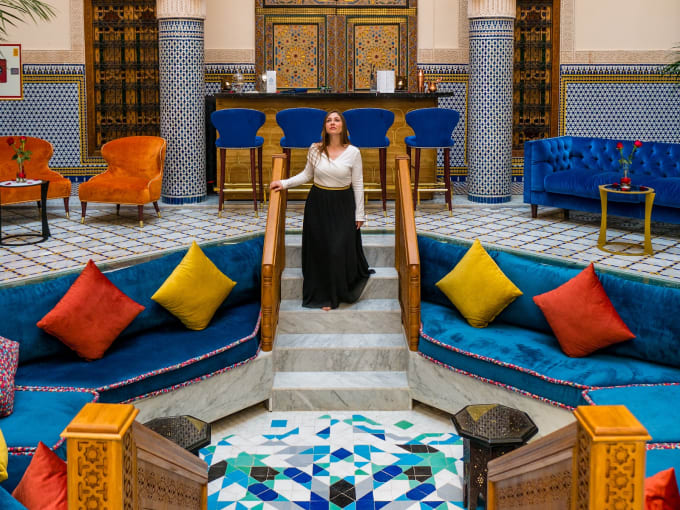

Comment choisir selon le séjour
À Fès, le bon hôtel dépend moins du prestige affiché que du programme réel sur deux ou trois jours.
Pour un premier séjour centré sur la médina, la logique la plus simple reste un riad bien placé dans Fès el-Bali. Riad Fès - Relais & Châteaux convient bien à ce scénario. L’adresse permet de rester proche des visites majeures. Bab Bou Jeloud sert de repère concret. Le gain se mesure en temps à pied. Sur deux nuits, éviter 20 à 30 minutes de transfert interne change le rythme. Riad Dar Lys peut aussi fonctionner pour un couple qui privilégie l’ambiance d’une maison restaurée. Riad El Amine peut convenir à un budget plus contenu. L’ordre de grandeur se situe souvent entre 180 et 280 € TTC. Dans ce segment, il faut arbitrer entre charme du bâti et contraintes réelles. Les marches, l’accès bagages et la taille de chambre comptent beaucoup.
Pour un voyageur affaires, ou pour une arrivée tardive, la logique change. Hotel Sahrai devient souvent plus cohérent. Les accès voiture sont plus simples. Le départ matinal vers l’aéroport de Fès-Saïss se gère mieux. Il faut compter environ 25 à 35 minutes selon trafic. La présence d’espaces communs plus lisibles aide aussi. Un dîner sur place la première nuit évite de reconfigurer toute la soirée. Palais Faraj peut jouer ce rôle si l’objectif reste un cadre historique avec une logistique plus fluide. Pour un couple qui veut alterner visites et temps à l’hôtel, cette option tient bien. Les tarifs observés se placent souvent entre 260 et 420 € TTC.
Pour un anniversaire, un court séjour gastronomique ou une parenthèse plus posée, deux approches se distinguent. Riad Fès - Relais & Châteaux apporte un repère d’adresse reconnue. Hotel Sahrai propose un registre plus contemporain. Le choix dépend alors de la relation souhaitée à la ville. Dormir dans la médina intensifie l’expérience historique. Dormir près de Fès el-Jdid facilite les retours et les départs. Pour deux nuits, mieux vaut viser la bonne zone que surpayer une suite mal placée. Pour trois nuits ou plus, la hiérarchie peut s’inverser. Le moment du voyage pèse alors presque autant que l’adresse choisie.