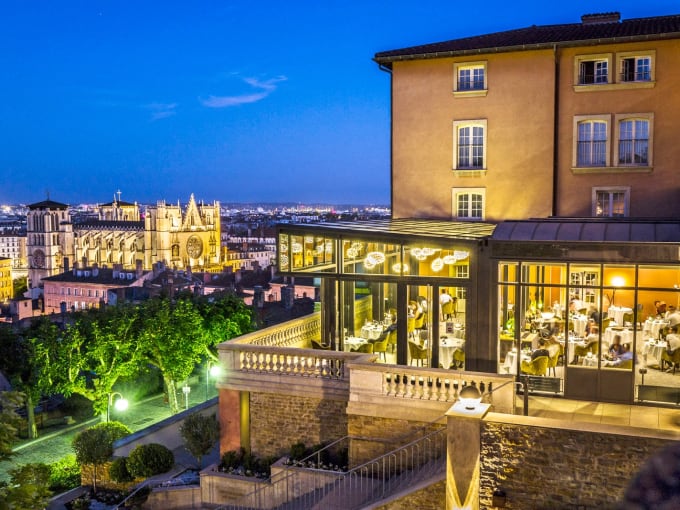
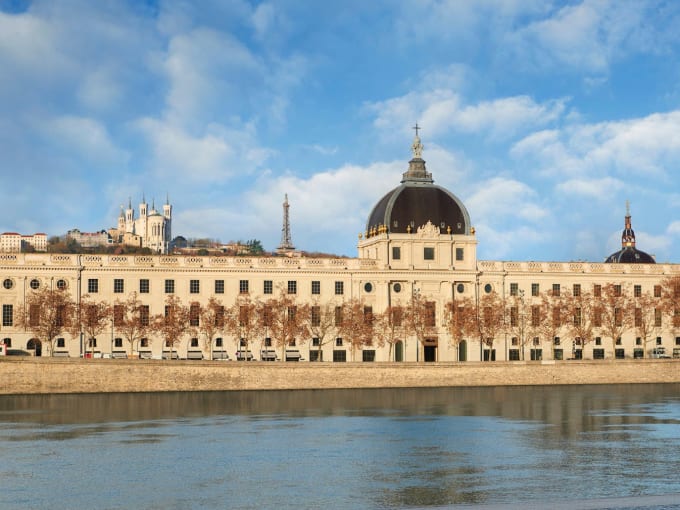
In Lyon, a charming hotel is more than just a pretty address; it engages with a city of layers, hills, and rivers. Here, heritage is never a mere backdrop; it shapes the experience, from Vieux Lyon to the slopes of Fourvière, and onto the reinvented quays. This is what makes this segment particularly intriguing. The traveller seeks not only a well-designed room but also a deeper understanding of a UNESCO-listed city, a feeling for its rhythms, and a return to a human-sized establishment in the evening. In this context, three names naturally stand out. Hôtel Villa Florentine, InterContinental Lyon Hôtel-Dieu, and Villa Maïa each embody a unique way of experiencing Lyon. Each illuminates a different relationship with heritage and offers a distinct vision of urban stay.
At MyConciergeHotel, a charming ranking is not built on mere announcements. We first observe the coherence between the location, the building's history, and the actual experience of the stay. In Lyon, this criterion holds more weight than elsewhere. A heritage address may impress without providing the sense of authenticity our clientele seeks. We assess the location within the city, architectural clarity, the quality of the spaces, the relationship to views, and the ability to create an atmosphere. The level of service is also considered, but it is not enough on its own. A grand hotel is not automatically a charming hotel. It is important to note that charm, in our methodology, arises from a balance. It relies on character, the memory of places, and a form of discreet precision.
The Lyon landscape is more nuanced than it appears. On one hand, Hôtel Villa Florentine occupies a rare position on the hill of Fourvière, with its roots in Vieux Lyon providing a direct connection to the city’s long history. On the other, InterContinental Lyon Hôtel-Dieu is housed in an iconic monument, at the heart of a repurposed hospital complex. Its charm lies in its controlled monumentality rather than intimacy. Finally, Villa Maïa offers a more contemporary interpretation of Lyon’s heritage, drawing on archaeological memory and a privileged location above the city. While all three hotels share a five-star rating, they tell different stories. It is precisely this diversity that makes the ranking useful. The traveller can choose a style of presence in Lyon, not just a level of comfort.
For 2025 and 2026, we are observing a clear return to hotels that provide context. After years dominated by instant imagery, high-end travellers are seeking greater depth. In Lyon, this favours addresses capable of explaining their neighbourhood, their building, and their relationship to the urban landscape. Views become a significant criterion, but they must be meaningful. A rooftop terrace, a perspective over the Saône, or a face-to-face with the hills matter more when they enhance the understanding of the city. We also note an increased expectation around discreet wellness. Pools, spas, or relaxation areas are appreciated, provided they do not divert the hotel from its identity. What our advisors observe is that clients are seeking less ostentation and more substance. They want to leave with a memorable address in mind, not just images.
Lyon offers a particularly fitting ground for contemplating French luxury. Here, it does not manifest through excess but through the quality of materials, the mastery of spaces, and respect for local history. Whether in an old convent, a large civil complex, or a contemporary address on the heights, the question remains the same: how to welcome without erasing the place? How to modernise without neutralising memory? This is where charm becomes a demanding criterion. It requires a certain restraint and a nuanced relationship between hospitality and heritage. My advice: in Lyon, always consider how the hotel connects you to the city. A beautiful interior is not enough. The best addresses are those that extend the promenade, architecture, and topography right into the room.
This ranking should therefore be read as an editorial guideline, not as a universal verdict. Each selected hotel meets a different expectation, and that is perfectly fine. Some travellers will favour the intimacy of a house perched on the heights, while others will appreciate the grandeur of a reinvented monument. Still others will seek a contemporary address rooted in a historic site. We do not aim to oppose these approaches but rather to rank them according to the specific theme of charming hotels in Lyon, with a pronounced heritage lens. This nuance is essential. A hotel can be remarkable without exactly fitting this narrative. Conversely, an address can impress with its uniqueness, even with a more understated expression. The right choice always depends on the envisioned stay, the desired pace, and the neighbourhood one wishes to inhabit.
Now, let us turn to the Top 3. We have selected three hotels that tell the story of Lyon with precision. Their common thread is simple: they add depth to the stay, both literally and figuratively.