Lyon is particularly well-suited for a ranking of urban hotels. The city concentrates various forms of stay within a compact area. Visitors come for business meetings, cultural weekends, gastronomic stops, or romantic getaways. This density changes everything. Here, the hotel is not merely a place to rest; it becomes a vantage point over the city. Between the Presqu'île, Vieux Lyon, the Fourvière hill, and the left bank, each establishment offers a different perspective on the same territory. This is precisely what makes this segment so exciting. In Lyon, urban luxury is not solely based on category or star rating. It is also measured by the quality of location, the relationship to heritage, and the way it accommodates the demanding pace of city life.
To establish this editorial perspective, we rely on concrete criteria. First, the actual location within the city. A large urban hotel must facilitate easy movement, whether on foot or by car, depending on the purpose of the stay. Next, the architectural quality. We observe the coherence between the building, communal spaces, and the experience offered. We also take into account the clarity of service. A successful city hotel simplifies the stay. It streamlines arrivals, departures, meetings, meals, and moments of relaxation. Finally, we consider the consistency of the offering. A beautiful view is not enough. An establishment must maintain its standards from the lobby to the room, from breakfast to wellness areas, with a clear identity.
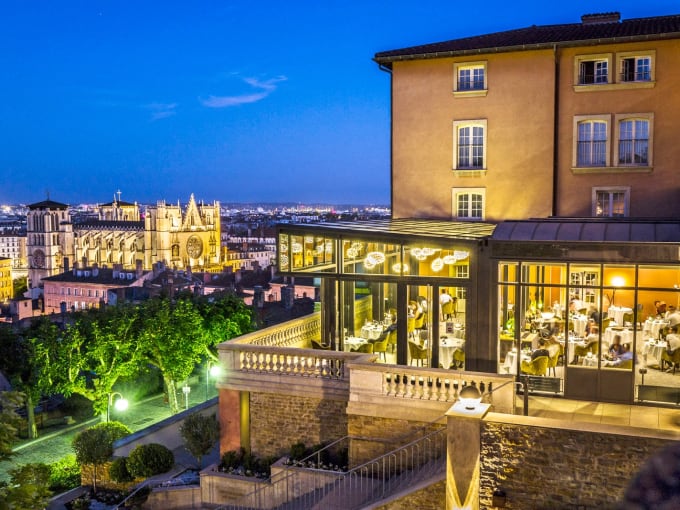
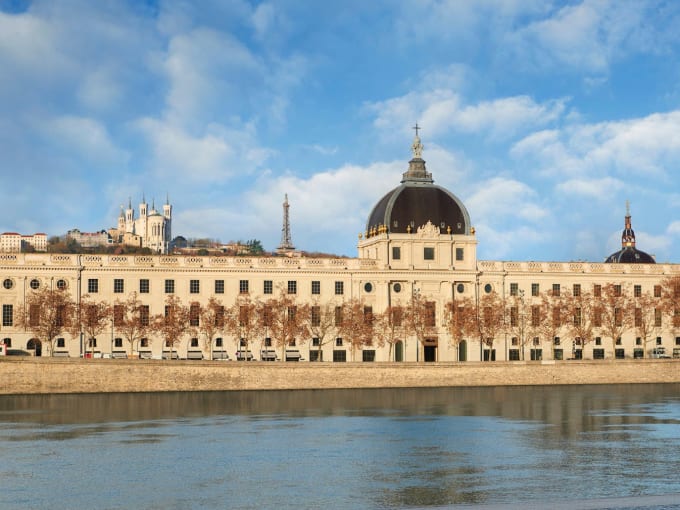
The three selected hotels aptly represent three facets of Lyon. Hôtel Villa Florentine is steeped in the memory of Vieux Lyon and Fourvière. Its elevated position provides a unique relationship with the city, almost panoramic, while remaining close to the historic centre. The InterContinental Lyon Hôtel-Dieu embodies another vision of the grand urban hotel. It occupies one of the city's most striking heritage sites, situated on the Presqu'île, with an instantly recognisable address for a stay that blends business and culture. Finally, Villa Maïa offers a more contemporary and understated interpretation of Lyonnais luxury. Its hillside location, more modest size, and refined aesthetics appeal to a clientele seeking the city without the tumult.
In 2025 and 2026, we observe a shift in expectations within this segment. The high-end urban traveller still desires a prime location, but they are seeking more space to breathe. This favours hotels capable of providing a genuine retreat without breaking away from the city. Spacious rooms, unobstructed views, terraces, indoor pools, and wellness areas are becoming increasingly important. Another clear trend is the value of reinterpreted heritage. Guests are not merely looking for a historical backdrop; they expect a contemporary, comfortable, and functional interpretation of old buildings or culturally significant sites. Finally, discretion is once again becoming a major criterion. It is important to note that a grand urban hotel today is not necessarily the one that showcases the most. It is often the one that makes the city feel simpler, more fluid, and more liveable.
This expectation aligns with a certain idea of French luxury. In Lyon, it is expressed less through ostentation and more through composition. Materials, volumes, views, the quality of silence, and the precision of service matter more than grand gestures. What our advisors often observe is an establishment's ability to create a continuity between the outside and the inside. In a city as layered as Lyon, this requires a genuine dialogue with the neighbourhood. A successful urban hotel could not be relocated elsewhere without losing part of its significance. It belongs to its site. This is particularly true here, where the city's religious, commercial, political, and gastronomic history remains very visible in both the stones and the customs.
Therefore, this ranking should be read for what it is. It does not designate an ideal hotel for everyone. It ranks strong propositions, each with its audience. Some travellers will favour the monumental and central address, perfect for radiating outwards. Others will prefer a more secluded establishment, with a more contemplative relationship to the city. Still others will seek a balance between intimacy, design, and quick access to major districts. My advice is simple. Before looking at the ranking, consider how you wish to experience Lyon. A forty-eight-hour stay, a birthday, a strategic meeting, or a first discovery of the city do not require the same hotel. Our role is to clarify these nuances, not to erase them.
In this Top 3, we have selected hotels that each excel in a precise definition of Lyonnais urban luxury. One dominates the city. Another engages in dialogue with a major monument. The third cultivates a highly controlled form of retreat. Here are the addresses we recommend prioritising for a stylish, efficient, and meaningful stay in Lyon.