Crypte archéologique de l'Ile de la Cité
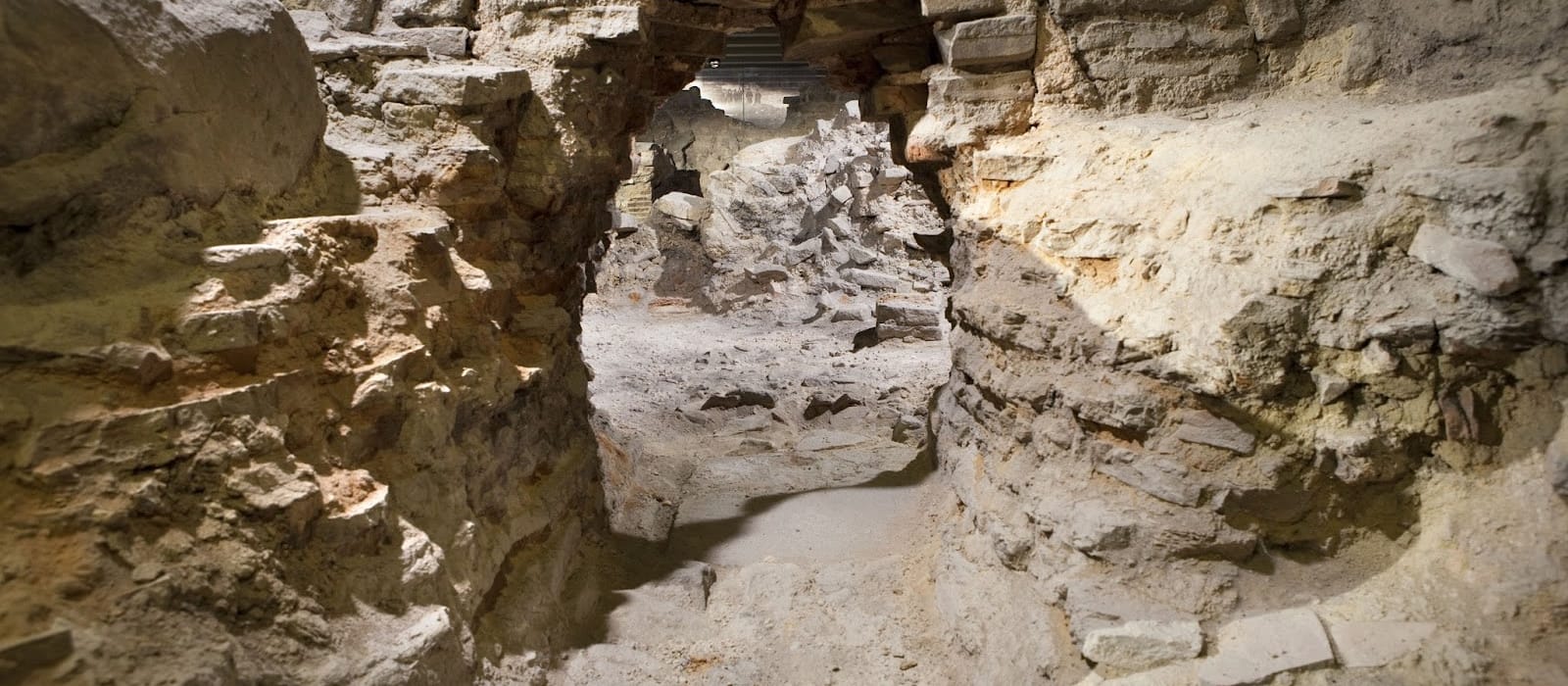
Beneath Notre-Dame square, this archaeological crypt reveals ancient and medieval remains that explain how the historic center of Paris evolved.
In pictures


About
Beneath the square in front of Notre-Dame, this archaeological crypt presents several layers of Parisian history. You walk at the level of the remains. That perspective makes the evolution of the Île de la Cité easier to grasp.
The site focuses on ancient and medieval traces, along with the former layout of streets and urban spaces. It works especially well as a companion visit to Notre-Dame and the surrounding area. It adds structure and context to a part of Paris many visitors cross too quickly.
This is a good stop for travelers who like to understand a city through its ground plan, not only its facades. The visit is usually manageable within a modest time slot. It fits naturally into a route linking the Seine, Sainte-Chapelle, and the Marais.
Try to go earlier in the day, or outside the busiest periods around Notre-Dame. In colder months, it is also a useful indoor stop between outdoor walks. If the square feels crowded, consider pairing it with a quieter walk toward the eastern tip of the island afterward.
The Concierge's Tip
Start with the crypt, then continue to Notre-Dame and the riverbanks. That sequence works well. You first understand the ground, then the cityscape above it. Avoid mid-afternoon, when the square is often busier. In cooler or rainy weather, this is a smart indoor stop between outdoor walks. If the area feels crowded afterward, cross toward the quieter eastern end of the island for a calmer stroll.
Ask the Concierge
Our Concierge arranges your visit: skip-the-line tickets, a private guide, off-hours access.
Ask the ConciergeFrequently asked questions
- How much time should I allow for the visit?
- In most cases, this is a relatively short visit. Many travelers spend between 30 minutes and one hour, depending on their interest in urban history. It combines easily with Notre-Dame, Sainte-Chapelle, or a walk along the Seine. It works well within a half-day plan in the historic center.
- Where exactly is the crypt located?
- The crypt sits beneath the square in front of Notre-Dame, on the Île de la Cité. The listed address corresponds to the forecourt area facing the cathedral. It is very central and easy to place within a historic Paris itinerary. The neighborhood is also convenient to explore on foot from nearby landmarks and both riverbanks.
- When is the best time to visit?
- Morning is often the easiest time, before the square becomes busier. Outside peak visitor periods, the experience feels calmer and easier to follow. On rainy days, it also makes sense as an indoor stop between outdoor visits. If you plan to see Notre-Dame on the same day, starting here gives useful historical context first.
- Do I need to book in advance?
- Access conditions can change depending on the season and visitor levels, so it is wise to check current arrangements before you go. That helps avoid unnecessary waiting around the square. If you prefer flexibility, aim for a quieter part of the day rather than the busiest sightseeing hours around Notre-Dame.
- Is it suitable for families?
- Yes, especially for children who are already curious about history or old cities. The visit is usually manageable in length, which helps. It works best as part of a broader walk, with time outdoors afterward. The contrast between underground remains and the lively neighborhood above can keep younger visitors engaged.
- Can I combine it with other nearby sights?
- Yes, very easily. The crypt pairs naturally with Notre-Dame, Sainte-Chapelle, the Conciergerie, or a walk toward the Marais. It often works well as a starting point on the Île de la Cité. Afterward, the surrounding streets, bridges, and riverbanks make more sense from a historical and urban perspective.
- Is there a convenient hotel nearby?
- Yes, many hotels in central Paris offer easy access on foot or with a short ride. The main advantage is the site’s very central position. It is straightforward to reach from both the Right Bank and the Left Bank. If you want a full sightseeing day, this area makes multi-stop planning especially efficient.
Hotels nearby
Our selection of extraordinary hotels a short walk from this place.