History & heritage
On Paris’s Left Bank, Hôtel Relais Christine occupies a distinctive place: less theatrical than some of the city’s grand establishments, yet immediately compelling for travellers seeking a particular expression of French luxury — discreet, human in scale, and elegant without relying on display. As a member of Relais & Châteaux, the property belongs to a tradition of hospitality in which character matters as much as service. Here, the experience is built not on ostentation, but on something rarer in Paris: the feeling of staying in a confidential address at the heart of a historic neighbourhood.
The 6th arrondissement is one of the capital’s most layered districts. Between Saint-Germain-des-Prés, the Seine and the Luxembourg Gardens lies a concentration of Parisian history: monastic roots, private mansions, literary cafés, publishing houses, galleries, bookshops and learned institutions. To stay here is not simply to choose a convenient location; it is to enter a cultural geography that has shaped Paris’s international image. Hôtel Relais Christine belongs naturally to that continuum, with a presence that favours intimacy over monumentality.
That sense of heritage is also evident in the way the hotel interprets the codes of classic Parisian hospitality. There is much here that defines the enduring appeal of fine Left Bank addresses: a residential scale, volumes that suggest a private home rather than a large hotel, a hushed atmosphere, and a gentler relationship with time than in business districts or heavily trafficked tourist areas. Guests come not only to sleep near major sights, but to recover a rhythm, a tone, a way of being in Paris that values walking, conversation and the return to calm after the city.
The property’s identity lies in this balance between Parisian heritage and contemporary comfort. Without turning the place into a period set, the hotel cultivates a classical, refined aesthetic that sits naturally within its surroundings. The result is a timeless address, equally appealing to seasoned Paris visitors and to travellers wishing to discover the city beyond its most crowded icons. In a market where many openings favour spectacle, Relais Christine is a reminder that a hotel can leave a lasting impression through precision, quietness and coherence.
That is perhaps its true distinction. The heritage of such a house is not reduced to a date or anecdote, but to a quality of presence. It belongs to that family of Paris hotels that seem always to have been there, so naturally do they fit into their quarter. For the contemporary traveller, this answers a very current desire: to experience Paris from within, in a place that shelters from the bustle without ever severing ties with the city. Hôtel Relais Christine thus offers a form of cultural, sensory and understated luxury, deeply rooted in the spirit of the Left Bank.
The property
What first stands out at Hôtel Relais Christine is the rarity of its setting. Being in the heart of the 6th arrondissement is already a privilege; finding, in addition, a genuinely peaceful atmosphere is almost exceptional. Just moments from the Seine, within a network of old streets where one can move in minutes from the quays to bookshops, from galleries to cafés, the hotel provides an especially balanced base from which to discover Paris. It is central enough for walking, yet sufficiently tucked away to restore, at day’s end, a sense of silence and shelter.
The relationship between the address and its surroundings is essential. This is the Paris many imagine before arriving: stone façades, historic lanes, immediate proximity to Saint-Germain-des-Prés, walks along the Seine, easy access to the Luxembourg Gardens. Yet not every address in the area enjoys the same degree of calm. Relais Christine is distinguished precisely by its ability to combine urban immersion with retreat. It is a hotel for those who wish to experience the Left Bank without absorbing all of its density.
The property also appeals through its scale. Where some Paris hotels impress through size, this one favours the feeling of a private residence. That intimate dimension changes the stay profoundly. Arrival feels less formal, circulation gentler, spaces more enveloping. One does not feel one has entered a hotel machine, but rather a place conceived for temporary inhabitation, with all the psychological comfort that implies: finding one’s bearings quickly, recognising faces, developing habits, returning with pleasure after a day in the city.
Its refinement lies in restraint. The classical décor referred to in descriptions is not merely an aesthetic register; it contributes to a continuity with the neighbourhood. In this part of Paris, the most convincing elegance is often that which does not seek to break with its context. Here, the hushed mood, the inner courtyard and the sense of shelter create a setting that speaks as much to international travellers as to Parisians on a city escape. The hotel becomes more than accommodation: a privileged observation point on the Left Bank.
For leisure stays, the address allows guests to move easily between major landmarks and more personal itineraries. A morning may begin on the quays, continue in the Luxembourg Gardens and drift towards the streets of Saint-Germain. For business travel, the location offers a different advantage: the possibility of working or meeting in a calm environment while remaining in central Paris. In both cases, the hotel fulfils a valuable role — that of an urban refuge.
That notion of refuge perhaps best defines the property. In a capital where the tempo can quickly become intense, Relais Christine proposes another rhythm. Luxury here is not only a matter of material comfort; it is also measured by the quality of silence, the softness of return, the feeling of being expected in a place that has preserved its intimacy. For many travellers, that is precisely what separates a good address from one to which they choose to return.
Rooms and Suites
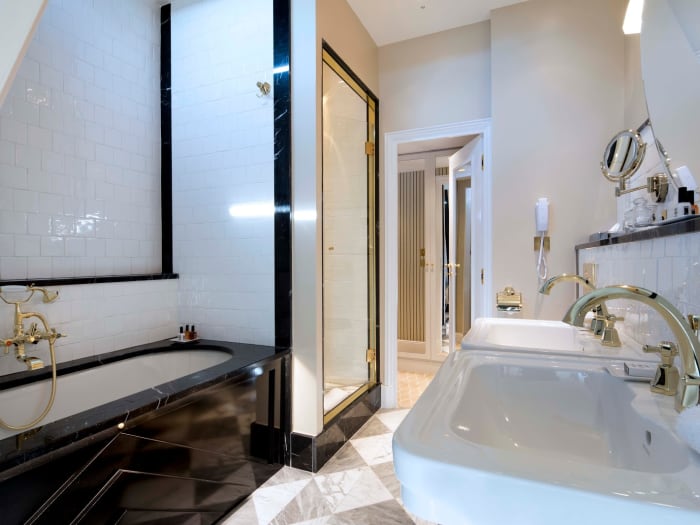
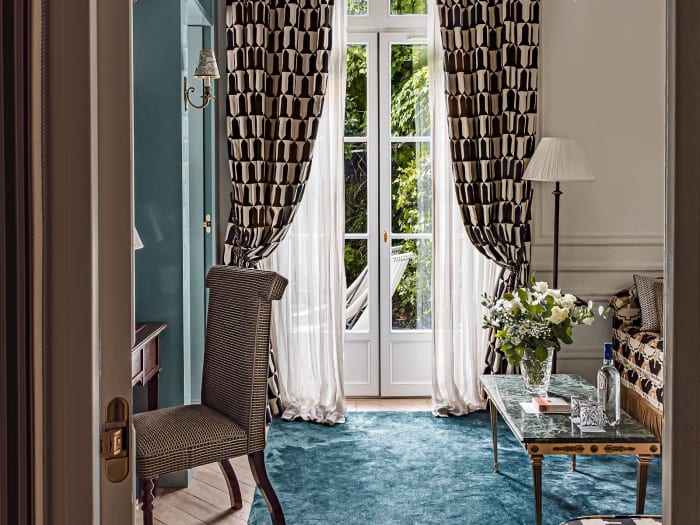
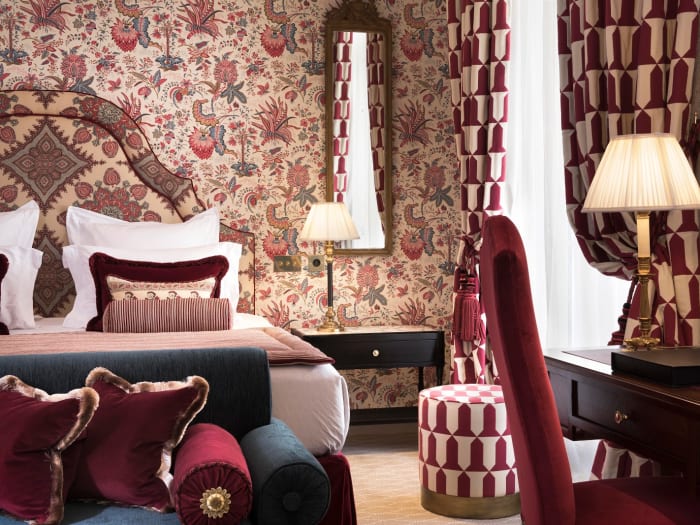
At Hôtel Relais Christine, the rooms are integral to the identity of the establishment. They extend the notion of a refined, calm, and residential Parisian stay. On the Left Bank, this coherence is essential.
The traveller seeks more than just a comfortable bed or a beautiful bathroom. They look for a room that resonates with the neighbourhood, embodies the spirit of the location, and offers the intimacy characteristic of smaller hotels.
Here, the classic and elegant style is a deliberate choice. It evokes a French decorative tradition, characterised by balance, meticulous details, and sustainable materials. Comfort is reflected in the proportions, the softness of the tones, and the sense of serenity.
For reservations, it is advisable to opt, if possible, for a room overlooking the inner courtyard. In Paris, this orientation significantly enhances the experience. The acoustics soften, and the stay becomes more tranquil. After a day of sightseeing or meetings, returning to a peaceful interior space remains a discreet luxury.
The suites offer a different way to inhabit the hotel. More spacious, they are suitable for extended stays, families, or those who view the room as a living space. Having an area to read, work, enjoy tea, or organise the next part of the itinerary alters the rhythm of the stay.
In the late afternoon, these rooms willingly take on the guise of a refuge. One returns to them after strolling along the quays, visiting an exhibition, enjoying a long lunch, or attending a meeting. The room then resumes its primary role: that of a retreat.
The turn-down service enhances this impression, aptly accompanying the transition from the city to the night.
For business travellers, the rooms provide an atmosphere conducive to concentration. For couples, they create a simple and intimate setting. For regular visitors to Paris, they serve as a reminder that a great stay often hinges on the balance between comfort, silence, location, and character.
Dining
At Hôtel Relais Christine, the gastronomic experience is first understood through the rhythm of one’s stay. Breakfast and the courtyard create a quintessentially Parisian scene to start the day. On the Left Bank, the morning sets the tone for the visit. Breakfast marks the transition between the intimacy of the room and the vibrancy of the city.
The charm of breakfast here lies in its well-executed simplicity. Guests seek a peaceful setting, attentive service, and a relaxed pace. It is equally suited for a quick departure or a leisurely morning before heading to the quays or the Luxembourg Gardens. When the weather permits, the courtyard becomes one of the highlights of the experience. In Paris, truly tranquil outdoor spaces are rare. Enjoying a coffee, reading a few pages, or watching the day awaken holds a special value.
The hotel’s appeal also stems from its location in one of the capital’s most gastronomically rich districts. Relais Christine benefits from an exceptional environment to organise one’s days around dining. The 6th arrondissement and its surroundings offer historic cafés, local bistros, contemporary eateries, tea rooms, wine cellars, and gourmet shops. From the hotel, it is easy to alternate between well-known institutions and more hidden gems.
Here, the hotel acts as a balancing point. It is a place to begin the day gently. One can return to unwind before setting off to explore the culinary resources of the Left Bank. This freedom allows guests to experience Paris like a local, according to their mood, the season, or current recommendations.
Service takes on particular importance in this context. An attentive team can guide guests to a quiet terrace, an elegant lunch, a lively dinner, or a venue suitable for a romantic evening. In such a rich neighbourhood, luxury also lies in the quality of advice. The gastronomic experience naturally extends the concierge service and knowledge of the area.
For a weekend stay, especially in spring and summer, the balance between the hotel’s calm and the culinary vibrancy of the surroundings works beautifully. A late wake-up, an extended breakfast, a stroll to the market or the quays, followed by a return before dinner. This flexibility aligns with the spirit of the house. At Relais Christine, dining is part of a broader art of living, characterised by moderation, pleasure, and openness to the city.
Spa & Well-being
At Hôtel Relais Christine, well-being begins with the atmosphere. The tranquility of the space creates a rare sense of relaxation in the heart of Paris.
Here, the first gesture of well-being is spatial. It relates to the courtyard, the gentle flow of movement, and the intimate scale of the house.
Relais Christine favours an integrated and quiet approach. Rest is not experienced separately from the stay; it forms a discreet thread throughout.
A peaceful night, a quiet awakening, an unhurried breakfast, a moment of reading in tranquillity – these elements compose a sustainable well-being experience.
In Paris, this promise is significant. Many visitors juggle exhibitions, appointments, shopping, dining, and strolls within a short timeframe.
The hotel allows for pauses. One can venture out early, return in the afternoon, head out for dinner, and then find a room prepared for the night.
This alternating rhythm, between movement and retreat, suits a Parisian stay particularly well.
Well-being also hinges on the quality of attention. A 24-hour reception, available concierge, and meticulous daily service contribute to mental comfort.
The ability to request assistance, organise a schedule, store luggage, or adjust one’s itinerary lightens the travel experience.
For couples, the hotel provides a setting conducive to a relaxing interlude. The calm, intimacy, and neighbourhood invite guests to experience Paris at their chosen pace.
For business travellers, well-being takes on another form. It becomes an environment that aids in quick recovery and helps maintain concentration.
Here, the spa is understood in a broad sense. The luxury of the house lies in its ability to create conditions conducive to calm.
In a city that easily sweeps one along in its movement, this balance is invaluable. Well-being here rests on silence, attentive service, and ample interior space.
Concierge & Services
In luxury hospitality, the most valuable services are often the most discreet. At Hôtel Relais Christine, this truth is fully realised.
The address cultivates an intimate atmosphere, supported by solid fundamentals. 24-hour concierge, 24-hour reception, daily room service, evening turndown service, luggage storage, laundry service, wake-up calls, and multilingual staff.
Individually, these services may seem expected in a five-star establishment. Together, in a human-sized house, they take on a different value: that of continuous, discreet, and personalised support.
The concierge is at the heart of this. In the 6th arrondissement, the quality of recommendations often changes the nature of a stay. It is not just about securing a reservation or arranging transport; it is about being guided accurately, according to one’s pace, preferences, and reason for travel.
The 24-hour reception also plays an essential role. Late arrivals, early departures, last-minute changes, or urgent needs – this availability provides tangible comfort. In an intimate hotel, it reassures without weighing down the atmosphere.
Daily service and evening turndown reflect a quieter luxury. A room maintained consistently, tidied at the right moment, and prepared for the night alters the perception of the stay. In Paris, where days can be long, this attention matters.
Luggage storage and laundry services offer valuable flexibility. They facilitate arrivals, departures, and extended stays. The wake-up call service also underscores the importance of well-managed details.
Finally, the presence of multilingual staff significantly enhances the quality of the welcome. Being understood accurately, making a specific request, and receiving nuanced advice contribute to a smoother interaction.
The services at Relais Christine thus outline a just vision of contemporary luxury. Less demonstration, more availability. Less protocol, more attention. In the heart of Paris, the experience gains in serenity and fluidity.
The Left Bank art of living
Choosing Hôtel Relais Christine also means choosing a particular way of living Paris. Not every great address tells the same city. Some provide access to a monumental Paris, others to a business Paris, others still to a Paris of spectacle. Here, it is the Left Bank that emerges as the emotional horizon: a Paris of walks, bookshops, cafés, gardens, conversation and evening returns on foot. That tone matters as much as the location itself, because it determines how one inhabits the stay.
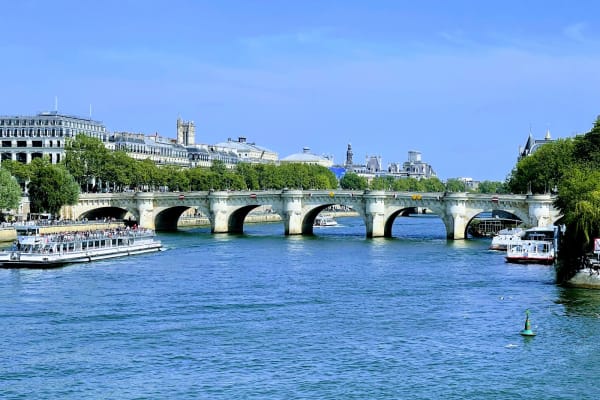
Just moments from the Seine, the hotel allows guests to enter quickly into one of the capital’s simplest and most satisfying gestures: walking without a strict purpose. Going down to the quays in the morning, crossing a bridge, returning through the streets of the 6th, lingering before a bookseller’s window or inside a gallery, extending the walk towards the Luxembourg Gardens — all this forms a luxury of availability that few cities offer with such density. Paris lends itself to improvised itineraries, but one still needs to stay in a district that genuinely supports them. The 6th arrondissement is one of those rare areas where one can spend several days without exhausting the pleasure of the immediate surroundings.
Its relationship with time is particular. One can of course have a very active stay here, but the neighbourhood above all invites one to slow down. Coffee is more readily taken seated than to go; one enters a bookshop without a precise objective; one chooses a street for its atmosphere rather than its efficiency. Hôtel Relais Christine naturally accompanies that disposition. Its calm, intimate scale and inner courtyard create continuity with this art of living made of nuance rather than performance. One does not come only to tick off sights; one cultivates a quality of presence.
For couples, the Left Bank retains an undiminished power of seduction. Romance here arises less from cliché than from the accuracy of settings and habits: light on stone in the late afternoon, a walk along the Seine, a détour through the Luxembourg Gardens, dinner in the neighbourhood, then a return to the hotel through streets that remain lively without ever feeling overwhelming. For solo travellers, the area offers a very agreeable form of urban company, made of movement, culture and observation. For regular visitors, it allows a return to a familiar Paris without slipping into routine.
It is also worth underlining the hotel’s strategic position for exploring beyond the 6th arrondissement alone. From this base, it is easy to reach other major Paris districts on foot or quickly, while keeping the Left Bank as one’s point of balance. That is a considerable advantage: one may spend the day elsewhere and still return in the evening to a neighbourhood that remains inhabited, elegant and deeply Parisian.
Ultimately, the art of living associated with Relais Christine rests on a simple yet demanding idea: Paris is best discovered when one has a place that does not try to compete with the city, but to interpret it. The hotel does not replace Paris; it offers a reading of it. A reading that is calm, cultivated, refined, attentive to detail and faithful to the spirit of the quarter. For those who love the capital without wishing to be overwhelmed by it, it is an especially convincing proposition.